Your Best Colors Aren't a Matter of Opinion — They're a Science
Every person has a unique combination of skin undertone, eye color, and hair color that determines which colors make them look radiant — and which wash them out. This isn't subjective. It's rooted in color theory, and it's called color season analysis.
AI-powered color season analysis now matches professional consultants at a fraction of the cost — delivering personalized palette recommendations from a single photo upload.
For decades, discovering your color season meant booking an expensive session with a certified consultant, traveling to their studio, and sitting through hours of fabric draping. In 2026, AI has changed that completely. You can now upload a single photo and receive an accurate color season classification in seconds — for free.
This guide covers everything you need to know about color season analysis: the science behind it, how AI makes it accessible, the full 12-season system with recommended palettes, and how fashion brands are using color theory to create product imagery that converts. Whether you're shopping for yourself or running a fashion label, understanding color seasons gives you a measurable edge.
Want your season right now? Take our free color season analysis — 11 questions about your veins, jewelry, tanning response and hair, answered in about 60 seconds. It is a questionnaire, not a photo upload, and it returns your season with a full 12-color hex palette, your neutrals, the colors to avoid, and swaps for each.
What Is Color Season Analysis?
Color season analysis (also called personal color analysis or color typing) is a system that matches your natural coloring to a palette of colors that harmonize with your features. The concept originated in the 1940s with artist Suzanne Caygill and was popularized in the 1980s by Carole Jackson's bestselling book Color Me Beautiful.
The system is built on three dimensions of color:
- Undertone (warm vs. cool): Whether your skin has golden/yellow undertones or blue/pink undertones
- Value (light vs. deep): The overall lightness or darkness of your natural coloring
- Chroma (clear vs. soft): Whether your coloring has high contrast and clarity or is more muted and blended
These three dimensions create a framework that maps every person to one of four main seasons, each associated with a family of colors found in nature during that time of year.
The Four Main Color Seasons
Spring: Warm undertone, light value, clear chroma. Think of the bright, fresh colors of early spring — warm yellows, peach, coral, warm greens, and golden tones. Spring types often have golden or strawberry blonde hair, light eyes, and warm peachy skin.
Summer: Cool undertone, light value, soft chroma. Picture the hazy, muted tones of a summer garden — lavender, dusty rose, powder blue, soft mauve, and cool grays. Summer types typically have ash blonde or light brown hair, cool-toned skin, and soft eye colors.
Autumn: Warm undertone, deep value, soft chroma. Imagine the rich, earthy palette of fall foliage — burnt orange, olive, mustard, terracotta, chocolate brown, and forest green. Autumn types often have auburn or dark brown hair, warm golden skin, and hazel or brown eyes.
Winter: Cool undertone, deep value, clear chroma. Think of the stark contrasts of winter — true white against black, jewel tones like sapphire, emerald, and ruby, plus cool berry shades and icy pastels. Winter types usually have dark hair, cool-toned skin, and high contrast between hair, skin, and eyes.
The 12-Season Color Analysis System Explained
The basic four-season system works well for people who clearly fit one category. But many people fall between seasons. The 12-season color analysis system solves this by dividing each season into three sub-types, based on which of the three color dimensions is most dominant in your coloring.
Spring Sub-Seasons
| Sub-Season | Dominant Trait | Characteristics | Best Colors |
|---|---|---|---|
| Light Spring | Lightness | Very fair skin, light golden hair, light blue or green eyes | Peach, light coral, warm pink, camel, light aqua, ivory |
| Warm Spring | Warmth | Distinctly golden skin, warm red or golden hair, warm eyes | Tomato red, golden yellow, warm green, tangerine, cream |
| Clear Spring | Clarity | High contrast with warm undertones, bright eyes, clear skin | Bright coral, turquoise, warm red, electric blue, hot pink |
Summer Sub-Seasons
| Sub-Season | Dominant Trait | Characteristics | Best Colors |
|---|---|---|---|
| Light Summer | Lightness | Very fair cool-toned skin, ash blonde hair, soft blue or gray eyes | Powder blue, soft pink, lavender, light periwinkle, rose |
| Cool Summer | Coolness | Distinctly cool pink undertones, ash brown hair, cool gray or blue eyes | Raspberry, blue-red, teal, cocoa, soft fuchsia, slate blue |
| Soft Summer | Softness | Muted, low-contrast coloring, dusty hair colors, soft blended features | Dusty rose, sage green, soft teal, mauve, medium gray, denim blue |
Autumn Sub-Seasons
| Sub-Season | Dominant Trait | Characteristics | Best Colors |
|---|---|---|---|
| Soft Autumn | Softness | Muted warm coloring, soft brown or dark blonde hair, hazel or green eyes | Camel, olive, soft terracotta, warm taupe, muted teal, mushroom |
| Warm Autumn | Warmth | Rich golden warmth, auburn or copper hair, warm brown or amber eyes | Burnt orange, mustard, rust, pumpkin, warm brown, forest green |
| Deep Autumn | Depth | Dark warm coloring, deep brown or black hair with warmth, dark eyes | Chocolate, olive green, bronze, warm burgundy, mahogany, dark teal |
Winter Sub-Seasons
| Sub-Season | Dominant Trait | Characteristics | Best Colors |
|---|---|---|---|
| Deep Winter | Depth | Very dark coloring, deep cool-toned skin, black hair, dark brown eyes | Black, dark navy, deep plum, forest green, true red, charcoal |
| Cool Winter | Coolness | Stark cool undertones, dark ash hair, cool pink or olive skin, icy eyes | True blue, magenta, icy pink, pure white, royal purple, silver |
| Clear Winter | Clarity | Highest contrast coloring, dark hair against light skin, bright striking eyes | Emerald, cobalt, true red, hot pink, bright white, lemon yellow |
How to Determine Your Color Season: Traditional Methods
Before AI entered the picture, determining your color season required a combination of self-assessment tests and professional draping sessions. These methods still work and provide useful baseline understanding.
The Vein Test
Look at the veins on the inside of your wrist in natural daylight. If they appear predominantly blue or purple, you likely have cool undertones (Summer or Winter). If they look green or olive, you lean warm (Spring or Autumn). If you see a mix of both, you may have neutral undertones, which can appear in several sub-seasons.
The Jewelry Test
Hold a piece of gold jewelry and a piece of silver jewelry against your bare skin. If gold looks more natural and flattering, you're likely warm-toned. If silver is more harmonious, you're likely cool-toned. This test is quick but effective for narrowing your season to warm or cool families.
The White Paper Test
Hold a sheet of bright white paper next to your face in natural light. Your skin will appear either yellowish/peachy (warm undertone) or pinkish/bluish (cool undertone) by contrast. This is one of the simplest methods and works best on makeup-free skin.
The Fabric Draping Test
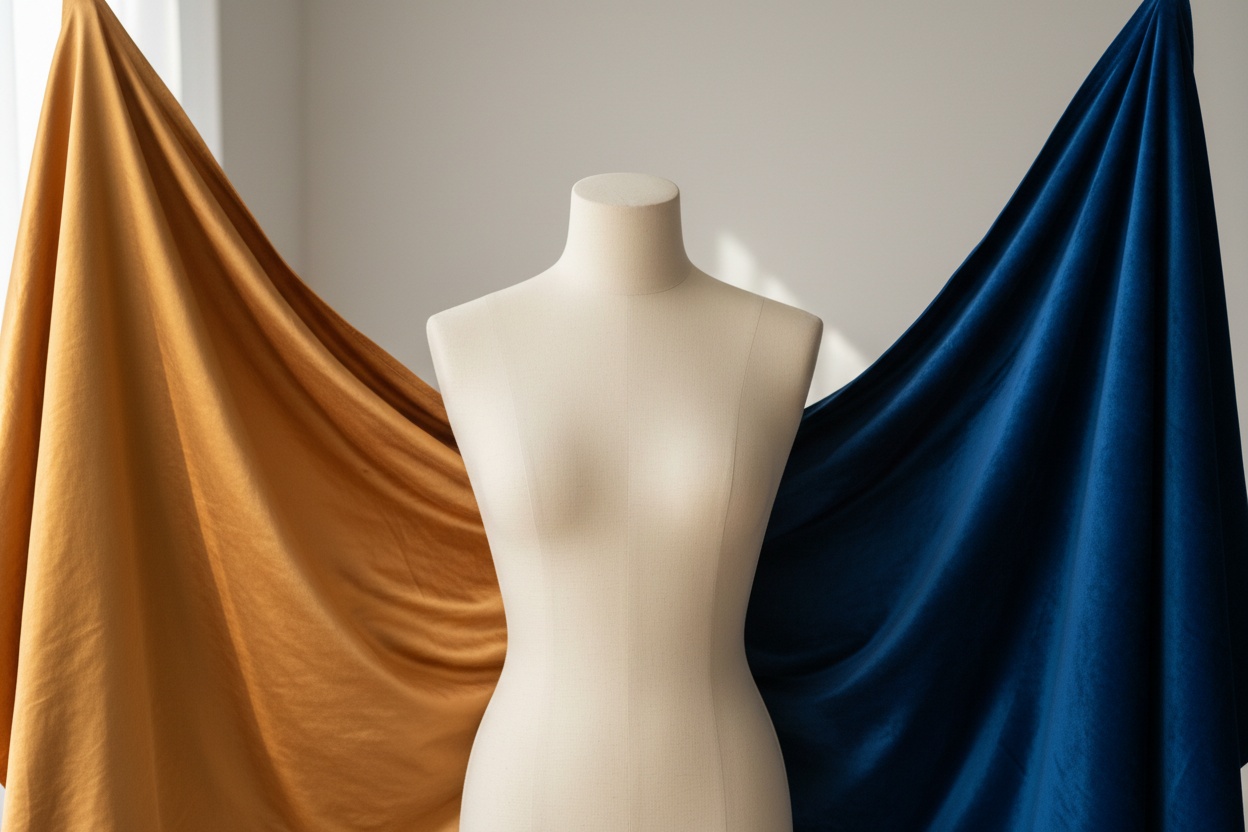
This is the gold standard of traditional color analysis. A consultant holds different colored fabrics near your face and observes how each color affects your appearance. The right colors make your skin look clear and vibrant, your eyes brighter, and your features more defined. The wrong colors make your skin look sallow, highlight dark circles, or cause your features to look washed out.
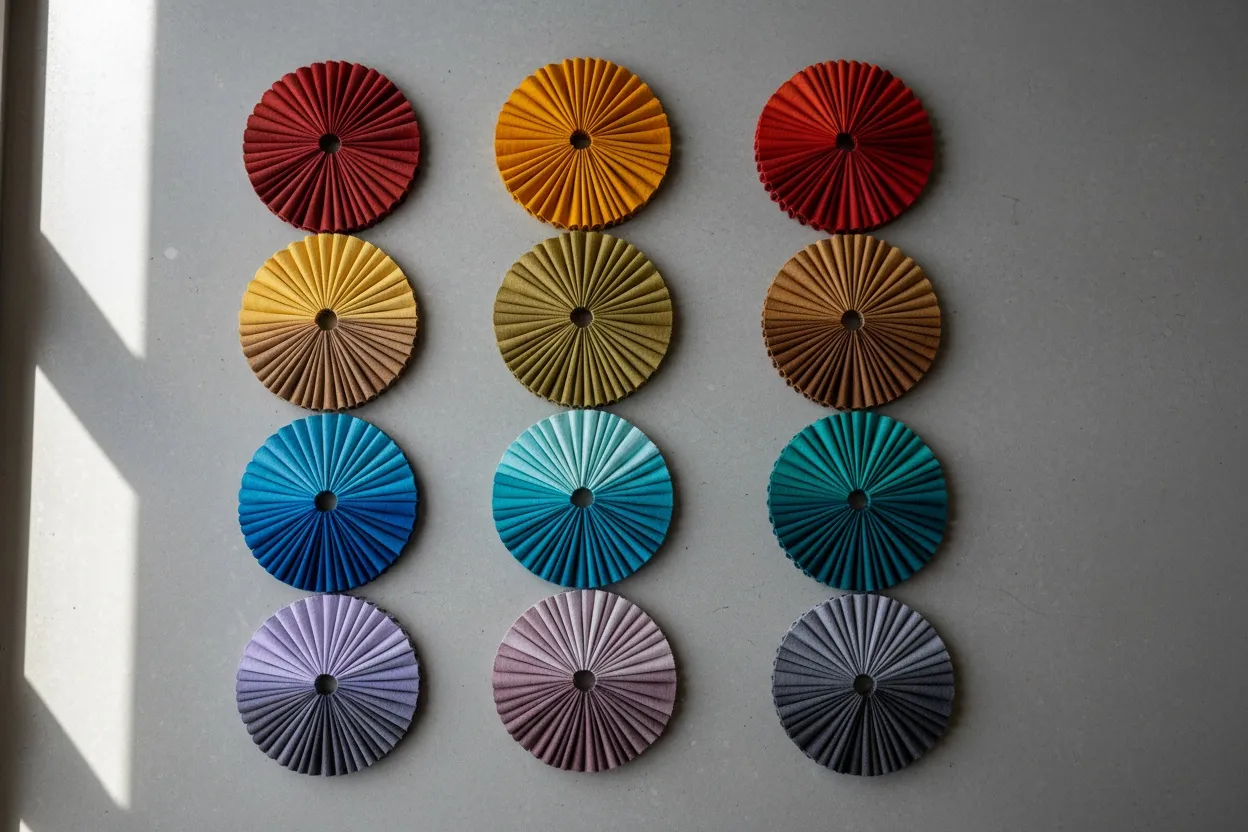
Professional draping tests use dozens of calibrated fabric swatches across all 12 sub-seasons. A full session typically costs $150–$500 and takes 1–2 hours. While accurate, the cost and limited availability of certified analysts have always been barriers.
How AI Color Season Analysis Works
AI has transformed color analysis from an expensive luxury into something anyone with a smartphone can access. Here's the technology behind it.
Computer Vision for Feature Detection
Modern AI color analysis starts with computer vision — the same technology that powers facial recognition and augmented reality filters. The AI identifies your face in the photo, then isolates three critical areas: your skin (typically the cheek, forehead, and jawline), your eyes (specifically the iris), and your hair.
For each area, the AI extracts precise color values in multiple color spaces (RGB, HSL, LAB). The LAB color space is particularly important because it separates lightness from color information, enabling accurate undertone detection regardless of lighting conditions.
Machine Learning Classification
Once feature colors are extracted, a machine learning model trained on thousands of professionally analyzed color profiles classifies your season. The model considers:
- Skin undertone warmth: Calculated from the relationship between red, yellow, and blue channel values
- Overall contrast: The difference in lightness between your hair, skin, and eyes
- Chroma level: How saturated and clear or muted and soft your natural coloring appears
- Value range: The overall lightness or darkness across all three features
Advanced AI models also account for common confounding factors: artificial lighting, camera white balance, makeup, and hair dye. The best systems ask whether you're wearing makeup and flag if lighting appears artificial.
Accuracy and Limitations
Current AI color analysis tools handle the 12-season system well for clear-cut types (Clear Winter, Warm Autumn) and least reliably for people who sit on the boundary between adjacent sub-seasons (like Soft Summer vs. Soft Autumn). Those boundary cases are where a human consultant still earns their fee — and where you should expect to disagree with the tool.
Tips for the Best AI Color Analysis Results
- Use a photo taken in natural daylight — not direct sunlight or indoor artificial lighting
- Remove all makeup, especially foundation, as it alters apparent undertone
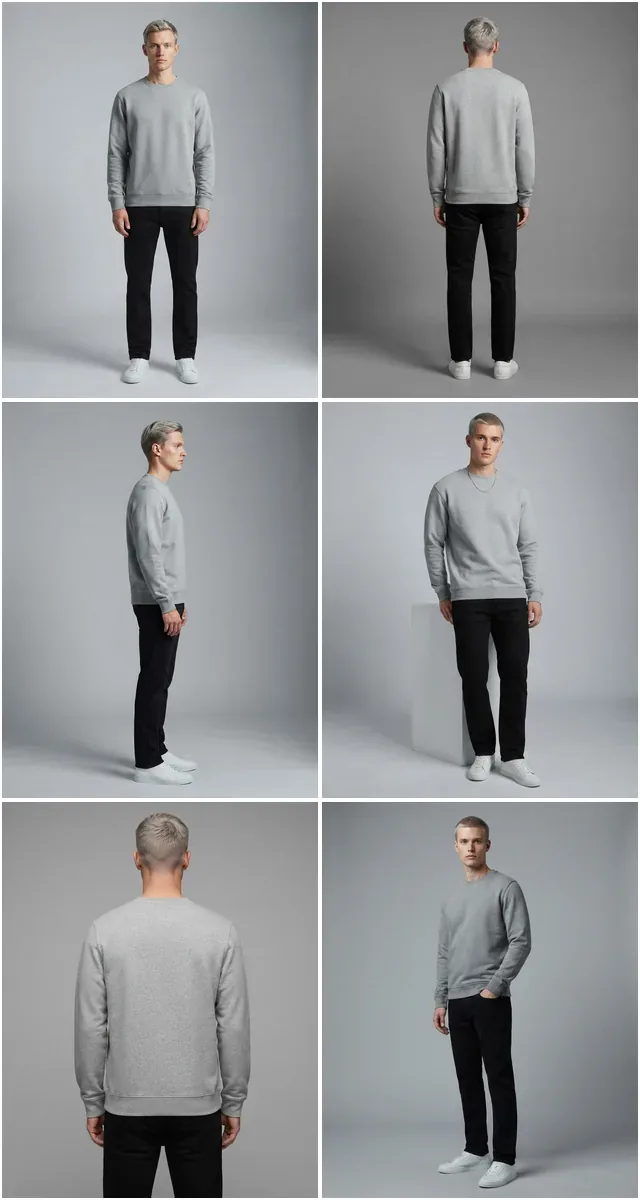
- Wear a neutral white or gray top to avoid color reflection on your skin
- Show your natural hair color — or note if your hair is dyed
- Face the camera directly with a neutral expression
Traditional Color Analysis vs. AI: A Direct Comparison
| Factor | Traditional (In-Person) | AI-Powered Analysis |
|---|---|---|
| Cost | $150–$500 per session | Free to $20 |
| Time | 1–2 hours plus travel | 10–30 seconds |
| Availability | Limited to cities with certified analysts | Available globally, 24/7 |
| Accuracy | 90–95% (expert dependent) | Reliable on clear-cut types; weaker on boundary sub-seasons |
| Repeatability | Varies by consultant | Consistent and objective |
| Personalization | High — consultants explain nuances | Moderate — improving with AI explanations |
| Edge Cases | Better at boundary sub-seasons | May struggle between adjacent types |
The verdict: AI color analysis is the best starting point for most people. It's fast, free, and accurate enough to give you a reliable color palette. For fashion professionals or people who fall between sub-seasons, a follow-up with a consultant can refine the result.
Create Color-Harmonized Product Photos with AI
Fashio AI automatically matches model coloring to your garments using color season theory — producing visually optimized product imagery at scale, no stylist required.
Start creating →How Fashion Brands Use Color Theory for Product Photography
Color season analysis isn't just a personal styling tool — it's a powerful framework for fashion brands looking to create product imagery that resonates with customers on a subconscious level.
Model-to-Garment Color Harmony
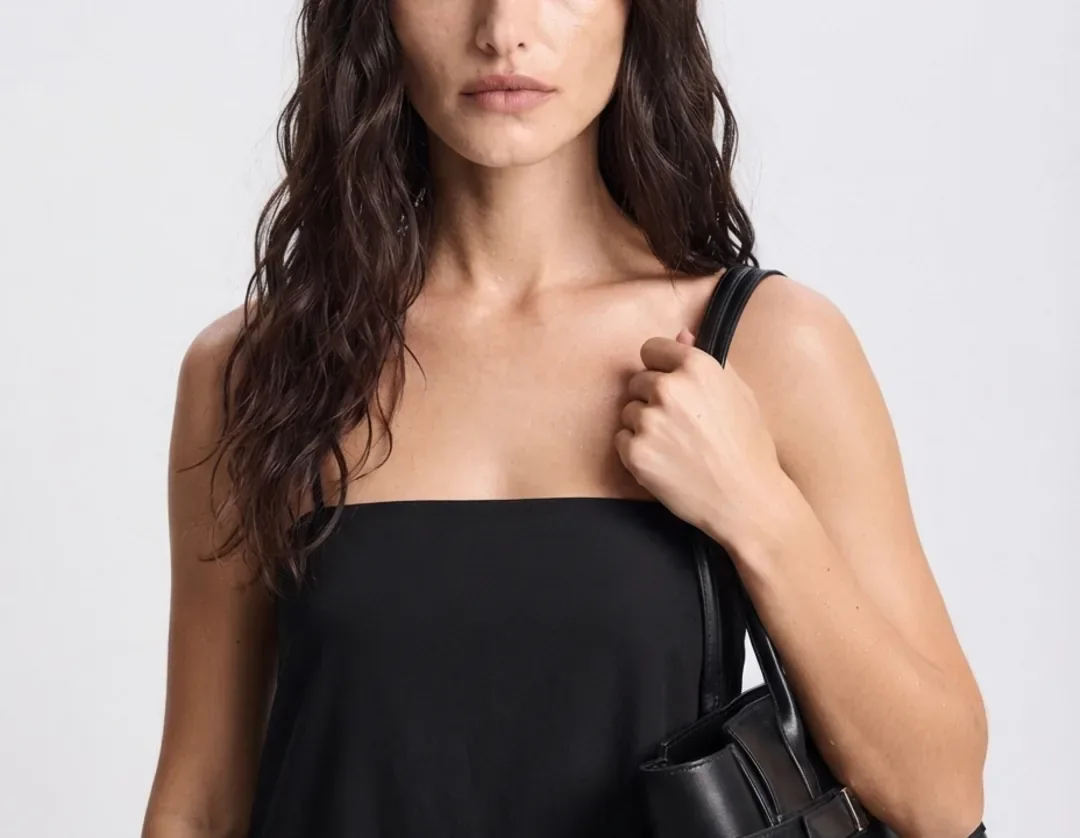
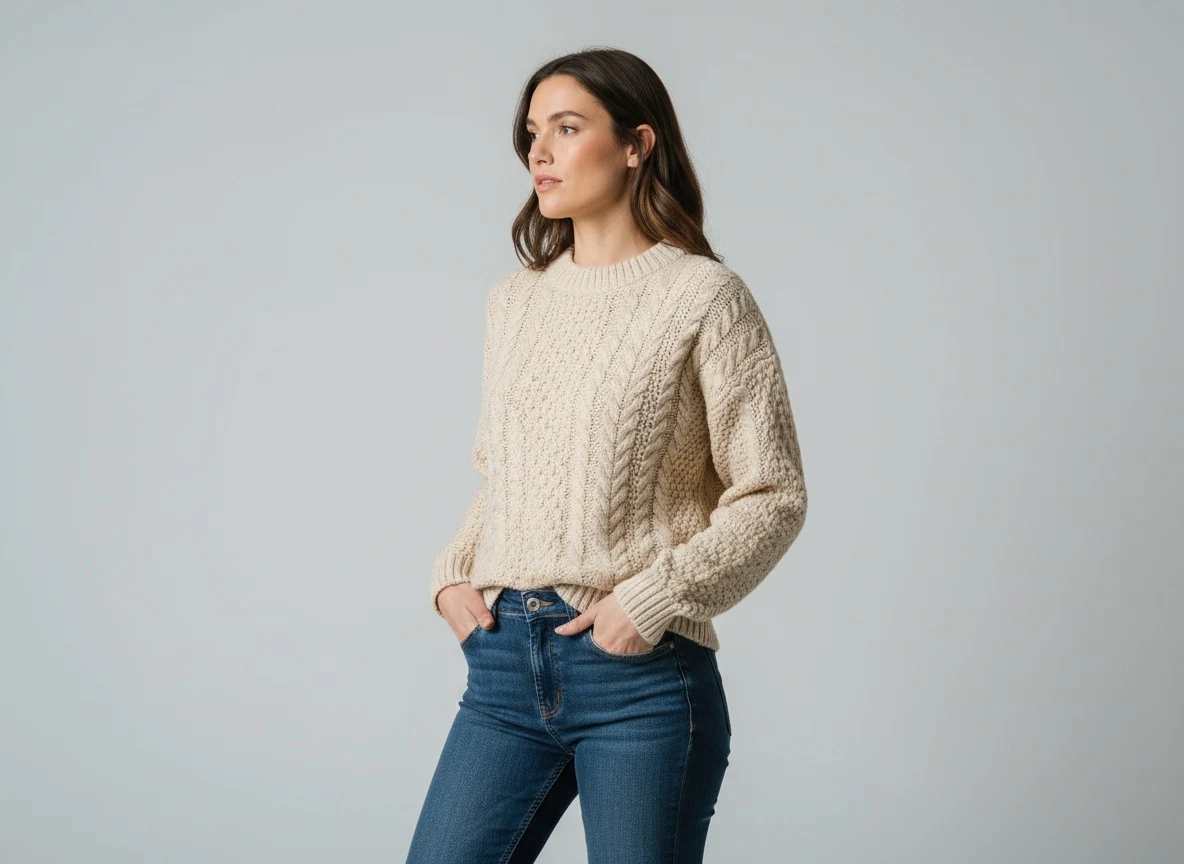
The most visually compelling product photos aren't just well-lit — they're color-harmonized. When a model's natural coloring complements the garment, the product looks more appealing, the model looks healthier, and the overall image feels more premium.
The most visually compelling product photos aren't just well-lit — they're color-harmonized. When a model's natural coloring complements the garment they're wearing, the product looks more appealing, the model looks healthier and more attractive, and the overall image feels more premium.
Fashion brands that understand color seasons can match models to garments strategically:
- A Warm Autumn model photographed in burnt orange, olive, and earthy tones will look strikingly natural
- A Clear Winter model in jewel tones — emerald, cobalt, true red — creates maximum visual impact
- A Light Summer model in dusty pastels produces an ethereal, editorial quality
Conversely, putting a Warm Autumn model in icy pastels or a Cool Summer model in mustard yellow creates subtle visual discord. The garment doesn't look wrong, but it doesn't look right either — and shoppers pick up on that.
Background and Styling Choices
Color theory extends beyond the garment-model pairing. Smart brands also consider:
- Background colors that create complementary or analogous harmony with the product
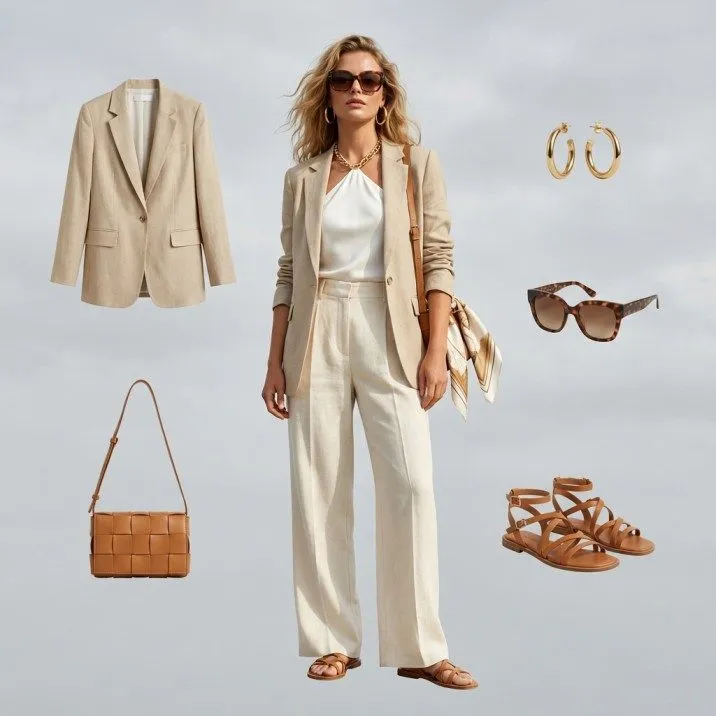
- Accessory styling that stays within the seasonal palette for visual cohesion
- Lighting temperature — warm lighting for Autumn and Spring collections, cool lighting for Summer and Winter
Scaling Color-Conscious Photography with AI
The challenge for most brands is that manual color analysis and styling at scale is impractical. When you're shooting 500+ SKUs per season across multiple model types, you can't have a color consultant on set for every image.
This is where AI tools like AI Fashion Model Generator provide a transformative advantage. When generating AI models for product imagery, brands can select model characteristics that complement specific garment colors — ensuring every product image benefits from color harmony without the manual overhead.
How Fashio AI Helps Brands Create Color-Harmonized Product Imagery
Fashio AI's suite of tools applies color theory principles automatically, enabling brands to produce visually optimized content at scale.
Fashio AI Tools for Color-Intelligent Fashion Content
- AI Fashion Studio — Generate complete editorial campaigns with color-coordinated models, garments, and scenes in one workflow
- AI Model Generator — Generate models with coloring that complements your garments automatically
- Image Editing — Adjust backgrounds, lighting, and color grading to match seasonal palettes
- Virtual Try-On — Let customers see how garment colors interact with their own coloring before buying
AI Model Generation with Color Intelligence
When you use AI Fashion Model Generator, the system analyzes the garment's color properties and can suggest or automatically select model characteristics that create optimal color harmony. A deep burgundy blazer? The AI knows that a Deep Autumn or Deep Winter model type will create the strongest visual result.
This isn't about limiting diversity — it's about ensuring every model-garment combination looks its absolute best. Brands can generate models across all ethnicities, body types, and age groups while maintaining color harmony that would previously have required a stylist with color training.
Intelligent Image Editing
With Fashio AI's image editing tools, brands can adjust background colors, lighting temperature, and overall color grading to match seasonal palettes. If a product is part of a "Winter Collection," the AI can apply cool-toned grading that reinforces the seasonal positioning and creates a cohesive lookbook feel.
Virtual Try-On with Color Context
Fashio AI's virtual try-on technology goes beyond showing how a garment fits — it shows how the garment's colors interact with the customer's own coloring. Shoppers can see whether a color truly flatters them before purchasing, reducing return rates driven by "it looked different in the photo" disappointment.
For brands, this means fewer returns, higher customer satisfaction, and increased confidence in online purchases — especially for color-critical categories like formalwear, cosmetics, and accessories.
Practical Tips for Using Your Color Season in Shopping and Styling
Key Benefits of Knowing Your Color Season
- Build a cohesive wardrobe where every piece coordinates naturally
- Shop faster by filtering out unflattering colors immediately
- Reduce return rates by choosing colors that truly work for you
- Look healthier, more vibrant, and more polished without extra effort
- Apply the same principles to makeup for a fully harmonized look
Once you know your color season, here's how to put that knowledge to work in your daily wardrobe decisions.
Build Your Core Wardrobe in Your Season's Neutrals
Every season has its own set of neutrals. For Winter, that's black, charcoal, and navy. For Autumn, it's chocolate brown, olive, and camel. For Spring, it's warm beige, light camel, and ivory. For Summer, it's soft gray, taupe, and cool navy. Start with these as your foundation pieces — they'll ensure everything in your wardrobe coordinates.
Use Your Best Colors for Statement Pieces
Your season's most vibrant, signature colors should go near your face. This means tops, scarves, jewelry, and outerwear in your power colors. Bottoms, shoes, and bags can be more flexible since they're farther from your face and have less impact on how your complexion looks.
Understand Your Worst Colors
Knowing which colors to avoid is just as valuable as knowing your best ones. If you're a Warm Autumn, icy pastels and blue-based pinks will make you look tired. If you're a Cool Summer, bright orange and golden yellows will clash with your undertone. Keep these colors away from your face — but they're fine for shoes, bags, or accent pieces.
Shop Smarter Online
One of the biggest benefits of knowing your color season is filtering your online shopping. Instead of browsing every color option, you can immediately narrow choices to colors in your palette. This saves time, reduces decision fatigue, and dramatically cuts your return rate.
Apply Color Theory to Makeup
Your color season also determines your most flattering makeup shades:
- Springs look best in peach blush, warm pink lip colors, and golden bronzers
- Summers suit rose and mauve tones, cool pink lips, and soft brown mascaras
- Autumns glow in terracotta blush, warm nude and brick lip colors, and bronzy eye shadows
- Winters can pull off bold berry lips, cool contour, and high-contrast eye looks
The Future of Color Analysis: Where AI Is Heading
Color analysis AI is evolving rapidly. Here's what's emerging in 2026 and beyond.
Real-Time Color Recommendations
The next generation of shopping apps will offer real-time color filtering based on your analyzed season. Browse any store, and products in your unflattering colors will be flagged or filtered out automatically. Some e-commerce platforms are already beta-testing this feature.
Video-Based Analysis
Photo-based analysis has limitations — a single frame can be affected by lighting and angle. Video-based AI analysis samples multiple frames across different micro-movements and lighting angles, producing more reliable results. This technology is becoming standard in 2026.
Integration with Virtual Try-On
The convergence of color analysis AI and virtual try-on creates a uniquely powerful experience. Imagine browsing a fashion retailer, virtually trying on an outfit, and receiving a color harmony score that tells you exactly how well those colors work with your personal coloring. Fashio AI is building toward this integrated experience, combining virtual try-on technology with color intelligence.
Brand-Side Color Intelligence
On the brand side, AI will increasingly inform design decisions. By analyzing which color-model combinations drive the highest engagement and conversion rates, brands can optimize their product photography and even influence design choices for upcoming collections. Fashio AI's model generation platform already provides the foundation for this kind of data-driven visual optimization.
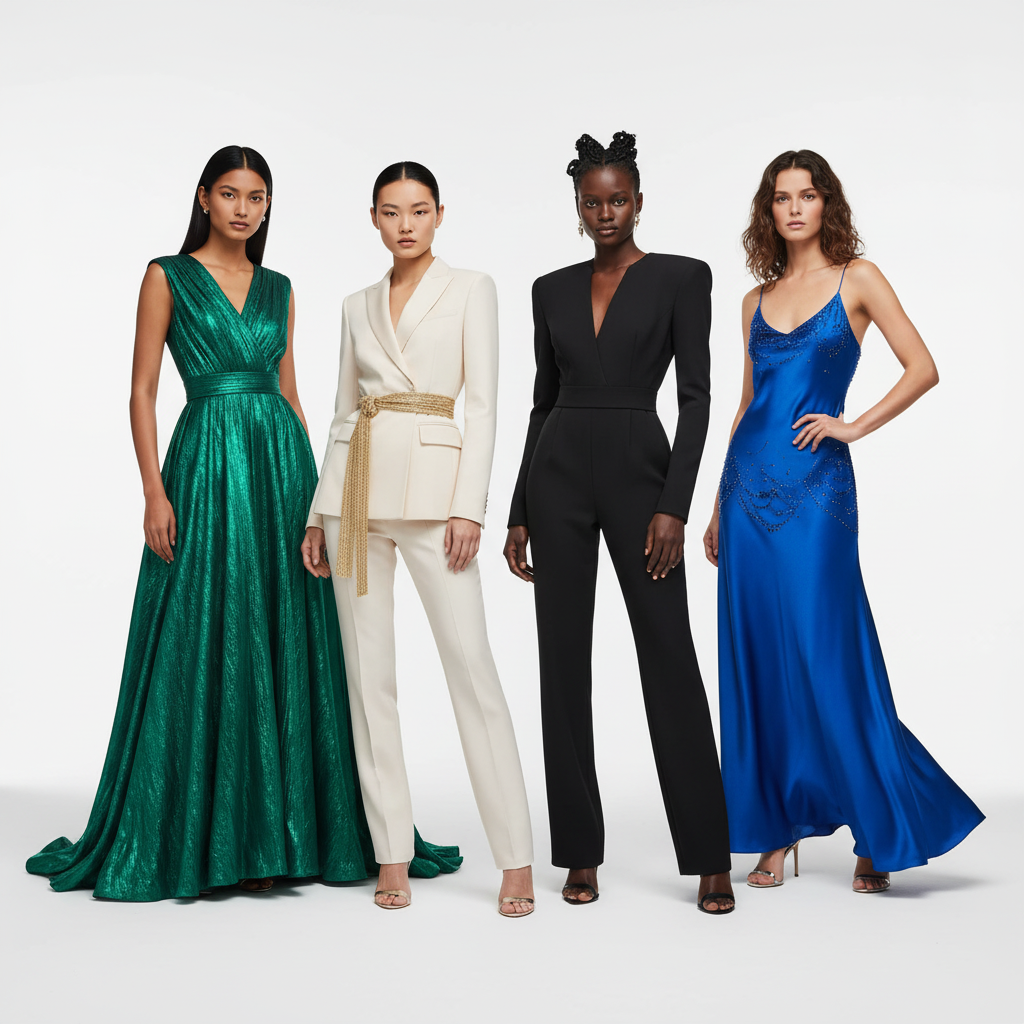
Color Season Analysis for Different Skin Tones
A common misconception about color season analysis is that it correlates directly with ethnicity or skin depth. It doesn't. Every ethnicity spans all four seasons and all 12 sub-seasons. The determining factors are undertone, contrast, and chroma — not skin depth alone.
- Deep skin tones are most commonly Deep Winter or Deep Autumn, but can also be Clear Spring, Warm Autumn, or Cool Winter
- Medium skin tones span the widest range of sub-seasons, making accurate undertone detection especially important
- Light skin tones are most commonly Light Spring or Light Summer, but high-contrast individuals can be Clear Winter
AI color analysis tools trained on diverse datasets handle this well. However, tools trained primarily on lighter skin tones may show reduced accuracy for deeper complexions. When choosing an AI tool, look for one that explicitly mentions training on diverse skin tones and provides equally detailed results regardless of skin depth.
Frequently Asked Questions About Color Season Analysis
What is color season analysis?
Color season analysis is a method of determining which colors look most flattering on you based on your natural coloring — skin undertone, eye color, and hair color. The system categorizes people into four main seasons (Spring, Summer, Autumn, Winter), each further divided into three sub-seasons for a total of 12 color profiles.
How does AI color season analysis work?
AI color season analysis uses computer vision to detect your skin undertone, eye color, and hair color from a photo. Machine learning models trained on thousands of professionally analyzed color profiles then classify your season and sub-season, providing personalized palette recommendations in seconds — no in-person consultant required.
Can I get a free color season analysis by uploading my photo?
Yes, several AI-powered tools now offer free color season analysis by photo upload. You simply take a selfie in natural daylight without makeup, upload it, and the AI analyzes your natural coloring to determine your color season and recommend your most flattering palette.
What are the 12 color seasons?
The 12 color seasons are: Light Spring, Warm Spring, Clear Spring, Light Summer, Cool Summer, Soft Summer, Soft Autumn, Warm Autumn, Deep Autumn, Deep Winter, Cool Winter, and Clear Winter. Each sub-season has a unique combination of undertone warmth, depth, and clarity that determines its ideal color palette.
Is AI color analysis as accurate as an in-person consultant?
AI color analysis handles most cases correctly on a well-lit photo, and the main drivers of a good result are photo quality and natural daylight. Accuracy drops between adjacent sub-seasons — Soft Summer versus Soft Autumn is the classic hard call — but for clear-cut types it lands reliably and at a fraction of the cost of a consultation.
How much does professional color analysis cost?
In-person color analysis sessions with a certified consultant typically cost $150–$500 depending on location and depth of analysis. Group sessions may cost $50–$100 per person. AI-powered alternatives offer comparable results for free or at a fraction of the cost, making color analysis accessible to everyone.
How can fashion brands use color season analysis in product photography?
Fashion brands use color season analysis to style product shoots with color-harmonized outfits, select model skin tones that complement specific garment colors, and create visually cohesive lookbooks. AI tools like Fashio AI automate this process, ensuring every product image uses color theory principles to maximize visual appeal and conversion rates.
Start Using Color Intelligence Today
Color season analysis has evolved from a niche personal styling service into a powerful tool for both individual shoppers and fashion brands. AI has eliminated the barriers of cost and access, making it possible for anyone to discover their most flattering colors in seconds.
For fashion brands, the implications are even bigger. Color-harmonized product imagery isn't just aesthetically superior — it measurably improves engagement and conversion rates. Every product photo that pairs the right model coloring with the right garment creates a subconscious signal of quality and intentionality that customers respond to.
Whether you're building your personal wardrobe around your color season or producing catalog imagery that leverages color theory at scale, the technology is here and accessible. Fashio AI's suite of tools — from AI model generation to intelligent image editing to virtual try-on — puts color intelligence into every step of the fashion content pipeline.
Ready to Create Color-Optimized Product Imagery?
See how color-intelligent visual production transforms your catalog — from AI model generation to virtual try-on, all powered by color season theory.
Start creating →