What is 3D ghost mannequin photography?
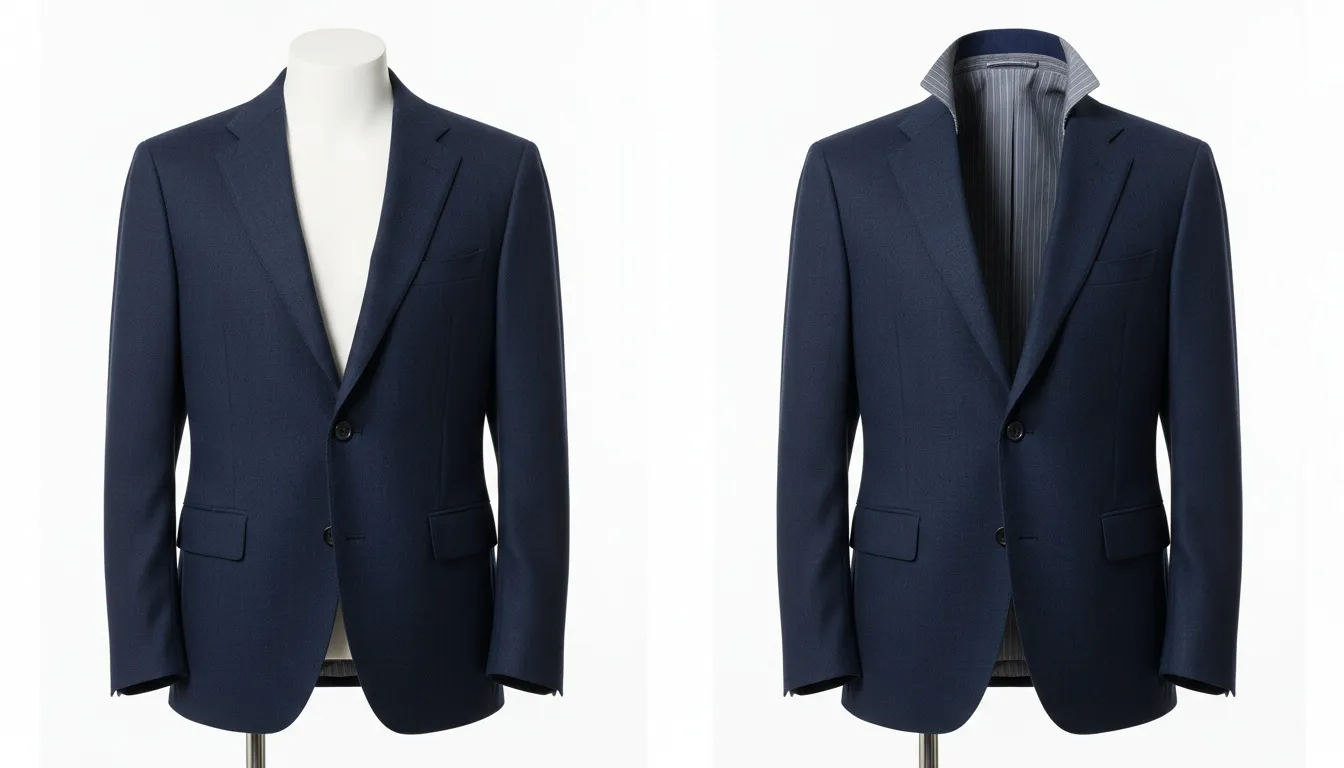
3D ghost mannequin photography is a product photography technique that captures a garment from 12 to 36 angles on a turntable, digitally removes the mannequin from every frame, and stitches the cleaned frames into a rotatable 360-degree product view. Unlike a standard 2D ghost mannequin shot, which shows one angle, the 3D version lets a shopper spin the garment on the product page. Fully retouched and rigged, a single SKU typically runs $200–$1,000 and 1–3 days of production.
12–36 frames per garment $200–$1,000 per SKU 1–3 days production AI on-model: $1–$5, 2–10 min
3D ghost mannequin photography needs a turntable, a segmented mannequin, and 4–8 hours of neck joint retouching per 24-frame SKU at $50–$120/hour. That is why the format stayed with luxury houses. AI on-model imagery with pose variation delivers multi-angle coverage for $1–$5 per SKU in 2–10 minutes.
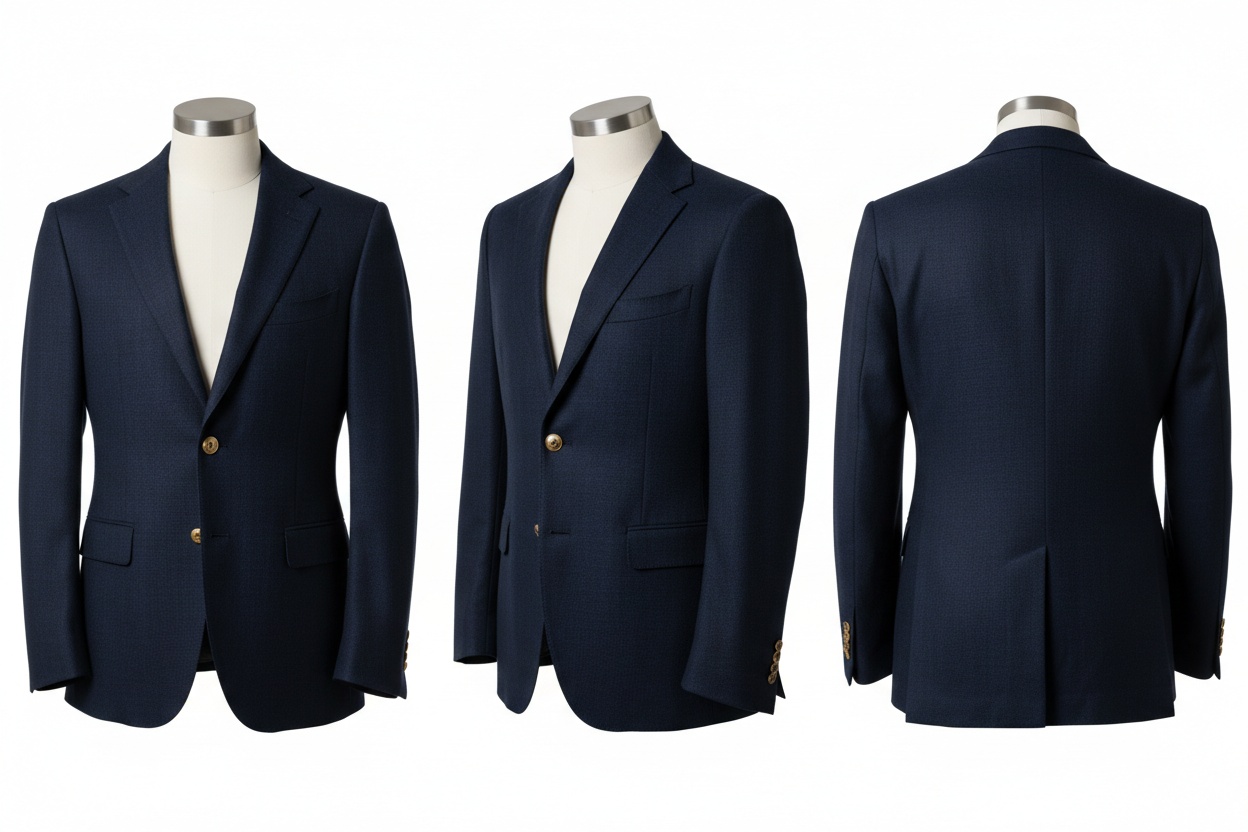
3D ghost mannequin photography is the dimensional cousin of standard ghost mannequin imagery. Where a regular ghost mannequin shot shows a single hollow view of a garment from one angle, a 3D version captures the garment from every direction — typically 12 to 36 frames around its full circumference — then stitches those frames into a rotatable, interactive product visual.
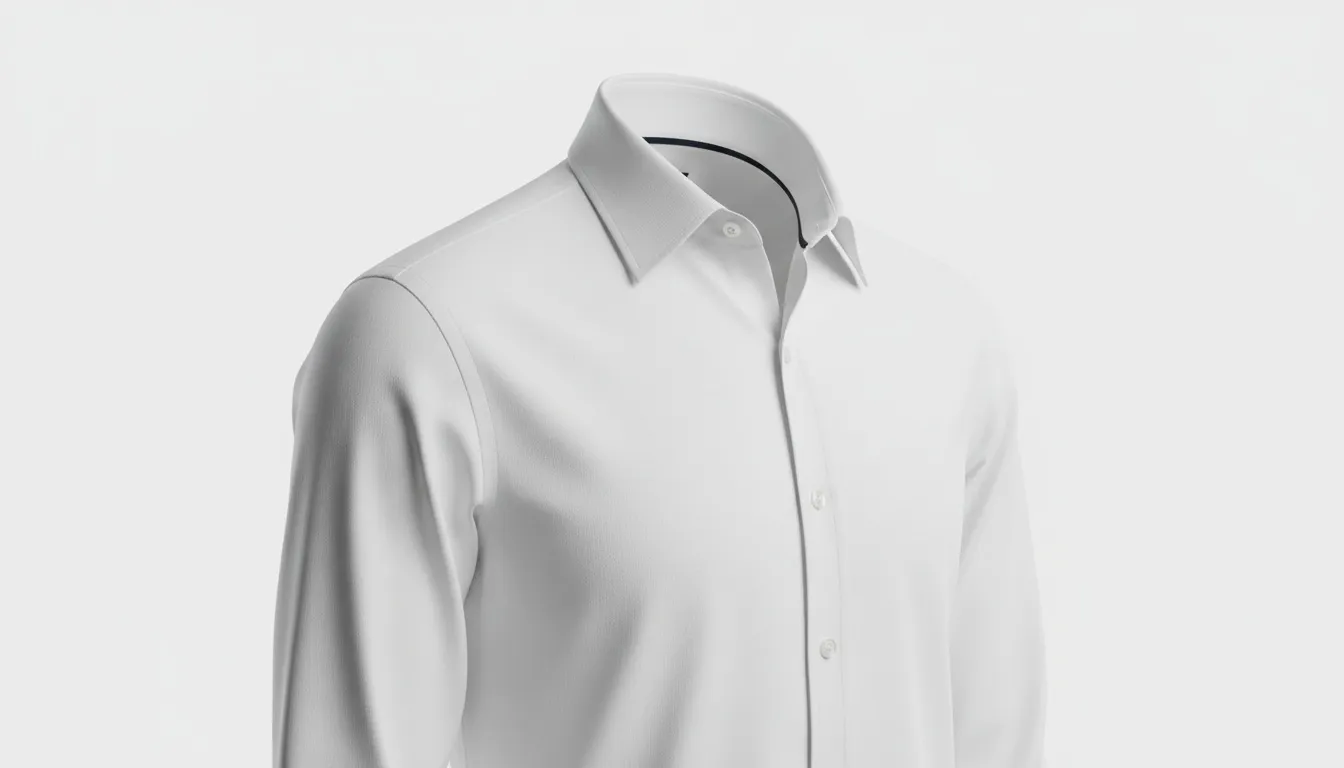
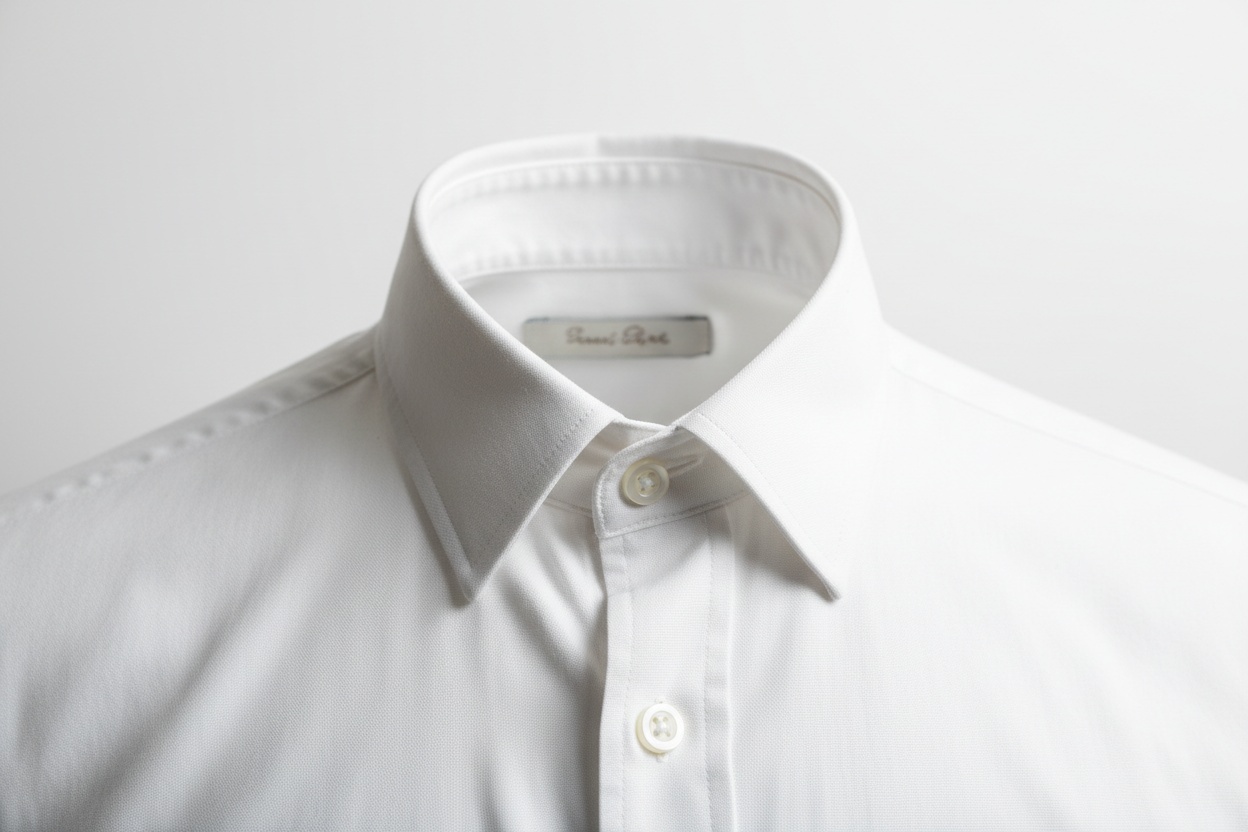
The result is the cleanest possible product visualization: a garment that floats in space, holds its shape, and can be rotated by shoppers to inspect every seam, stitch, and construction detail. There is no model, no mannequin, no distraction — just the product, examined from every angle.
For premium and luxury brands, this format has been the gold standard. Think handbags, footwear, structured outerwear, and tailoring — categories where construction quality is part of the value proposition. For everyone else, it has historically been too expensive and slow to produce at catalog scale. That economics changed in 2026.
"3D ghost mannequin photography solves a real shopper problem — wanting to see a product from every angle — but the production cost has historically put it out of reach for most brands."
How is 3D ghost mannequin photography produced?
Production runs in four stages: multi-angle capture on a precision turntable (16, 24, or 36 frames), per-frame mannequin removal and neck joint reconstruction in Photoshop, stitching the cleaned frames into a 360-degree viewer such as Sirv or WebRotate, then QA and web optimisation. Stage two is the bottleneck — a 24-frame SKU consumes 4–8 hours of skilled retouching.
The 3D ghost mannequin workflow combines hardware, software, and skilled retouching. Each step adds time and cost, which is why the format remained niche for so long.
Step 1: How many angles do you need to capture?
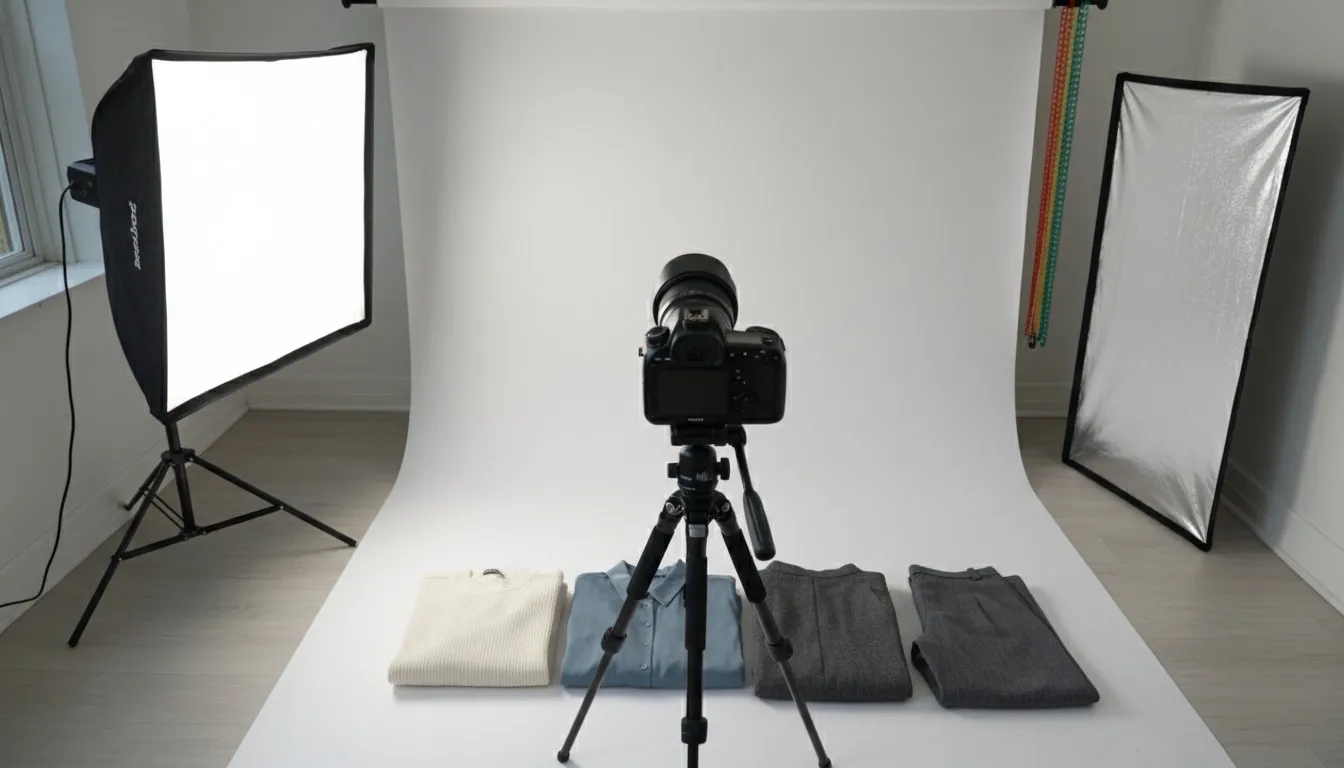
The garment is dressed on a specialized photography mannequin — usually a removable, segmented form that allows the photographer to capture inside-collar and inside-cuff details on a separate pass. The mannequin sits on a precision turntable that rotates in fixed increments. A camera mounted on a fixed boom captures one frame per rotation step.
Standard configurations capture 16, 24, or 36 frames per garment. Higher frame counts produce smoother rotation but multiply post-production work. A 36-frame product takes 36x the retouching time of a single ghost mannequin image.
Step 2: How is the mannequin removed from each frame?
Each frame is opened individually in Photoshop or a similar editor. A skilled retoucher manually masks out the mannequin, reconstructs the inside neckline (the "neck joint"), and balances exposure and color across the frames so the final rotation looks consistent. This is the slowest, most expensive step.
For a 24-frame 3D capture, neck joint editing alone can consume 4–8 hours of skilled retouching time. At professional retouching rates of $50–$120 per hour, that is $200–$960 per SKU before any other production cost.
Step 3: How are the frames stitched into a 360 viewer?
Cleaned frames are imported into a 360-degree viewer tool — Sirv, WebRotate, Magic 360, or PackshotCreator are common — that handles the interactive rotation on the product page. Some workflows go further and use photogrammetry software like RealityCapture to generate a true 3D mesh that can be embedded in a WebGL viewer or AR experience.
Photogrammetric workflows produce the highest-fidelity 3D output but require even more capture coverage (often 60+ frames including top and bottom angles) and substantially more processing time. They are typically reserved for hero products and luxury catalogs.
Step 4: How do you keep a 3D viewer from slowing the page?
The completed 3D asset is reviewed for consistency — checking that lighting, color, and shape look stable across the rotation. The asset is then optimized for web delivery: image compression, lazy loading, and progressive frame delivery to keep page weight manageable. A poorly optimized 3D viewer can add 5–15MB to a single product page, which is a meaningful conversion drag on mobile.
What software and hardware do you need for 3D ghost mannequin work?
You need three layers of tooling: capture hardware (a $400–$3,000 photography turntable, a $300–$2,000 segmented ghost mannequin, and multi-strobe wraparound lighting), retouching software (Photoshop and Capture One), and a 360 viewer platform (Sirv 360, WebRotate 360, PackshotCreator Spinner, or RealityCapture and Marmoset Toolbag for true photogrammetric meshes).
The 3D ghost mannequin tooling stack splits across capture, retouching, and viewer technologies.
What capture hardware is required?
- Turntables: Foba, Manfrotto, and Iconasys offer photography turntables in the $400–$3,000 range. The high-end models include precise rotation control synchronized with camera triggers.
- Mannequins: Specialized 3D ghost mannequin forms like the Eonic Mannequin or Bonanza Mannequin Pro cost $300–$2,000. Their removable segments enable interior shots without re-rigging.
- Lighting: Multi-strobe setups with continuous wraparound diffusion are essential — uneven lighting across rotation frames is one of the most common failure modes.
What software do retouchers use?
- Adobe Photoshop: Still the dominant tool for frame-by-frame retouching. Actions and batch processing help, but mannequin removal remains a manual operation in most workflows.
- Capture One: Preferred by professional retouchers for color consistency across long frame sequences.
- Retouching plugins: Tools like Pixelmator Photo, Luminar Neo, and dedicated mannequin-removal scripts can automate parts of the workflow but rarely replace manual cleanup entirely on premium garments.
Which 360 viewer platforms are available?
- Sirv 360: SaaS-based 360-degree viewer with Shopify, Magento, and BigCommerce integrations. Pricing scales by image volume.
- WebRotate 360: Self-hosted alternative with stronger customization and one-time licensing.
- PackshotCreator Spinner: Bundled with their hardware solutions; convenient for studios already using their capture systems.
- RealityCapture / Marmoset Toolbag: For full photogrammetric 3D meshes destined for AR or WebGL experiences.
Skip the Studio Entirely
Convert flat-lay or mannequin photos to multi-angle on-model imagery in seconds — no turntable, no neck joint editing.
Try Fashio AI's Ghost Mannequin Tool →How much does 3D ghost mannequin photography cost per SKU?
Fully loaded, $245–$1,095 per SKU: $40–$120 for capture, $200–$960 for neck joint retouching across 24+ frames, $5–$15 in rig amortisation, plus $0.10–$0.50 per SKU per month in viewer hosting. A 200-SKU collection therefore exceeds $80,000 before the recurring viewer fee, which is why the format stayed with luxury houses and large multi-brand retailers.
When brands ask for 3D ghost mannequin photography quotes, the headline studio number rarely reflects the true cost. The fully loaded production cost includes:
- Capture cost: $40–$120 per SKU for studio time, photographer fees, and equipment depreciation
- Retouching cost: $200–$960 per SKU for neck joint editing across 24+ frames
- Viewer integration: $0.10–$0.50 per SKU per month in SaaS hosting fees
- Mannequin and capture rig amortization: $5–$15 per SKU spread across capture volume
- Lost merchandising velocity: The 2–4 week production cycle delays product launches
For a small brand launching a 200-SKU collection, fully loaded 3D ghost mannequin production easily exceeds $80,000 — and then the brand still owes monthly viewer fees in perpetuity. This is why the format has remained the domain of luxury houses and large multi-brand retailers.
How has AI changed the cost of 3D ghost mannequin photography?
By 2026, AI has restructured almost every step of the 3D ghost mannequin workflow. The tools that previously made the format expensive — multi-angle capture rigs, manual neck joint retouching, custom viewer integration — now have AI alternatives that are 50–100x cheaper and 100x faster.
Can AI replace multi-angle turntable capture?
Instead of capturing a garment from 24 physical angles, a brand can shoot a single flat-lay or mannequin photo and use AI to generate the additional angles synthetically. AI Fashion Model Generator creates on-model imagery from any number of angles, and pose variation tools generate the rotation effect on a real model rather than an empty mannequin.
The shift from "empty garment rotated in space" to "garment on a model rotated naturally" is more than a cost optimization. Across the brands we work with at Fashio AI, on-model imagery has consistently outperformed empty-garment product views on conversion rate, regardless of how interactive the empty view is. Run the comparison on your own catalog before committing a season's production budget either way.
Can AI do neck joint retouching automatically?
Tools like Fashio AI's Ghost Mannequin Generator handle mannequin removal in 30–60 seconds per image, including the inside-collar and neck-joint reconstruction that previously consumed hours of skilled retouching time. The output is consistent across frames, which removes one of the hardest aspects of 3D ghost mannequin production.
Can AI generate multiple angles from one photo?
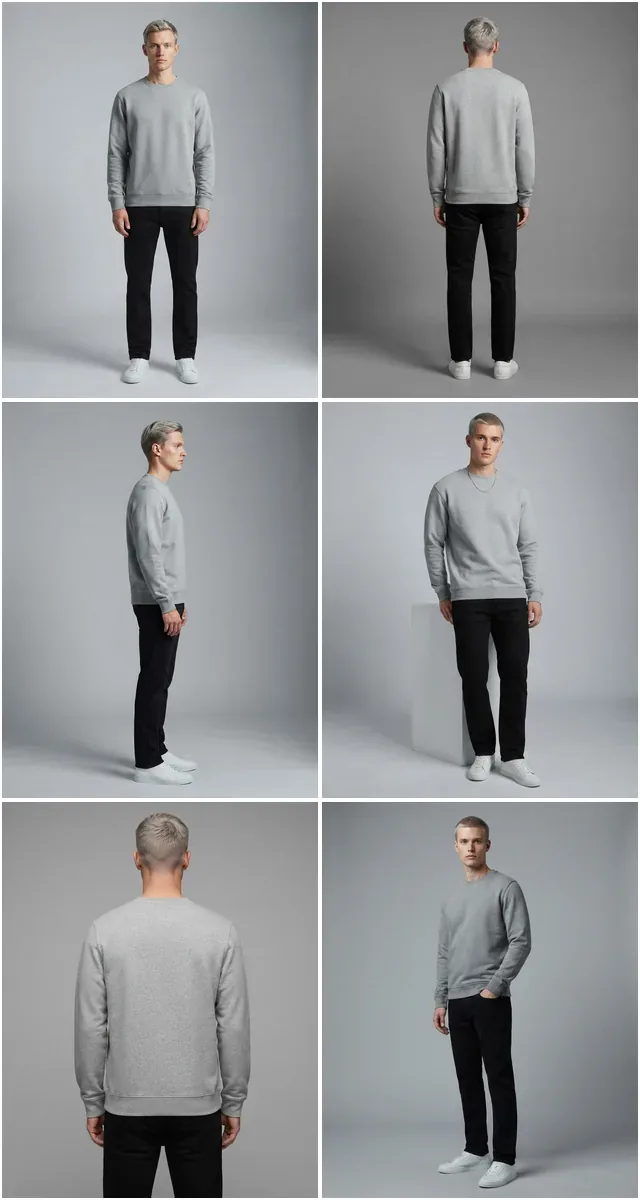
The most disruptive shift: AI tools now produce multiple consistent angles of the same garment from a single source image. Pose variation tools generate front, side, three-quarter, and back views with the same model, lighting, and styling. The result functions like a 3D rotation viewer in terms of shopper experience, but production cost is a fraction of traditional 3D capture.
2D ghost mannequin vs 3D vs AI on-model: how do they compare?
| Approach | Cost per SKU | Production Time | Conversion Lift |
|---|---|---|---|
| 2D ghost mannequin (traditional) | $8–$25 | 2–4 hours | Baseline |
| 3D ghost mannequin (interactive) | $200–$1,000 | 1–3 days | Modest lift over a single static angle |
| AI on-model with pose variation | $1–$5 | 2–10 minutes | Strongest of the three for apparel |
The cost and turnaround figures above are typical market rates rather than a surveyed average, and they vary widely: premium brands shooting on-set with high-end retouching pay well above the upper bounds, and brands with optimized in-house production come in under the lower ones. Price your own workflow before using these as a planning baseline.
Is 3D ghost mannequin photography still worth it in 2026?
For most small and mid-sized brands, no — at $200–$1,000 per SKU it is cost-prohibitive against $1–$5 AI on-model imagery. It remains worth it for heritage and luxury brands where production is part of the brand story, for highly structured products where construction detail drives the purchase, for editorial work where the empty-garment look is deliberate, and for AR experiences that need a real photogrammetric mesh. Despite the economics, there are still scenarios where traditional 3D ghost mannequin photography is the right choice:
- Heritage and luxury brands where the production process itself is part of the brand story
- Highly structured products like leather goods, footwear, and tailoring where construction detail is the primary purchase consideration
- Editorial campaigns where the empty-garment aesthetic is a deliberate creative choice
- AR and metaverse applications where a true photogrammetric 3D mesh is required for the experience
For everyone else — and especially for ecommerce brands optimizing for conversion rate per dollar of production spend — AI-generated on-model imagery has become the rational default in 2026.
How do you decide between 3D ghost mannequin and AI?
The decision framework comes down to four questions:
- What is your production budget per SKU? If it is below $50, AI is the only viable option for multi-angle imagery.
- How fast do you need the imagery? If you have less than a week between capture and listing, traditional 3D photography is rarely feasible.
- What is the construction value of your product? If construction detail is the primary purchase driver — luxury leather goods, fine tailoring, structured footwear — 3D photography may justify its cost.
- Who is your shopper? If your buyer skews younger and mobile-first, on-model imagery outperforms empty-garment 3D views in conversion testing across virtually every category we have measured.
For most brands working with us, the answer leads to AI on-model imagery. For a small subset of luxury and heritage clients, 3D ghost mannequin remains the right format. The two are not mutually exclusive — many brands use AI for the long tail and reserve 3D ghost mannequin for hero products that justify the production investment.
What does a modern ghost mannequin workflow look like?
A 2026-appropriate ghost mannequin workflow looks very different from a 2020 workflow. The simplified version:
- Capture once. Shoot a single flat-lay or mannequin image per SKU with consistent lighting and a clean background.
- Use AI to remove the mannequin. Run the source through Fashio AI's ghost mannequin tool to generate the 2D ghost mannequin asset for catalog listings.
- Generate on-model variations. Pass the cleaned garment image through AI model generation to create on-model shots that replace the need for 3D rotation.
- Add pose variations. Use pose variation to create the multi-angle effect without re-shooting.
- Optionally add 3D for hero products. Reserve traditional 3D ghost mannequin photography for the small set of products that justify the investment.
This hybrid approach delivers comprehensive multi-angle imagery for the entire catalog at a fraction of all-3D production cost, while preserving budget for the hero products that warrant premium treatment.
Frequently Asked Questions
What is 3D ghost mannequin photography?
3D ghost mannequin photography is a technique that produces a 360-degree, dimensional view of a garment without a visible mannequin or model. Unlike standard 2D ghost mannequin shots — which show only front or back — 3D ghost mannequin imagery captures the garment from multiple angles and lets shoppers rotate the view interactively on the product page.
How is 3D ghost mannequin photography produced?
The garment is photographed on a turntable or rig that captures 12 to 36 angles around the mannequin. Each frame is then processed in post-production to remove the mannequin, and the cleaned frames are stitched into an interactive 3D viewer or animation. Some workflows use photogrammetry software to generate a true 3D model from the captures.
What software do photographers use for 3D ghost mannequin work?
Common tools include Photoshop and Capture One for individual frame retouching, Marmoset Toolbag and RealityCapture for photogrammetry, Sirv and PackshotCreator for 360-degree spinners, and dedicated retouching plugins for batch neck-joint work. AI tools like Fashio AI now automate the mannequin-removal step that traditionally consumed the most time.
Is 3D ghost mannequin photography worth it for small brands?
For most small to mid-sized brands, traditional 3D ghost mannequin photography is cost-prohibitive — a single SKU often runs $200–$1,000 fully retouched and rigged for an interactive viewer. AI-assisted alternatives reduce this to a few dollars per SKU and produce on-model imagery that converts better than empty-garment views.
What is the difference between 3D ghost mannequin and 2D ghost mannequin?
2D ghost mannequin produces a single hollow image of the garment from one angle (typically front). 3D ghost mannequin captures the garment from multiple angles around its full circumference, creating a rotatable view that shows the back, sides, and construction details. 3D delivers richer detail but takes 5–10x longer to produce.
Can AI generate 3D ghost mannequin imagery?
AI cannot yet generate fully interactive 3D ghost mannequin imagery from a single photo, but modern AI workflows can convert flat-lay or mannequin shots directly into multiple on-model angles — which deliver the same dimensional understanding shoppers want, often with higher engagement than empty-garment 3D views.
Final Thoughts
3D ghost mannequin photography solved a real problem — giving shoppers a dimensional understanding of a garment without a model — but its economics priced it out of reach for most brands. In 2026, AI tools deliver the same shopper experience at a per-image price rather than a per-SKU production budget.
For most ecommerce fashion brands, the right move is to stop thinking about ghost mannequin photography as a destination format and start thinking about it as one input to a richer AI-driven product visualization stack. The garment is the same. The cost, speed, and conversion outcomes are dramatically different.
For more on the broader shift away from traditional ghost mannequin workflows, see our companion guide on why ghost mannequin photography is outdated in 2026, and our complete guide to AI product photography for ecommerce.