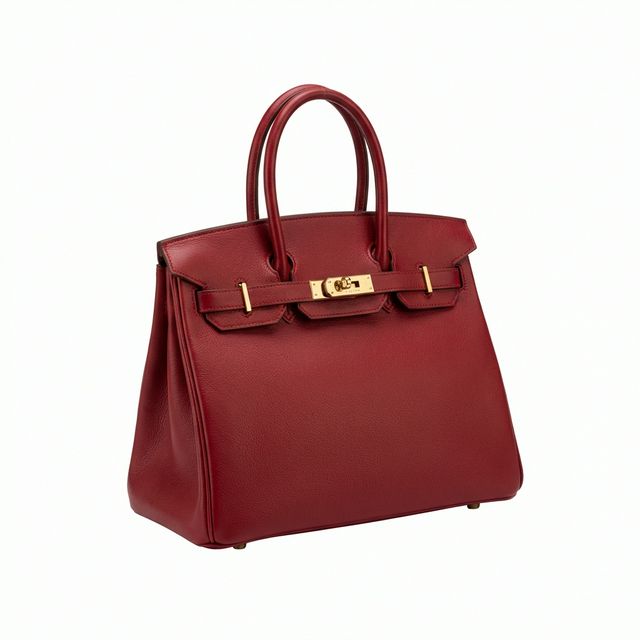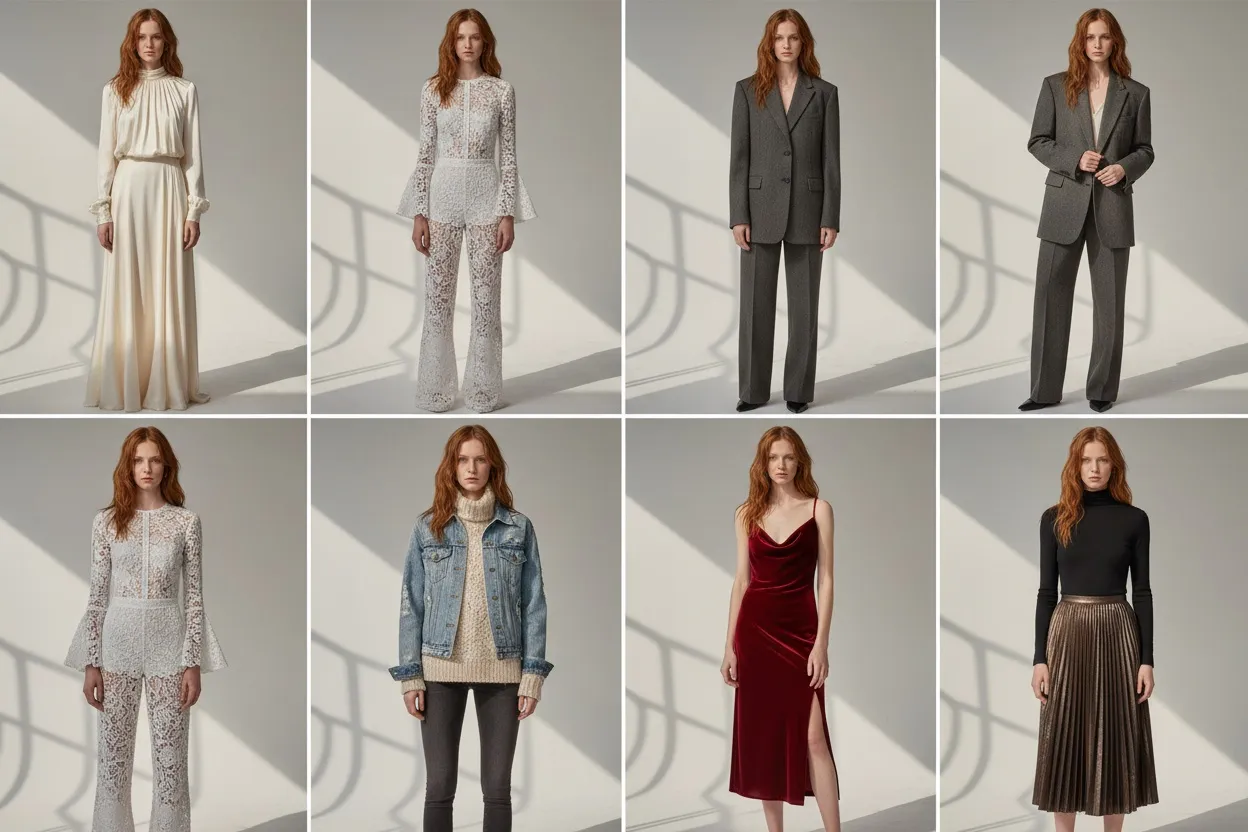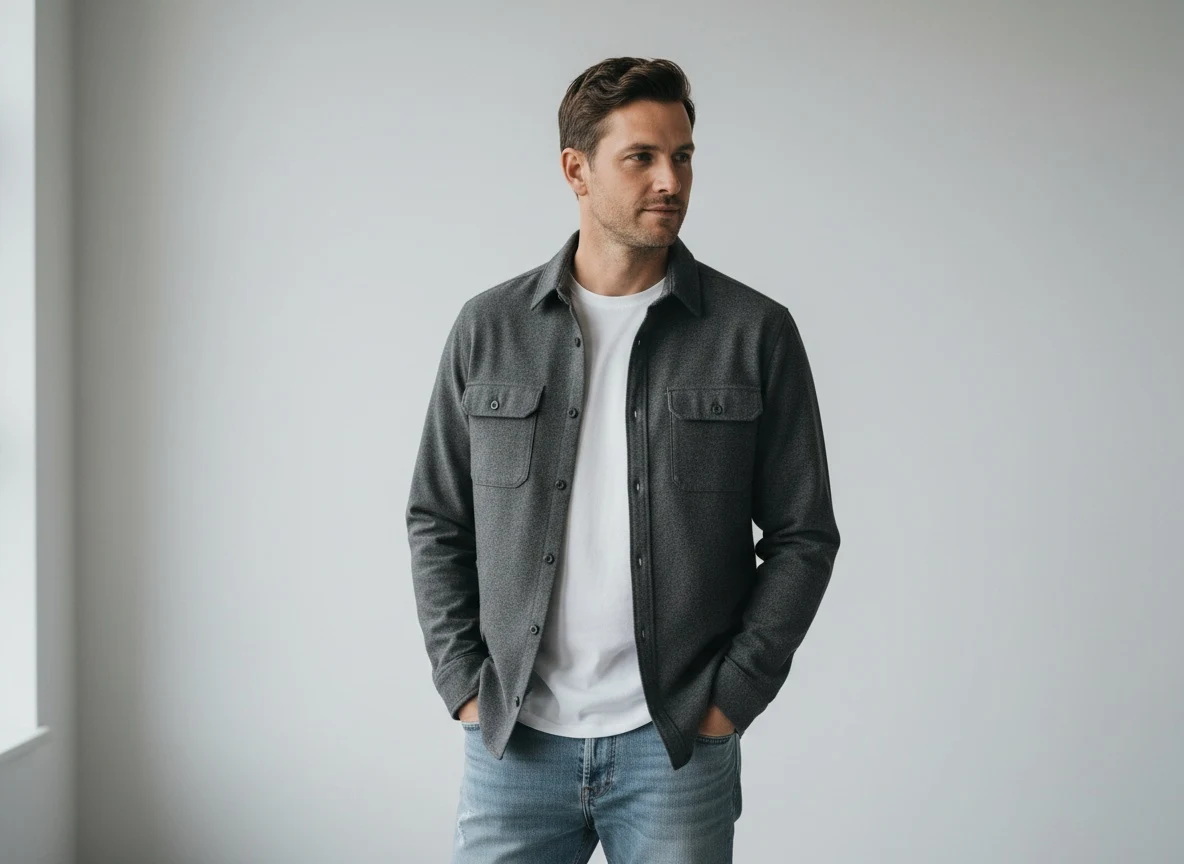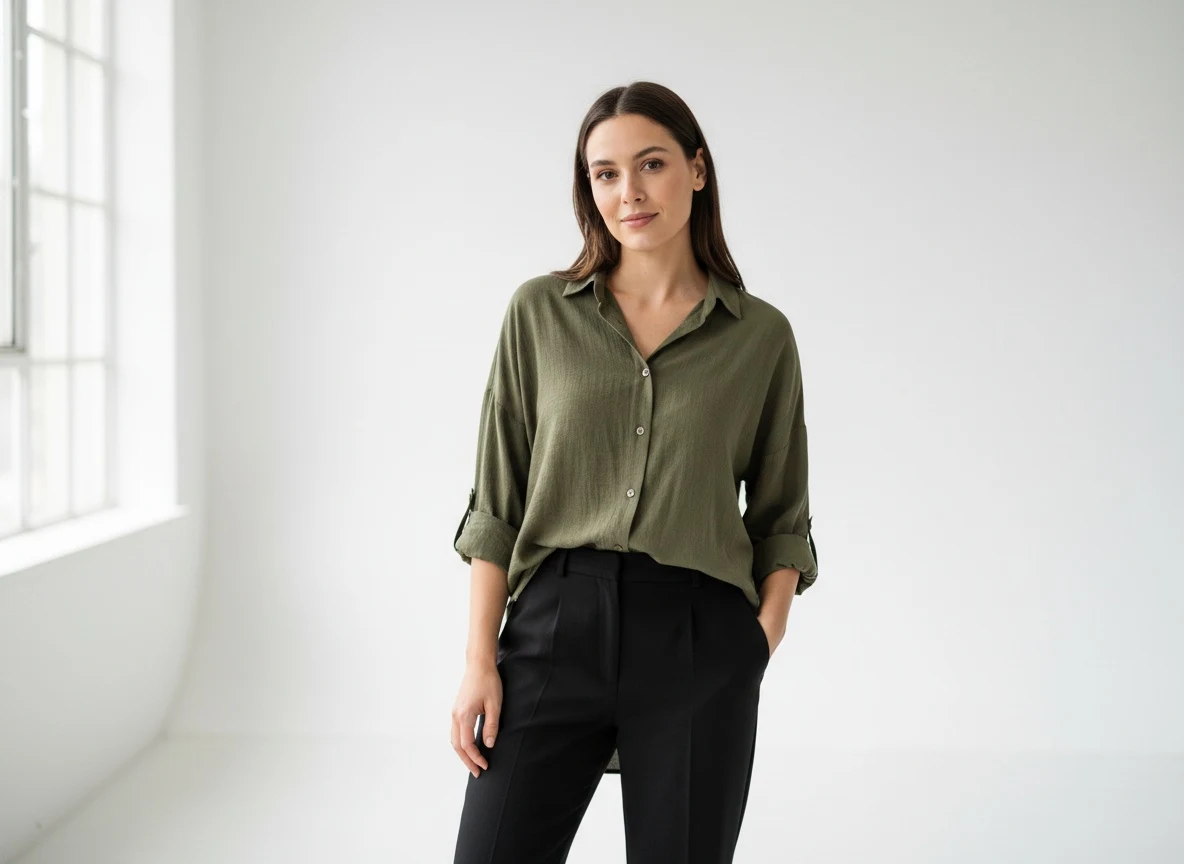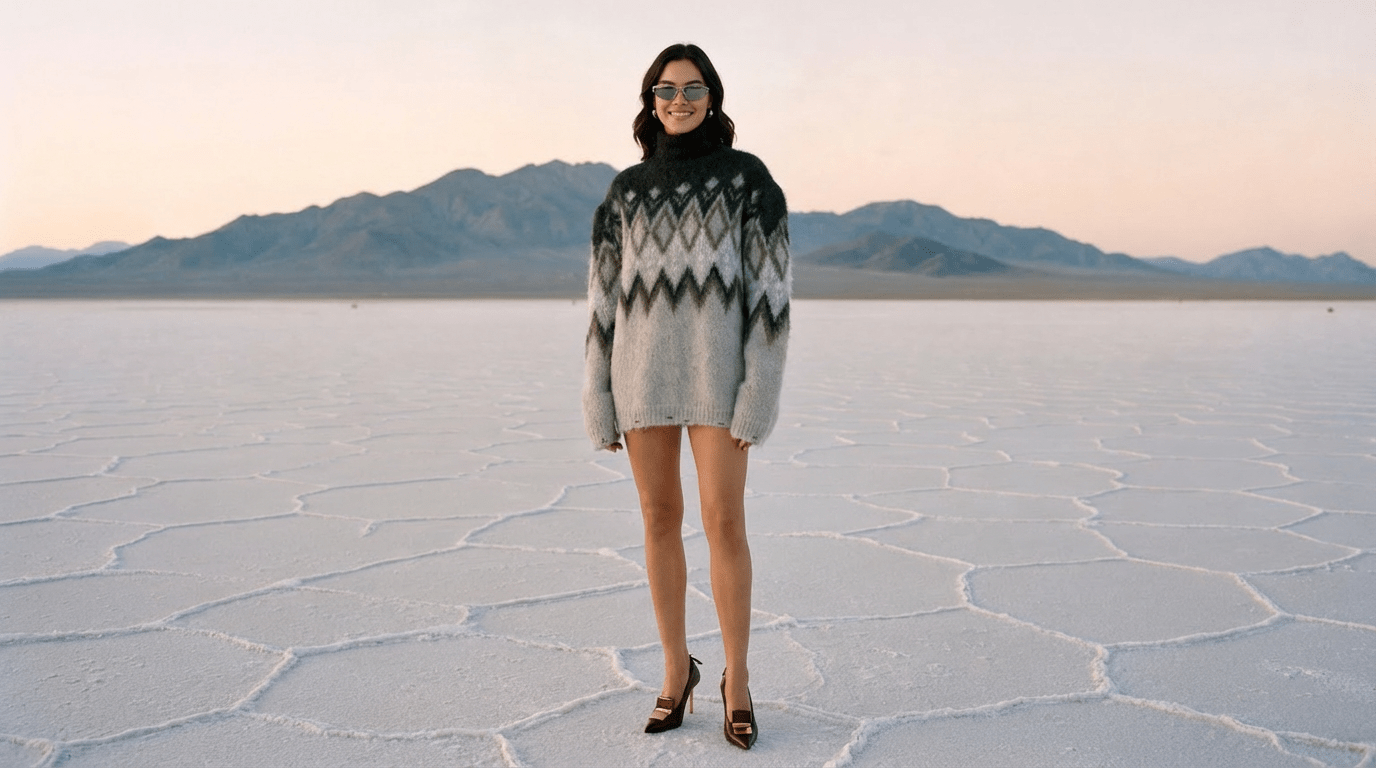
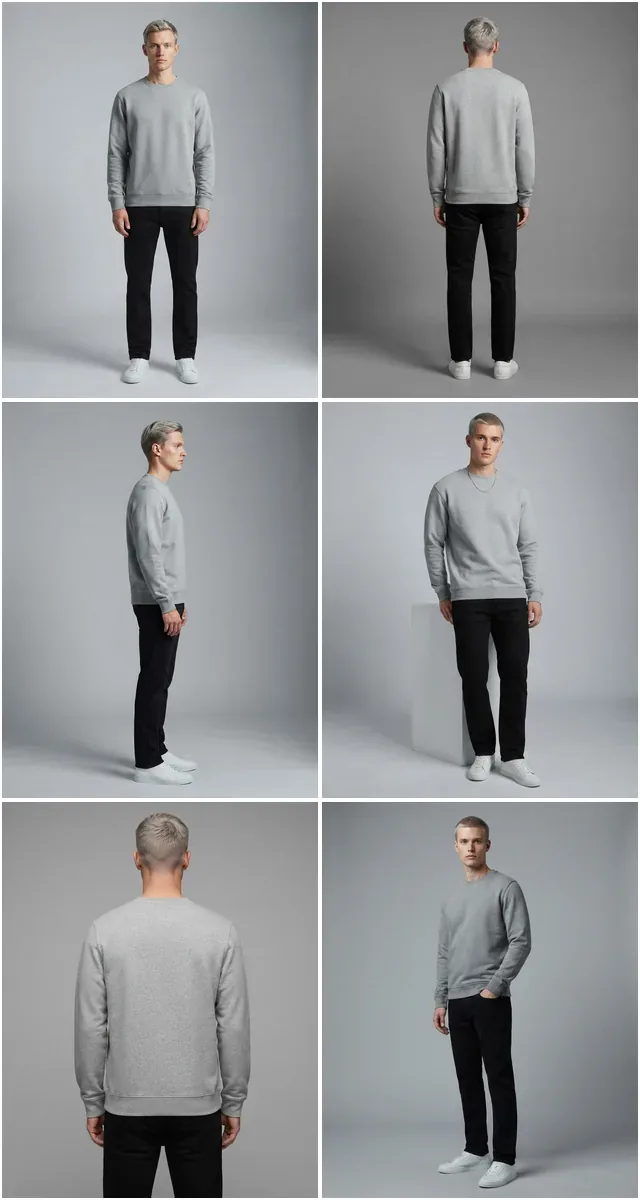
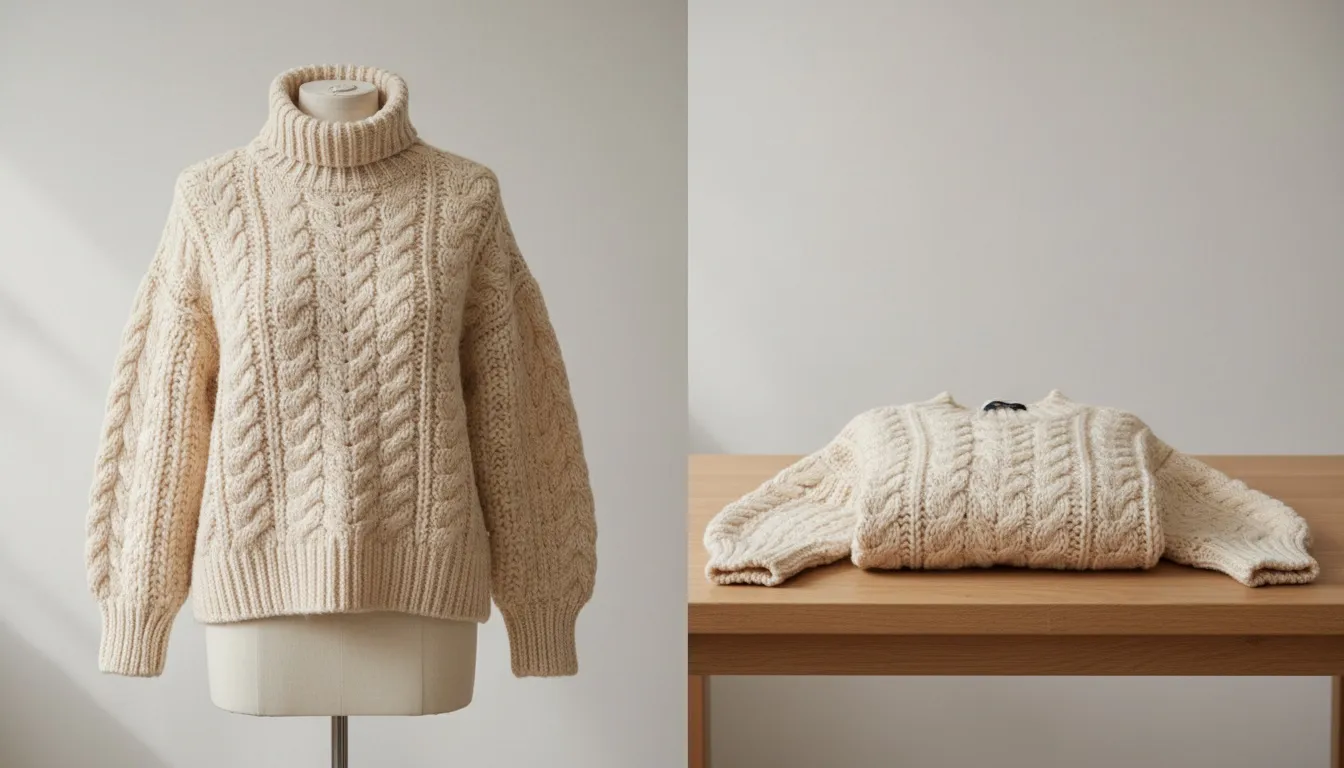
What is ghost mannequin photography?
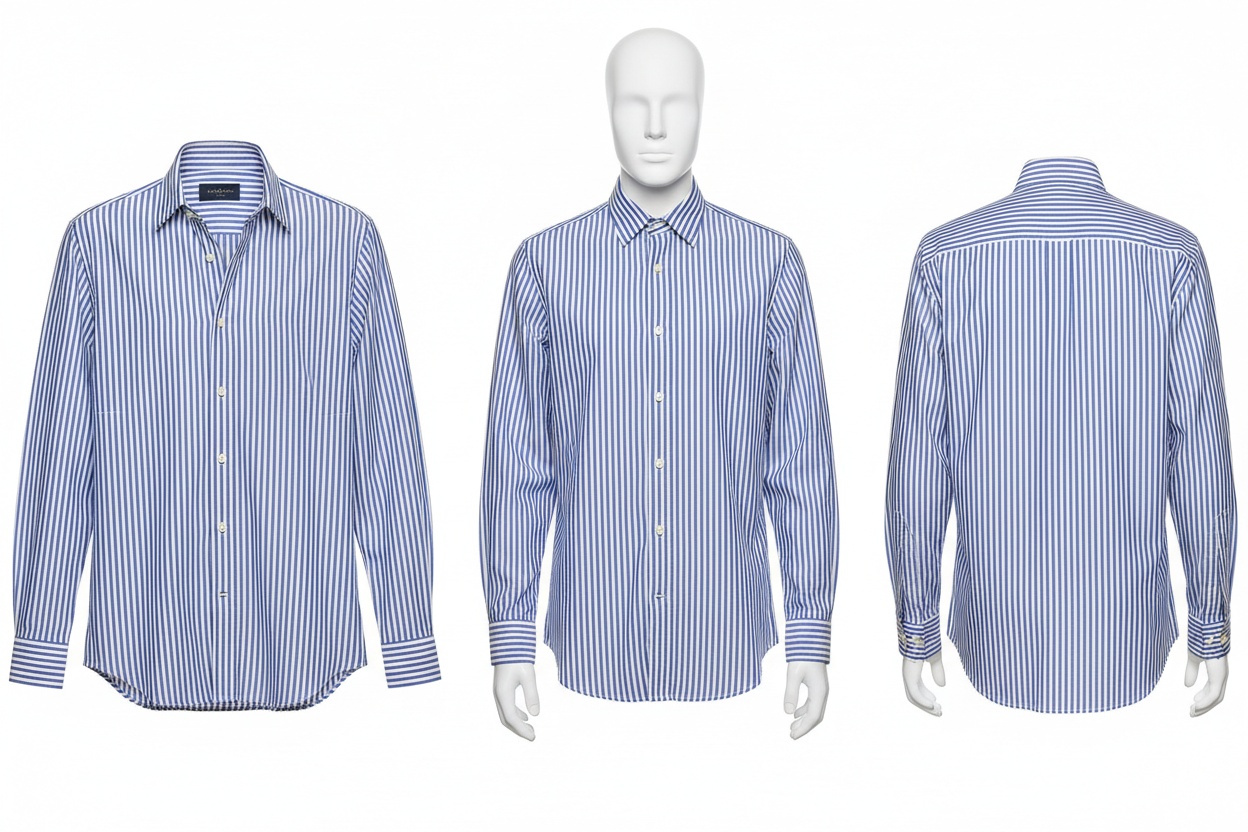
Ghost mannequin photography is a product photography technique where a garment is dressed on a mannequin, photographed from multiple angles, and the mannequin is then digitally removed in post-production so the clothing appears hollow but keeps its 3D shape. It is also called invisible mannequin or hollow man photography. Traditional production runs $5–$15 per image and 15–30 minutes of neck joint retouching per shot; AI on-model alternatives run $0.50–$1 per image in 30–60 seconds.
$5–$15 per image traditional 15–30 min neck joint editing $0.50–$1 per image with AI 30–60 sec AI turnaround
Ghost mannequin photography is the hollow-garment product shot used across fashion ecommerce. It costs $5–$15 per image, needs 15–30 minutes of neck joint retouching, and takes 2–4 weeks end to end. AI tools convert a mannequin or flat-lay shot straight to on-model imagery in 30–60 seconds for $0.50–$1 per image.
Ghost mannequin photography — also known as invisible mannequin photography or hollow man photography — has been the backbone of e-commerce product imagery for over a decade. The technique involves dressing a mannequin in a garment, photographing it from multiple angles, then meticulously removing the mannequin in post-production to create that distinctive "floating garment" effect.
The result is a 3D representation of the clothing that shows shape, fit, and construction details without the distraction of a model or the flatness of a flat-lay shot. You've seen it on every major fashion retailer's website — that clean, hollow silhouette that lets shoppers focus on the garment itself.
The traditional ghost mannequin workflow looks like this:
- Dress the mannequin — Pin, clip, and style the garment on a specialized photography mannequin
- Shoot the exterior — Capture the front, back, and detail shots with controlled studio lighting
- Shoot the interior — Remove the garment, photograph the inner neckline, collar, and label areas separately
- Neck joint editing — Combine the exterior and interior shots in Photoshop, meticulously blending the seams
- Mannequin removal — Erase every trace of the mannequin while preserving garment edges and shadows
- Final retouching — Color correction, wrinkle removal, background cleanup, and shadow creation
What are the problems with ghost mannequin photography?
Ghost mannequin photography served its purpose when it was the only way to create clean product imagery at scale. But in 2026, its limitations are becoming impossible to justify.
1. How much does neck joint editing really cost?
The "neck joint" — that invisible seam where the exterior and interior shots meet — is where most of the cost hides. A skilled photo editor needs 15-30 minutes per image just for this step. At $5-15 per image when you factor in studio time, photographer fees, mannequin costs, and post-production editing, a 500-SKU catalog costs $2,500-7,500 just for ghost mannequin photography. And that's before reshoots for quality issues.
2. Why do ghost mannequin shots look lifeless?
No matter how skilled the photographer, a garment hanging on an invisible mannequin looks exactly like what it is — a garment hanging on an invisible mannequin. There is no movement, no drape, no sense of how the piece actually looks on a human body. Shoppers can see the construction of a blouse, but not how it flows when someone walks. They can inspect the structure of a jacket, but not how it fits across real shoulders.
3. Which garment types does ghost mannequin fail on?
Ghost mannequin photography works reasonably well for structured garments — blazers, button-down shirts, jackets with defined shapes. But it falls apart with:
- Flowing fabrics — Silk dresses and chiffon blouses look stiff and unnatural on a mannequin
- Knitwear — Sweaters and cardigans stretch and distort on rigid mannequin forms
- Accessories — Scarves, bags, and jewelry cannot be meaningfully displayed this way
- Activewear — Performance fabrics need body movement to communicate their purpose
- Swimwear — Requires a body shape to convey fit and coverage
4. Why does ghost mannequin imagery lack lifestyle context?
Modern shoppers don't just buy clothes — they buy how clothes make them feel. Ghost mannequin imagery is transactional and clinical. It tells the shopper nothing about the lifestyle, occasion, or emotional context of the garment. In the catalogs we work on at Fashio AI, on-model imagery has consistently outperformed ghost mannequin shots on conversion rate and time on page — but run the A/B test on your own product pages before you commit a season's budget.
Ghost mannequin photography carries significant hidden costs: neck joint editing alone takes 15-30 minutes per image, studios run $200-500/day, and the final output still cannot communicate fit, drape, or lifestyle context to shoppers.
Why do fashion brands still use ghost mannequins?
Brands stay with ghost mannequin photography for three reasons: it looks cheap next to live-model shoots ($5–$15 per image versus $25–$100+), it delivers uniform lighting and framing across every SKU, and existing teams and workflows are already built around it. All three advantages are eroding as AI on-model generation gets cheaper than either option.
If ghost mannequin photography has so many problems, why do so many fashion brands still rely on it? The answer comes down to three perceived advantages that are rapidly eroding.
Cost vs. live model photography. Traditional on-model photography with real models, hair stylists, makeup artists, and full production crews costs $25-100+ per image. Ghost mannequin photography at $5-15 per image looks like a bargain by comparison. But this is a false dichotomy — AI has introduced a third option that beats both on cost.
Consistency across catalogs. Mannequin shots deliver uniform lighting, positioning, and framing across every SKU. Brand managers love the visual consistency. But AI-generated on-model imagery now delivers even better consistency, with identical model appearance, pose style, and lighting across unlimited images.
"Good enough" mentality. Many brands know ghost mannequin imagery isn't optimal, but consider it acceptable. They've built their workflows around it. Their teams are trained on it. The switching cost feels high — until they realize that the AI alternative is actually simpler, not more complex.
How does the AI alternative to ghost mannequin photography work?
Here's the breakthrough that changes everything: you don't need to choose between ghost mannequin photography and expensive model shoots anymore. Fashio AI offers a direct path from mannequin shots (or any product image) to photorealistic on-model imagery.
The AI workflow replaces the entire ghost mannequin pipeline with two simple steps:
Step 1: Mannequin to Flat Lay
Fashio AI's Mannequin to Flat Lay tool takes your existing mannequin photographs and intelligently extracts the garment, removing the mannequin entirely and generating a clean, professional flat-lay image. No neck joint editing. No Photoshop. No 15-minute-per-image retouching sessions.
The AI understands garment construction — it preserves collars, necklines, sleeve shapes, and fabric textures while eliminating every trace of the mannequin form. The output is a production-ready flat-lay image in seconds.
Step 2: Flat Lay to On-Model
Take that flat-lay image (or any product photo you already have) and feed it into the Flat Lay to Catalog Creator. This tool generates photorealistic on-model imagery with AI models that match your brand's target demographic — any ethnicity, body type, age range, and styling preference.
The garment is rendered with accurate drape, natural body interaction, and realistic fabric behavior. A silk blouse flows. A structured blazer holds its shape across the shoulders. A knit sweater shows natural ease. The AI understands how different materials behave on real human bodies.
The result? On-model imagery that outperforms ghost mannequin photography in every metric — higher conversion rates, lower return rates, better engagement, and a fraction of the cost.
Replace Your Ghost Mannequin Workflow Today
Upload your existing mannequin shots and get photorealistic on-model imagery in under 60 seconds. No studio, no editing, no compromises.
Start creating →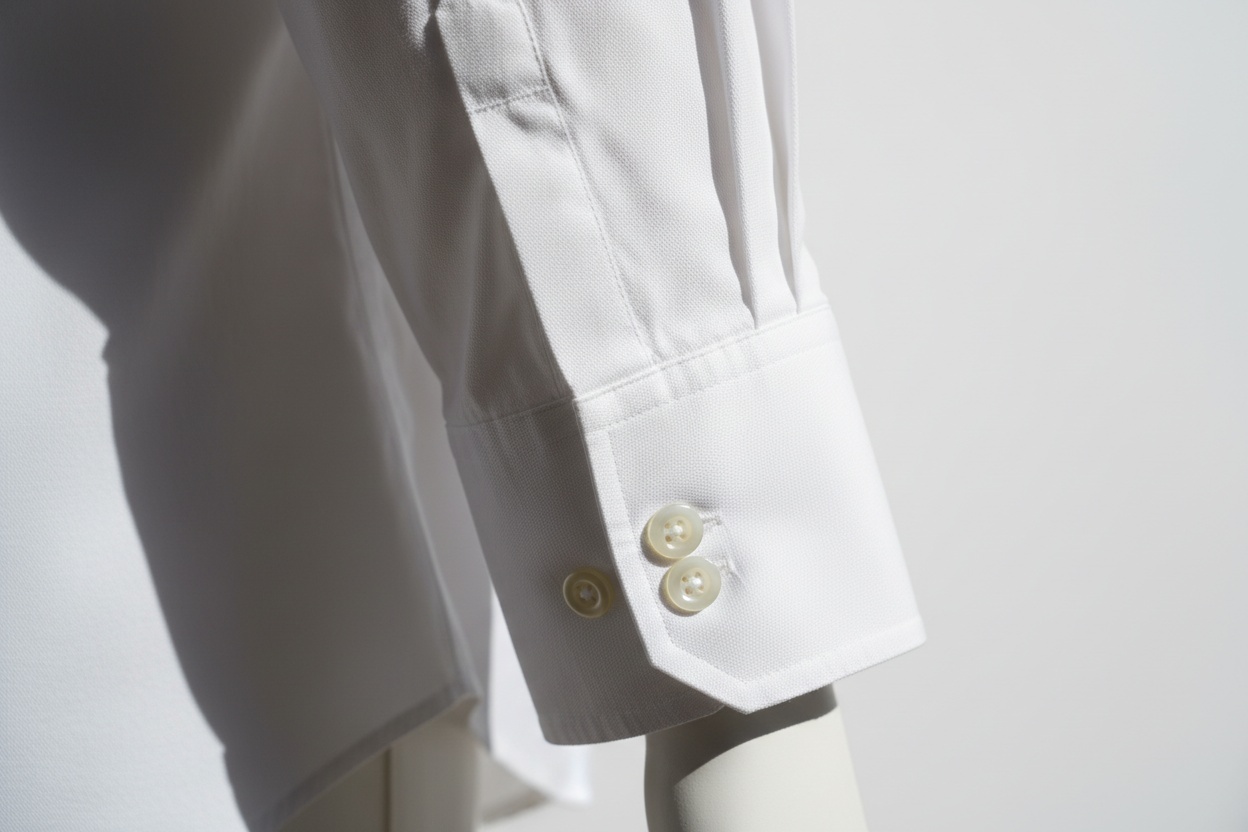
How do you replace a ghost mannequin workflow with AI, step by step?
Here's exactly how to transition from ghost mannequin photography to AI-powered on-model imagery using Fashio AI.
Step 1: Gather Your Existing Images
You likely already have hundreds or thousands of mannequin shots in your asset library. Good news — you don't need to reshoot anything. Fashio AI works with your existing mannequin photos, flat-lay images, or even simple product shots on hangers.
Step 2: Remove the Mannequin
Upload your mannequin images to the Mannequin to Flat Lay tool. The AI processes each image in approximately 30 seconds, extracting the garment cleanly from the mannequin form. For larger catalogs, use batch mode, which takes up to 5 garments per run.
Step 3: Remove Backgrounds (Optional)
If your images need background cleanup, run them through the Background Remover for a perfectly isolated garment on a transparent or solid-color background. This step is optional but recommended for the cleanest on-model results.
Step 4: Generate On-Model Imagery
Upload your clean garment images to the Flat Lay to Catalog Creator or the AI Fashion Model Generator. Configure your model preferences:
- Model demographics — Age, ethnicity, body type matching your target audience
- Pose style — Standing, walking, editorial, commercial, lifestyle
- Background — Studio white, contextual lifestyle, custom environments
- Lighting — Studio, natural, editorial, soft, dramatic
Step 5: Review and Download
Each generation takes 30-60 seconds. Review the outputs, request variations if needed, and download your production-ready on-model images. No post-production required — the images come out retouched, color-corrected, and ready for your product pages.
Step 6: Scale Across Your Catalog
Once you've dialed in your model preferences, apply the same settings across your entire catalog for perfect visual consistency. A 500-SKU catalog that would take weeks with ghost mannequin photography can be completed in a single afternoon with AI.
How much cheaper is AI on-model imagery than ghost mannequin photography?
The economics of ghost mannequin photography versus AI are not even close. Here's a realistic breakdown for a mid-size fashion brand processing 500 product images per season.
| Cost Factor | Ghost Mannequin (Traditional) | AI On-Model (Fashio AI) |
|---|---|---|
| Photography/Generation | $3-8 per image | $0.50-1 per image |
| Post-production (neck joint) | $2-5 per image | $0 (included) |
| Retouching | $1-3 per image | $0 (included) |
| Studio rental | $200-500/day | $0 |
| Mannequin costs | $100-500 per form | $0 |
| Turnaround time (500 images) | 2-4 weeks | 1-2 days |
| Total cost (500 images) | $2,500-7,500 | $250-500 |
| Cost basis | Day rate plus retouching | ~$0.75 per generated image |
And that's comparing ghost mannequin to AI on-model. If you compare AI on-model to traditional on-model photography (with real models and production crews), the gap is wider still, because traditional on-model work adds model fees and crew on top of studio time while AI stays priced per image at $29.99/month for 160 credits — about $0.75 per generated image at 4 credits per generation.
But cost is only half the story. On-model imagery gives the shopper fit and drape information that a hollow-garment shot cannot, and it tends to move the metrics that matter in the same direction:
AI on-model imagery gives shoppers the fit and drape information a hollow-garment shot cannot, and it is priced per image rather than per shoot day — $29.99/month for 160 credits — about $0.75 per generated image at 4 credits per generation.
Is AI on-model image quality as good as ghost mannequin photography?
The quality argument for ghost mannequin photography used to be straightforward: it was the most cost-effective way to show garment shape and detail. But AI-generated on-model imagery has now surpassed ghost mannequin quality in nearly every dimension.
- Static, rigid garment presentation
- No sense of fabric drape or movement
- Cannot communicate real fit
- Visible neck joint artifacts possible
- Limited to structured garments
- No lifestyle or emotional context
- Natural fabric behavior on a body
- Realistic drape, flow, and movement
- Accurate fit communication
- Clean, artifact-free output
- Works with all garment types
- Lifestyle and emotional storytelling
Does AI preserve garment detail?
Ghost mannequin photography excels at showing construction details — stitching, labels, interior lining. AI on-model imagery preserves these same details while adding realistic fabric behavior. You see the stitching and how the garment drapes naturally on a body. It's strictly more information for the shopper.
How accurate are the colors?
Both approaches deliver accurate color reproduction when properly executed. Ghost mannequin photography depends on controlled studio lighting. Fashio AI's fashion-trained models are calibrated for color fidelity across fabric types, maintaining consistency from product shot to on-model output.
How well is fabric represented?
This is where AI pulls decisively ahead. Ghost mannequin imagery shows fabric in a static, tensioned state — stretched over a rigid form. AI on-model imagery shows fabric in its natural state: silk flows, cotton drapes, denim holds its structure, chiffon catches light. Shoppers get a dramatically more accurate sense of the material.
Which format communicates fit better?
Ghost mannequin photography cannot communicate fit. It shows garment shape, not garment fit. There is a meaningful difference between seeing that a blazer has a tapered waist and seeing how that tapered waist actually looks on a human torso. AI on-model imagery bridges this gap entirely, and it's the single biggest driver of reduced return rates.
When does ghost mannequin photography still make sense?
For the sake of completeness, there are a few specific scenarios where ghost mannequin photography may still be the right choice in 2026:
- Technical garment documentation — When you need to show interior construction, lining details, or specific technical features for B2B buyers or manufacturing partners, ghost mannequin shots remain useful as supplementary images.
- Brand guidelines requiring it — Some marketplace platforms (particularly certain Amazon categories) still specify ghost mannequin or flat-lay as the primary image format. However, most major platforms now accept and prefer on-model imagery.
- Garment archives — Museums, fashion archives, and historical documentation projects may prefer the neutral, standardized presentation of ghost mannequin photography.
- Very small volumes — If you're photographing fewer than 10 items one time, the setup overhead of any system may outweigh the benefits. Though even here, a single month of Fashio AI likely makes it the faster option.
For 90%+ of fashion e-commerce product photography, AI on-model imagery is the superior choice on every axis: cost, quality, speed, and conversion performance. Ghost mannequin photography remains relevant only for technical documentation, specific marketplace requirements, and archival purposes.
Make the Switch Today
Ghost mannequin photography had a good run. For years, it was the best compromise between cost and quality in fashion product imagery. But compromises become obsolete when better options emerge — and AI-powered on-model photography is not just a better option, it's a categorically different approach that eliminates the tradeoffs entirely.
With Fashio AI, you get on-model quality at below-ghost-mannequin prices, with turnaround times measured in seconds instead of days. Your existing mannequin shots become the input for photorealistic model imagery that drives higher conversions and lower returns.
The question isn't whether to make the switch. It's how much money you're leaving on the table every day you don't.
Stop Paying for Ghost Mannequin Photography
Convert your existing mannequin shots into photorealistic on-model imagery. About $0.75 per generated image, seconds of turnaround, zero post-production.
Start creating →Frequently Asked Questions
What is ghost mannequin photography?
Ghost mannequin photography (also called invisible mannequin or hollow man photography) is a product photography technique where garments are shot on a mannequin, then the mannequin is digitally removed in post-production to create a 3D, hollow effect that shows the garment's shape and fit without a visible model or mannequin. It requires multiple shots and extensive neck joint editing to merge interior and exterior images seamlessly.
How much does ghost mannequin photography cost?
Traditional ghost mannequin photography costs $5-15 per image when you factor in studio time, mannequin costs, photography fees, and the extensive post-production neck joint editing required. For a 500-image catalog, that's $2,500-7,500 per season. AI alternatives like Fashio AI can achieve superior on-model results for $0.50-1 per image.
Can AI replace ghost mannequin photography?
Yes. AI tools like Fashio AI can now convert mannequin shots or flat-lay images directly into realistic on-model photography, completely eliminating the need for ghost mannequin techniques. The Mannequin to Flat Lay tool extracts garments from mannequin shots, and the Flat Lay to Catalog Creator generates photorealistic on-model imagery — all in under a minute per image.
What is the best ghost mannequin alternative app?
Fashio AI is the leading ghost mannequin alternative in 2026. It offers dedicated Mannequin to Flat Lay and Flat Lay to Catalog tools that convert mannequin photography directly into on-model imagery. With 16 purpose-built fashion AI tools, it handles the entire workflow from garment extraction to final on-model shots.
What is neck joint photography and why is it problematic?
Neck joint photography is the post-production process of combining multiple images to create the ghost mannequin effect — typically merging a front shot with an inner label/neck shot. It is time-consuming (15-30 minutes per image for skilled editors), prone to visible seams and artifacts, and represents a significant hidden cost of invisible mannequin photography.
Does ghost mannequin photography work for all garment types?
No. Ghost mannequin photography works best for structured garments like blazers, jackets, and button-down shirts. It struggles with flowing fabrics, knitwear, accessories, and items that need body movement to look appealing. AI alternatives like Fashio AI's AI Fashion Model Generator handle all garment types equally well since they generate realistic on-model imagery.
How long does it take to process ghost mannequin images with AI?
With Fashio AI, converting a mannequin photo to on-model imagery takes approximately 30-60 seconds per image. Compare that to the traditional ghost mannequin workflow which requires 15-30 minutes of post-production editing per image for neck joint work alone, plus hours of studio shooting time. Batch mode takes up to 5 garments per run.
Related Ghost Mannequin Guides
- 3D Ghost Mannequin Photography: How It Works (2026 Guide) — Workflow, software, and how AI changed the economics of 3D ghost mannequin work.
- Ghost Mannequin vs Invisible Mannequin: What's the Difference? — Terminology explainer for the same finished effect.
- Ghost Mannequin in Photoshop: Step-by-Step Tutorial vs AI Workflow — Manual Photoshop walkthrough compared with the modern AI workflow.
- Flat Lay Photography to On-Model: Complete AI Workflow — Convert flat-lay product shots into on-model catalog imagery.