Are ghost mannequin and invisible mannequin the same thing?
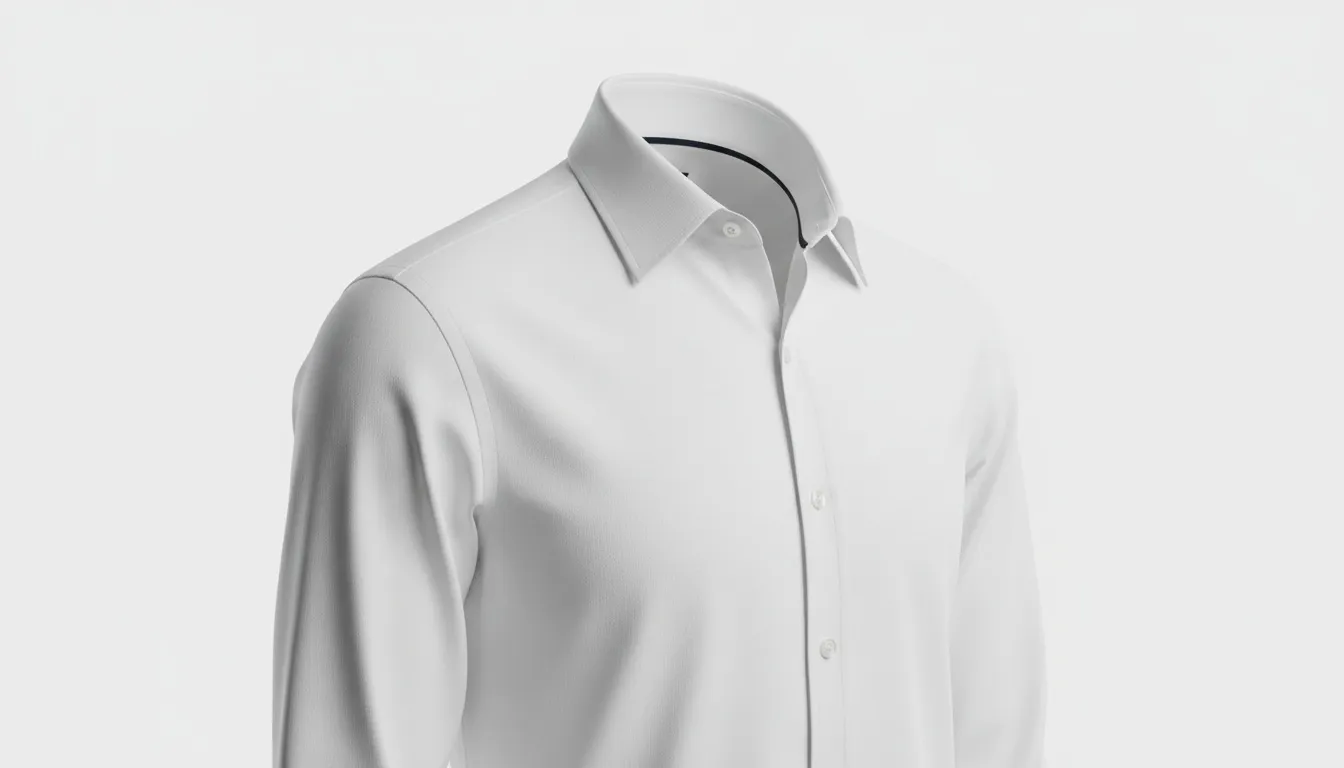
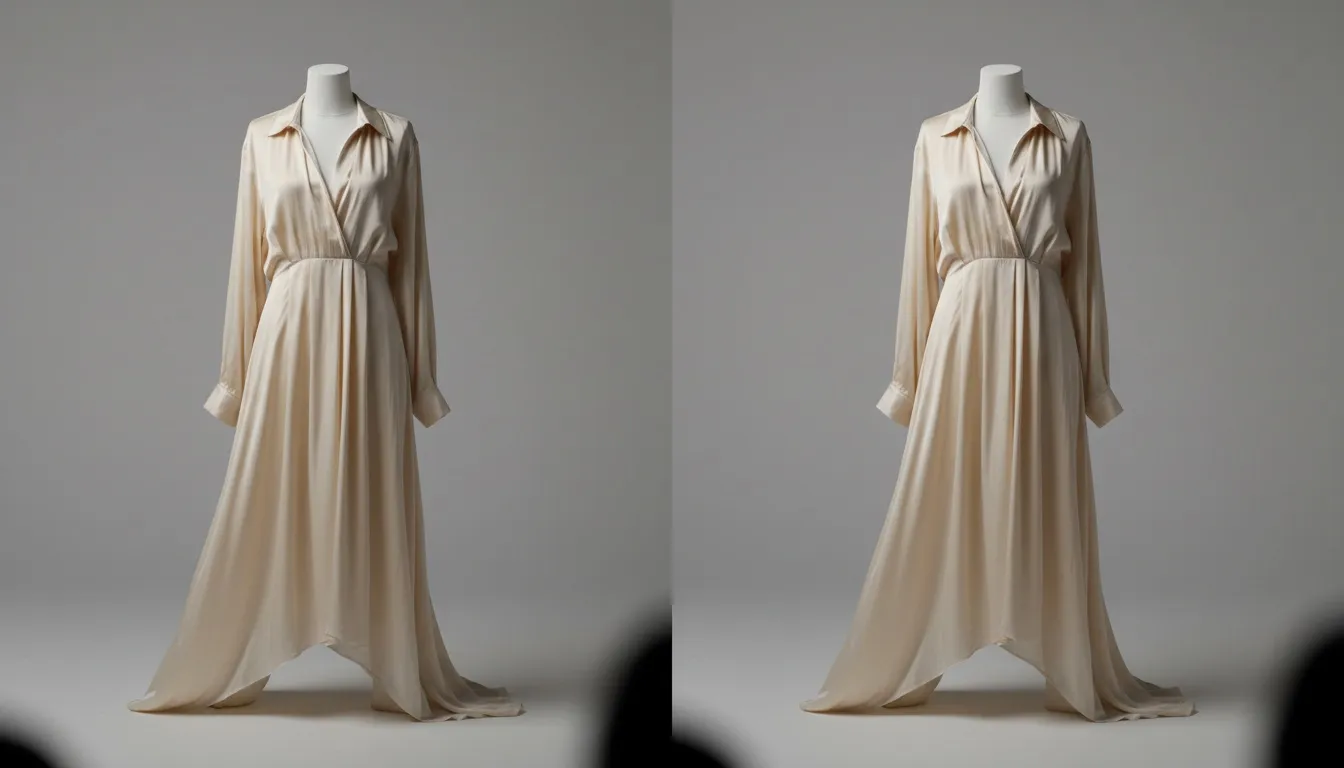
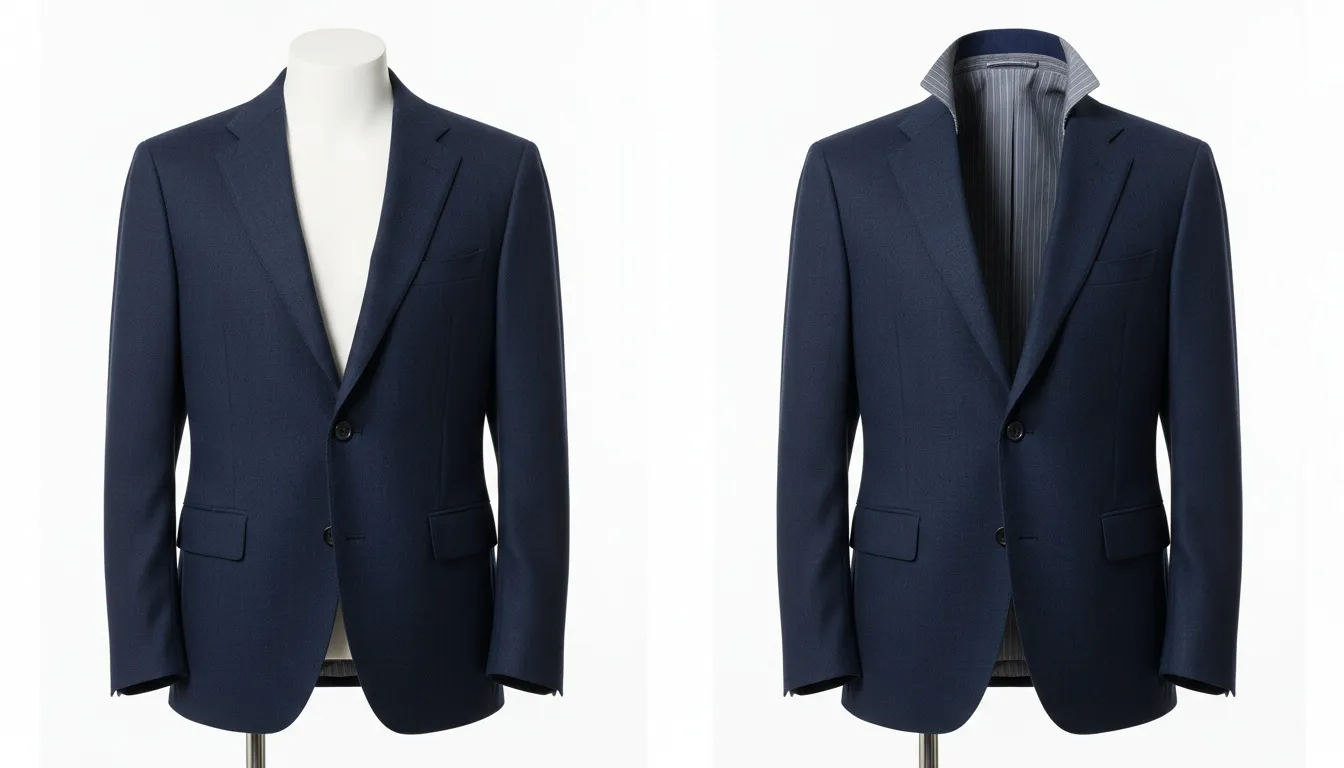
Yes — they are two names for the same technique. In both cases a garment is dressed on a mannequin, photographed, and the mannequin is digitally removed in post-production so the garment appears hollow while still holding its three-dimensional shape. "Ghost mannequin" is the dominant term in North American fashion ecommerce; "invisible mannequin" is more common in the UK and South Asia. The finished image is identical, and no professional photographer or retoucher will produce a different deliverable depending on which word you use.
Same effect, 2 names 5-step manual workflow 2 source photos manually, 1 with AI 30–60 sec AI output
Ghost mannequin and invisible mannequin describe the same hollow-garment product image. Manually it takes two source shots (front plus inside neckline) composited across five Photoshop steps; AI tools produce the same result from a single front-facing photo in 30–60 seconds. Other names for it: hollow man, neck joint, apparel-on-air.
The terminology overlap is a holdover from the technique's history. Different studios in different markets developed the workflow independently in the 1990s and 2000s, and each named it slightly differently. By the time the technique became standardized in the early 2010s, multiple terms had taken root.
This guide unpacks the terminology, the underlying photography technique, the situations where the language actually matters, and how 2026 AI tools handle both terms identically.
Where did each term come from?
Ghost Mannequin
The term ghost mannequin emerged from US-based ecommerce photographers in the early 2000s. The "ghost" referred to the visual impression — a garment that holds its shape as if a transparent mannequin were still inside. The phrase caught on quickly because it was descriptive and search-friendly, and it became the dominant term in North American fashion ecommerce by the mid-2010s.
Invisible Mannequin
The term invisible mannequin took root primarily in the UK and parts of Asia, particularly India where outsourced post-production studios specializing in this work adopted the phrase as their service category. The reasoning was the same — describing the visual outcome of a mannequin made invisible in post — but the language convention differed.
Other Names You Might Encounter
- Hollow man photography: An older term that emphasizes the empty-shape effect. Less common today.
- Neck joint photography: Technically refers to one specific post-production step, but sometimes used as a stand-in for the entire workflow, especially in retouching service contexts.
- 3D product photography: Sometimes used to describe ghost mannequin work, though it can also refer to actual interactive 3D viewers — context matters.
- Apparel-on-air: A regional term, particularly in Japanese fashion ecommerce.
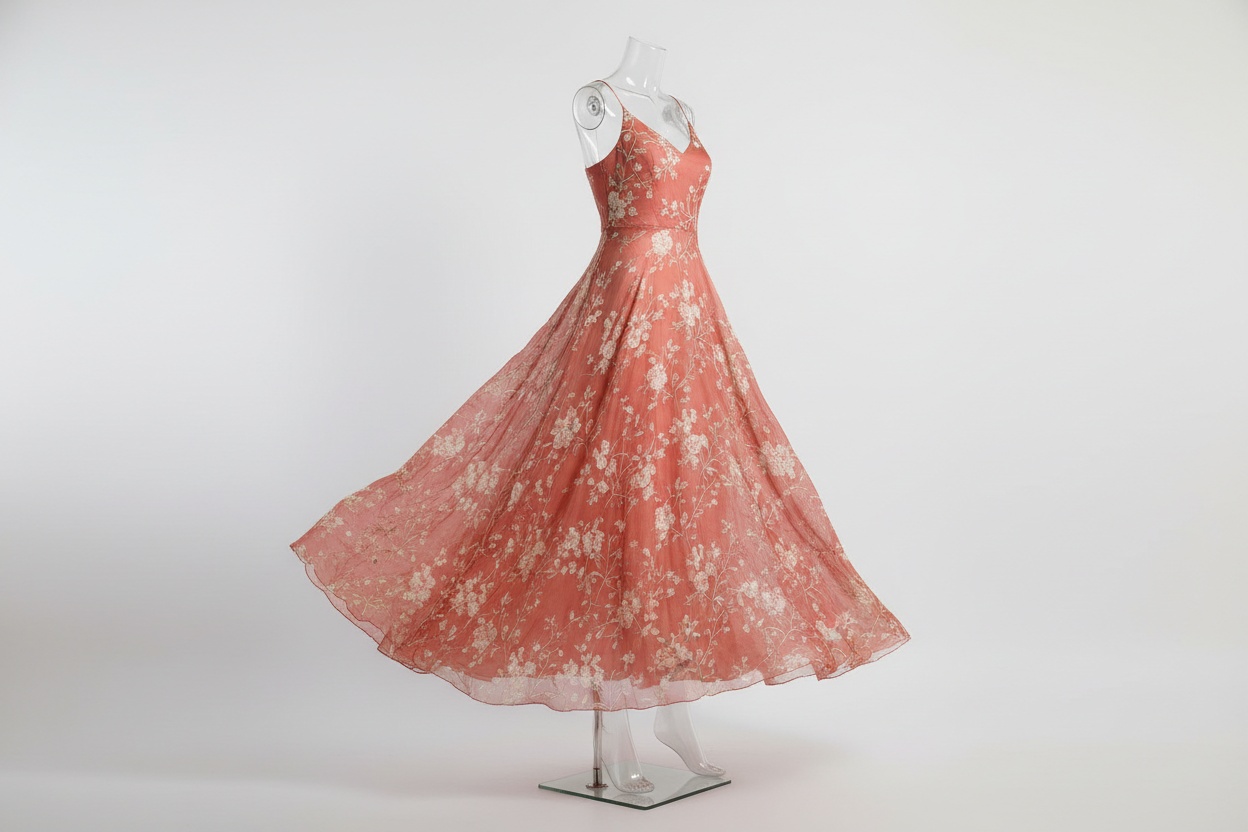
How is a ghost mannequin photo actually made?
A ghost mannequin image is made in five steps: dress the garment on a segmented photography mannequin, shoot the primary front angle, shoot the inside neckline separately, composite the two shots in Photoshop so the mannequin is masked out and the inside collar shows through, then clean up pinning marks and seams. The compositing step is what retouchers call neck joint work, and it is the slowest part.
Regardless of what you call it, the technique itself is well-defined. Here is the standard workflow that produces a ghost mannequin or invisible mannequin image:
Step 1: Dress the Mannequin
The garment is dressed on a specialized photography mannequin — typically a torso form designed for product photography rather than retail display. The mannequin is segmented or removable so that the inside collar and neckline can be photographed separately.
Step 2: Capture the Front (or Primary Angle)
The photographer shoots the dressed mannequin from the primary angle (usually front-facing) under controlled lighting. Pinning, clipping, and steaming are used to ensure the garment hangs naturally and the silhouette reads cleanly.
Step 3: Capture the Inside Neckline
The mannequin is partially undressed or its segments removed to expose the inside collar. A second shot captures the inside neckline — the part that will appear visible through the "ghost" effect.
Step 4: Composite in Post-Production
In Photoshop or a similar editor, the retoucher composites the two shots: the mannequin is masked out of the primary shot, and the inside-collar shot is layered into the empty interior. Color, exposure, and seams are matched to create a seamless final image. This compositing step is what most retouchers call neck joint work.
Step 5: Final Cleanup
Final retouching addresses any remaining mannequin artifacts, smooths out fabric pinning marks, and balances the overall image. The output is a clean, hollow product image that looks like a garment floating in space.
Whether you call this workflow "ghost mannequin" or "invisible mannequin," the steps are identical. There is no technique difference — only language difference.
Skip Steps 1-5 Entirely
AI tools generate the ghost mannequin effect from a single garment photo — no pinning, no neck joint editing, no compositing.
See Fashio AI's Ghost Mannequin Tool →When does the terminology actually matter?
For most brands and photographers the terms are fully interchangeable. The language convention only matters in three situations: briefing international production studios, choosing which term to optimize for in regional SEO, and reading retouching quotes where "neck joint" and "ghost mannequin" are priced as separate line items for identical work.
Which term should you use when briefing a photographer?
If you are working with an outsourced retouching studio in South Asia, "invisible mannequin" or "neck joint" will get faster recognition than "ghost mannequin." If you are working with North American studios, "ghost mannequin" is more universally understood. When briefing across multiple markets, include a reference image to eliminate any terminology ambiguity.
Which term has more search volume?
The two terms have different search volumes in different markets. If you are creating service pages or marketing materials for a specific region, optimize for the term that has higher local search volume. In the US, ghost mannequin search volume substantially exceeds invisible mannequin. In the UK and India, the gap narrows or reverses.
Why do studios quote different prices for the same work?
Some retouching studios advertise "neck joint" services at one rate and "ghost mannequin" services at a higher rate, even though the underlying work is identical. Understand that any price difference between these line items is purely terminology — not technique. If a vendor charges more for "ghost mannequin" than "neck joint" services, ask them to clarify what additional work justifies the premium.
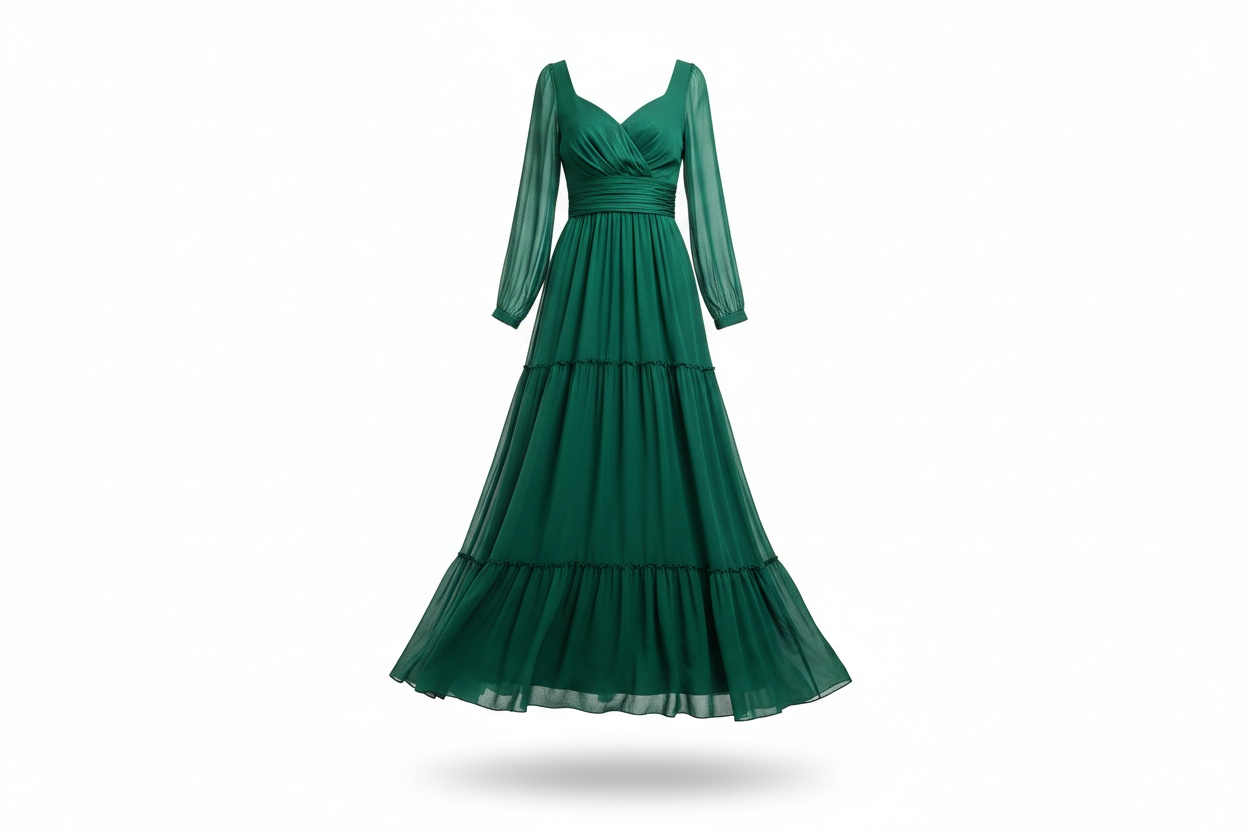
How does ghost mannequin compare to flat-lay, on-mannequin, and on-model photography?
The terminology question becomes clearer when ghost mannequin (and its synonyms) is contrasted with the other major product photography formats.
| Format | What You See | Mannequin Visible? | Best For |
|---|---|---|---|
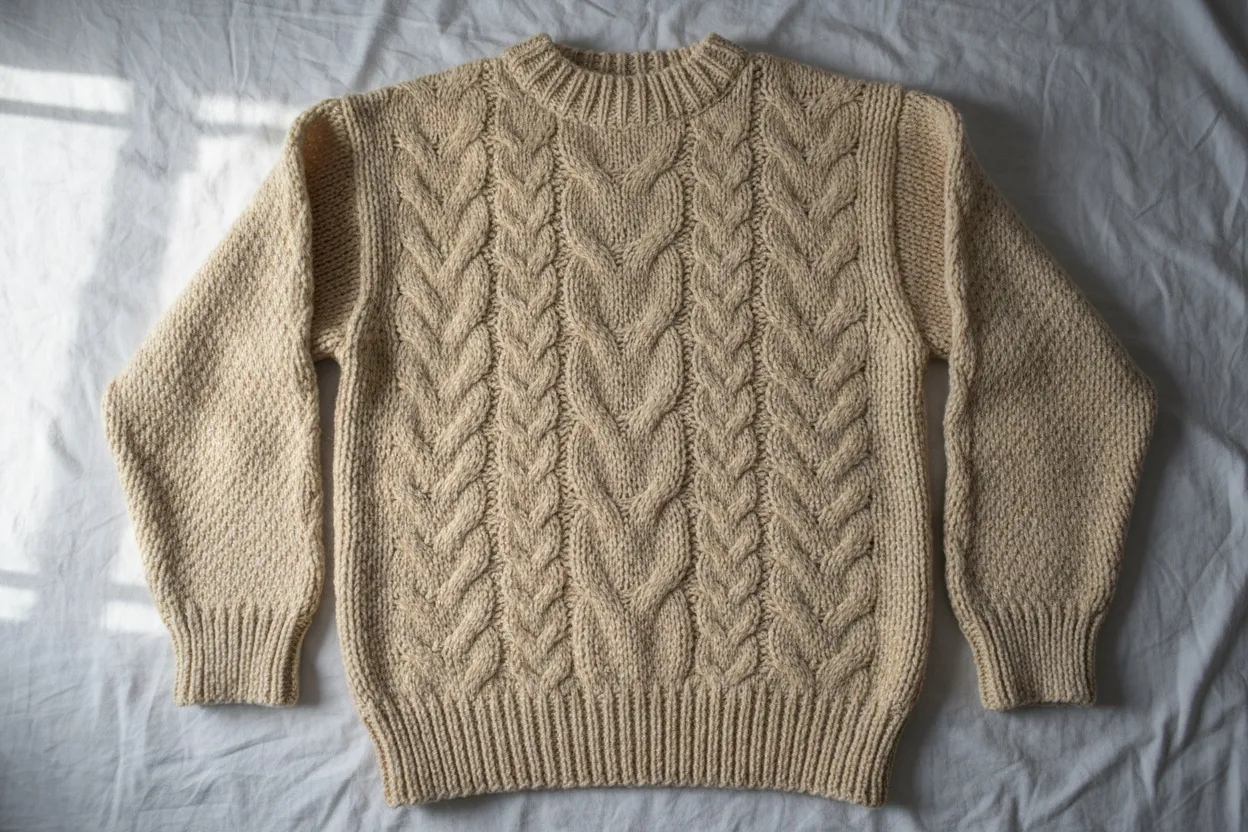
| Flat-lay | Garment laid flat, top-down | No — no mannequin used | Quick catalog shots, marketplaces requiring white-background |
| On-mannequin | Garment dressed on visible mannequin | Yes | Mid-tier ecommerce where the mannequin reads as neutral |
| Ghost mannequin / Invisible mannequin | Garment shape with hollow interior | No — removed in post | Premium ecommerce focused on garment construction |
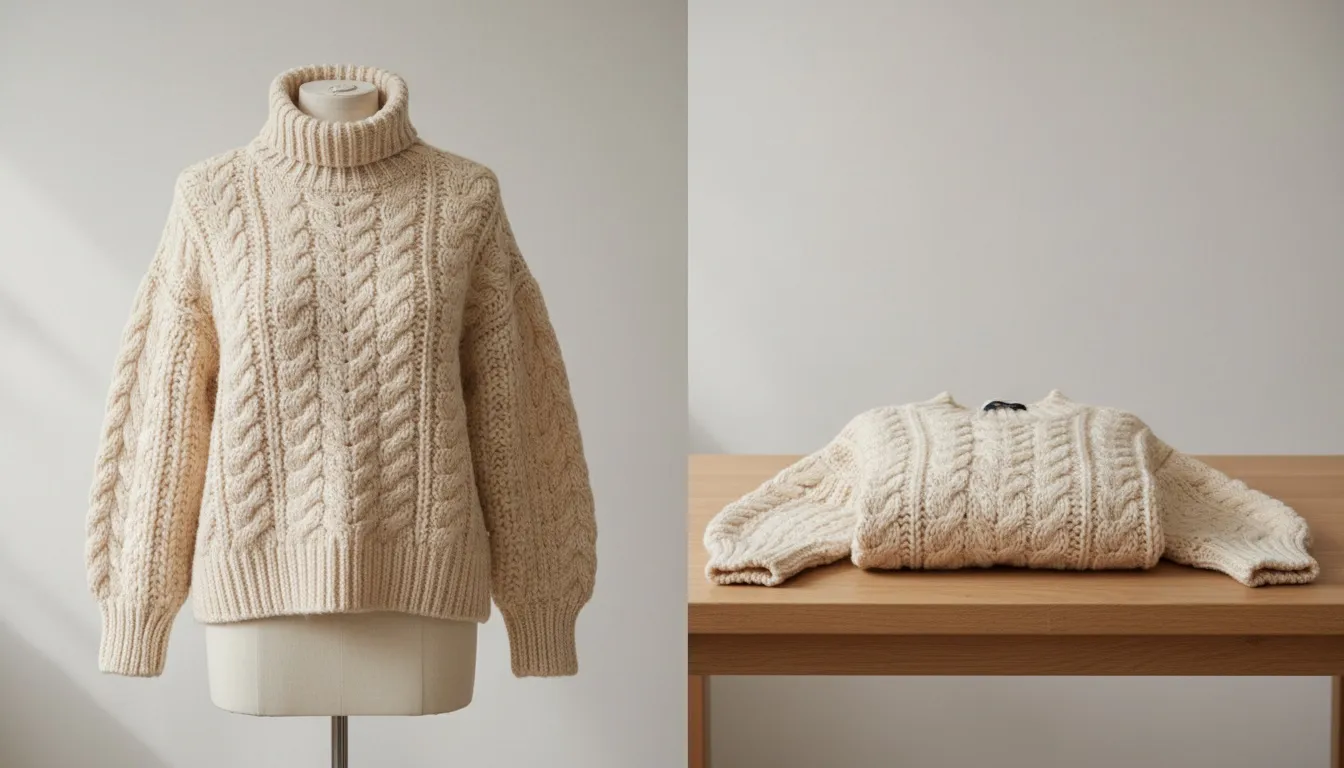
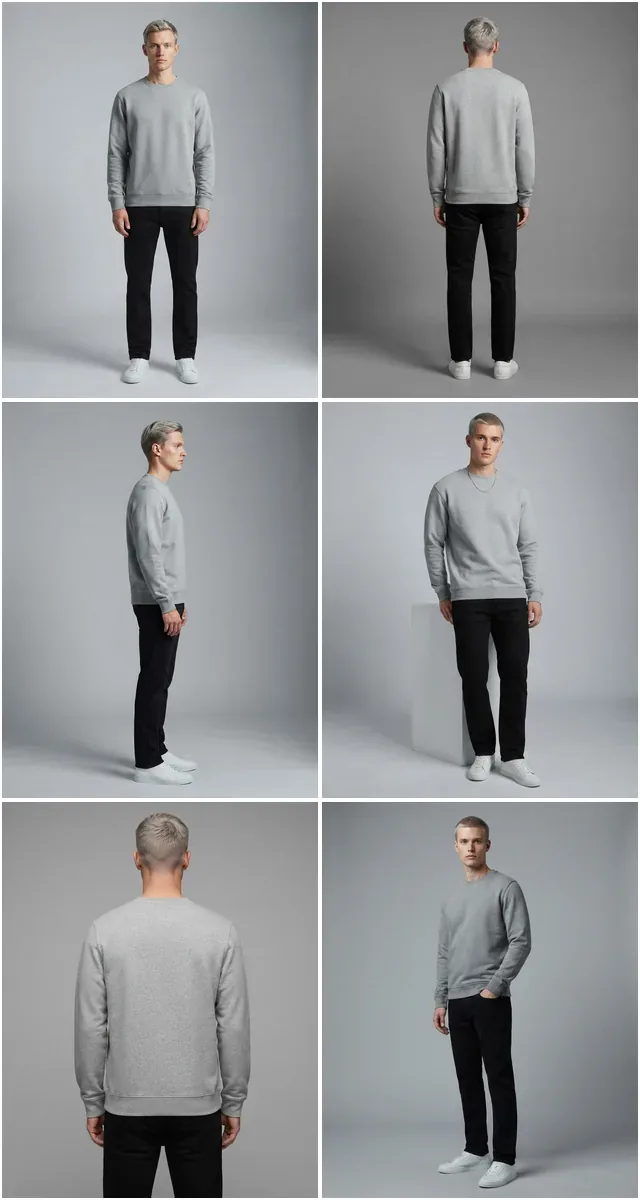
| On-model | Garment worn by a real or AI-generated person | No — model instead | Conversion-focused ecommerce, social, lookbooks |
For most categories, on-model imagery converts better than any of the empty-garment formats. Ghost mannequin work persists where construction detail is the dominant purchase driver — tailoring, structured outerwear, premium leather goods — or where brand convention favors the clean, abstract look.
Can AI tools produce both ghost mannequin and invisible mannequin imagery?
Modern AI ghost mannequin tools — including Fashio AI's mannequin-to-flat-lay tool — produce the same finished effect that both "ghost mannequin" and "invisible mannequin" describe. The AI:
- Removes the mannequin from a single source photo
- Reconstructs the inside neckline without requiring a second shot
- Cleans up pinning marks, fabric distortion, and lighting inconsistencies
- Outputs a clean ghost-mannequin-style image in 30–60 seconds
You can call the input shot a "mannequin shot" and the output a "ghost mannequin image" or an "invisible mannequin image" — the AI does not care, and the deliverable is identical either way.
Should you still be doing ghost mannequin photography in 2026?
The terminology debate distracts from a more important question: in 2026, is ghost mannequin photography (under any name) still the right format for your products?
For most ecommerce categories, the honest answer is no. On-model imagery — especially AI-generated on-model imagery — outperforms empty-garment ghost mannequin views across virtually every category we have tested. The cost of producing on-model imagery with AI tools has dropped to a fraction of what ghost mannequin retouching used to cost. And shoppers, especially mobile-first shoppers, prefer to see how a garment actually fits on a body.
If you are evaluating ghost mannequin (or invisible mannequin) production for a new collection, consider whether AI on-model imagery would deliver better business outcomes for the same — or lower — production cost. For a deeper look at this trade-off, see our companion guide on why ghost mannequin photography is outdated in 2026 and our broader 3D ghost mannequin photography guide.
Frequently Asked Questions
Are ghost mannequin and invisible mannequin the same thing?
In current usage, ghost mannequin and invisible mannequin refer to the same finished effect — a garment photographed with the mannequin removed in post-production, leaving a hollow, dimensional view of the product. The terms are used interchangeably across most of the industry, with regional preferences.
Why does the technique have so many different names?
The technique has been called ghost mannequin, invisible mannequin, hollow man, neck-joint photography, 3D photography, and even apparel-on-air. The variation reflects different studios developing the technique independently in the 1990s and 2000s, and different markets adopting different terminology. Today the industry has largely converged on 'ghost mannequin' for the finished effect and 'neck joint' for the post-production step.
What is the difference between ghost mannequin and flat-lay photography?
Flat-lay photography shoots the garment laid flat on a surface, producing a 2D top-down view. Ghost mannequin shoots the garment dressed on a mannequin, producing a dimensional view that shows shape and fit. Flat-lay is faster and cheaper to produce; ghost mannequin shows the garment as it actually fits.
What is neck joint photography?
Neck joint photography is the post-production step in ghost mannequin work where the photographer combines a primary shot with a secondary inside-collar shot to reconstruct the interior of the garment. The combined image shows the garment shape from outside while exposing the inside neckline and label — the signature visual of ghost mannequin imagery.
Which term should I use when briefing a photographer?
Either ghost mannequin or invisible mannequin will be understood by any professional fashion photographer or retoucher. In North America, ghost mannequin is more common; in the UK and parts of Asia, invisible mannequin is more common. When in doubt, include a reference image of the desired outcome — that eliminates terminology confusion entirely.
Can AI tools produce both ghost mannequin and invisible mannequin imagery?
Yes. AI tools like Fashio AI produce the same finished effect regardless of which term you use. The AI removes the mannequin, reconstructs the inside neckline, and outputs a clean dimensional product image — the visual result that both terms refer to.
Final Thoughts
Ghost mannequin and invisible mannequin are two names for the same technique. Use whichever your team prefers, match the convention of the studios and platforms you work with, and stop worrying about terminology. The more important decision is whether the empty-garment aesthetic — by any name — is still the right format for your brand in 2026, or whether AI-generated on-model imagery would serve your shoppers better.
For ecommerce brands rebuilding their visual production stack, see our complete guide to AI product photography for ecommerce for the full framework.