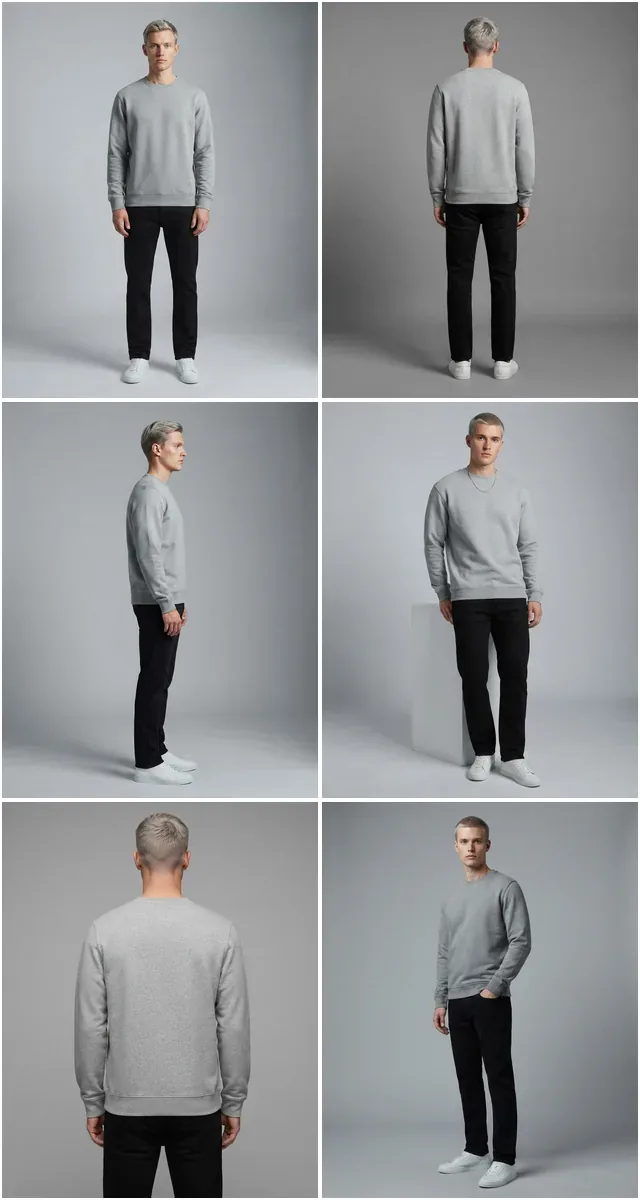
The fashion industry is undergoing its most profound transformation since the invention of the sewing machine. Artificial intelligence is no longer a futuristic concept for apparel brands — it is the operating system of modern fashion. From AI-generated model photography that eliminates the need for traditional photoshoots to virtual try-on experiences that let shoppers see garments on their own body before clicking "buy," AI clothes technology is rewriting every rule in the fashion playbook.
The AI-generated fashion photography market is projected to reach $6.11B by 2029 at a 32.1% CAGR, according to The Business Research Company (2025). On the production side, a generated image on Fashio AI's Plus plan costs about $0.75 ($29.99 for 160 credits, 4 credits per generation), and brands using virtual try-on report fewer size-related returns.
In this comprehensive guide, we break down exactly how AI is transforming fashion in 2026 — the technologies, the business cases, the brands leading the charge, and how your brand can leverage AI tools today to compete in the new landscape.
1. The AI Fashion Revolution: From Niche Tech to Industry Standard
Three years ago, AI in fashion was a novelty. Brands experimented cautiously with chatbots for customer service or basic recommendation engines. Today, artificial intelligence touches every link in the fashion value chain — design, production, photography, marketing, sales, and sustainability.
The shift happened faster than anyone predicted. Generative AI models became capable of producing photorealistic imagery in 2023. By 2024, fashion-specific AI tools emerged that understood fabric texture, garment drape, and body proportions with unprecedented accuracy. In 2025, adoption hit an inflection point as major retailers like ASOS, Zalando, and H&M integrated AI across their visual production pipelines. Now in 2026, AI-powered fashion production is the standard, not the exception.
What is driving this acceleration? Three converging forces:
- Cost pressure. Rising production costs and shrinking margins force brands to find efficiency. AI delivers it at scale.
- Consumer expectations. Shoppers demand personalized, immersive experiences. Static product photos on white backgrounds no longer convert.
- Speed-to-market. Fast fashion cycles require visual assets in days, not weeks. AI compresses what took a studio team a month into hours.
The question for fashion businesses in 2026 is not whether to adopt AI — it is how quickly they can integrate it into their workflows. Brands that hesitated are now scrambling to catch up.
2. AI-Generated Fashion Models: The End of Traditional Photoshoots
The most visible impact of AI clothes technology is in model photography. Traditional fashion photoshoots are expensive, slow, and logistically complex. A single shoot requires booking a studio, hiring a photographer, casting models, coordinating hair and makeup, managing wardrobe, and spending days in post-production retouching.
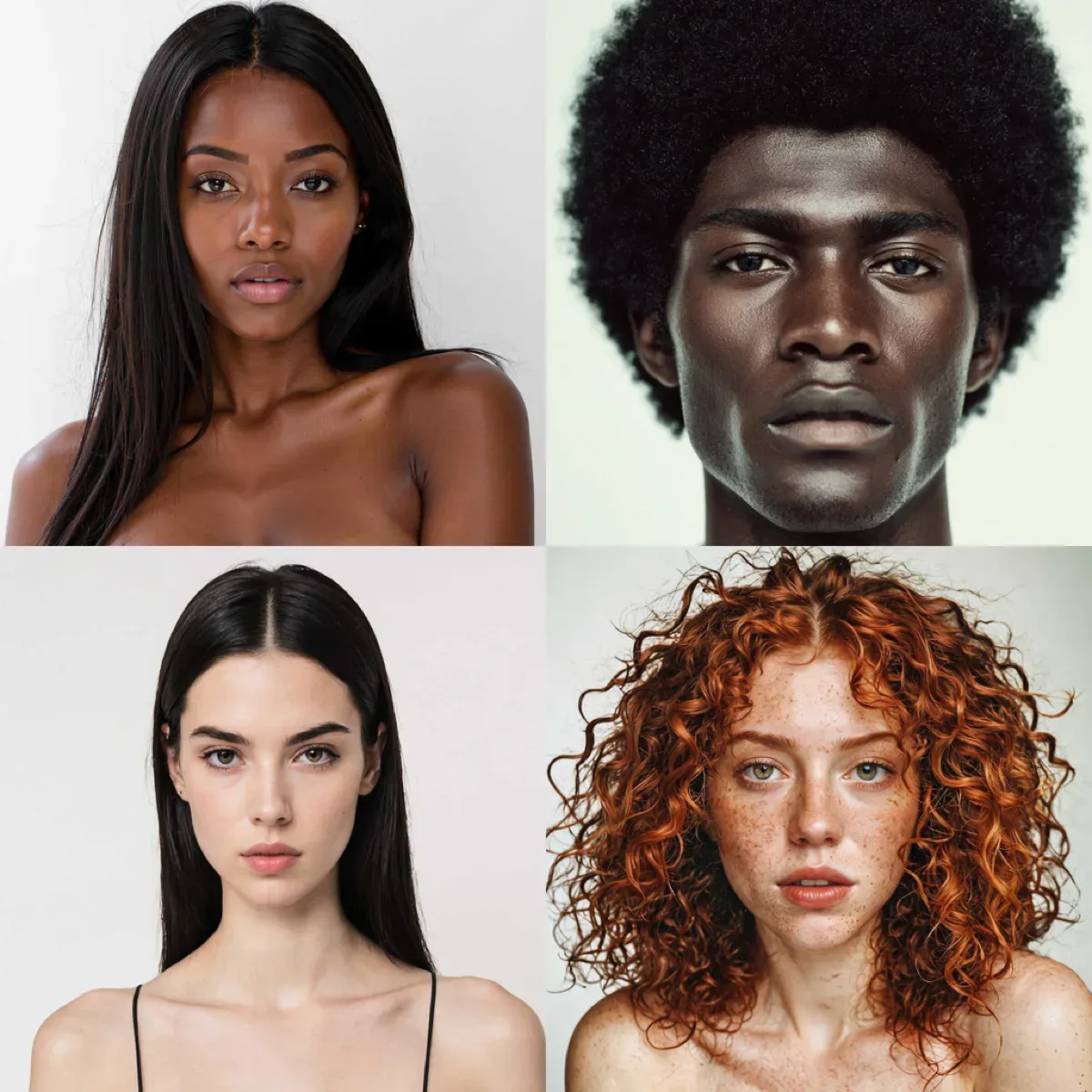
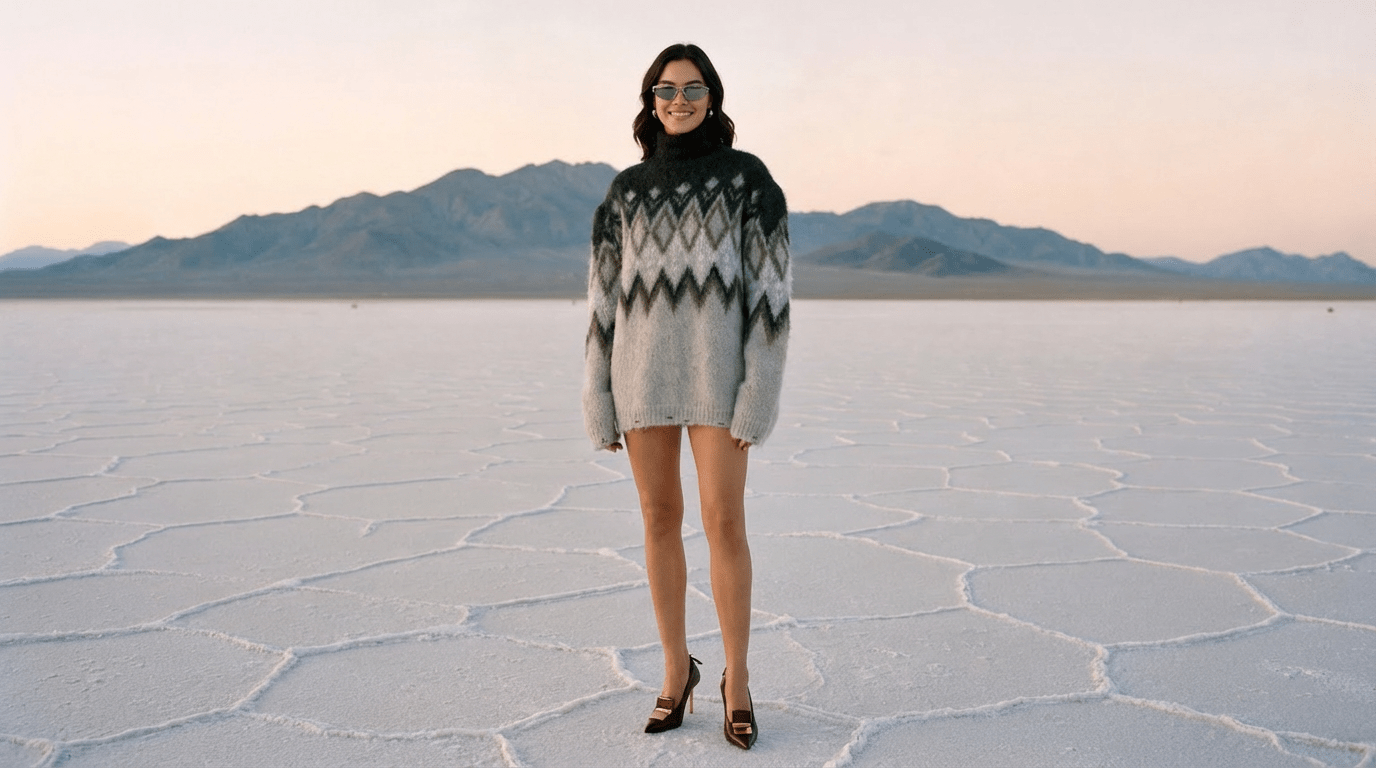
AI model generators eliminate this entire workflow. Upload a flat product image — a photo of a garment on a hanger, mannequin, or flat surface — and the AI generates a photorealistic image of that garment worn by a model. You select ethnicity, body type, pose, expression, and background. The output is indistinguishable from a traditional photoshoot, delivered in seconds rather than days.
The technology behind this is sophisticated. Fashion-specific diffusion models are trained on millions of on-body fashion images, learning the physics of how different fabrics behave — how silk drapes versus how denim holds structure, how a pleated skirt falls versus how a tailored blazer sits on shoulders. The result is garment-accurate AI imagery that preserves stitching details, fabric texture, color fidelity, and realistic body interaction.
- About $0.75 per generated image on the Plus plan ($29.99 for 160 credits, 4 credits per generation), against catalog photography booked at day rates
- Production time compressed from 2–4 weeks to same-day delivery
- Unlimited diversity — generate models of any ethnicity, age, and body type to represent your full customer base
- Infinite variations — create multiple poses, angles, and backgrounds from a single product photo
- No scheduling constraints — produce imagery at any time, for any market, without coordinating human teams
Transform Your Product Photography Today
Fashio AI's Model Generator turns flat lay, mannequin, and hanger shots into catalog-ready on-body imagery — with industry-leading garment accuracy.
Start creating →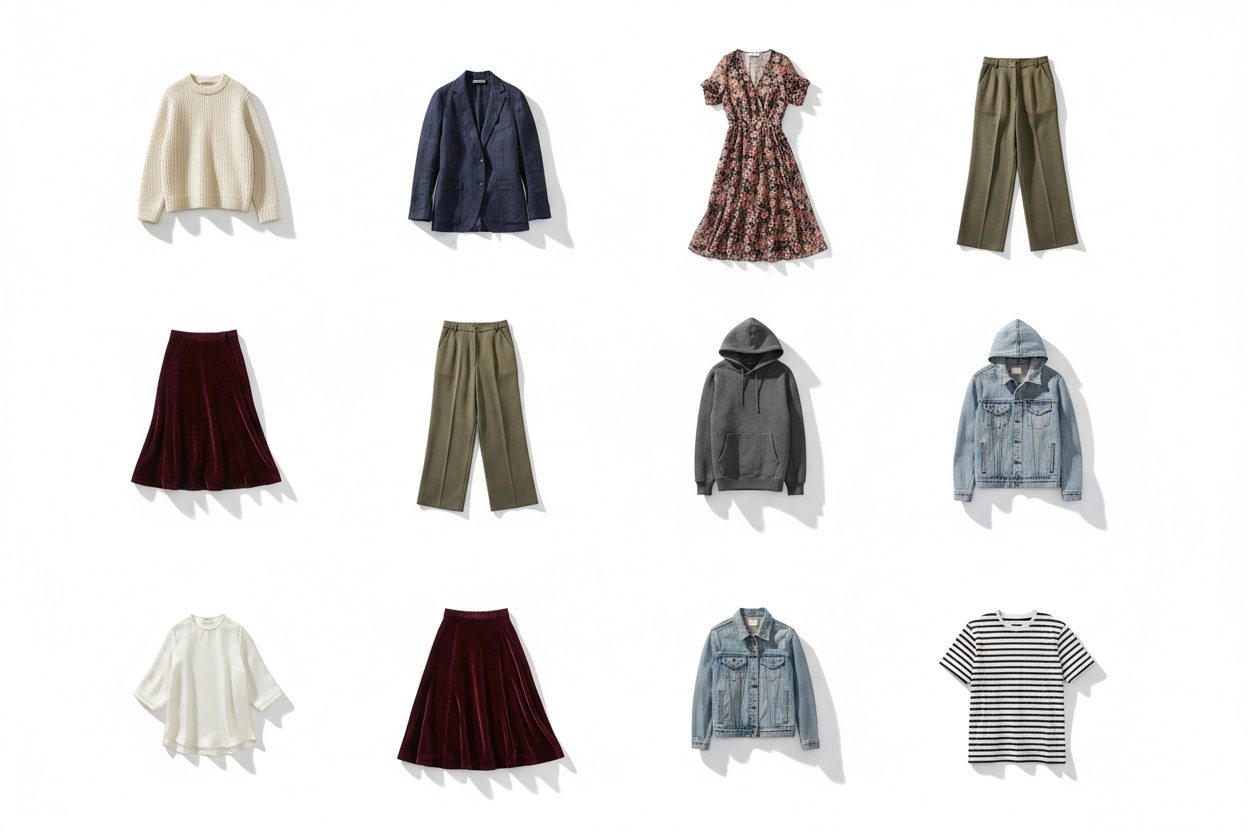
3. Virtual Try-On: Letting Shoppers Wear Clothes Digitally
One of the biggest challenges in online fashion retail has always been fit uncertainty. Shoppers cannot touch fabric, try on garments, or see how clothes look on their body. This uncertainty drives return rates of 30–40% in online fashion — a massive drain on profitability and a sustainability nightmare.
AI virtual try-on technology solves this problem directly. Using advanced computer vision and generative AI, virtual try-on lets shoppers upload a photo of themselves and see how a garment looks on their body. The AI accounts for body shape, skin tone, and proportions to create a realistic visualization that shows fabric drape, fit, and styling.
ASOS launched its virtual try-on tool as one part of a wider returns programme and has not published a try-on-specific figure. Zalando has run its own fit and size-recommendation programmes, and virtual try-on has moved from novelty to standard e-commerce furniture.
The technology works through several layers:
- Body parsing — The AI segments the shopper's body, identifying pose, proportions, and key landmarks.
- Garment understanding — The system analyzes the clothing item's structure, fabric type, and intended fit (slim, regular, oversized).
- Physics simulation — The AI simulates how the fabric would drape, fold, and stretch on that specific body.
- Rendering — The final composite image blends the garment onto the shopper's photo with correct lighting, shadows, and perspective.
Fashio AI's Virtual Try-On tool brings this technology to brands of any size. Rather than requiring a multi-million dollar engineering investment, fashion brands can integrate virtual try-on into their product pages and see immediate improvements in conversion and return rates.
4. AI Product Photography: Studio Quality at a Fraction of the Cost
Beyond model generation and virtual try-on, AI is transforming every aspect of fashion product photography. The traditional workflow — shoot, edit, retouch, resize, format — involved multiple specialists and days of post-production. AI compresses this into automated, scalable processes.
Background removal is the most widely adopted AI photography tool in fashion. Fashion-specific AI models outperform general-purpose tools by understanding complex garment edges — lace trim, fringe, mesh overlays, flowing chiffon. Fashio AI's Background Remover is trained specifically on fashion imagery, delivering cleaner results for the textures and materials that general tools struggle with.
Flat lay to catalog conversion takes this further. Many brands, especially smaller ones, shoot products as flat lays because it is fast and inexpensive. AI can transform these flat lay images into styled catalog shots — including generating on-body imagery from a simple flat lay photo. Fashio AI's Flat Lay to Catalog Creator handles this transformation automatically.
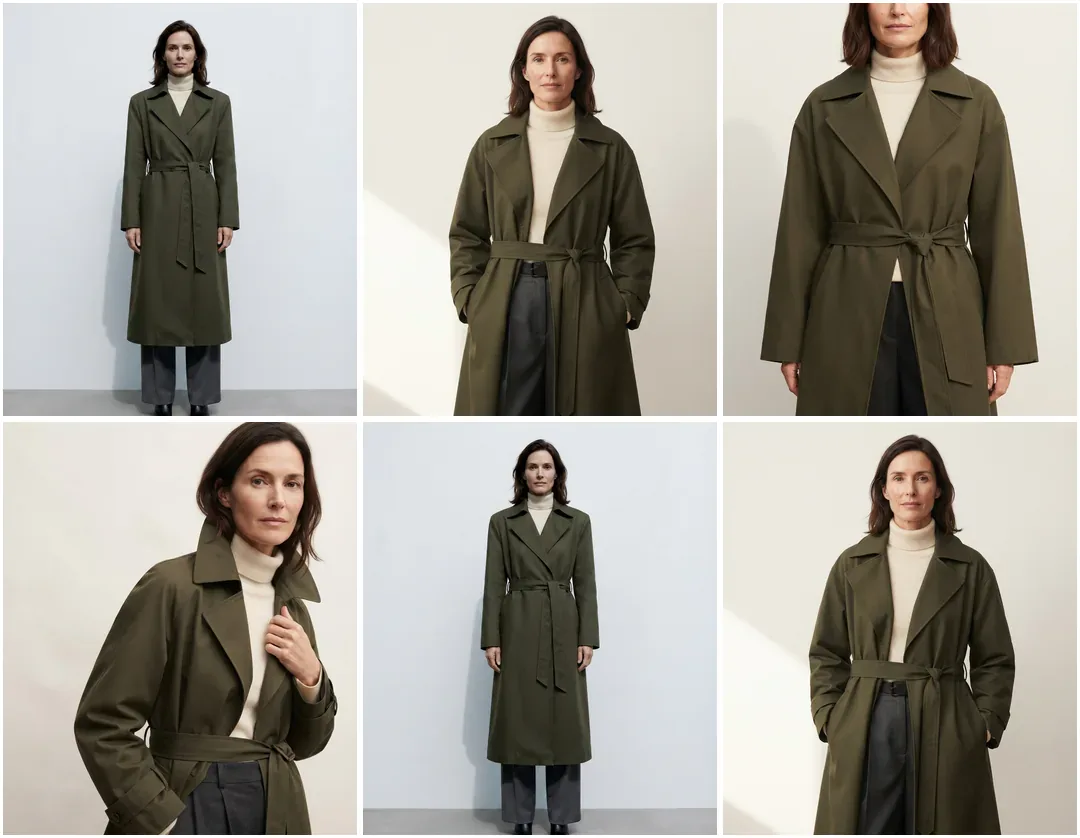
Pose variation is another game-changer. From a single model photo, AI can generate multiple poses — walking, standing, seated, turning — giving brands a full range of catalog angles without multiple shots. The Pose Variation tool from Fashio AI lets brands multiply their visual assets from a single source image.
The cumulative impact on production economics is staggering:
| Production Task | Traditional Cost | Fashio AI Credits | Fashio AI Cost (Plus plan) |
|---|---|---|---|
| On-model image (per look) | $150–$500 | 4 credits | ~$0.75 |
| High-resolution upscale (per image) | Billed hourly by a retoucher | 3 credits | ~$0.56 |
| Video from stills | Separate production budget | From 15 credits | From ~$2.81 |
| Full catalog (500 on-model images) | $50,000–$150,000 | 2,500 credits | ~$271 via Agency credit packs |
For fashion brands operating on thin margins, these savings are not incremental improvements — they are transformational shifts in business economics.
5. AI Fashion Video: The Social Commerce Engine
Static images are no longer enough to drive engagement on social platforms. TikTok, Instagram Reels, and YouTube Shorts have made video the dominant format for fashion discovery and conversion. But producing fashion video content at the volume and speed social platforms demand has been prohibitively expensive — until AI.
AI fashion video generation creates professional marketing videos from product photos. Upload a still image, and AI generates a video showing the garment in motion — fabric flowing, model walking, dynamic camera angles. The output is formatted for the aspect ratios and durations that perform best on each platform.
Fashio AI's Photo-to-Video tool produces fashion videos optimized for social commerce. Brands use it to generate dozens of video variations from a single product image, enabling A/B testing at a scale that would be impossible with traditional video production.
- $2,000–$10,000 per video
- Weeks of production turnaround
- Limited variations for A/B testing
- Static brand feel, lower engagement
- $5–$25 per video
- Minutes, not weeks
- Dozens of variations instantly
- UGC-style content, 2–3x engagement
For fashion brands competing for attention in crowded social feeds, the ability to produce high-quality video content at scale is no longer optional. AI makes it economically viable for brands of any size.
6. AI-Powered Trend Forecasting and Design
While visual production gets the most attention, AI is equally transforming the creative side of fashion. AI trend forecasting analyzes millions of data points — social media posts, search trends, runway imagery, street style photos, purchase behavior, and cultural signals — to predict emerging trends weeks or months before they peak.
Traditional trend forecasting relied on human analysts attending runway shows, monitoring street style, and making educated guesses. This approach was subjective, slow, and limited by human bandwidth. AI processes orders of magnitude more data, identifies patterns humans miss, and quantifies trend momentum with statistical precision.
In 2026, leading AI trend forecasting systems can:
- Predict color trends 3–6 months before they peak in consumer demand
- Identify emerging silhouettes by analyzing social media and runway imagery at scale
- Forecast regional variations — understanding that a trend peaking in Seoul may hit New York 8 weeks later
- Quantify trend longevity — distinguishing flash-in-the-pan viral moments from sustained shifts in consumer preference
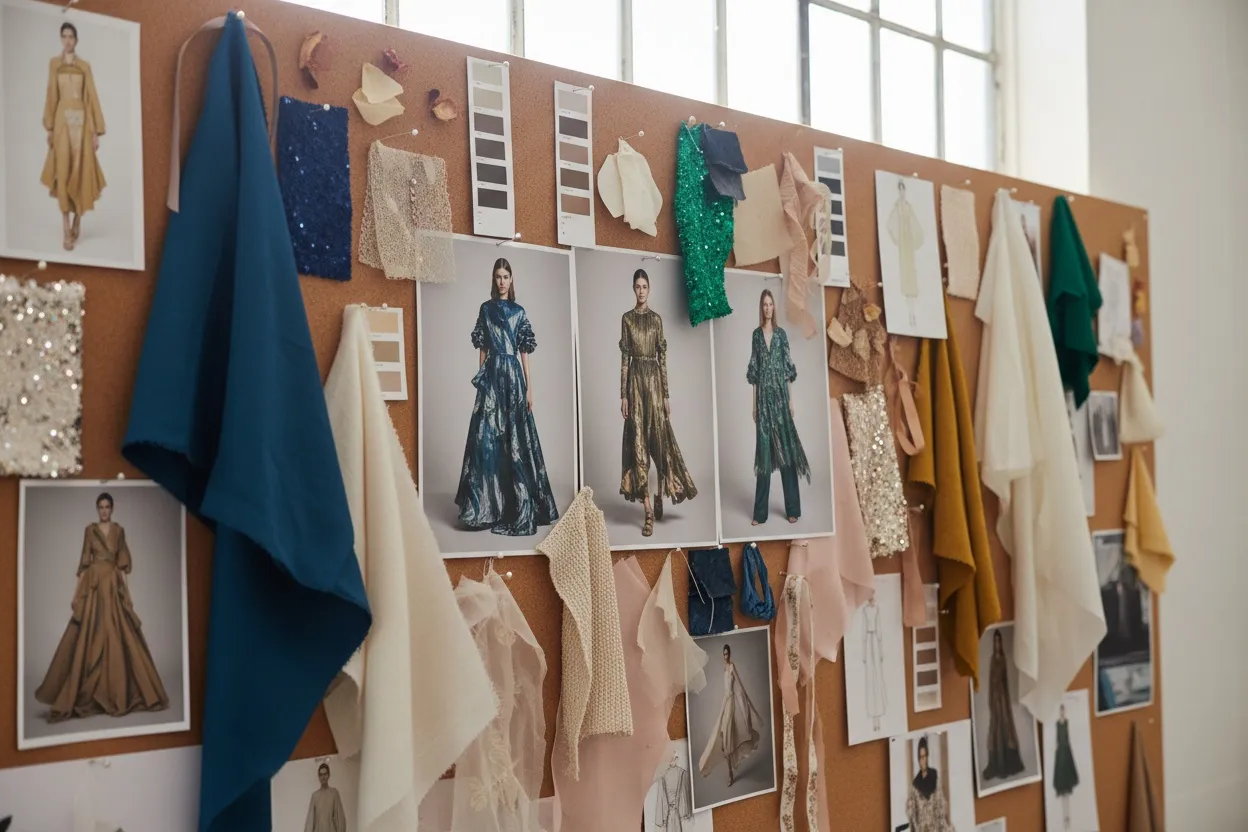
AI is also moving into the design process itself. Generative design tools allow designers to input mood boards, color palettes, and style parameters, then generate hundreds of design variations. This does not replace human creativity — it accelerates the ideation phase, giving designers a broader canvas of possibilities to curate and refine.
Brands that fold AI into the design loop report shorter time-to-market and better sell-through, because products are validated against actual demand signals before they are cut.
7. The Sustainability Angle: AI as Fashion's Green Technology
The fashion industry produces 92 million tons of textile waste annually, according to the UN Environment Programme (2024). Overproduction is the root cause — brands manufacture more than they can sell because traditional demand forecasting is imprecise. AI addresses this problem at multiple levels.
AI-driven demand forecasting reduces overproduction by improving the accuracy of purchase predictions. When brands know more precisely what consumers will buy, they produce less excess inventory. McKinsey finds that AI-driven forecasting cuts forecasting errors by 20–50%, which in turn reduces the overstock that drives markdowns and waste.
Digital sampling eliminates the need for physical prototypes. Traditionally, a single garment design goes through 5–15 physical samples before reaching production — each sample requiring fabric, labor, and international shipping. AI-generated design visualizations and virtual fit testing let teams cut rounds of physical sampling, saving materials and carbon emissions.
Virtual photoshoots eliminate the environmental footprint of traditional production photography. No flights for models and crew, no energy-intensive studio lighting, no fabric waste from styling samples. For a brand producing 10,000 SKU images per season, the carbon savings from switching to AI-generated photography are significant.
AI-optimized supply chains reduce waste throughout the production and distribution process. From predicting which sizes will sell in which markets (reducing size-related returns and markdowns) to optimizing shipping routes and inventory allocation, AI minimizes waste at every step.
The sustainability benefits of AI in fashion are not a marketing talking point — they are a measurable, quantifiable reduction in the industry's environmental impact. Brands leveraging AI have a genuine environmental story to tell: fewer forecasting errors, fewer physical samples, and zero-footprint virtual photoshoots.
8. How Fashio AI Fits Into the AI Fashion Revolution
Fashio AI is purpose-built for fashion brands navigating this transformation. Rather than cobbling together general-purpose AI tools that were not designed for apparel, Fashio AI provides 16 specialized tools — including the all-in-one AI Fashion Studio for end-to-end campaign creation — trained specifically on fashion data and optimized for apparel production workflows.
Plus: UGC Video Creator, Image Upscaler, Mannequin to Model, AI Retouch, Color Variation, Size & Fit Predictor, Trend Analyzer, and Batch Processor.
Every model, every algorithm, every training dataset is fashion-specific. The background remover understands lace edges. The model generator knows how silk drapes differently from denim. This specialization delivers measurably better results than general-purpose tools.
Ready to Transform Your Fashion Workflow?
Use Fashio AI to produce studio-quality visuals at a fraction of the cost.
Start creating →9. The Future: What Is Next for AI in Fashion
The current wave of AI fashion technology is impressive, but it is only the beginning. Looking ahead to 2027 and beyond, several emerging capabilities will further transform the industry:
Real-time personalized storefronts. AI will dynamically generate product imagery tailored to each individual shopper — showing garments on a model that matches the shopper's body type, in the colors and styles their purchase history suggests they prefer, styled in ways that match their aesthetic profile. Every visitor sees a unique storefront.
AI-native fashion brands. We will see the emergence of fashion brands that are AI-first from inception — designing with generative AI, producing imagery entirely through AI tools, personalizing the shopping experience with AI, and optimizing supply chains through AI demand forecasting. These brands will operate with radically smaller teams and faster cycles than traditional brands.
Conversational fashion shopping. AI assistants will guide shoppers through natural-language fashion consultations. Instead of browsing a grid of products, shoppers will describe what they need — "I need a dress for a summer wedding in Tuscany, something that looks elegant but is comfortable in heat" — and AI will curate and present options, show them in virtual try-on, and complete the purchase in a single conversation.
3D garment generation. Current AI works primarily with 2D imagery. The next frontier is AI that generates full 3D garment models from text descriptions or sketches, enabling virtual sampling, metaverse fashion, and augmented reality shopping experiences that are far richer than current 2D try-on.
Closed-loop sustainability. AI will connect demand signals to production in near real-time, enabling a fashion system where overproduction approaches zero. Combined with AI-optimized recycling and material recovery, the industry can move toward genuinely circular fashion.
The brands that invest in AI infrastructure today will be best positioned to adopt these next-generation capabilities as they mature. The AI fashion revolution is not a one-time disruption — it is an ongoing acceleration, and the gap between AI-adopters and laggards will only widen.
Frequently Asked Questions
What are AI clothes?
AI clothes refers to the application of artificial intelligence across the fashion lifecycle — from AI-generated product photography and virtual try-on experiences to trend forecasting, automated design, and smart inventory management. Rather than physical garments made by AI, the term describes how AI transforms how clothes are designed, photographed, marketed, and sold. In 2026, AI clothes technology encompasses tools like AI model generators, virtual try-on, AI product photography, and AI-driven demand forecasting.
How is AI used in the fashion industry in 2026?
In 2026, AI is used across nearly every stage of fashion production. The most impactful applications include: generating photorealistic model imagery without photoshoots, enabling virtual try-on for online shoppers, automating product photography and background removal, creating marketing videos from product photos, forecasting trends from social media and search data, and optimizing supply chains to reduce overproduction. The AI-generated fashion photography segment alone is projected to reach $6.11 billion by 2029 at a 32.1% CAGR, according to The Business Research Company (2025).
Can AI replace fashion models?
AI is not replacing fashion models entirely but is transforming catalog and e-commerce photography. AI model generators create photorealistic on-body images from flat product shots, removing the need for a traditional photoshoot on most catalog work. High fashion editorial and runway work still relies on human models, but everyday e-commerce imagery is rapidly shifting to AI-generated visuals. For the majority of fashion brands, AI model generation delivers equivalent or better quality at a fraction of the cost.
How does virtual try-on technology work?
Virtual try-on uses computer vision and generative AI to digitally dress a shopper or model in a garment. The technology analyzes body shape, garment structure, and fabric properties to simulate realistic fit, drape, and texture. Shoppers upload a photo or use a pre-set model to see how clothing looks before purchasing. ASOS added virtual try-on in 2026 as one part of a wider returns programme; it has not published a figure isolating try-on's own effect.
How much does AI product photography save compared to traditional shoots?
A generated image on Fashio AI's Plus plan costs about $0.75 — $29.99 per month for 160 credits, at 5 credits per generation. Set that against the day rates and per-look fees quoted by production studios and the gap is large: individual model photos typically quoted at $150–$500 per look are replaced by images costing about a dollar. Fashio AI enables brands to produce studio-quality catalog images without physical shoots, making professional visuals accessible to brands of any size.
Is AI fashion technology sustainable?
Yes. AI significantly improves fashion sustainability at multiple levels. AI-driven demand forecasting reduces overproduction; the UN Environment Programme (2024) estimates the industry generates 92 million tons of textile waste annually, and McKinsey finds AI-driven forecasting cuts forecasting errors by 20–50%. Digital sampling removes rounds of physical prototypes, saving materials and shipping. Virtual photoshoots remove the carbon footprint of physical shoots. AI-optimized supply chains further reduce waste through better inventory allocation and size prediction. The sustainability impact is measurable and increasingly important to consumers.
What AI fashion tools does Fashio AI offer?
Fashio AI offers 16 purpose-built AI tools for fashion: AI Model Generator, Virtual Try-On, Background Remover, Photo-to-Video, UGC Video Creator, Image Upscaler, Flat Lay to Catalog, Mannequin to Model, Pose Variation, AI Retouch, Color Variation, Size & Fit Predictor, Trend Analyzer, and Batch Processor. All tools are trained specifically on fashion data for superior accuracy with fabrics, garment structures, and fashion photography standards. Start your free trial to explore the full platform.