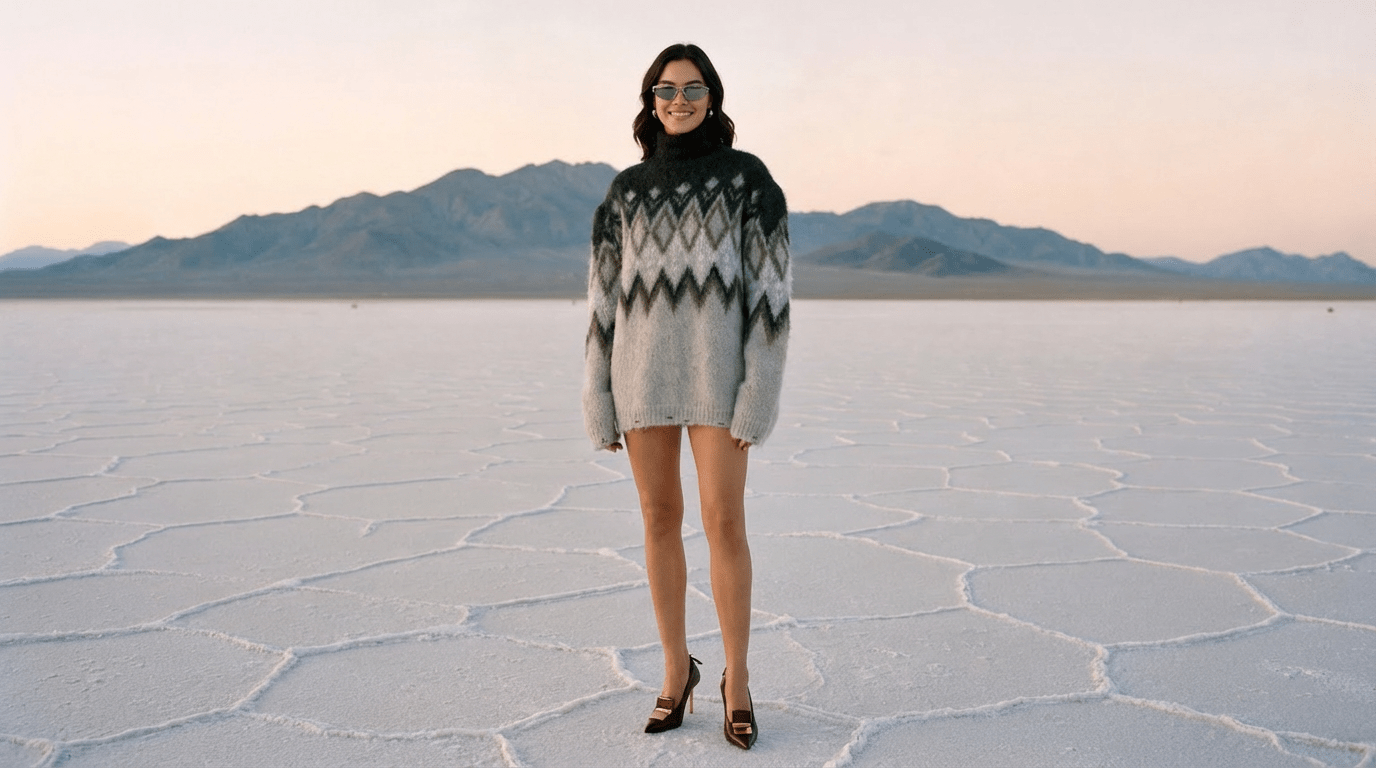
Fashion Design Is Being Rewritten by AI — Here's What's Actually Happening
The fashion industry has always been driven by creativity, intuition, and craftsmanship. In 2026, a new force has entered the design studio: artificial intelligence. But this isn't the dystopian "robots replacing designers" narrative the media loves. The reality is far more interesting — and far more practical.
AI fashion design is reshaping how collections are conceived, visualized, tested, and produced. Designers using AI tools are producing 3–5x more concepts in the same timeframe, reducing physical sample production by up to 70%, and making better trend-aligned decisions backed by data instead of gut feeling alone. The designers thriving in 2026 aren't choosing between creativity and technology — they're combining both.
AI fashion design is delivering measurable results across the entire design-to-market pipeline — from concept generation to consumer satisfaction.
This guide covers the current state of AI in fashion design: the tools worth using, the trends driving adoption, how sustainability benefits, and where the industry is heading. Whether you're an independent designer, a fashion student, or a brand creative director, this is your complete overview of AI fashion design in 2026.
AI in Fashion Design: What It Actually Does
AI fashion design isn't one thing — it's a collection of capabilities that touch every stage of the design process. Here's a breakdown of what AI actually does in fashion today:
Sketch-to-Image Rendering
The most visible application of AI in fashion design. Designers sketch a concept — on paper, tablet, or even described in text — and AI generates photorealistic renderings of the garment. This collapses the traditional concept-to-visualization timeline from days to minutes.
In 2026, sketch-to-image tools understand fashion-specific details: fabric drape, garment construction, proportion, and styling context. A designer can input a rough sketch of a draped midi dress and receive multiple rendered variations showing different fabrics, colorways, and styling options within seconds.
AI Trend Forecasting
Traditional trend forecasting relied on trend agencies, runway reports, and industry intuition — expensive, slow, and often subjective. AI trend forecasting analyzes millions of signals simultaneously: social media imagery, search volume trends, e-commerce purchase data, runway collections, street style photography, and cultural events.
The result is data-driven trend intelligence that identifies emerging colors, silhouettes, fabrics, and styles 6–18 months before they peak. Brands using AI forecasting design closer to what consumers actually want rather than what they assume consumers want, which is where sell-through improvements come from.
Collection Visualization
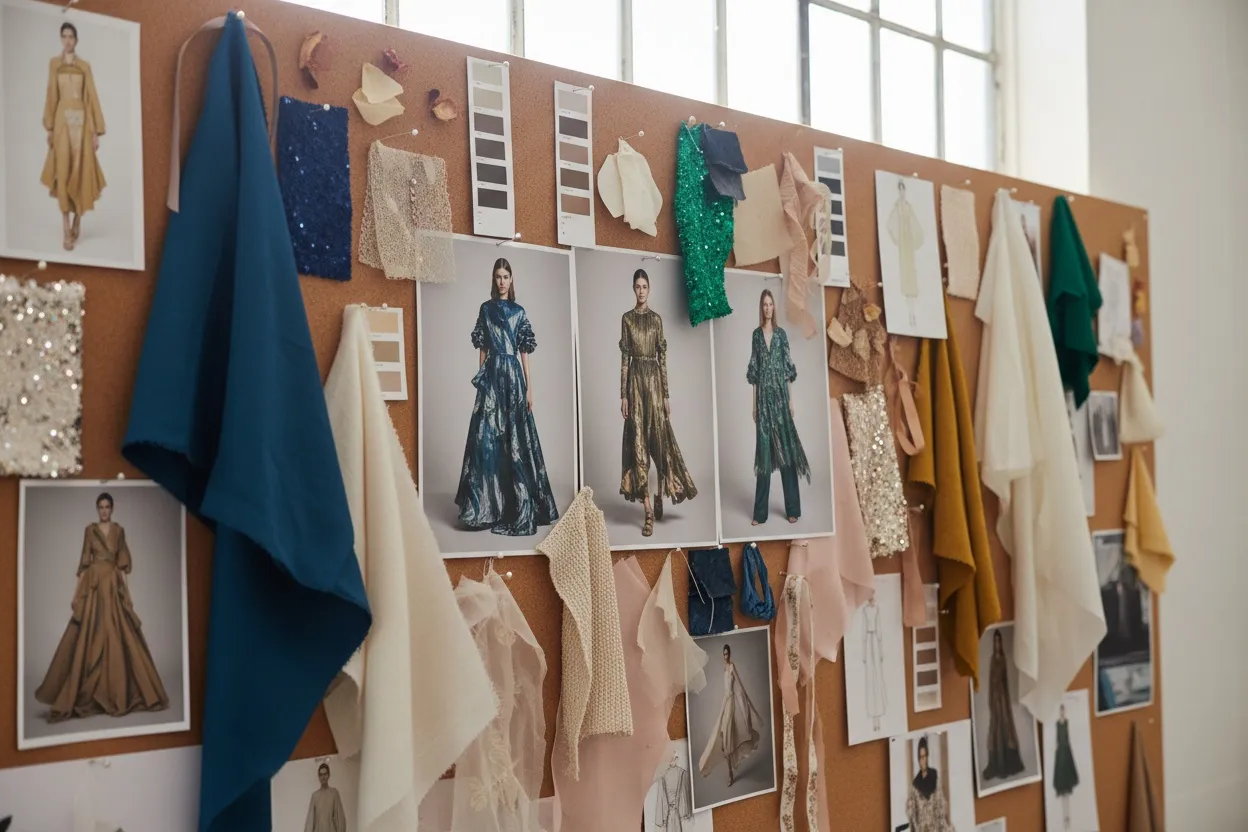
Before AI, visualizing a full collection meant producing physical samples or commissioning technical illustrations. Now, designers can render entire collections digitally — seeing how pieces work together, testing colorway combinations, and presenting to buyers before a single sample is cut.
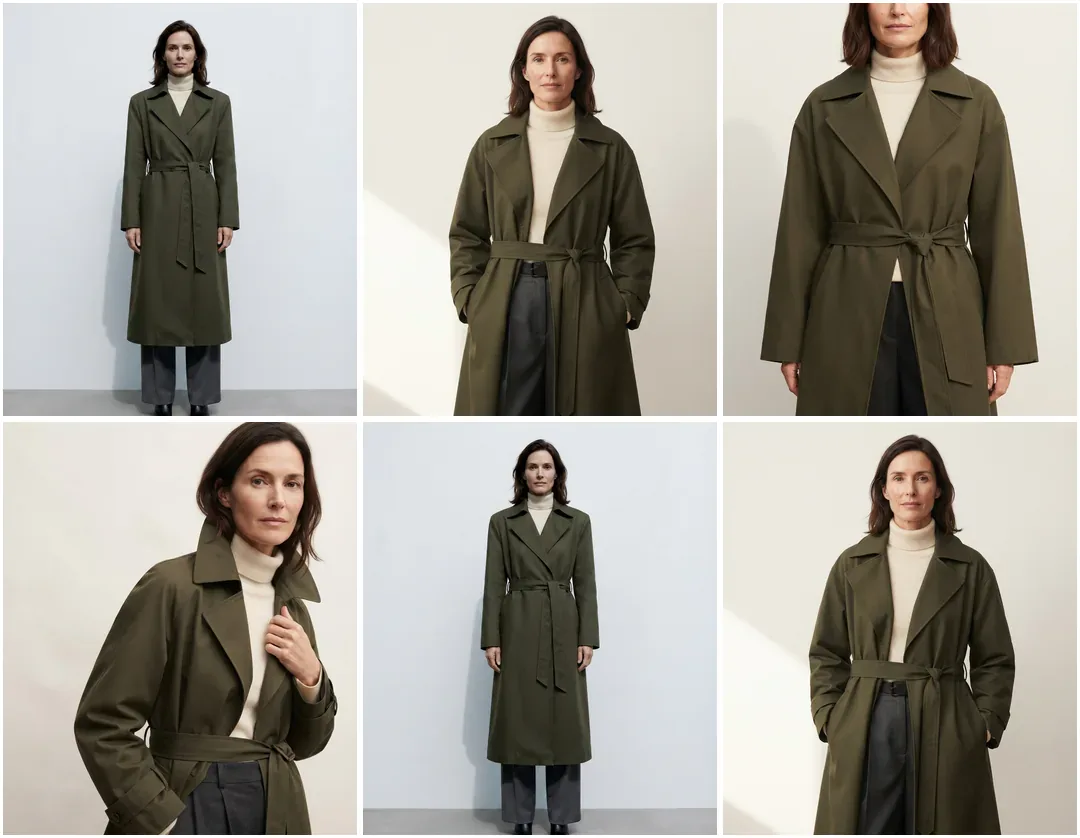
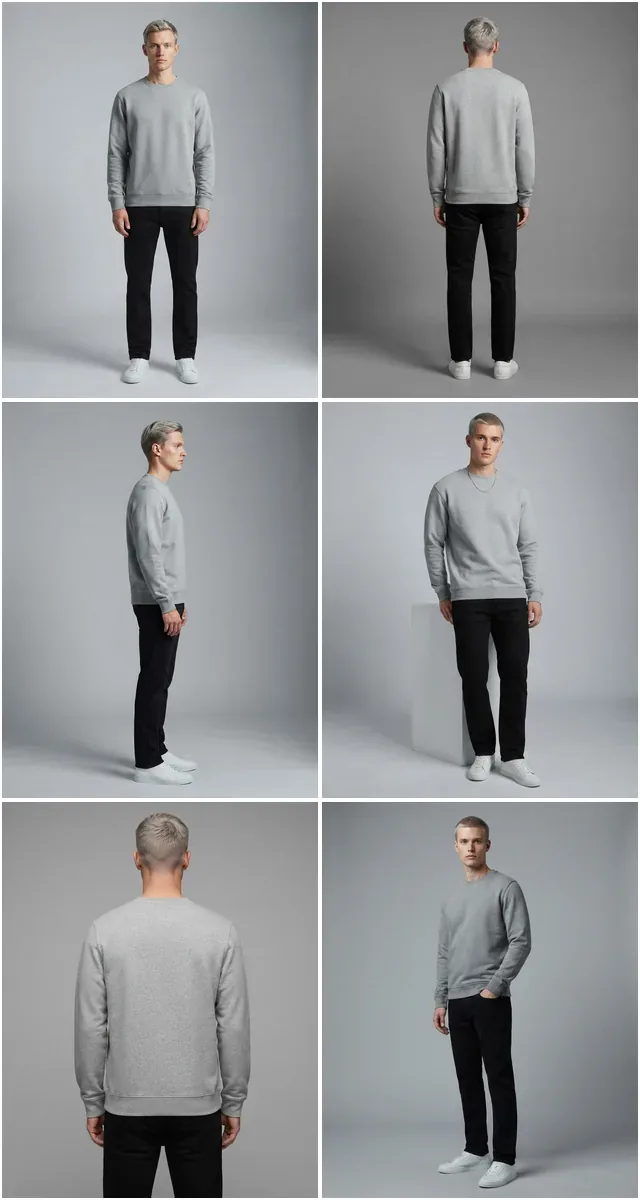
AI Fashion Model Generator takes this further by placing designed garments on diverse AI models, showing how pieces look on different body types and in different styling contexts. This is invaluable for collection planning, buyer presentations, and pre-season marketing.
Pattern and Print Generation
AI generates original textile patterns, prints, and surface designs from text prompts or reference imagery. Designers can describe "a watercolor floral print inspired by Japanese cherry blossoms with a muted, earthy palette" and receive dozens of unique print options. This accelerates surface design exploration dramatically — what used to take a textile designer days of iteration now takes minutes.
Color Palette Intelligence
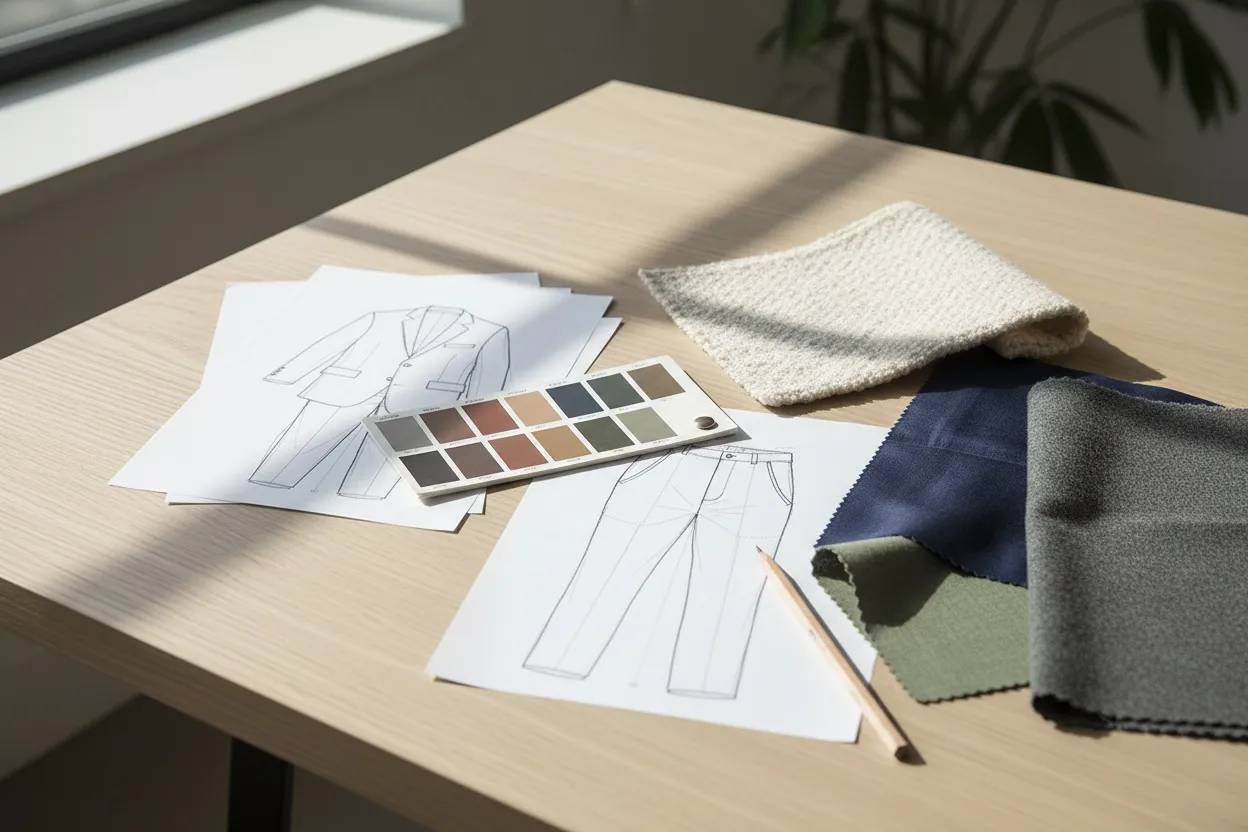
AI tools analyze trend data, seasonal color forecasts, and brand archives to recommend color palettes for upcoming collections. They can also ensure palette cohesion across a collection, predict which colors will resonate in specific markets, and generate complementary accent colors that work across garment categories.
The Best AI Fashion Design Tools in 2026
Not all AI tools are equal for fashion design. Here's a breakdown of the tools leading the space, categorized by their primary function:
Creative Exploration and Concept Generation
- Midjourney: The most popular general AI image generator, excellent for mood boarding and concept exploration. Strong on aesthetic output, limited on technical fashion accuracy. Best for early-stage creative direction. ($10–$60/month)
- DALL-E 3: OpenAI's image generator with strong text understanding. Good for specific design prompts and variation generation. Less consistent on garment construction details than fashion-specific tools. (Included in ChatGPT Plus, $20/month)
- Stable Diffusion (with fashion fine-tunes): Open-source flexibility with community fashion models. Requires technical setup but offers the most customization. Best for teams with ML expertise. (Free/self-hosted)
Fashion-Specific Production Tools
- Fashio AI: Purpose-built for fashion visualization and production. Converts product images into on-model shots, generates diverse model imagery, handles image editing, pose variation, and collection visualization. The strongest tool for production-ready fashion imagery. (Per-image pricing, scales with volume)
- CLO 3D: Industry-standard 3D garment simulation with AI-assisted features. Creates realistic 3D garments from 2D patterns, simulates fabric physics, and enables virtual fitting. Essential for technical design and digital sampling. ($50–$500/month)
- Browzwear: Enterprise 3D design platform used by major brands. AI-powered fit simulation and digital twin creation. Strong on technical accuracy, less accessible for independent designers. (Enterprise pricing)
Trend Intelligence Platforms
- Heuritech: AI trend forecasting analyzing social media images and runway data. Predicts color, print, silhouette, and category trends. Used by luxury and fast-fashion brands alike. (Enterprise pricing)
- Edited: Market intelligence platform with AI-powered trend identification from e-commerce data. Tracks pricing, assortment, and demand signals across thousands of brands. ($$$)
- Google Trends + AI analysis: Free trend signal data combined with AI interpretation. Not fashion-specific but valuable for cross-referencing consumer interest data. (Free)
Fabric and Material Digitization
- Vizoo: Digitizes physical fabrics into photorealistic digital materials for 3D design tools. Essential for accurate 3D garment visualization. (Hardware + software pricing)
- Substance 3D (Adobe): Creates and customizes digital materials and textures. AI-assisted material generation from photos or descriptions. ($49.99/month)
AI Trend Forecasting: How It's Changing Design Decisions
Trend forecasting is where AI delivers its most measurable ROI in fashion design. Here's how AI trend forecasting works and why it's becoming non-negotiable:
Data Sources AI Analyzes
- Social media: Billions of images from Instagram, TikTok, Pinterest analyzed for emerging style patterns
- Search data: Google Trends, e-commerce search queries revealing consumer interest signals
- Runway and fashion week: Automated analysis of designer collections for downstream trend prediction
- Street style: AI analysis of street photography datasets identifying grassroots trends
- Sales data: Purchase patterns, sell-through rates, and return reasons revealing demand shifts
- Cultural signals: Film, music, art, and cultural events that historically predict fashion direction
What AI Forecasting Predicts
AI forecasting goes beyond "blue is trending." Modern AI trend tools predict with granular specificity:
- Color: Not just trending colors, but the specific shades, combinations, and seasonal timing
- Silhouette: Shifts in garment proportions — oversized vs. fitted, length trends, volume placement
- Fabric: Material preferences — natural vs. synthetic, texture trends, weight shifts
- Category: Which garment types are gaining or losing consumer interest
- Price sensitivity: How trend adoption varies across price points and demographics
Real Impact on Design Decisions
Brands using AI trend forecasting report better sell-through, shallower markdowns, and fewer "missed trend" gaps in their assortments. McKinsey finds AI-driven forecasting cuts forecasting errors by 20–50%, which is the mechanism behind those effects. The data doesn't replace creative vision — it validates and refines it.
Sustainable Fashion Design with AI
Sustainability is no longer optional in fashion — it's a business imperative. AI is becoming one of the most effective tools for reducing fashion's environmental impact at the design stage, where 80% of a product's environmental footprint is determined.
Digital Sampling Reduces Physical Waste
The traditional design process requires 5–15 physical samples per style before production. Each sample consumes fabric, generates waste, and requires shipping (often internationally). AI-powered 3D design and visualization tools cut how many of those rounds have to exist physically. When designers can visualize, iterate, and present collections digitally, fewer physical prototypes are needed.
Better Demand Prediction Means Less Overproduction
Overproduction is fashion's biggest environmental problem — an estimated 30% of garments produced are never sold. AI trend forecasting and demand prediction directly address this by helping brands produce closer to actual demand. Better predictions mean fewer unsold garments heading to landfills or incinerators.
Virtual Try-On Reduces Returns
Virtual try-on technology helps consumers make better purchase decisions by seeing how garments look on their body type before buying. This reduces returns — ASOS folded virtual try-on into a wider returns programme in 2026 — and fashion returns carry a heavy carbon footprint from reverse logistics, repackaging, and the share of returned items that end up unsaleable.
Material Optimization
AI analyzes pattern layouts to minimize fabric waste during cutting. AI-powered nesting algorithms recover fabric that manual layouts leave as offcuts — a small percentage per garment that becomes significant scaled across a production run.
Key Sustainability Benefits of AI in Fashion Design
- Fewer physical samples — less fabric waste and fewer international shipments per style
- Less overproduction — AI demand prediction keeps inventory closer to actual demand
- Lower return rates — virtual try-on helps consumers choose correctly the first time
- Less cutting waste — AI nesting algorithms optimize pattern layouts at scale
How Fashio AI Fits into the Fashion Design Workflow
While some AI tools focus on early-stage concept generation, Fashio AI occupies a critical position in the design-to-market pipeline: turning designs and products into production-ready visual content. The AI Fashion Studio bundles model generation, scene staging, and editorial campaign workflows in one place.
Collection Visualization
Designers use AI Fashion Model Generator to visualize how designed garments look on diverse models before physical samples exist. Upload a technical flat or prototype photo, select model characteristics, and see your design on-body in seconds. This is invaluable for internal reviews, buyer presentations, and pre-season marketing materials.
Design Iteration at Speed
Test colorway options, styling variations, and accessorizing choices without re-shooting. Fashio AI's image editing tools enable rapid visual iteration that keeps pace with the speed of design ideation.
Production-Ready Output
Unlike creative AI tools that produce beautiful but unusable imagery, Fashio AI outputs are production-ready — correct resolution, accurate color representation, marketplace-compliant formatting. Images go directly from Fashio AI to your e-commerce platform, lookbook, or marketing channels.
From Concept to Commerce
The full workflow: sketch your design → create a prototype or flat lay → upload to Fashio AI → generate on-model imagery with multiple poses → publish to your store. What used to take weeks from design to product listing now takes days.
See Your Designs on AI Models in Seconds
Upload your product photos or flats and generate professional on-model imagery with Fashio AI — no photoshoots needed.
Start creating →The Future of AI Fashion Design: What's Coming
AI fashion design is still in its early stages. Here's what the next 2–3 years will bring:
Real-Time Collaborative Design
AI will serve as a real-time creative partner — designers describing modifications verbally while AI renders changes instantly. Think "make the sleeve longer, change to a v-neck, show it in burgundy" and seeing results in real-time rather than re-rendering.
Full Digital-to-Physical Pipelines
AI-designed garments will connect directly to automated manufacturing. Design in AI, generate production-ready patterns, and send to automated cutting and sewing systems. This end-to-end digital pipeline is already emerging in 2026 and will become standard within 3 years.
Personalized Fashion at Scale
AI enables mass customization — generating personalized design variations based on individual customer preferences, body measurements, and style history. Brands will offer curated, AI-designed pieces tailored to individual customers without the cost of traditional bespoke design.
AI-Driven Trend Micro-Targeting
Instead of broad seasonal trends, AI will identify hyper-specific trend niches — "cottagecore maximalism for Gen Z in Nordic markets" — enabling brands to design targeted collections for specific audience segments with unprecedented precision.
Sustainable Design Intelligence
AI will embed sustainability scoring directly into the design process. As designers make material, construction, and production decisions, AI will provide real-time environmental impact assessments — making sustainable design the default rather than an afterthought.
Getting Started with AI Fashion Design
Whether you're an established brand or an independent designer, here's how to start integrating AI into your design workflow:
5 Steps to Start with AI Fashion Design
- Start with visualization: Use Fashio AI to see your existing designs on diverse models. This delivers immediate value with zero learning curve.
- Experiment with concept generation: Use Midjourney or DALL-E for mood boarding and early-stage exploration. Don't try to replace your design process — augment it.
- Integrate trend data: Start with free tools like Google Trends to validate your design instincts with data. Graduate to specialized platforms as your needs grow.
- Reduce physical samples: For every new style, generate AI visualizations first. Only produce physical samples for designs that pass digital review.
- Build an AI-augmented workflow: Don't overhaul your process overnight. Add AI tools incrementally where they save the most time or improve the most decisions.
The fashion designers who will lead the industry in the next decade are those who master AI as a creative tool — not as a replacement for creativity, but as an amplifier of it.
Ready to Transform Your Design Workflow?
Use Fashio AI to visualize collections, generate on-model imagery, and go from concept to commerce faster.
Start creating →Frequently Asked Questions
What is AI fashion design?
AI fashion design uses artificial intelligence tools to assist or automate parts of the fashion design process — including sketch-to-image rendering, pattern generation, trend forecasting, color palette creation, collection visualization, and fabric simulation. It augments human creativity rather than replacing it.
What are the best AI fashion design tools in 2026?
The best AI fashion design tools in 2026 include Fashio AI for collection visualization and on-model rendering, CLO 3D for AI-assisted 3D garment simulation, Vizoo for fabric digitization, Heuritech for trend forecasting, and Midjourney for creative exploration. Fashio AI stands out for production-ready fashion visualization.
Can AI design clothes from scratch?
AI can generate clothing designs from text prompts, sketches, or reference images. However, AI works best as a design accelerator — generating variations, exploring colorways, and visualizing concepts that designers then refine. The most effective workflow combines AI speed with human creative direction and taste.
How is AI used in fashion trend forecasting?
AI analyzes millions of data points — social media trends, runway shows, search data, purchase patterns, and street style imagery — to predict upcoming fashion trends. AI forecasting tools identify color, silhouette, fabric, and style trends 6–18 months ahead, helping brands make better inventory and design decisions.
Is AI fashion design sustainable?
Yes, AI meaningfully improves sustainability in fashion design. Digital sampling cuts the number of physical samples a style needs before production, reducing fabric waste and shipping emissions. AI trend forecasting reduces overproduction by improving demand prediction. Virtual try-on reduces returns — ASOS folded virtual try-on into a wider returns programme in 2026 — which cuts the footprint of reverse logistics.
How much does AI fashion design software cost?
AI fashion design tools range from free tiers to enterprise pricing. General AI image generators cost $10–$60/month. Specialized fashion tools like Fashio AI offer plans starting from affordable per-image pricing for independent designers up to enterprise solutions. 3D design tools like CLO 3D cost $50–$500/month depending on features.
Will AI replace fashion designers?
AI will not replace fashion designers — it will transform the role. Designers who use AI tools are 3–5x more productive, spending less time on repetitive tasks and more time on creative direction, brand storytelling, and innovation. The future belongs to designers who leverage AI as a creative partner, not those who compete against it.