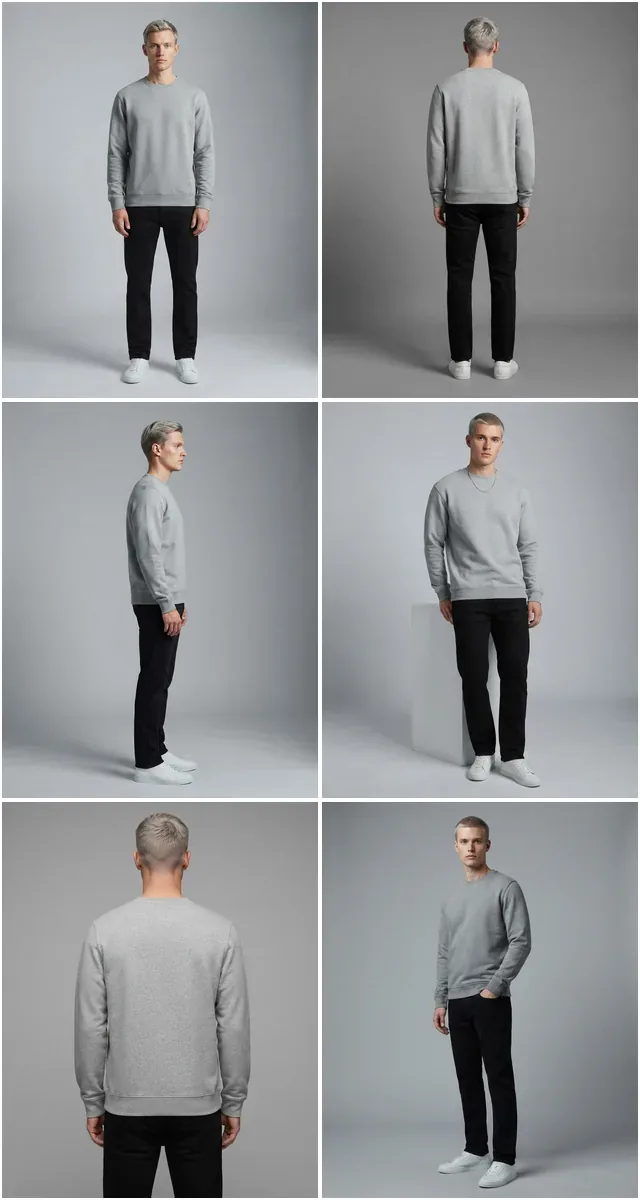
- Men's XXXXL (4XL)56–58" body chest · 19.5–20" collar · India tag 48–50
- Women's XXXXLUS 28–30 · UK 32–34 · bust about 57.5–59.5"
- Men's XXXL (3XL)52–54" body chest · 18.5–19" collar · India tag 46–48
- Size 12 / 15 / 1812 = L · 15" collar = M · 18 = XL, 1X or XXL (table)
Size converter
Pick a letter, or type your chest or bust. You get the size in every system and the body measurement it is cut to.
Men's XXXXL = 56–58" chest · UK 57 · EU 66 · India shirt label 50
India shirt label: the number on the tag at U.S. Polo Assn. India (4XL = 50; Blackberrys uses 48). It is not your chest in inches. Indian size charts give the shirt's own chest, which for a 4XL is about 51–59".
Full chart, every size (tap to open)
| Alpha | US chest | UK | EU | IT | FR | JP | India | Waist | Neck |
|---|---|---|---|---|---|---|---|---|---|
| XS | 31–33" | 32 | 44 | 44 | 44 | S | 38 | 26–28" | 14" |
| S | 34–36" | 35 | 46 | 46 | 46 | M | 39 | 30–32" | 14.5" |
| M | 38–40" | 39 | 48 | 48 | 48 | L | 40 | 33–35" | 15.5" |
| L | 42–44" | 43 | 52 | 52 | 52 | LL | 42 | 36–38" | 16.5" |
| XL | 45–47" | 46 | 54 | 54 | 54 | 3L | 44 | 39–41" | 17" |
| XXL | 48–50" | 49 | 58 | 58 | 58 | 4L | 46 | 42–44" | 18" |
| XXXL | 52–54" | 53 | 62 | 62 | 62 | 5L | 48 | 45–47" | 19" |
| XXXXL | 56–58" | 57 | 66 | 66 | 66 | 6L | 50 | 48–50" | 20" |
| 5XL | 60–62" | 61 | 70 | 70 | 70 | 7L | 52 | 51–53" | 21" |
These are the standard ready-to-wear conversions, anchored to body measurements rather than to a label. Individual brands vary by up to a full size in either direction because of vanity sizing and house blocks. Measure, then check the brand's own chart before ordering.
Is XXXXL size 12, 15 or 18? Numbers to letters
A number on a label means different things depending on what it measures. XXXXL is not size 12. A women's 12 is a L in the US and a M in the UK, and a 15 on a men's shirt is the collar in inches, which is a M. Find your number, then the column that matches the garment.
| Number | US women's | UK women's | Men's shirt collar | Kids (US) |
|---|---|---|---|---|
| 10 | M | S | — | L |
| 12 | L | M | — | L |
| 14 | L | M | 14" = S | XL |
| 15 | — | — | 15" = M | — |
| 16 | XL | L | 16" = L | XXL |
| 17 | XXL (Target) | — | 17" = XL | — |
| 18 | XL (Kohl's) or 1X (Target) | L | 18" = XXL | XXXL (Children's Place), XL (Nike boys) |
| 19 | — | — | 19" = 3XL | — |
| 20 | 2X | XL | 20" = 4XL | XL (Nike boys) |
| 22 | 2X | XL | — | — |
| 24–26 | 3X | XXL | — | — |
| 28–30 | 4X | XXXL | — | — |
| 32–34 | — | XXXXL* | — | — |
Swipe for collar and kids' columns.
Sources: US women's from Target and Kohl's. UK women's from the Marks & Spencer dual-size chart, which stops at XXXL = UK 28–30, so *UK 32–34 follows the same four-size step. Collar from the M&S formal shirt chart. Kids from Children's Place and Nike/Hurley boys at Kohl's.
XXXXL (4XL) and XXXL (3XL) size chart for men
Men's sizes are cut from body chest. These are the Marks & Spencer body measurements, the one chart we found that runs every size from S to 5XL with chest, waist and collar together. US brands run the same or a little larger. Van Heusen's 3XB fits a 54–56" chest and its 4XB fits 58–60".
| Letter | Body chest | Waist | Collar | India tag | EU |
|---|---|---|---|---|---|
| L | 42–44" (107–112 cm) | 36–38" | 16–16.5" | 42 | 52 |
| XL | 45–47" (114–119 cm) | 39–41" | 17" | 44 | 54 |
| XXL / 2XL | 48–50" (122–127 cm) | 42–44" | 17.5–18" | 46 | 58 |
| XXXL / 3XL | 52–54" (132–137 cm) | 45–47" | 18.5–19" | 48 | 62 |
| XXXXL / 4XL | 56–58" (142–147 cm) | 48–50" | 19.5–20" | 50 | 66 |
| 5XL | 60–62" (152–157 cm) | 51–53" | 20.5–21" | 52 | 70 |
Swipe for collar, India tag and EU.
They are three different measurements. 48 or 50 is the number on an Indian tag: U.S. Polo Assn. India tags 4XL 50, Blackberrys 48. 51–59" is the garment, the shirt measured flat and doubled, which Indian charts list (Blackberrys 51", USPA 54.3", Powerlook 54.5", Indian Terrain 59"). 56–58" is the body the shirt is cut for (M&S). The garment is always bigger than the body by a few inches of ease, so compare your chest with a body chart, or a shirt you own with a garment chart.
3XL and 4XL at 14 brands we checked
We read each brand's own chart on 6 October 2026. "Body" means the size is cut for that chest. "Garment" means the shirt itself measures that. For Indian brands the number before the arrow is the tag.
| Brand | XXL | 3XL | 4XL | 5XL | Chart measures | Source |
|---|---|---|---|---|---|---|
| Marks & Spencer (UK) | 48–50" | 52–54" | 56–58" | 60–62" | Body chest | M&S men's size guide |
| Van Heusen / IZOD (US) | neck 18–18.5" | 54–56" (3XB) | 58–60" (4XB) | — | Body chest | Kohl's Van Heusen chart |
| Charles Tyrwhitt (UK/US) | 51" | 54" | — | — | Body chest, up to | Charles Tyrwhitt shirt guide |
| U.S. Polo Assn. (India) | 46 → 50" | 48 → 52.4" | 50 → 54.3" | 52 → 55.5" | Garment chest | USPA India shirt chart |
| Powerlook (India) | 50.5" | 52.5" | 54.5" | 56.5" | Garment chest | Powerlook shirt chart |
| Indian Terrain (India) | — | 56" (shirt) / 53.5" (polo) | 59" (shirt) / 57" (polo) | — | Garment chest | Indian Terrain shirt chart |
| Blackberrys (India) | 44 → 47" | 46 → 49" | 48 → 51" | 50 → 53" | Garment chest | Blackberrys polo chart |
| Van Heusen India (India) | — | 48.8" | 50.8" | — | Garment chest | Van Heusen polo chart |
| Monte Carlo (India) | 44 | 46 → 50" | — | — | Garment chest | Monte Carlo shirt chart |
| Peter England (India) | 48.8" | 50.8" | — | — | Garment chest | Peter England polo chart |
| Park Avenue (India) | 46 → 49.6" | — | — | — | Garment chest | Park Avenue shirt chart |
| Jockey (India) | 47–49" | — | — | — | Body chest | Jockey India T-shirt chart |
| J. (Junaid Jamshed) (Pakistan) | 57" (collar 18.5") | — | — | — | Garment chest | J. kameez chart |
| Aarong (Bangladesh) | 48" (collar 17") | 50" (collar 17.5") | — | — | Garment chest | Aarong sizing |
Swipe sideways for every size and the source link.
Three things stand out. No Indian brand we checked tags 4XL as 52 or 54: it is 50 at U.S. Polo Assn. and 48 at Blackberrys. Indian tag numbers are not one scale either. Monte Carlo calls 44 an XXL and 46 a 3XL, which is a size below U.S. Polo Assn. And the garments differ: a 4XL measures 51" at Blackberrys and 59" at Indian Terrain. Many Indian brands (Peter England, Allen Solly, Monte Carlo) stop at 3XL.
XXXXL and XXXL size chart for women
Women's letters sit on the US numeric scale. The UK runs four sizes higher. On the Marks & Spencer chart XXL is UK 24–26 and XXXL is UK 28–30. Bust and hip are Target's body measurements, which match M&S within half an inch where the two overlap.
| Letter | US | UK | EU | Bust | Hip | Plus scale |
|---|---|---|---|---|---|---|
| XL | 16–18 | 20–22 | 46–48 | 43.5–47.5" (110–121 cm) | 46–50.5" | 1X at 18 |
| XXL | 20–22 | 24–26 | 50–52 | 49.5–51.5" (126–131 cm) | 52.75–55" | 2X |
| XXXL | 24–26 | 28–30 | 54–56 | 53.5–55.5" (136–141 cm) | 57.25–59.5" | 3X |
| XXXXL | 28–30 | 32–34 | 58–60 | 57.5–59.5" (146–151 cm) | 61.75–64" | 4X |
Swipe for EU, bust, hip and the plus scale.
US stores often stop the straight letters at XXL and switch to the plus scale. On Target's chart US 24–26 is 3X and 28–30 is 4X. Kohl's puts 3X at 22W–24W and 4X at 26W–28W. Same letters, a size apart, so check the number.
XXXL and 3X are not the same thing
XXXL and 3XL are the same label written two ways. 3X is the plus-size scale. Plus blocks are cut with more room through the bust, waist and hip, so a 3X is usually roomier than a 3XL even when the number is the same. A "W" after a number (18W, 22W) means the same thing: plus block.
XXXL and XXXXL in India, Pakistan and Bangladesh
India, men. Shirt tags carry a number as well as a letter, but brands do not agree on which number goes with which letter:
| Brand | M | L | XL | XXL | 3XL | 4XL | 5XL |
|---|---|---|---|---|---|---|---|
| U.S. Polo Assn. India | 40 | 42 | 44 | 46 | 48 | 50 | 52 |
| Blackberrys (polo) | 39 | 40 | 42 | 44 | 46 | 48 | 50 |
| Monte Carlo | 38 | 40 | 42 | 44 | 46 | — | — |
Swipe for 3XL to 5XL.
The tag is not chest inches. Blackberrys' shirt chart lists the numbers against collar size: 46 = 18.5" and 48 = 19". Allen Solly and Van Heusen India shirts print only the number (up to 50), with no letter.
India, women. Kurta letters run smaller than US letters. Biba's XXXL is labelled 42 and fits a 43–44" bust, which a US chart would call about a size 14–16. W labels plus kurtas with UK numbers (3XL = 18, 49" garment bust).
Pakistan. J. lists kameez chest as half the garment, so its XXL reads 28.5, a 57" garment chest, with an 18.5" collar.
Bangladesh. Aarong's executive shirt runs XXL 48" and XXXL 50" garment chest, with a 17.5" collar at XXXL. Panjabi is sold by number, 34 to 48.
When XXXL means a kids' size 18
Kids' letters are a separate scale. At Children's Place 10 and 12 are L, 14 is XL, 16 is XXL and 18 is XXXL. Nike and Hurley boys call 18–20 an XL. So a kids' XXXL is a size 18 at one brand and does not exist at another.
How to measure for XXXL and XXXXL
- Chest or bust. Around the fullest part, arms down, tape level. Breathe out normally.
- Waist. Bend sideways. The crease is your natural waist. Measure there, not at the trouser band.
- Hip. Around the fullest part, feet together.
- Neck. Around the base where a collar sits. Shirt sizes in inches are this number.
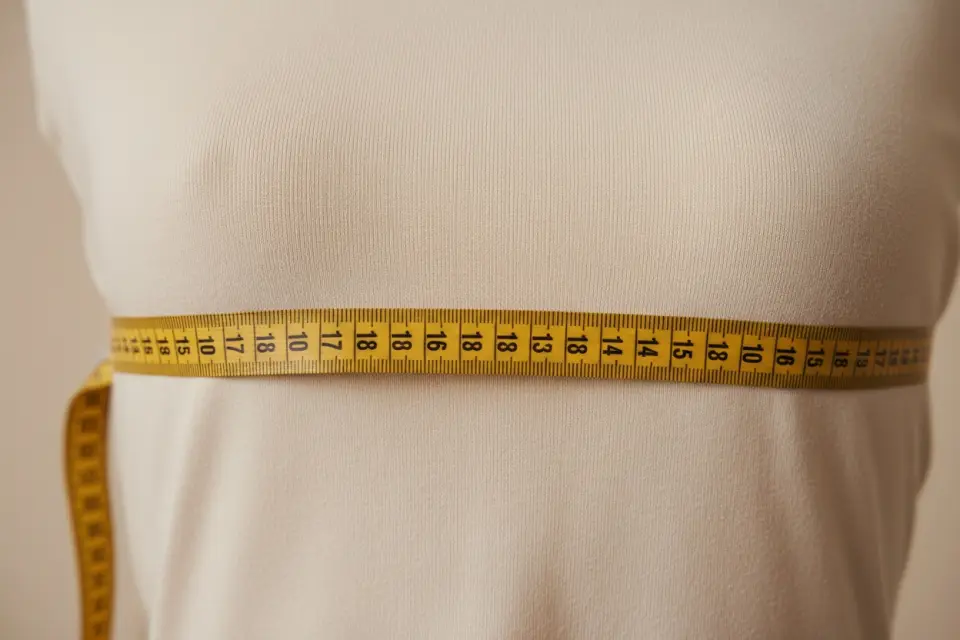
Compare your numbers with a body chart, or measure a shirt that fits you flat across the chest, double it, and compare that with a garment chart. Between two sizes, take the larger and have it taken in.
XXXXL and XXXL size FAQ
What is XXXXL size in numbers?
For men, XXXXL (4XL) fits a body chest of 56–58 inches (142–147 cm), a waist of 48–50 inches and a 19.5–20 inch collar, per the Marks & Spencer chart. US brands run the same or larger: Van Heusen's 4XB is 58–60 inches. For women, XXXXL is US 28–30 and UK 32–34, a bust of about 57.5–59.5 inches on Target's chart, where the same sizes are called 4X.
Is XXXXL size 12?
No. A women's size 12 is a L in the US (Target, Kohl's) and a M in the UK (Marks & Spencer). In kids' sizes, 12 is a L at Children's Place. XXXXL starts at US 28.
Is size 18 XXL?
It depends on the chart. US women's 18 is XL at Kohl's and 1X at Target. UK 18 is L at Marks & Spencer. An 18-inch shirt collar is XXL (M&S 2XL is 17.5–18"). A kids' 18 is XXXL at Children's Place but XL for Nike boys.
Is size 15 XXL?
No. A 15-inch shirt collar is a M (M&S: 15–15.5"). XXL is an 18-inch collar.
What is 4XL in inches?
A 4XL is cut for a 56–58 inch body chest at Marks & Spencer and 58–60 inches at Van Heusen US. Indian charts list the shirt itself, which measures about 54–59 inches across the chest for a 4XL.
What is 4XL in cm?
About 142–147 cm body chest (M&S). Garment chest on Indian 4XL shirts is 138 cm at U.S. Polo Assn. India and 150 cm at Indian Terrain.
What is 4XL in Indian size?
48 or 50, depending on the brand. U.S. Polo Assn. India tags XL 44, XXL 46, 3XL 48, 4XL 50. Blackberrys runs one step lower: XXL 44, 3XL 46, 4XL 48. No brand we checked tags 4XL as 52 or 54. The number is not your chest in inches: on Blackberrys' shirt chart 48 is a 19" collar.
Is 44 size XXL for men?
At some brands. On an Indian tag, 44 is XXL at Blackberrys and Monte Carlo but XL at U.S. Polo Assn. India. A 44-inch body chest is a L at Marks & Spencer (42–44").
Is 42 inches XL or XXL?
Neither. A 42-inch body chest is a L (M&S L = 42–44"). XL is about 46" and XXL 48–50".
Is XXXL the same as 3XL?
Yes, XXXL and 3XL are two ways of writing the same label, and so are XXXXL and 4XL. 3X is different: it is the plus-size scale, cut fuller at the same number.
Is XXXL bigger than 2XL?
Yes, by one size. For men XXL (2XL) is a 48–50 inch chest and XXXL a 52–54 inch chest (M&S). For women XXL is UK 24–26 and XXXL UK 28–30. For the full XL and XXL chart, see XXL size in numbers.
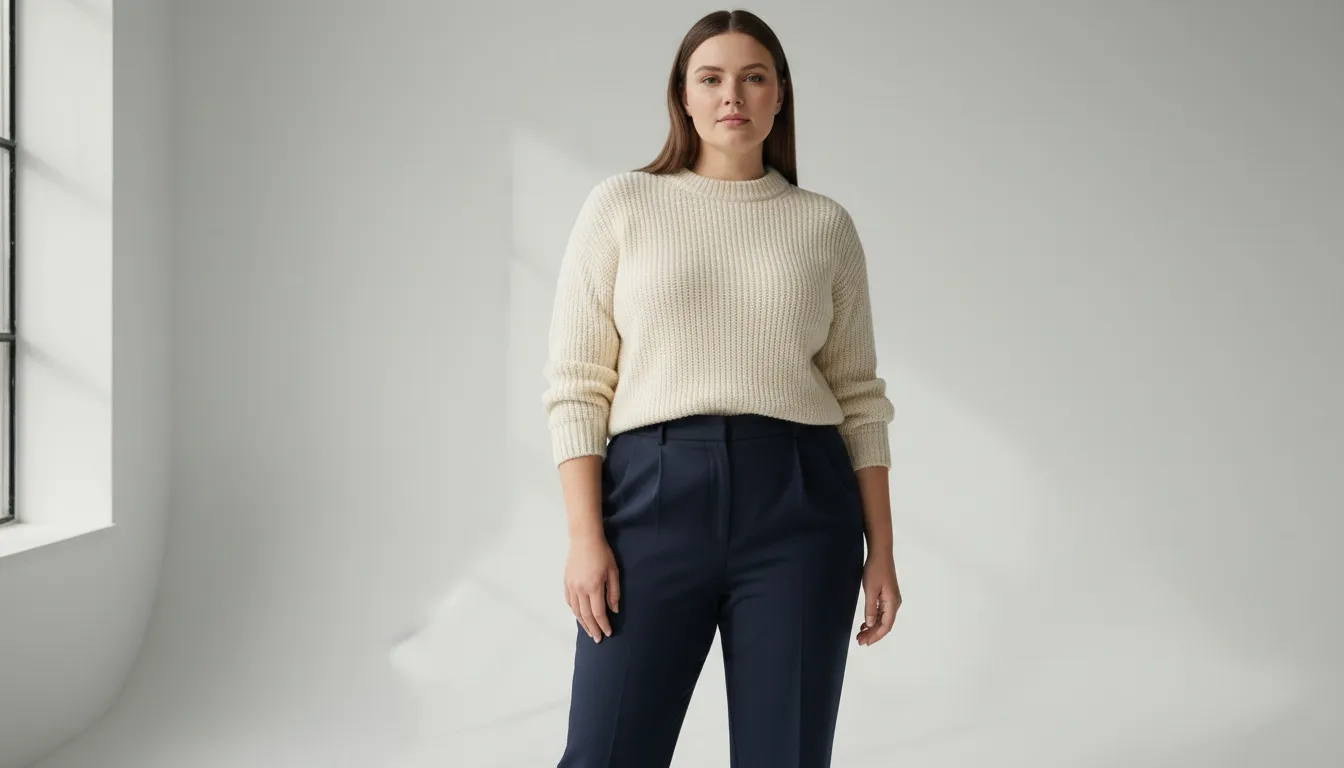
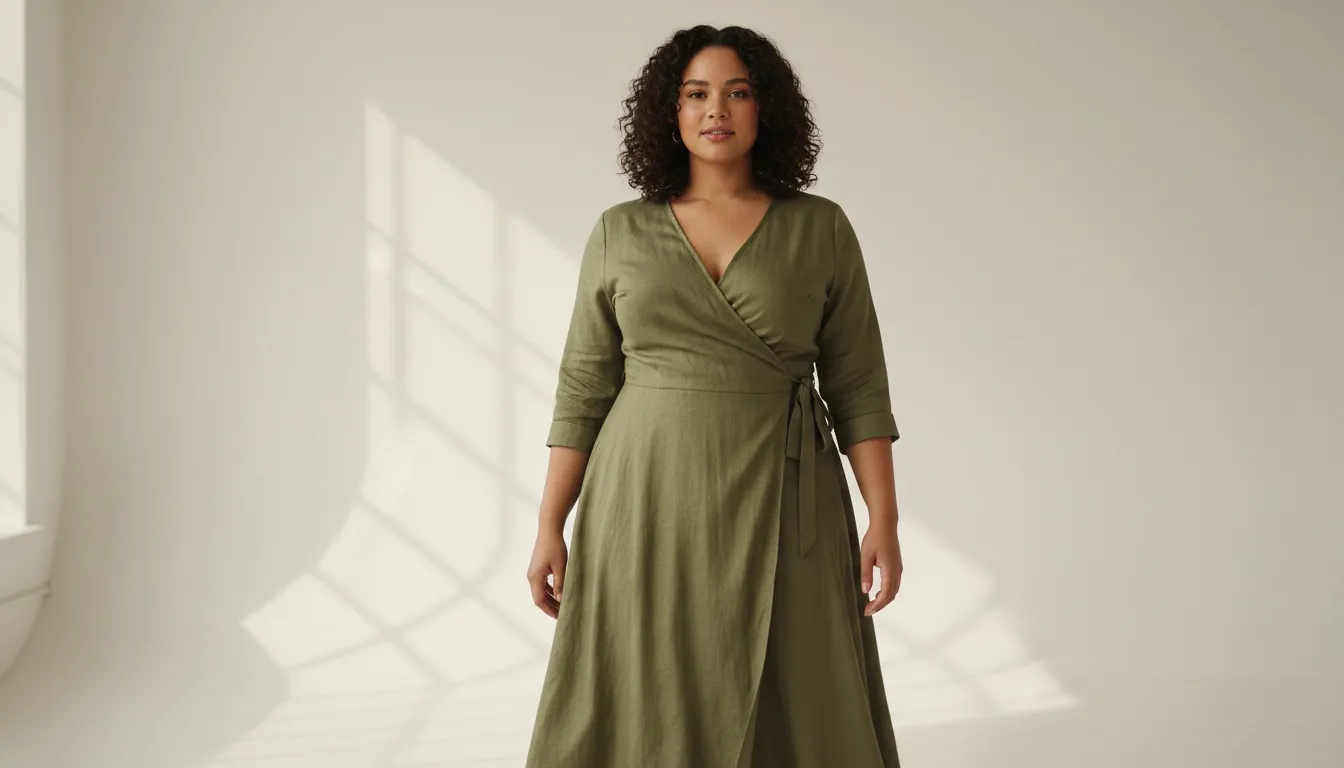
Extended sizes are the ones most often listed with no photo on a body of that size. Our AI plus size model generator shows one garment on models across the size range.
Every brand number on this page was read from that brand's own size chart on 6 October 2026. Body charts: Marks & Spencer, Target, Kohl's, Charles Tyrwhitt, Jockey India, Children's Place. Garment charts: U.S. Polo Assn. India, Blackberrys, Van Heusen India, Monte Carlo, Park Avenue, Peter England, Powerlook, Indian Terrain, J., Aarong. Brands vary by up to a full size, so check the chart for the garment you are buying.
6 Oct 2026: re-checked against brand charts. Men's 3XL corrected from 50–52" to 52–54" and 4XL from 53–55" to 56–58" body chest. India 4XL tag corrected from 54 to 48–50, and 3XL from 50 to 46–48. Women's busts updated to Target's chart (XXXL 53.5–55.5"). Added the size-by-number table and the kids' and South Asia sections. First published 26 Aug 2026.