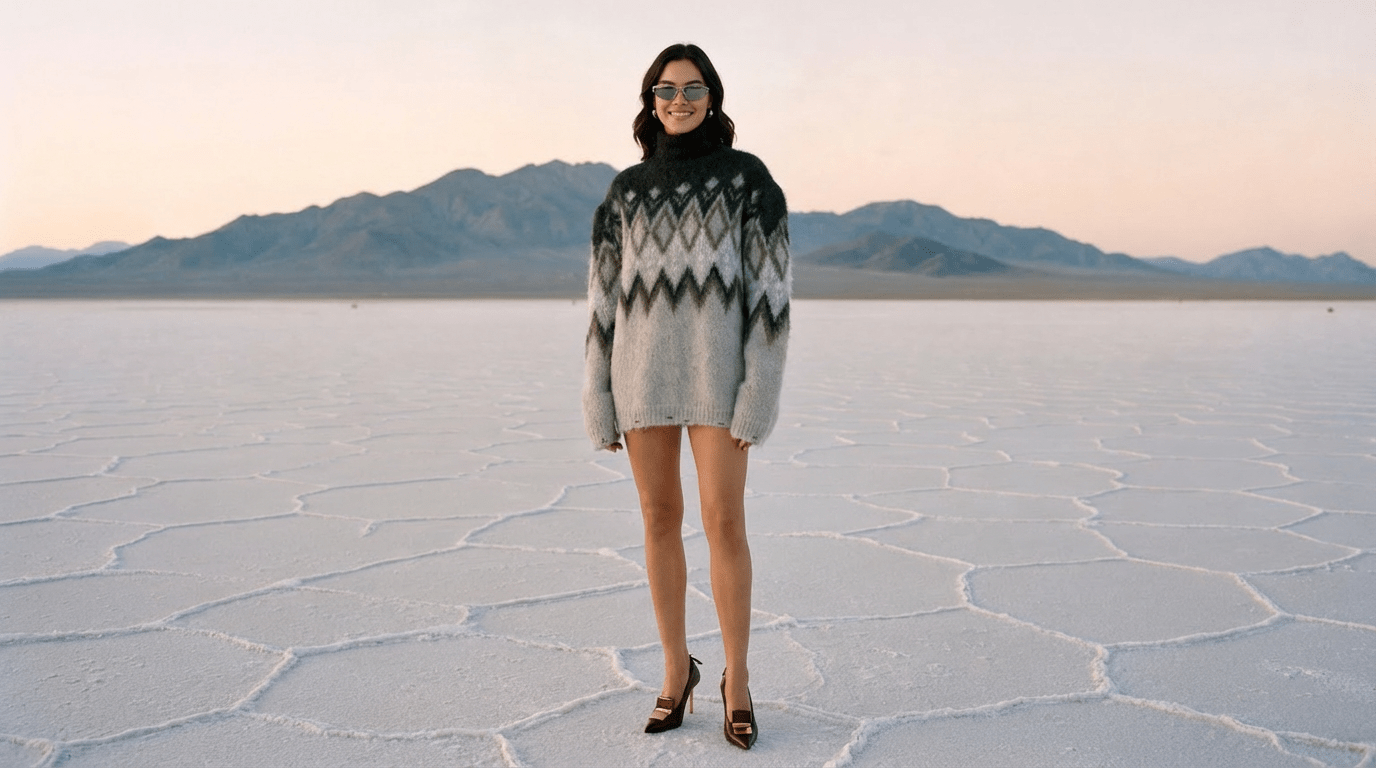
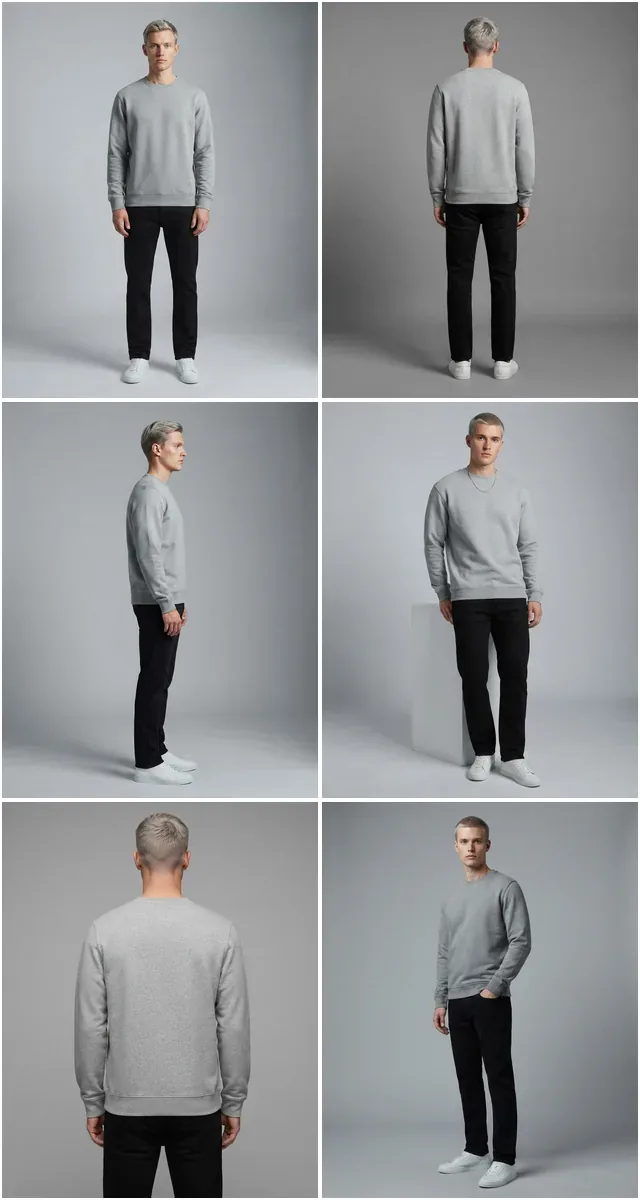

2026: The Year AI Stopped Being a Fashion Pilot and Became Infrastructure
$6.11B AI fashion photography by 2029 6 major AI segments 32.1% CAGR (photography segment)
By 2026, AI in fashion has moved past the pilot phase into operational infrastructure. The leading brands no longer talk about "AI initiatives" — they talk about AI-native workflows. The center of gravity has shifted from experimental innovation labs to ecommerce, merchandising, and production teams running AI as part of weekly operating cadence.
Three years ago, "AI in fashion" was mostly press releases. Innovation labs at major houses announced partnerships, ran small pilots, and published trend-forecast slide decks. The actual operating impact on production, merchandising, and ecommerce was modest. Brands experimenting with AI imagery, virtual try-on, or AI-driven design were the exception rather than the rule.
2026 looks fundamentally different. Artificial intelligence has crossed the threshold from interesting technology to infrastructure-grade tooling that fashion brands depend on for daily operations. AI-generated product imagery powers PDPs at every major fast-fashion and DTC brand. Virtual try-on reduces return rates measurably across categories that previously had no good solution. AI personalization shapes what shoppers see on category pages. AI design tools accelerate the concepting phase across every commercial design team. AI demand forecasting drives inventory decisions worth billions.
This report maps the 2026 state of AI in the fashion industry across six major segments, documents the brand-level adoption patterns, profiles the tool landscape powering each segment, and forecasts where the field moves next through 2027. It is not a press-release-cycle "AI is transforming fashion" report. It is a working-document for fashion operators trying to understand where AI is already infrastructure and where it remains experimental.
Methodology
Published 18 May 2026. Last updated 20 July 2026. Written by the Fashio Editorial team — the people who build and run Fashio AI, a fashion AI production platform. We have a commercial interest in this category, which you should weigh when reading.
This is a practitioner's read, not a market-research report. It draws on public trade reporting, vendor and brand statements that are on the record, and what we observe running a fashion AI platform. Every number in this document is either sourced to a named third party with a link, or is our own pricing, which you can check on our pricing page.
What this document does not know:
- Total AI-in-fashion market size. We have no defensible figure. Spending is spread across at least six application areas with different buyers and no common definition, and we are not going to invent an aggregate. The one segment with a credible published figure is AI-generated fashion photography — see below.
- Brand adoption percentages. We have seen no survey with a published methodology and a defined population that we would stand behind. Where we describe adoption, it is directional and based on public brand statements, not a percentage.
- Segment growth rates. Same problem. We quote the one CAGR that has a named source and leave the rest unquantified.
- Aggregate conversion and return-rate effects. Individual brands publish their own results; there is no reliable cross-industry average. We cite named brands rather than averaging them.
Sources
- The Business Research Company, AI-Generated Fashion Photography Global Market Report 2025 — market size and CAGR.
- ASOS Customer Care, virtual try-on tool — return-rate effect among engaging shoppers.
- UN Environment Programme (2024), textile waste volumes.
- McKinsey, AI in forecasting and distribution operations.
- Fashio AI pricing, fashiolabs.com/pricing — first-party, current.
1. The AI Fashion Market by the Numbers
Quantifying "AI in fashion" is harder than quantifying most software categories because spending is distributed across at least six distinct application areas with different buyer profiles, and no two analysts scope the category the same way. We are not going to publish an aggregate we cannot defend. What we can do is describe where each segment sits on the adoption curve, which is the part that actually informs a decision:
| AI Fashion Segment | Adoption Stage | Who Is Buying It |
|---|---|---|
| AI Imagery & Photoshoots | Production mainstream | Ecommerce and content teams, replacing studio day-rates |
| Virtual Try-On Technology | Mainstream in apparel | Ecommerce, owned by whoever carries the returns number |
| AI-Assisted Design | Growing rapidly | Design and product development, at the concepting stage |
| Supply Chain / Forecasting AI | Enterprise mainstream | Planning and merchandising, longest-established segment |
| AI Personalization (PDP, search) | Mainstream in DTC | Growth and onsite merchandising teams |
| Sustainability / Circular AI | Early production | Compliance and sourcing, often regulation-driven |
The one segment with a credible published market figure is AI-generated fashion photography: The Business Research Company (2025) sizes it at $2.01B in 2025 and projects $6.11B by 2029, a 32.1% CAGR. That is one segment of six, and it should not be read as the whole category. Supply chain and demand forecasting AI is almost certainly the largest segment by spend, since it has been deploying inside enterprise apparel companies for over a decade — but we have no figure for it that we would put our name to.
2. The Six Major AI Segments in Fashion
Segment 1: AI Imagery and Photoshoots
The most visible AI capability in fashion is the one most directly replacing existing budget lines: AI-generated product imagery, on-model photography, and editorial lookbooks. The economics shifted decisively in 2024-2025 as fashion-trained image AI reached parity with traditional photography on garment fidelity, character consistency, and commercial license.
In 2026, AI imagery infrastructure spans:
- PDP / Product Page Imagery — AI-generated on-model shots replacing or supplementing studio shoots for fast-fashion and DTC catalogs shipping at high velocity.
- Lookbook and Campaign Imagery — Editorial-style sets built entirely in AI workflows, used for category landing pages, email campaigns, and wholesale linesheets.
- Paid Ad Creative — High-variant creative production for Meta, TikTok, and Google ads, where the volume and cadence of traditional production cannot keep up with paid social testing.
- Marketplace Listings — Amazon, Walmart, Shein-style platforms increasingly populated by AI-generated product imagery that meets marketplace accuracy requirements.
- Regional Variants — Localized model representation per market (ethnicity, body type) generated from a single garment input without re-shooting per region.
The leading tools in this segment include Fashio AI, Botika, and other fashion-trained platforms. The displaced category is traditional commercial product photography, and the pressure falls hardest on mid-tier catalog work rather than on editorial or campaign photography. We have no adoption-velocity data that would let us put a number on how much of that work moves by 2027.
Segment 2: Virtual Try-On Technology
Virtual try-on has the longest history of any AI fashion segment but reached production maturity only in 2024-2025. The breakthrough was diffusion-based virtual try-on that handles real garment photos with realistic drape and fit, rather than earlier AR-style overlay approaches that looked obviously synthetic.
By 2026, virtual try-on deployment splits into three primary use cases:
- PDP Try-On Buttons — Shoppers upload a photo or select an avatar to see the garment on a body shape close to their own. ASOS added virtual try-on in 2026 as one part of a wider returns programme; it has not published a figure isolating try-on's own effect.
- Brand-Side Try-On for Imagery — Brands use virtual try-on internally to generate on-model PDP imagery from flat-lay product shots, replacing on-model studio sessions.
- Try-On in Brand Apps — Loyalty-app exclusives where engaged shoppers get advanced try-on features tied to their saved measurements.
The tool landscape includes Fashio AI's Virtual AI Fashion Try-On, Doji, AYR, and several enterprise-specific solutions integrated into Shopify Plus and SAP Commerce stacks.
Segment 3: AI-Assisted Design
AI in the design phase is the segment where the 2025-2026 shift was most pronounced. Where previously AI was used primarily for moodboards and trend-spotting, by 2026 mainstream commercial design teams use AI tools throughout the concepting-to-tech-pack workflow:
- Concepting and Iteration — Generative AI tools (Midjourney, Flux, dedicated fashion design AIs) for rapid concept iteration before sketch finalization.
- Print and Pattern Design — AI-generated textile prints, surface patterns, and graphic placements tested at scale before commit.
- Trend Forecasting and Brief Generation — AI synthesis of social media, runway, and shopper-behavior signals into design briefs.
- Tech Pack Acceleration — Design-to-tech-pack handoff accelerated by AI flat-sketch generation and spec extraction.
The honest reality: AI is augmenting, not replacing, commercial fashion designers. Senior design judgment, brand direction, and the human eye for buyability remain irreplaceable. What AI provides is iteration speed — testing 50 print variants in an afternoon instead of 5, exploring concept directions in hours instead of days.
Segment 4: Supply Chain and Demand Forecasting AI
The least visible but largest AI segment in fashion by spending. Major apparel companies have used machine learning for demand forecasting, inventory allocation, and pricing optimization for over a decade. What changed in 2024-2026 was the integration of new data sources — real-time social signal data, granular shopper segment data, and AI-driven trend forecasting — into the forecast models.
The operational impact is significant. McKinsey finds that AI-driven forecasting cuts forecasting errors by 20-50%, which is the mechanism behind improvements in:
- Sell-through rates on new collections (better assortment decisions)
- Inventory carrying costs (less dead stock)
- Markdown depth (less aggressive end-of-season clearance)
- Stockouts on hero SKUs (better replenishment timing)
This segment is enterprise-only — the buyers are tier-1 retailers, not small DTC brands — and the spending is concentrated in companies like Inditex (Zara), H&M Group, Fast Retailing (Uniqlo), Stitch Fix, and the major North American department stores.
Segment 5: AI Personalization on PDPs and Search
AI-driven personalization on PDPs, search results, and category pages is mainstream in fashion DTC by 2026. The capabilities span:
- Product Recommendations — "You might also like" and "Complete the look" panels driven by AI rather than rule-based logic.
- Search Reranking — Personalized search result ordering based on the individual shopper's browsing and purchase history.
- Dynamic Category Page Sorting — Per-shopper sort order on category pages, surfacing the products most likely to convert that specific user.
- Email Product Curation — Per-user product selection in marketing emails, replacing universal merchandising decisions.
- Ad Creative Personalization — Dynamic ad creative variants assembled at serve time based on audience segment.
The platforms powering this segment include Klaviyo (email), Algolia and Constructor (search), Nosto and Dynamic Yield (PDP personalization), and the major DTC commerce platforms themselves.
Segment 6: Sustainability and Circular Economy AI
The smallest but fastest-growing AI fashion segment in 2026. The applications:
- Demand Forecasting for Reduced Overproduction — The single largest sustainability impact, because overproduction drives most of fashion's environmental footprint.
- Material Optimization — AI analysis of fabric environmental impact across the supply chain, surfacing lower-impact alternatives during design.
- Resale and Authentication AI — Image-based authentication for resale platforms (Vestiaire Collective, The RealReal), expanding the secondary market.
- Circular Logistics — AI optimization of take-back, repair, and resale flows for brands operating circular programs.
- Supply Chain Transparency — AI-powered supply chain traceability for regulatory disclosure and consumer-facing transparency.
The segment is dominated by enterprise sustainability software vendors and the resale platform leaders themselves. Brand spending on this segment is growing fastest among brands facing EU regulatory pressure (Extended Producer Responsibility, Digital Product Passport requirements).
3. Brand-Level Adoption Patterns
The 2026 fashion AI adoption curve is uneven across brand categories. The clearest pattern: brand categories shipping high SKU velocity and operating at margin pressure lead AI adoption; brand categories that compete on craft authenticity lag.
| Brand Category | AI Adoption Stage (2026) | Most Common Use Cases |
|---|---|---|
| Fast Fashion (Shein, Temu, etc.) | Production infrastructure | Imagery, design iteration, forecasting |
| Mass-Market Apparel (H&M, Zara, Uniqlo) | Production mainstream | All six segments to varying depth |
| DTC Brands (Stitch Fix, etc.) | Production mainstream | Imagery, personalization, try-on |
| Mid-Market Apparel (Tommy, Calvin Klein, etc.) | Growing adoption | Imagery, try-on, supply chain |
| Athleisure / Performance (Nike, Lululemon) | Growing adoption | Personalization, design, try-on |
| Accessible Luxury (Coach, Tory Burch) | Selective adoption | Imagery, personalization |
| Heritage Luxury (LVMH brands, Kering) | Innovation labs only | Trend forecasting, internal tools |
| Independent Designers / Emerging Brands | Marketing tool only | Imagery, social content |
The heritage luxury lag is structurally interesting. The brands with the most resources to deploy AI are also the brands whose value proposition is most threatened by AI imagery and AI-assisted design. Selling a $4,000 handbag depends partly on the perception of irreplaceable craft and human-led design. AI undermines that perception even when the AI use is purely operational. The result: heritage luxury moves more cautiously, deploys AI primarily in customer service and supply chain (invisible to the consumer), and keeps design and imagery firmly human-led for public-facing work.
4. Brand Case Studies
The 2026 case studies that have been publicly documented in trade reporting:
H&M
H&M has been one of the most public AI adopters in mass-market apparel, with documented use of AI imagery for ecommerce product pages, AI-assisted design for trend-responsive collections, and AI demand forecasting integrated into the merchandising stack. The brand has explicitly discussed AI as part of its operational efficiency strategy across multiple earnings cycles.
Zara (Inditex)
Inditex operates one of the most sophisticated demand-forecasting AI stacks in the apparel industry, dating back over a decade and continuously enhanced. The brand's fast-fashion model — short cycles, high SKU velocity, narrow assortment — depends entirely on accurate forecast and replenishment AI. More recent AI deployments include trend-spotting on social signals and AI-assisted concepting in design.
Shein
Shein's operational model is the closest thing to fully AI-native fashion in 2026 — AI-driven trend detection, design iteration, demand testing through micro-batch production, and AI imagery for the vast SKU catalog. The model's controversies (labor, sustainability, copying) sit alongside its operational AI sophistication; both are accurate descriptions of the same company.
Stitch Fix
Stitch Fix has been an AI-personalization pioneer in fashion since its founding, using ML for both stylist-decision support and direct customer-facing recommendations. The brand has continued to invest in AI as part of its business model rather than as a layer on top of it.
Levi's
Levi's has documented several AI initiatives including AI-generated marketing imagery and exploration of digital model representation. The brand has approached AI imagery with explicit disclosure and diversity-positive framing, positioning the work as complementary to rather than replacing traditional production.
Ralph Lauren and Tommy Hilfiger
Both brands have publicly documented AI-driven personalization on PDPs and category pages, virtual try-on deployment, and trend-forecasting initiatives. The adoption pattern in mid-luxury sits between aggressive fast-fashion deployment and conservative heritage-luxury caution.
The most accurate way to describe AI in fashion in 2026 is that the leading brands have stopped treating it as an initiative and started treating it as infrastructure. When AI shows up in earnings calls, it shows up as part of operational efficiency narratives — not as the future-vision slide.
5. The Fashion AI Tool Landscape
The tool ecosystem powering each segment has consolidated significantly since 2023. The 2026 landscape:
| Segment | Leading Tools / Platforms | Buyer Profile |
|---|---|---|
| AI Imagery / Photoshoots | Fashio AI, Botika, Modelia, Claid | DTC, fast-fashion, mid-market |
| Virtual Try-On | Doji, AYR, Fashio Virtual Try-On | Apparel DTC and ecommerce |
| AI-Assisted Design | Midjourney, Flux, fashion-specific design tools | Design teams across categories |
| Demand Forecasting | SAP, Oracle Retail, Blue Yonder, custom ML | Enterprise apparel |
| PDP Personalization | Nosto, Dynamic Yield, Algolia, Constructor | DTC and mid-market commerce |
| Sustainability AI | Worldly, Higg / SAC tools, specialized vendors | Brands facing regulatory pressure |
| Resale / Authentication | Entrupy, Veracitiz, in-house at major platforms | Resale platforms and luxury brands |
The pattern across segments is clear: enterprise-scale segments (demand forecasting, sustainability) are dominated by traditional enterprise software vendors with AI bolted on; consumer-facing creative segments (imagery, design) are dominated by AI-native specialist platforms; personalization sits in the middle with both enterprise vendors and specialist tools competing.
6. The Economics: Why AI Spread So Fast
The fastest AI adoption in fashion in 2024-2026 happened in the segments with the clearest unit economics. The pattern:
| AI Capability | Traditional Cost | AI Cost | Adoption Velocity |
|---|---|---|---|
| Product-on-Model Imagery | $200-$500 per SKU shot | $0-$5 per SKU on platform | Very high |
| Editorial Lookbook | $3K-$15K per shoot | $0-$100 per lookbook | Very high |
| Ad Creative Variants | $500-$2K per variant set | $0-$50 per variant set | High |
| Virtual Try-On (per shopper) | n/a (didn't exist) | $0.01-$0.10 per try-on | High |
| Demand Forecast Accuracy | Hard to attribute | Lower dead stock and shallower markdowns | Moderate (enterprise sales cycle) |
The segments where AI spread fastest are the segments where the cost reduction is most measurable and the alternative is unambiguously expensive. AI imagery wins because traditional photography is expensive; virtual try-on wins because returns are expensive; demand forecasting AI wins because dead stock is expensive. The pattern is industrial-grade unit economics, not technology-fad enthusiasm.
7. Risks and Open Questions
The honest 2026 risks and open questions around AI in fashion, in rough order of how much active discussion they generate:
1. Disclosure and Regulatory Risk
The EU AI Act and various US state-level laws are pushing toward broader AI imagery disclosure requirements. By 2027, fashion brands using AI-generated imagery in advertising may face mandatory labeling in multiple major markets. Brands that have built disclosure into their AI workflows now are positioned ahead of compliance; brands that have not are positioned to be reactive.
2. Training Data Provenance
The provenance of training data behind the AI imagery models powering fashion brands' outputs remains an active question. Several major lawsuits in 2024-2026 have addressed whether AI image generators trained on uncredited photographs constitute fair use or infringement. Brands using AI imagery vendors should ask about training data sources — and prefer vendors with clean, documented training data origins.
3. Representation Bias
AI image generators can encode biases from their training data — over-representing certain demographics, defaulting to thin Western beauty norms, under-representing older models or disabled bodies. Responsible deployment requires active prompting for diversity rather than accepting whatever the model defaults to.
4. Production Job Displacement
The honest impact on commercial fashion photographers, retouchers, and ecommerce production assistants is real and ongoing. The displaced category is mid-tier catalog production work, not editorial or campaign photography. Brands deploying AI imagery should consider what their responsibility is to the production talent ecosystem they previously supported.
5. Brand Trust and Consumer Acceptance
Consumer reaction to AI fashion imagery varies by demographic and category. Survey research in 2026 suggests younger shoppers are generally more accepting; older shoppers more skeptical. Categories where physical fit and material matter most (formal wear, luxury) generate more consumer skepticism than fast-fashion and ad creative.
6. Brand-Specific Model Risk
Brands fine-tuning AI models on their own imagery face the question of what happens to that model if the vendor changes terms, gets acquired, or shuts down. Brand-specific AI infrastructure is becoming a real asset class with corresponding asset-management questions.
The 2026-2027 regulatory direction is unambiguous: AI imagery disclosure requirements will expand. Brands that proactively label AI-generated content, document their training data sources, and maintain auditable AI workflow logs will navigate the coming regulations smoothly. Brands that haven't started this work will spend 2027 in reactive compliance mode. The cheap version is to build it now.
8. Forecast: Where AI Fashion Goes in 2027
The directions visible from 2026 data that will likely define 2027:
1. Video-First AI Imagery Becomes Default
By end of 2027, AI fashion imagery will be increasingly video-native rather than still-first. The convergence of high-quality photo-to-video tools (Runway Gen-4, Kling, Fashio Photo to Video) and AI model generators means video output will become the default rather than the upgrade.
2. Brand-Specific Fine-Tuned Models for Large Brands
Large brands will increasingly train fashion AI models on their own product imagery, brand-specific photography, and house styling rules — moving from generic AI tool consumers to operators of brand-specific AI infrastructure. This shift is already visible at Shein and major fast-fashion brands and will move down-market through 2027.
3. AI Personalization Extends to Dynamic Ad Creative
The boundary between PDP personalization and ad creative will dissolve. Dynamic ad creative — different ad images per shopper segment, generated on the fly from a brand's AI imagery library — moves from experimental to standard at performance-marketing-led DTC brands.
4. On-Device Generation in Mobile Commerce
Smaller, faster AI models (Flux Schnell, SDXL Lightning, on-device variants) will move into mobile commerce apps directly. Expect shopping apps to ship features like "see this on me" with on-device try-on, generated without server-side AI.
5. Regulatory Disclosure Expands
EU AI Act implementation, US state laws, and category-specific requirements (e.g., advertising standards bodies) will tighten disclosure requirements through 2027. Brands without an established AI workflow disclosure process will spend 2027 retroactively building one.
6. The Heritage Luxury Position Shifts
The current heritage-luxury caution around AI imagery is sustainable for another 12-24 months but probably not indefinitely. As AI imagery becomes invisible-default in mid-luxury and accessible luxury, heritage houses will need to articulate where the line is. Expect more public statements clarifying AI use in heritage luxury through 2027.
7. AI Native New Entrants
The most interesting forecast is which AI-native fashion brands emerge as challengers to incumbents. Shein was the prototype; the next generation may be brands that ship product imagery and ad creative entirely AI-generated, never built traditional production infrastructure, and operate at margin structures incumbents cannot match.
Fashio AI Tools Across the Fashion AI Stack
- Fashio AI — full fashion AI platform overview
- AI Fashion Studio — end-to-end fashion AI workflow hub
- AI Fashion Model Generator — text-to-model with identity lock
- Virtual AI Fashion Try-On — production-grade fit imagery
- Product to Model — flat-lay to on-model conversion
- Pose Variation — editorial pose direction
- Flat Lay to Catalog Creator — batch catalog production
- Photo to Video — AI video for social and ads
- AI Image Editing — refine and adjust generated imagery
Going Deeper — Related Reading
If this report covers the macro view, these deeper pieces cover specific segments and workflows in more depth:
- 12 Best AI Tools for Fashion Brands in 2026 — tool-by-tool review of the platforms powering AI fashion
- Best AI Image Generators for Fashion Brands in 2026 — deep comparison of the imagery segment
- AI Clothes & Fashion Revolution — the AI imagery and try-on segment in narrative form
- AI Photoshoot Guide — operational workflow for AI imagery production
- AI Fashion Model Generator Guide — fashion model AI subset
- AI Lookbook Generator Guide — editorial AI imagery workflow
- AI Person Generator Guide — human imagery generation specifics
Key Takeaways
- AI in fashion has crossed from pilot phase to production infrastructure — leading brands run AI as part of weekly operating cadence, not as a future-vision initiative
- Six major segments drive adoption: AI imagery and photoshoots, virtual try-on, AI-assisted design, supply chain forecasting, AI personalization, and sustainability AI
- We cannot source a total market size and do not publish one; the AI fashion photography segment alone is projected at $6.11B by 2029 at a 32.1% CAGR (The Business Research Company, 2025)
- Fast-fashion and DTC categories lead adoption; heritage luxury lags structurally because AI undermines the craft-authenticity brand promise
- The economics are industrial-grade: a generated image on Fashio AI's Plus plan costs about $0.75 ($29.99 for 160 credits, 5 credits per generation) against studio work booked at day rates, while ASOS folded virtual try-on into a wider returns programme without publishing a try-on-specific reduction figure
- The 2027 directions: video-first imagery becomes default, brand-specific fine-tuned models proliferate, AI personalization extends to dynamic ad creative, and regulatory disclosure expands
- The risks are real: training data provenance, representation bias, production job displacement, regulatory disclosure, and brand trust — all addressable, none ignorable
- The honest summary: AI is not coming to fashion; it has already arrived in production. The strategic question for brands is whether they integrate it deliberately or react to competitors who already have
Build Your AI Fashion Workflow on Fashio AI
Production-grade AI imagery, virtual try-on, lookbook chaining, and fashion video — under one platform with full commercial rights and free credits to test with.
Start creating →FAQ: AI in the Fashion Industry
How big is the AI fashion industry in 2026?
We do not have a defensible figure for total AI-in-fashion spending, and we would rather say so than publish an estimate. The one segment with a published third-party market figure is AI-generated fashion photography, which The Business Research Company put at $2.01B in 2025 and projects to reach $6.11B by 2029, a 32.1% CAGR. The fastest-moving areas by our own observation are AI imagery, virtual try-on, and personalization.
What percentage of fashion brands use AI in 2026?
We have not found a survey with a published methodology and a defined population that we would stand behind, so we will not quote a percentage. Directionally, and based on public brand statements, most mid-to-large fashion brands have deployed at least one AI capability in production — most commonly AI-generated product imagery, virtual try-on for sizing, or AI-driven personalization on PDPs. Adoption is highest at fast-fashion and DTC brands shipping high SKU volumes; slower at heritage luxury houses where craft authenticity remains the central brand promise.
What are the most important AI applications in fashion right now?
Six segments are driving the most measurable impact in 2026: AI imagery and photoshoots (replacing studio production), virtual try-on (reducing returns), AI-assisted design (accelerating concepting), supply chain AI (demand forecasting and inventory), AI personalization (PDP recommendations and dynamic merchandising), and sustainability AI (material optimization and circular economy tracking).
Which fashion brands lead in AI adoption?
Fast-fashion and DTC categories lead aggregate AI adoption — Shein, H&M, Zara, Uniqlo, and Stitch Fix have all publicly documented AI deployments. Among luxury houses, Levi's, Tommy Hilfiger, and Ralph Lauren have published AI initiatives. The pattern is clear: brands shipping high SKU volumes and frequent collections benefit most from AI capabilities.
Is AI replacing fashion designers and creatives?
The 2026 evidence suggests no — AI is augmenting, not replacing, fashion creatives. Designers use AI for concepting, mood boarding, and rapid iteration; the design decisions, brand direction, and creative judgment remain human-led. The roles being most affected are production photography, ecommerce imagery, and routine catalog work — not the creative leadership functions.
How does AI help fashion sustainability?
AI contributes to fashion sustainability in three main ways: demand forecasting (reducing overproduction and dead stock), material optimization (selecting lower-impact fabrics with AI analysis), and circular economy tracking (resale and recycling logistics). The biggest impact is in inventory accuracy — by improving forecast accuracy, AI reduces the overproduction that drives most of fashion's environmental footprint.
What does AI fashion look like in 2027?
The 2027 directions visible from 2026 evidence: video-first AI imagery becomes default, brand-specific fine-tuned models replace generic platforms for large brands, on-device AI generation moves into mobile commerce apps, AI personalization extends from PDP recommendations to dynamic ad creative, and regulatory disclosure requirements expand from selective to broad. Expect AI to move from a "tool brands use" to "infrastructure brands depend on" by end of 2027.
What are the risks of AI in fashion?
The honest risks: deepfake and impersonation concerns when AI generates human imagery, training-data provenance questions for the models powering brand outputs, regulatory uncertainty around disclosure requirements, potential representation bias if AI tools encode beauty-norm biases, and the displacement of certain production roles (commercial photography, ecommerce retouching). Responsible brands are actively addressing each — transparency, training-data audits, regulatory monitoring, and reskilling programs.