We Tested 10+ AI Image Generators on Real Fashion Use Cases
10+ tools tested 3 production use cases Honest verdict per tool Free + paid tiers reviewed
We ran the same three fashion tasks — text-to-model, garment fitting from a real product photo, and full lookbook chaining — across every major AI image generator in 2026. The results are not what most "best of" listicles report. Fashion-specific tools dominate production use cases; generic image AIs dominate concept work; the tiers do not overlap.
The AI image generator market in 2026 is the biggest it has ever been — and the most confusing for fashion brands. Generic tools like Midjourney, DALL-E, and Flux dominate the "best AI image generator" search results, but most of those listicles do not test the tools on actual fashion production tasks. They test them on "generate a cool image of a person," which is the easiest possible benchmark. Real fashion brand work — fitting your specific dress onto a consistent model across 20 lookbook frames — is a fundamentally different problem.
This guide is different. We ran the same three real-world fashion tasks across every major AI image generator on the market in 2026 and report the honest result. The headline finding: fashion-trained platforms dominate production use cases by a wide margin, generic image AIs dominate concept work, and the "all-in-one best tool" question is the wrong framing. The right question is which tier matches your use case.
How We Tested
Every tool below was tested on the same three fashion-specific tasks. These were chosen because they represent the actual production workflows brands run in 2026 — not abstract benchmark tests.
-
Test 1 — Text-to-Model Realism
Prompt: "30-year-old Korean woman, medium build, shoulder-length black hair, soft natural smile, soft daylight from camera-left, three-quarter portrait, photoreal." We scored each output on skin texture realism, eye geometry, hand anatomy, and overall ecommerce-grade believability.
-
Test 2 — Garment Fitting from Real Product Photo
Input: a real flat-lay photo of a striped midi dress. Task: place this exact dress on a generated model. We scored each tool on stripe pattern accuracy, drape fidelity, hardware preservation (buttons, zipper, etc.), and whether the output looked like the actual product or a hallucinated approximation.
-
Test 3 — Lookbook Chaining
Task: generate the same model across 5 different outfits with pose variation and a consistent backdrop. We scored each tool on identity lock (does the face stay the same?), pose direction quality, scene consistency, and whether the workflow could ship a coherent lookbook end-to-end.
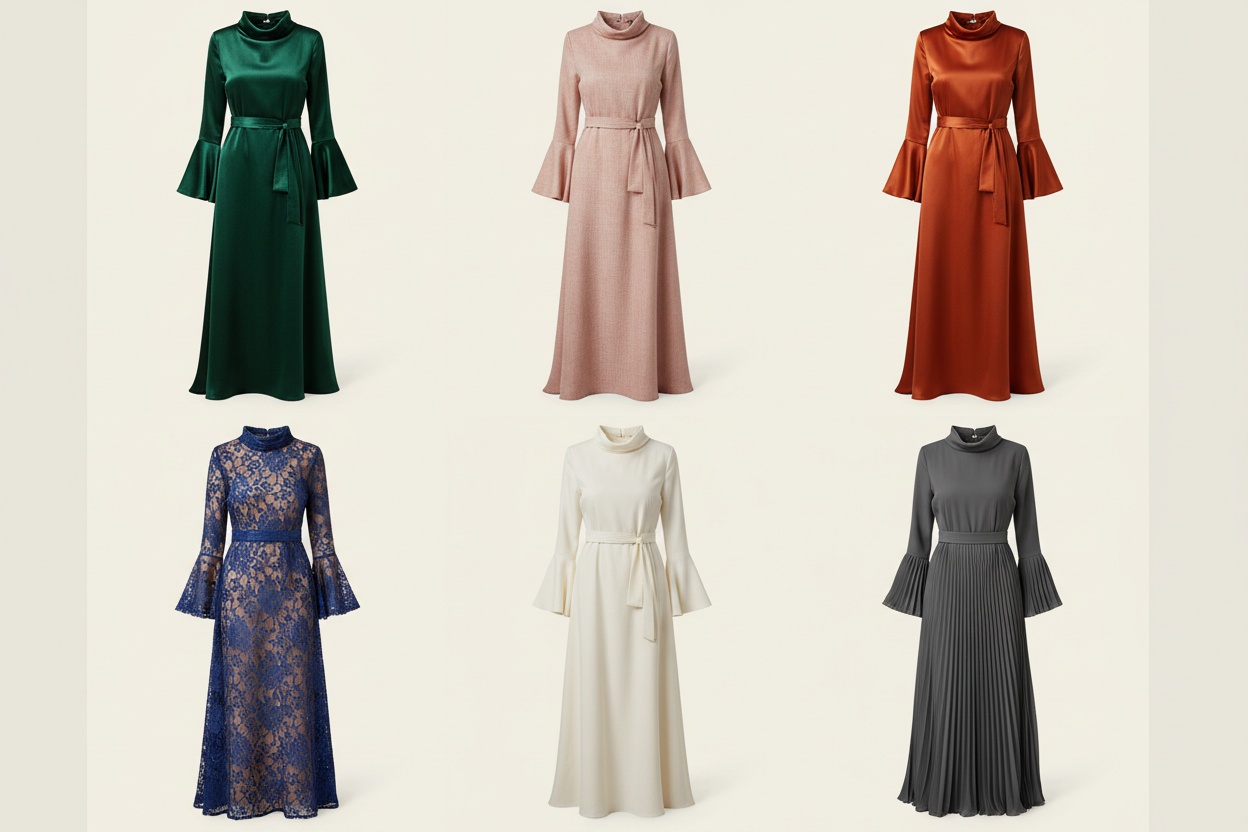
The 2026 AI Image Generator Landscape — Quick Overview
| Tier | Tools in Tier | Best Use Case | Verdict |
|---|---|---|---|
| Generic Creative AI | Midjourney v7, DALL-E 3, Flux Pro, Ideogram | Concept art, mood boards, ideation | Excellent for ideation; cannot do production fashion |
| Open / Self-Hosted | Stable Diffusion XL/3, Flux Dev | Custom pipelines for technical teams | Powerful but requires engineering investment |
| Adobe Ecosystem | Adobe Firefly 4, Photoshop Generative | Brands already on Adobe Creative Cloud | Strong commercial license, weaker fashion fidelity |
| Creative Suites | Leonardo AI, Krea, Magnific | Designer-focused workflows, upscaling | Mid-tier — not specialized enough for fashion |
| Fashion-Trained Platforms | Fashio AI, Botika, Modelia, ZMO.ai | Production ecommerce, lookbooks, ads | The only tier that solves real fashion production |
The TL;DR: if you need imagery for catalogs, lookbooks, or ad creative, you need a fashion-trained platform. If you need concept art and mood boards, you need a generic creative AI. Most brands need both — a fashion-trained tool for production work and a generic tool for ideation — rather than picking one to rule them all.
Generic Creative AI Tools — Detailed Review
Midjourney v7
Best for: Concept art, mood boards, editorial vision-setting.
Midjourney v7 is the strongest pure-creative AI image generator in 2026. Skin texture, lighting realism, and editorial mood are unmatched in the generic tier. For mood board creation and campaign vision-setting, no tool produces more inspiring outputs.
Where it fails for fashion: No way to fit a real garment photo onto a generated model. No identity lock — the same prompt produces a different person every time. Discord-only workflow until web app rollout. License requires paid plan for commercial use. For PDP imagery or lookbook chaining, Midjourney is the wrong tool category.
Pricing: $10/month (Basic) to $120/month (Mega). Commercial use requires Pro tier or higher.
DALL-E 3 (via ChatGPT)
Best for: Quick prompt-driven imagery inside a conversational workflow.
DALL-E 3's strength in 2026 is prompt comprehension — it understands complex multi-part prompts better than most. Inside the ChatGPT workflow, it is excellent for rapid iteration on concepts. Commercial license is included on paid plans.
Where it fails for fashion: Same fundamental limits as Midjourney — no garment fitting, no identity lock, no fashion-specific training. Output quality is solid but less photoreal than Midjourney v7 for portrait work. Not a production fashion tool.
Pricing: Included in ChatGPT Plus ($20/month) and above.
Stable Diffusion (SDXL, SD3)
Best for: Technical teams building custom pipelines.
Open-source Stable Diffusion remains the most flexible option for engineering teams. With LoRAs, ControlNet, and IP-Adapter, it's possible to build fashion-specific pipelines that approach commercial fashion AI capability. The ceiling is high; the floor requires real technical work.
Where it fails for fashion: Out of the box, SD is not a fashion tool — it requires substantial engineering to add identity lock, garment fitting, and consistent character workflows. Most brands cannot justify the build cost when fashion-trained platforms exist off the shelf.
Pricing: Free (self-hosted, GPU costs apply) or $0-$50/month on cloud platforms.
Flux (Pro, Dev, Schnell)
Best for: High-fidelity portrait generation, concept work.
Flux Pro in 2026 produces some of the most photoreal portrait outputs in the generic tier, particularly for skin texture detail and hand anatomy. Flux Dev (open-source) has become a popular base for technical teams building on top.
Where it fails for fashion: Same fundamental limits — no native garment-from-product-photo workflow, no identity lock, no fashion-trained data. Excellent for the model generation step; not a full fashion pipeline.
Pricing: Flux Pro via API ($0.05+/image), Flux Schnell free tier, Flux Dev open-source.
Adobe Firefly 4
Best for: Brands already in Adobe Creative Cloud.
Adobe Firefly's biggest advantage in 2026 is commercial license clarity — trained on Adobe Stock with explicit creator opt-in, which removes most of the legal uncertainty around AI imagery training data. Integration with Photoshop's Generative Fill is genuinely useful for compositing and editing.
Where it fails for fashion: Image quality lags Midjourney and Flux in the portrait realism category. No fashion-specific training. No garment fitting from real product photos. Strong for branding work, weaker for production fashion imagery.
Pricing: Included with Creative Cloud subscription, or standalone $4.99-$9.99/month.
Leonardo AI
Best for: Designer-friendly UI, multi-model platform.
Leonardo gives access to multiple base models through one UI, with strong upscaling and a free tier for testing. Good for designers who want to try different aesthetic directions.
Where it fails for fashion: Not a specialist tool — fashion outputs are middle-of-the-road across every dimension. Better as a generalist designer tool than a fashion production platform.
Pricing: Free tier (150 tokens/day) up to $48/month for Pro tier.
Ideogram
Best for: Text rendering inside images (logos, captions, signage).
Ideogram remains the leader in 2026 for rendering legible text inside generated images — useful for poster mockups, signage, packaging concepts. For fashion text-on-clothing or brand-mark mockups, it's the strongest tool in the category.
Where it fails for fashion: Portrait realism is weaker than dedicated portrait AIs. Not a garment-fitting tool. Best as a complement to other tools, not a primary fashion generator.
Pricing: Free tier available, $8-$48/month for paid plans.
Fashion-Trained AI Image Generators — Detailed Review
Fashio AI
Best for: End-to-end fashion production — model generation, garment fitting, lookbooks, video.
Fashio AI is built as an integrated fashion AI platform rather than a single-purpose tool. The full pipeline — AI Fashion Model Generator, Virtual Try-On, Pose Variation, Photo to Video, and 10+ other tools — runs inside one platform with consistent identity lock across every step. For brands shipping production fashion imagery, this end-to-end integration is the defining capability.
Where it shines: Garment fitting from real product photos is best-in-class — stripes stay straight, hardware survives, drape looks right. Identity lock works reliably across hundreds of frames. Free tier includes full commercial rights and no watermark. Multi-tool workflow makes lookbook chaining a single platform session.
Where it has room: Less suited for pure concept art or abstract editorial vision-setting (that's where Midjourney still wins).
Pricing: Free tier with full commercial rights, paid plans for higher volume.
Botika
Best for: AI model swap on existing product imagery.
Botika focuses specifically on swapping AI models into existing product photography — useful for ecommerce brands that already have on-model shots and want to localize or diversify the model without reshooting.
Where it fails: Narrower scope than full-pipeline platforms. Less flexibility for building lookbooks from scratch with multiple integrated tools.
Pricing: Paid plans starting around $30/month.
Modelia
Best for: AI fashion model generation, broad consumer appeal.
Modelia is one of the more visible fashion AI brands in 2026, with strong SEO presence and a focus on the AI fashion model generator subset. Output quality is competitive in the fashion-trained tier.
Where it has room: Less integrated end-to-end tooling than full-pipeline platforms. Pricing tends to scale faster than peers.
Pricing: Paid plans, exact tiers vary.
ZMO.ai
Best for: Ecommerce-focused AI imagery with strong APAC market focus.
ZMO.ai serves ecommerce brands with a focus on rapid product imagery generation. Strong for marketplace sellers needing volume PDP imagery.
Where it has room: Tooling depth lags larger platforms; UX is more transactional than creative.
Pricing: Pay-per-credit and subscription models.
The most common error fashion brands make in 2026: trying to run a production catalog or lookbook on Midjourney, DALL-E, or Stable Diffusion. These tools are excellent for what they were built for (creative imagery, concept work) but lack the two capabilities production fashion actually requires — fitting your real garment photo onto a model, and locking a consistent model identity across a campaign. The output looks good in isolation but cannot ship as a coherent brand catalog. Use the right tier for the right task.
Side-by-Side Comparison Table: All 10 Tools
| Tool | Fashion Fidelity | Identity Lock | Garment Fitting | Commercial License | Best Use Case |
|---|---|---|---|---|---|
| Midjourney v7 | High (creative) | No | No | Paid plan req'd | Concept boards |
| DALL-E 3 | Medium-High | No | No | Paid plan req'd | Ideation, prompts |
| Stable Diffusion | High (with effort) | Custom only | Custom only | Open | Engineering pipelines |
| Flux Pro | Very High (portraits) | No | No | Paid API | Photoreal portraits |
| Adobe Firefly 4 | Medium | No | No | Clear (Stock data) | Adobe ecosystem |
| Leonardo AI | Medium | Limited | No | Paid plan | Designer workflows |
| Ideogram | Medium (text strong) | No | No | Paid plan | Text-in-image work |
| Fashio AI | Very High (fashion) | Yes, built-in | Yes, real photo | Full, free tier | Production fashion |
| Botika | High | Yes | Yes (swap-style) | Paid plan | Model swap on existing photos |
| Modelia | High | Yes | Limited | Paid plan | AI fashion models |
The right AI image generator isn't the most popular one — it's the one that solves your actual problem. Brands shipping production fashion content need fashion-trained tools. Brands ideating campaign concepts need creative generic tools. Mixing the tiers up wastes money and ships worse imagery.
Verdict by Use Case
Rather than a single "best" tool, here's the honest verdict by what you actually need to ship.
| You Need To... | Best Tool | Runner-Up | Skip |
|---|---|---|---|
| Generate PDP product-on-model imagery | Fashio AI | Botika | Midjourney, DALL-E |
| Build a lookbook with consistent model | Fashio AI | Modelia | Generic image AIs |
| Create campaign mood boards | Midjourney v7 | Flux Pro | Fashion-trained tools |
| Generate ad creative variants | Fashio AI | Adobe Firefly | Free generic tools |
| Build a custom AI pipeline | Stable Diffusion + ControlNet | Flux Dev | Closed platforms |
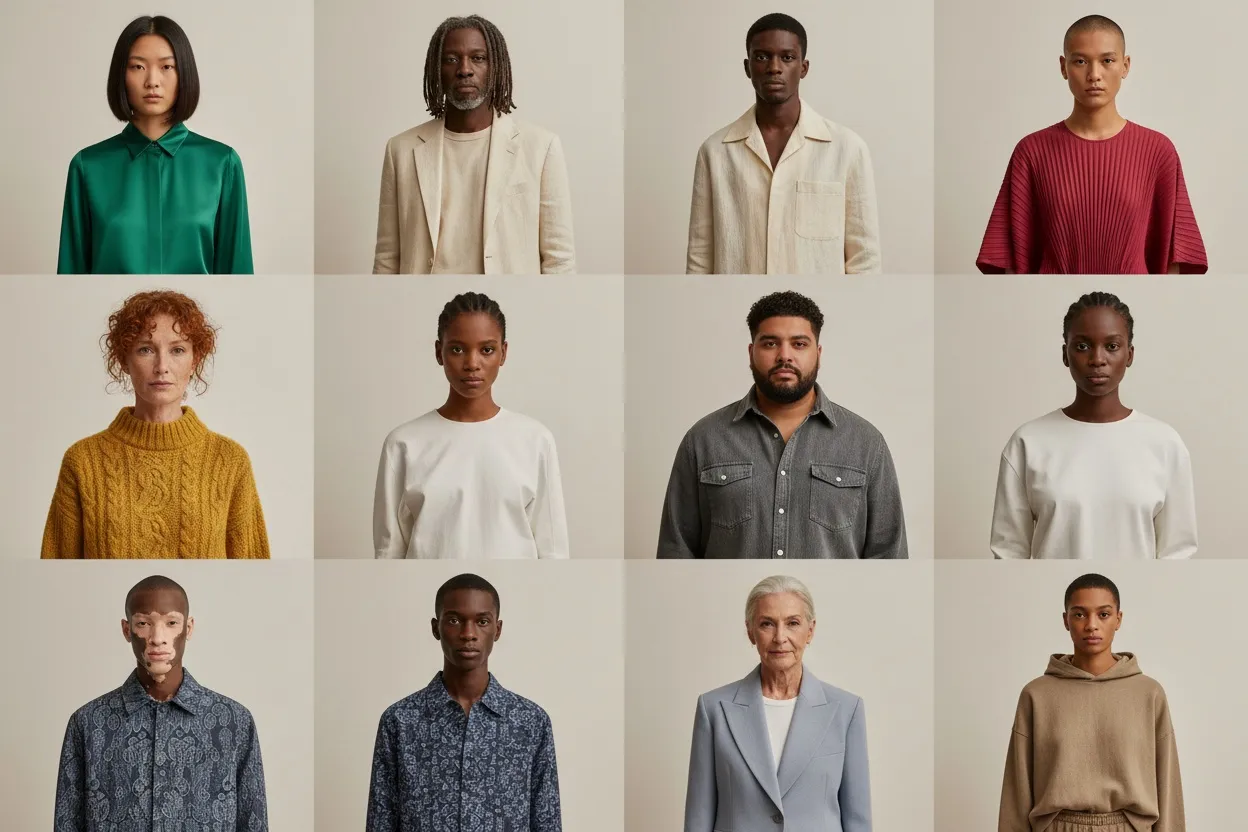
| Generate diverse model rosters | Fashio AI | Botika | Stock photo libraries |
| Add text/signage to product imagery | Ideogram | Adobe Firefly | Midjourney (poor text) |
| Edit existing photography | Photoshop Generative | Fashio Image Editing | Pure generators |
| Generate fashion video | Fashio Photo to Video | Runway Gen-4, Kling | Still-image tools |
Free vs Paid: What You Actually Get
The "best free AI image generator" question is real, but the answer is nuanced. Free tiers vary wildly in what they restrict.
| Tool | Free Tier | Watermark? | Commercial Use? | Verdict |
|---|---|---|---|---|
| Fashio AI | Yes | No | Yes, full | Deepest fashion toolset |
| Leonardo AI | Yes (150 tokens/day) | No | Limited | Good for testing |
| Ideogram | Yes | No | Limited on free | Solid for text-in-image |
| Flux Schnell | Yes (varies) | No | Yes | Strong free generic tier |
| Adobe Firefly | Limited (with CC) | No | Yes | Bundled w/ Creative Cloud |
| Stable Diffusion | Yes (self-host) | No | Open | Free if you have a GPU |
| Midjourney | No | n/a | Paid only | No free tier in 2026 |
| DALL-E 3 | Limited (ChatGPT free) | No | Paid plan req'd | Free for experimentation |
For fashion brands specifically, Fashio AI is the strongest fashion-specific entry point because every plan includes the full pipeline (model generator, try-on, pose variation) with full commercial rights and no watermark. Most other free tiers restrict at least one of those dimensions.
Fashio AI Tools Used Across Production Fashion Workflows
- AI Fashion Model Generator — text-to-model with identity lock
- Virtual AI Fashion Try-On — fit real garments onto models
- Product to Model — full-look styling including accessories
- Pose Variation — editorial pose range
- AI Image Editing — refine and adjust generated imagery
- Fashion Photo Upscale — print-ready resolution
- Photo to Video — animate stills for social
- AI Fashion Studio — end-to-end workflow hub
What's Coming Next
The AI image generator market is moving fast enough that any 2026 verdict comes with a built-in expiration date. The directions that matter for fashion brands:
- Video-first generators — Photo-to-video tools (Runway, Kling, Fashio Photo to Video) are converging with image AI. The next year will see "AI image generators" that produce video by default.
- Multi-modal control — Prompt + reference image + 3D model + audio inputs combined into one generation. Text-only prompting is becoming the floor, not the ceiling.
- On-device generation — Smaller models (Flux Schnell, SDXL Lightning) running locally on phones and laptops. Expect more brands to embed AI generation directly into their product workflows.
- Regulatory layers — AI imagery disclosure requirements, training data transparency rules, and likeness protections will continue tightening, especially in the EU and California.
- Brand-specific fine-tuning — Fashion brands increasingly train custom AI models on their own product imagery for true brand-DNA consistency. Expect this to move from enterprise-only to mid-market by 2027.
Going Deeper — Related Reading
If you're building out an AI imagery workflow, these guides cover specific pieces in more depth:
- 12 Best AI Tools for Fashion Brands in 2026 — broader fashion AI tooling beyond image generators
- AI Fashion Model Generator Guide — deeper dive on the fashion-trained model generator subset
- AI Photoshoot Guide — full production workflow using these tools
- AI Lookbook Generator Guide — chaining generators for editorial output
- AI Person Generator Guide — the human-imagery subset of AI generation
Key Takeaways
- There is no single "best AI image generator" for fashion brands — there are tier-specific best tools for tier-specific use cases
- Generic creative AIs (Midjourney, DALL-E, Flux) dominate concept work and mood boards but cannot do production fashion imagery
- Fashion-trained platforms (Fashio AI, Botika, Modelia) dominate production work — PDPs, lookbooks, ad creative, wholesale
- The two capabilities that separate fashion-trained tools: fitting real garment photos onto models, and locking a consistent character identity across a campaign
- For free tiers, Fashio AI is the strongest fashion-specific option (full commercial rights, no watermark); generic free tiers are good for experimentation but rarely full production
- Brands typically need both tiers: a fashion-trained platform for production work, a generic creative AI for ideation and mood boards
- Adobe Firefly 4 has the cleanest commercial license among generic tools (trained on opt-in Adobe Stock) — useful for compliance-conscious brands
- The market is moving toward video-first generators, multi-modal control, and brand-specific fine-tuning — expect annual refresh of any "best tools" list
Try the Strongest Free AI Image Generator for Fashion
Every Fashio AI plan includes the full fashion AI pipeline — model generator, garment try-on, pose variation, video — with full commercial rights and no watermark.
Start creating →FAQ: Best AI Image Generators for Fashion Brands
What is the best AI image generator for fashion brands in 2026?
For production fashion ecommerce — PDPs, lookbooks, ad creative — fashion-trained platforms like Fashio AI, Botika, and Modelia outperform generic image AIs. For concept art and mood boards, Midjourney v7 and Flux Pro lead the generic tier. The honest answer depends on use case: brands shipping production catalog work need fashion-specific tools; brands ideating campaign concepts can use generic tools.
Are free AI image generators good enough for fashion brands?
For ideation and internal use, yes — free tiers of Leonardo AI, Ideogram, and Stable Diffusion (self-hosted) produce usable concept output. For commercial publishing — ads, ecommerce, marketplace listings — most free tiers either restrict commercial use or watermark outputs. Fashio AI's free tier is one of the few that grants full commercial rights with no watermark.
Which AI image generator has the best commercial license for fashion?
Fashion-trained platforms typically grant full commercial rights by default because they're built specifically for ecommerce use cases — Fashio AI, Botika, Modelia, ZMO.ai all include commercial licenses on free or paid tiers. Among generic tools, Adobe Firefly has the cleanest commercial license (trained on Adobe Stock with explicit creator opt-in), Midjourney requires a paid plan, and DALL-E 3 includes commercial rights on paid plans.
Can I use Midjourney or DALL-E for ecommerce product photography?
For concept art and mood boards, yes. For actual ecommerce product imagery — where the AI needs to fit your specific garment onto a model — Midjourney and DALL-E cannot, because they hallucinate generic clothing rather than fitting your real product photos. Brands shipping production ecommerce imagery need fashion-trained tools with garment-fitting capabilities.
What's the difference between fashion-trained AI and generic image AI?
Generic image AI generates any image from a text prompt — it produces imaginative outputs but doesn't understand specific garments, fitting, character consistency, or fashion conventions. Fashion-trained AI is built on apparel datasets and includes specialized capabilities: garment fitting from real product photos, character identity locking, pose control, scene composition, and commercial licensing tailored for ecommerce.
Which AI image generator is best for AI fashion model photography?
For fashion model imagery specifically — generating consistent on-model shots with real garments — Fashio AI, Botika, and Modelia lead the fashion-trained tier. The deciding factors are garment fidelity (does your dress look like your dress?), character consistency across shots, and commercial license. Generic image AIs produce plausible models but cannot fit your specific products onto them.
How much do AI image generators for fashion cost?
Pricing in 2026 spans from free (Stable Diffusion self-hosted, Ideogram free tier) to $200+ per month (Midjourney Pro, ComfyUI cloud setups). Most fashion-trained platforms run $0-$100/month for prosumer/small brand usage, and $200-$500/month for enterprise tiers with API access and team seats.
Can AI image generators replace traditional photoshoots for fashion?
For roughly 85-90% of production fashion imagery — PDPs, category pages, ad creative, social, wholesale — yes, fashion-trained AI generators replace traditional shoots with comparable or better quality at a fraction of the cost. For hero brand campaigns, PR imagery, and behind-the-scenes content, traditional photography still wins. The split most brands run in 2026 is roughly 90% AI, 10% traditional.