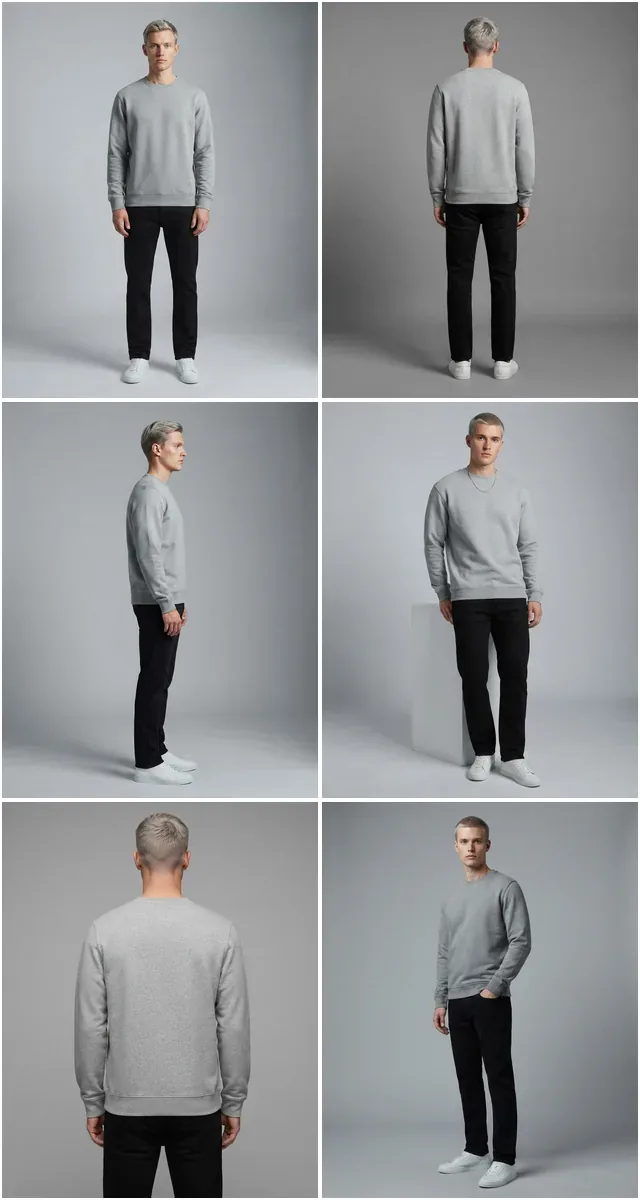
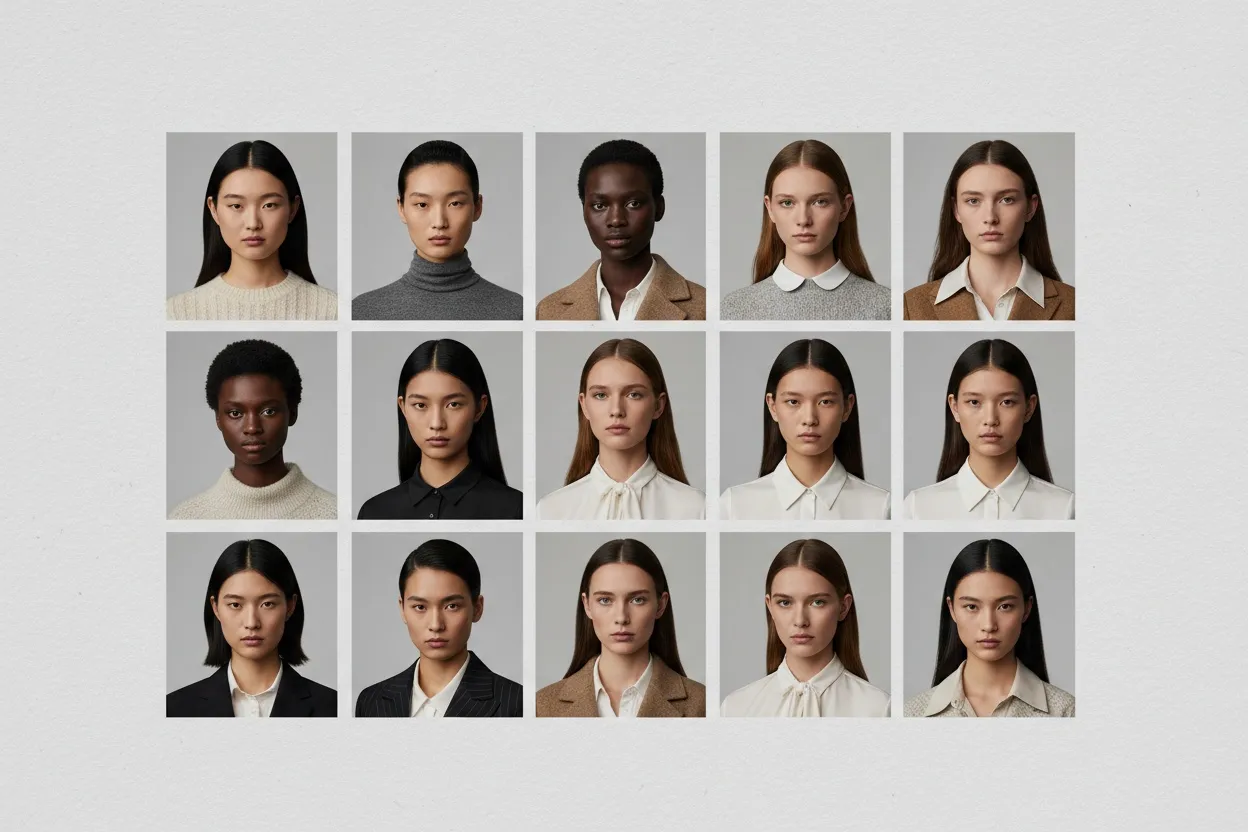
AI People Are Indistinguishable Now — Here's What That Means for Brands
Photo-real in 2026 $0 vs $500-$3K/day model rate Unlimited diversity Full commercial rights
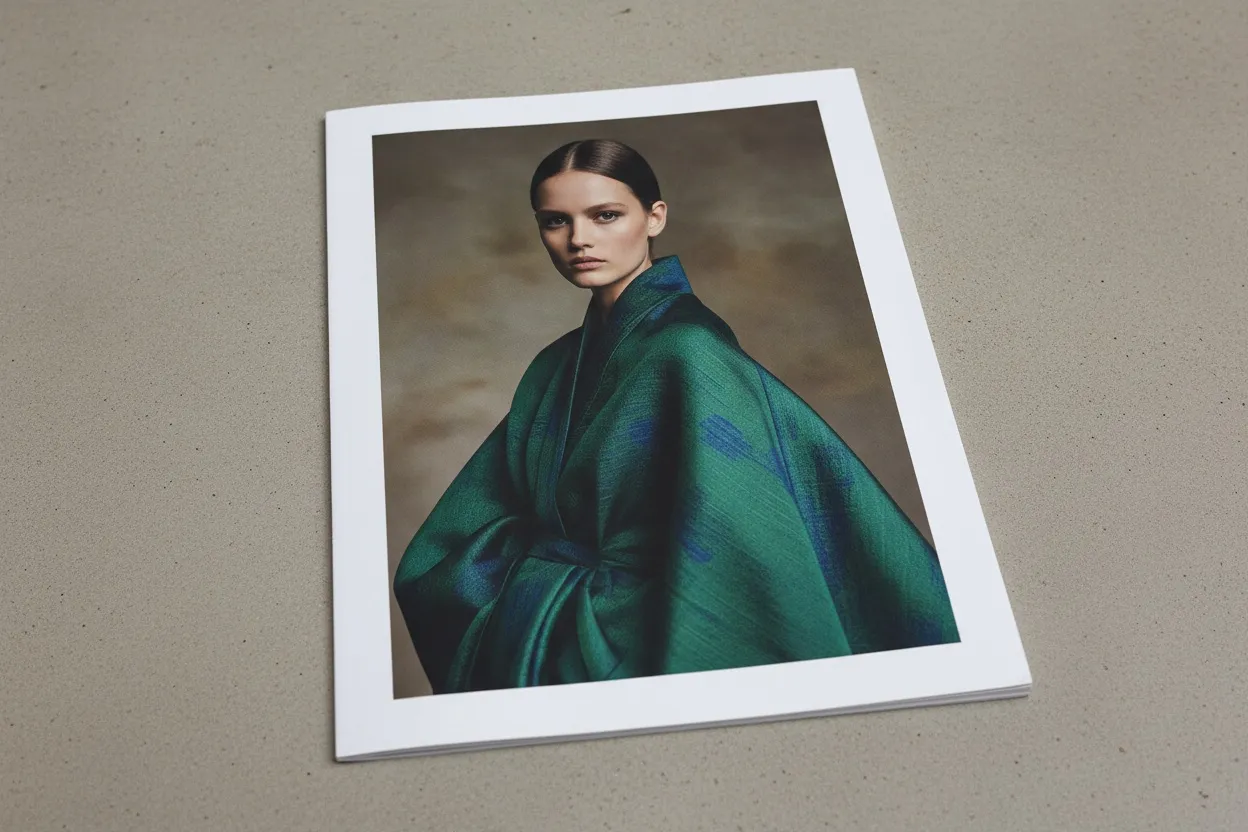
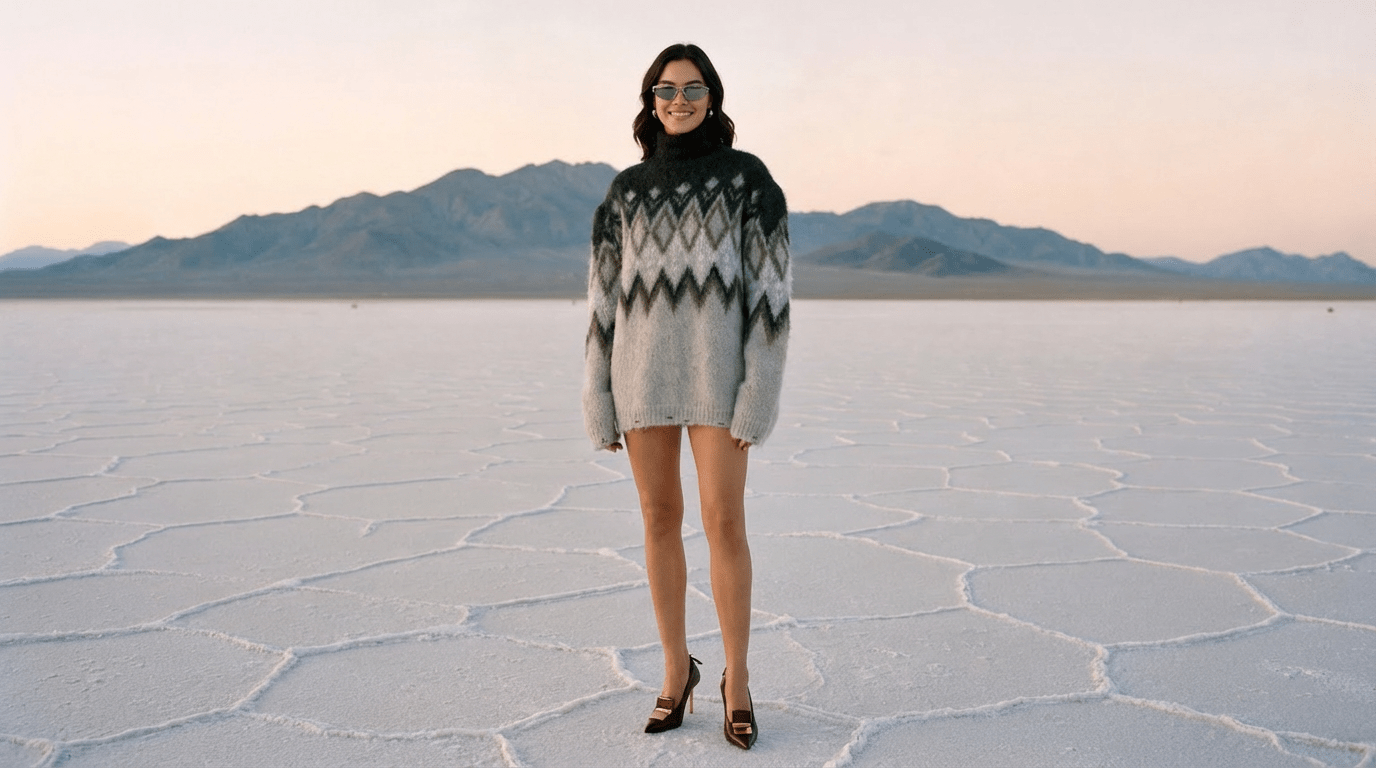
AI person generators have crossed the photorealism threshold. In 2026, a well-prompted fashion-trained AI produces a model that is visually indistinguishable from a photographed human — with full commercial rights, on any ethnicity or body type, in any styling, at any pose. The technology question is settled; the strategic question is what brands do with it.
For most of AI image history, "AI-generated people" carried a recognizable visual signature — too-smooth skin, asymmetric eyes, the infamous AI hand problem, an uncanny-valley quality that made the output obvious. That era is over. In 2026, fashion-trained AI person generators produce people that pass every visual test ecommerce and advertising imagery has to pass.
That shift has changed the working assumption for fashion brands. AI people are no longer a concept-stage tool or a budget workaround. They are production-grade infrastructure for catalogs, lookbooks, advertising, and editorial imagery — used routinely by major brands shipping content at scale. This guide explains what an AI person generator does, how to choose between the major tool categories, the ethical and legal questions brands need to navigate, and the step-by-step workflow for producing realistic AI people for fashion and ecommerce.
What an AI Person Generator Actually Does
An AI person generator is a model — usually a diffusion or transformer model — trained on millions of consented or licensed human images, taught to synthesize entirely new people from text prompts or reference inputs. The output is a photoreal image of a human who does not exist in real life.
The capability stack of a modern AI person generator typically includes:
| Capability | What It Produces | Why It Matters |
|---|---|---|
| Text-to-Person | A new human image from a written description | Generate any model from a prompt |
| Demographic Control | Age, ethnicity, gender, body type controls | Build diverse model rosters in minutes |
| Identity Lock / Character Save | Save a generated person and reuse | Consistent model across full campaigns |
| Pose Control | Direct the model's pose deliberately | Editorial range, not pose repetition |
| Outfit / Garment Fitting | Fit clothing onto the generated person | Brand-specific looks, not generic clothing |
| Scene / Backdrop | Place the person in a chosen environment | Studio, location, or brand-specific scenes |
| Expression / Mood Control | Smiling, neutral, candid, editorial expressions | Match brand tone, not generic stock energy |
Generic AI image tools (Midjourney, DALL-E, Stable Diffusion) cover the first capability — text-to-person. They produce a photoreal human from a prompt. The further down the capability stack you go, the more you need a specialized tool. Fashion-trained AI person generators like the AI Fashion Model Generator are built specifically for the full stack — identity lock, pose control, garment fitting, scene composition — that ecommerce and advertising imagery actually requires.
Generic AI Image Tools vs Fashion-Trained AI Person Generators
This is the most important decision when choosing an AI person generator: are you in the concept-art tier (Midjourney, DALL-E) or the production tier (fashion-trained platforms)?
| Dimension | Generic AI (Midjourney, DALL-E, SD) | Fashion-Trained AI Person Generator |
|---|---|---|
| Photorealism | High, but stylized by default | Photo-real, ecommerce-grade by default |
| Hand Anatomy | Improved but still inconsistent | Reliable hand rendering |
| Identity Lock | Limited (LoRA-style workarounds) | Built-in, save and reuse |
| Pose Control | Prompt-only, inconsistent | Deliberate pose direction |
| Garment Fitting | Hallucinated clothing, no real garment input | Fits your actual garment photos |
| Commercial License | Varies, often restricted on free tiers | Full commercial rights by default |
| Workflow Speed | Manual chaining across tools | End-to-end pipeline in one platform |
| Best For | Concept art, mood boards, ideation | PDPs, lookbooks, ad creative, campaigns |
The 2026 reality: generic image AIs are excellent for ideation and concept work, but they are not production-grade tools for fashion imagery. Brands trying to run catalog or campaign work on Midjourney typically end up with inconsistent characters, hallucinated garments, and a manual chaining process that eats the speed advantage AI was supposed to deliver. Fashion-trained AI person generators were built specifically to close that gap.
How to Generate a Realistic AI Person — Step by Step
Whether you're using a generic image AI or a fashion-trained platform, the workflow for producing a high-quality AI person follows the same five steps. Fashion-trained tools just automate more of them.
-
Write a Specific, Layered Prompt
Generic prompts ("a woman, photorealistic") produce generic outputs. Specific prompts produce specific people. Include age range, ethnicity, body type, hair description, expression, and lighting context. Example: "30-year-old woman, Korean, medium build, shoulder-length black hair with subtle waves, soft natural smile, neutral expression, soft daylight from camera-left, shot on a 50mm lens, three-quarter portrait framing." The more specific the prompt, the more directable the output.
-
Generate Multiple Variations
Even with the best prompt, run 4-8 generations and pick the strongest. Look for: natural skin texture (not waxy), consistent eye geometry, anatomically correct hands, realistic hair flow, no AI artifacts in the background. The first generation is almost never the best — selection matters.
-
Lock the Identity for Reuse
Once you have a person you want to keep, save their identity. On fashion-trained platforms like Fashio AI, this is a one-click "save model" action. On generic AI, you may need to use seed locking, character LoRAs, or image-to-image workflows to reuse the same face. This step is what makes an AI person usable for brand work — without it, every output is a different person.
-
Refine with Pose, Outfit, and Scene
Now layer the production specifics on top of the locked identity. Direct the pose, fit the outfit (use Virtual Try-On for real garments, not prompted clothing), set the backdrop. The locked identity carries through; everything else changes per shot. This is where one AI person becomes a complete campaign.
-
Quality-Check Before Publishing
Run every final output through a checklist: skin looks like skin, not plastic; eyes are symmetric and reflective; hands have five fingers in plausible positions; jewelry and hardware are real-looking; no logo or text artifacts hallucinated into the background. AI quality has improved dramatically, but the QC step is still mandatory for brand-facing imagery.
The biggest mistake brands make with AI person generators is using a different generated person for every image, the same way they would pick different stock photos. This destroys the brand consistency that traditional photography enforces by default. Lock one (or a small roster of) consistent AI people first, then run all your production imagery against those locked identities. The difference between an AI catalog and a "stock photo catalog" is almost entirely this single discipline.
The Ethical and Legal Questions Brands Need to Navigate
AI person generators raise real ethical and legal questions that brands using them in 2026 need to address explicitly, not avoid. The good news: the questions are increasingly well-mapped, and the best-practice answers are settling into consensus.
1. Likeness Rights
The clearest legal rule: do not generate AI people that resemble real, identifiable individuals without their consent. This applies to celebrities and public figures (right of publicity), private individuals (privacy and likeness laws in most jurisdictions), and employees, customers, or models whose images may have been included in training data. Responsible AI person generators are trained on consented, licensed datasets and produce fully synthetic individuals — but the prompt-side discipline is still on the user.
2. Deepfake and Impersonation Concerns
AI person generators are not deepfake tools — they create entirely new people, not face-swaps onto real video. However, the public conversation often conflates the two. Brands using AI imagery should be clear in their internal positioning: this is synthetic-character creation, not impersonation of real people. The technical and legal distinction matters.
3. Disclosure Requirements
Some jurisdictions (parts of the EU under the AI Act, several US states for political advertising) require disclosure when imagery is AI-generated. As of 2026, fashion ecommerce is largely outside the mandatory disclosure scope, but the regulatory direction is toward broader labeling. Brands that disclose AI-generated imagery in their advertising terms or product pages are ahead of the curve and avoid retroactive compliance risk.
4. Training Data Provenance
Where did the AI generator's training data come from? This is the single biggest hidden risk for brands. AI platforms that scraped uncredited human images face ongoing legal challenges; platforms trained on consented and licensed data have cleaner legal footing. When selecting an AI person generator, ask about training data sources — and prefer platforms that can answer the question.
5. Representation and Inclusion
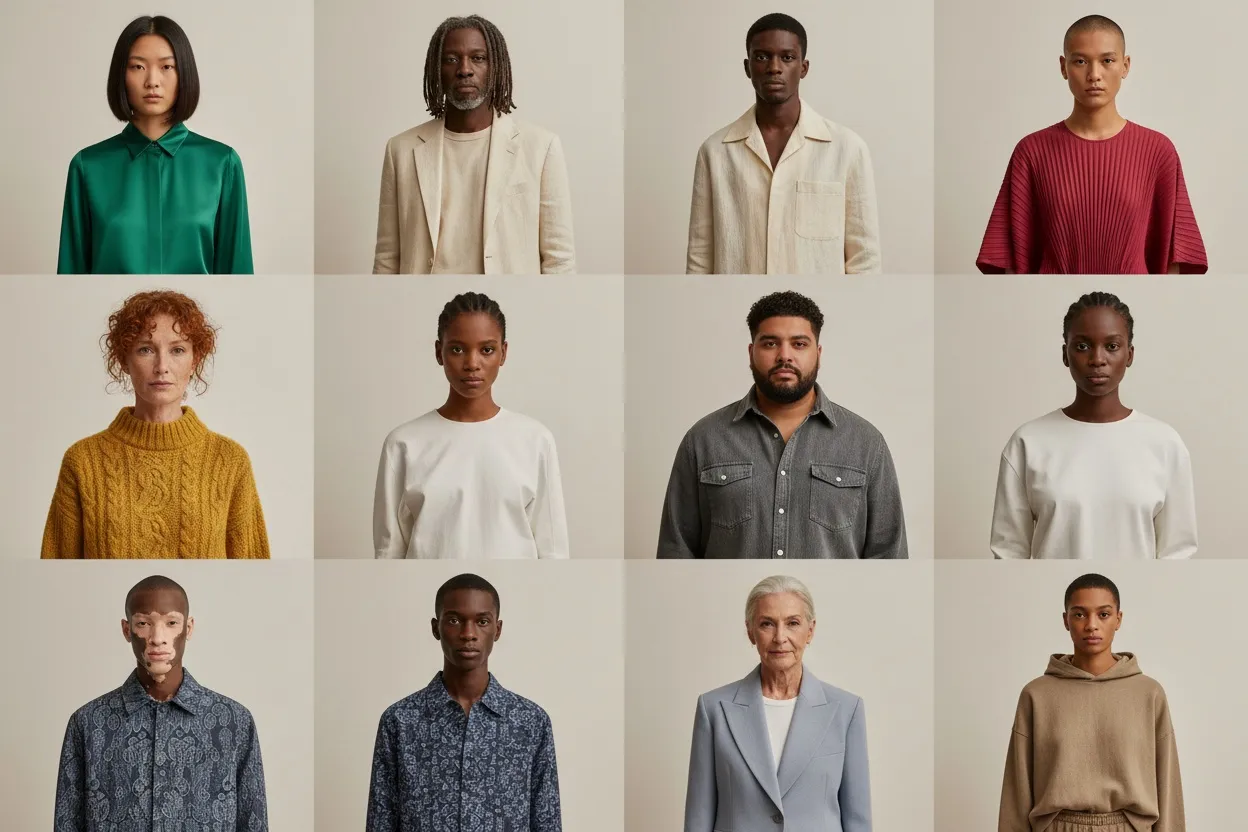
AI person generators can make inclusive representation radically easier — generating any ethnicity, body type, age, or ability status without the casting friction of traditional shoots. But they can also encode biases from training data (over-representing certain demographics, defaulting to thin Western beauty norms). Responsible use means actively prompting for diversity, not just defaulting to whatever the model produces.
An AI person isn't a shortcut around hiring real models — it's a different tool. The brands using AI people best treat them as a production-grade asset class with its own ethics, governance, and quality standards. The brands using them worst treat them as free stock photos.
The Best AI Person Generators in 2026
The market has stratified into three tiers based on use case. Picking the right tier is more important than picking the right brand within a tier.
| Tier | Tools | Best Use Case | Commercial Rights |
|---|---|---|---|
| Generic Image AI | Midjourney, DALL-E 3, Stable Diffusion, Flux | Concept boards, mood references, ideation | Varies — check plan tier |
| Stock / Marketing AI | Generated Photos, Synthesia avatars, Hour One | Stock-replacement, talking-head video | Usually included on paid plans |
| Fashion-Trained AI | Fashio AI, Botika, Modelia, ZMO.ai | Ecommerce models, lookbooks, ad creative | Full commercial rights by default |
For fashion and ecommerce brands specifically, the fashion-trained tier is the production-grade choice. Generic image AIs handle concept work but break down at the catalog scale. Stock-marketing AIs are oriented toward face-only or avatar-only outputs and lack garment-fitting capabilities. Fashion-trained platforms close the gap with traditional photography on every dimension brands actually need.
Fashion Brand Use Cases for AI Person Generators
What do brands actually do with AI people once they have them? In 2026, the use cases have stratified into clear production categories.
| Use Case | Why AI People Win | Fashio Tool |
|---|---|---|
| PDP / Product Page Models | Consistent face across full catalog | AI Fashion Model Generator |
| Editorial Lookbook Models | Same model, multiple looks, no booking | AI Fashion Studio |
| Diverse Campaign Casting | Every demographic, no casting agency | AI Fashion Model Generator |
| Regional Market Variants | Localize model ethnicity per market | AI Fashion Model Generator |
| Body-Inclusive Sizing Pages | Show garment on multiple body types | Body Editor |
| Pose Variation for Ad Creative | Same person, 30 poses, A/B test ready | Pose Variation |
| Influencer-Style UGC | Casual-feel imagery without influencer fees | UGC Video |
The use case that breaks the cost model most decisively is diverse representation. A brand that wants to show every garment on five different body types and three different ethnicities is looking at 15x the casting and shoot budget with traditional production — or zero additional cost with an AI person generator.
What Separates a Good AI Person from a Bad One
Photorealism is no longer a meaningful differentiator — most fashion-trained AI now produces photoreal outputs by default. What separates production-grade AI people from amateur ones in 2026:
1. Skin Texture Detail
Real skin has pores, fine lines, slight asymmetries, and natural color variation. Over-smooth "wax skin" is the most common 2026 AI tell. Production-grade outputs preserve natural skin texture without over-retouching it.
2. Eye Geometry and Reflection
The eyes are the most scrutinized part of any face image. Look for symmetric pupils, consistent catchlights (reflections matching the lighting setup), realistic iris detail, and natural eye whites. Eye drift is a common low-quality AI signature.
3. Hand and Finger Anatomy
The "AI hand problem" has improved dramatically in 2026 but remains the most common giveaway in mid-tier outputs. Production-grade fashion AI renders hands with five fingers in plausible anatomical positions; lower-tier tools still occasionally produce six fingers, fused thumbs, or impossible grip positions.
4. Hair Flow and Edge Detail
Real hair has flyaway strands, depth variation, and edge complexity. AI hair often reads as too-clean or too-uniform. Production-grade tools preserve hair edge complexity; lower-tier tools render hair as a single textured mass.
5. Background Integration
The shadow under the model has to match the lighting in the scene. The reflection in their eyes has to match the backdrop. The color cast on their skin has to match the ambient light. Cheap AI gets the foreground subject right but loses scene-light coherence; production AI integrates the person into the scene properly.
Fashio AI Tools for AI Person Generation Workflows
- AI Fashion Model Generator — the core text-to-person generator with identity lock
- Body Editor — adjust body type, proportions, and posture on a generated person
- Pose Variation — direct deliberate poses across a shoot
- Virtual AI Fashion Try-On — fit real garments onto generated people
- Product to Model — full-look styling including accessories
- AI Image Editing — refine and adjust generated person imagery
- Fashion Photo Upscale — print-ready resolution exports
- Photo to Video — animate generated people into social video
- AI Fashion Studio — end-to-end AI person + garment workflow
The Cost Reality: AI People vs Real Models
The economics are the part most brands focus on first, and for good reason. The gap is structural.
| Production Cost | Real Model | AI Person Generator |
|---|---|---|
| Model Day Rate | $500-$3,000 | $0 (no booking) |
| Agency Commission | 20% on top of model rate | $0 |
| Usage Rights / Year | $500-$5,000 per year, per market | $0 (full commercial ownership) |
| Casting Cost | $500-$2,000 per casting round | $0 (generate variations free) |
| Reshoot Cost When Needed | Full day rate + crew + studio again | $0 (regenerate any frame) |
| Platform Subscription | n/a | $0-$100/month for unlimited usage |
| Annual Cost (10 shoots/year) | $15K-$80K+ | $0-$1,200 |
The cost difference is the headline, but the cadence difference is the bigger strategic shift. A brand paying real-model rates produces imagery in quarterly bursts (when the budget refills); a brand using AI people produces imagery as a continuous workflow (whenever the merchandising team uploads a new SKU). That cadence change is what enables weekly content drops, regional variants, and inclusive sizing pages that were previously unworkable.
Generate Your First AI Person Free
Build a consistent AI model, save the identity, fit your garments — all on one Fashio AI membership. No watermarks, full commercial rights, cancel any time.
Start creating →Going Deeper — Related Reading
If you're building out an AI person workflow for your brand, these guides cover specific pieces in more depth:
- AI Fashion Model Generator Guide — the fashion-specific subset of AI person generation
- How to Make AI Fashion Models Look Real and Consistent — character consistency techniques
- AI Lookbook Generator Guide — running AI people across a full editorial set
Key Takeaways
- AI person generators in 2026 produce people that are visually indistinguishable from photographed humans for most ecommerce and advertising contexts
- Generic AI image tools (Midjourney, DALL-E) handle concept work; fashion-trained AI person generators handle production work — the difference is identity lock, garment fitting, and commercial licensing
- Identity lock (saving a generated person and reusing the same face) is the single most important capability for brand consistency
- Annual cost drops from $15K-$80K+ (real models for 10 shoots) to under $1,500 (AI person generator subscription)
- Diverse representation becomes easier, not harder — every ethnicity, body type, age, and ability status without casting friction
- Ethical and legal best practice: do not generate likenesses of real people, disclose AI imagery where required, prefer platforms with clean training data provenance
- Quality indicators in 2026: skin texture detail, eye geometry, hand anatomy, hair flow, scene-light integration
- Best use cases: PDP models, lookbook editorial, ad creative, regional variants, inclusive sizing pages, weekly content drops
Try the Full AI Person Workflow on Fashio AI
16 fashion AI tools — model generator, body editor, pose variation, try-on, video — on one membership. Generate your first realistic AI person today.
Start creating →FAQ: AI Person Generators
What is an AI person generator?
An AI person generator is a tool that creates photorealistic images of people who do not exist in real life. The AI synthesizes a complete human face and body from a text prompt or reference inputs, producing a model image that can be used for marketing, ecommerce, advertising, or design work without booking, casting, or photographing a real person.
Are AI-generated people legal for commercial use?
Yes, when the generator's license explicitly grants commercial rights and the output does not resemble a real, identifiable person. Fashion-trained platforms like Fashio AI grant full commercial usage with no model release required because the generated person is not based on a real individual. Generic image AIs vary widely — always check the license terms before using AI people in ads or ecommerce.
How realistic are AI-generated people in 2026?
In 2026, fashion-trained AI generators produce people that are visually indistinguishable from photographed humans in most ecommerce, advertising, and editorial contexts. Skin texture, hand anatomy, eye geometry, and hair detail have all reached production quality. Earlier generations of generic AI image tools (2022-2023) had recognizable "AI tells" — these have largely been resolved on fashion-trained platforms.
Can I keep the same AI person across multiple images?
Yes, with character-lock or identity-save features. Fashion-specific AI person generators allow you to save a generated person and reuse the same identity across hundreds of images, ensuring consistent face, body, and styling. Generic image AIs typically do not support this and produce a slightly different person each generation.
What's the difference between an AI person generator and an AI fashion model generator?
An AI person generator produces any human image for any context — stock photos, illustrations, concept art, marketing visuals. An AI fashion model generator is a specialized subset focused on producing models in poses, lighting, and styling suitable for fashion ecommerce — with garment fitting, pose variation, and brand-consistent identity locking built in. Fashion brands generally need the model-specific tool; brands needing generic people imagery can use the broader category.
Is it ethical to use AI-generated people instead of real models?
The ethical questions are real but resolvable. Best practice in 2026: disclose AI-generated imagery in advertising contexts where required by law (some EU jurisdictions), avoid using AI to impersonate real, identifiable people without consent, and ensure the generator's training data and license are clean. Fashion brands using AI people for catalog and ad work are doing so transparently and within emerging regulatory norms.
Can AI person generators create diverse representation?
Yes, and this is one of the strongest practical advantages. AI person generators can produce models across every ethnicity, body type, age range, gender expression, and ability status — without the casting, scheduling, and budget constraints that limit traditional shoots. Brands building inclusive campaigns can generate a full diverse model roster in minutes instead of weeks.
Do AI-generated people violate anyone's likeness rights?
Not when the generated person is not based on or trained to resemble a specific real individual. The legal risk arises when an AI generator is prompted or trained to produce a recognizable likeness of a real public figure or private person — that crosses into right-of-publicity territory in many jurisdictions. Responsible AI person generators are trained on consented, licensed data and produce fully synthetic individuals.