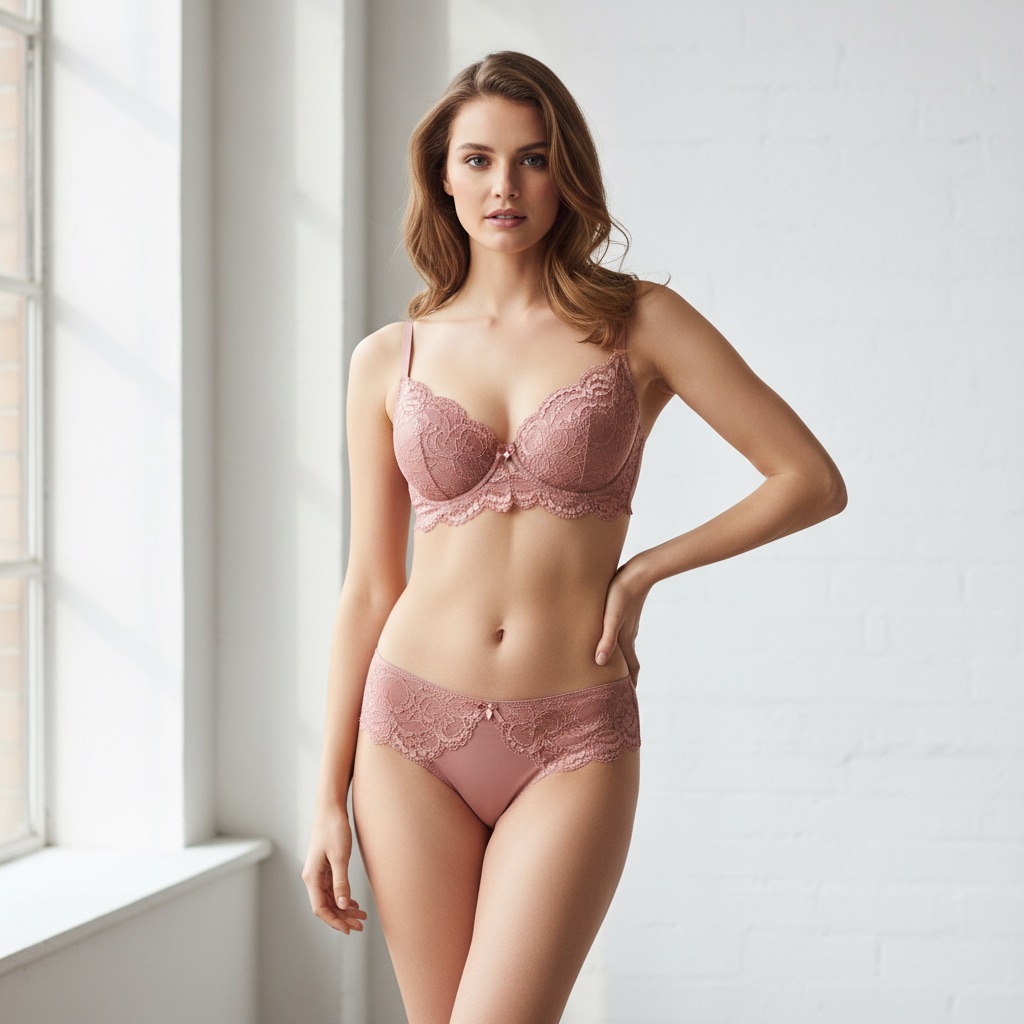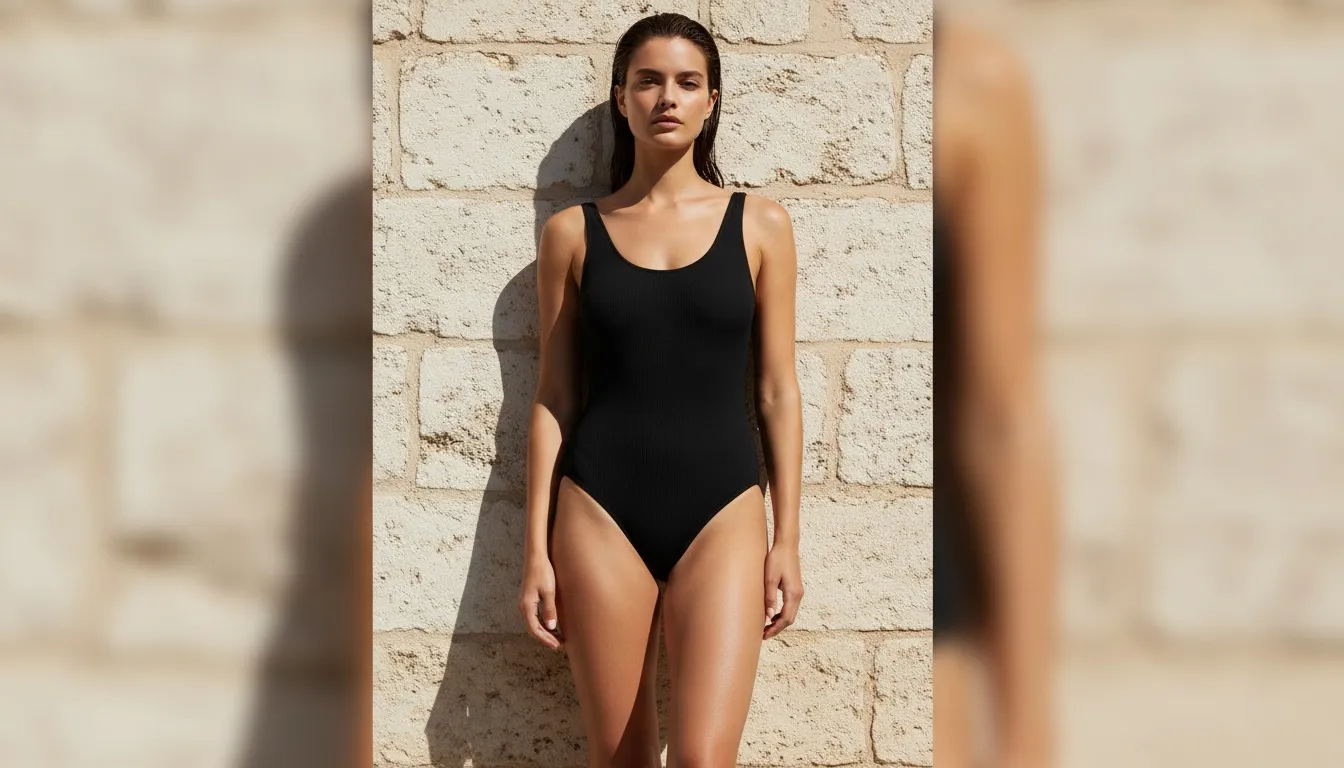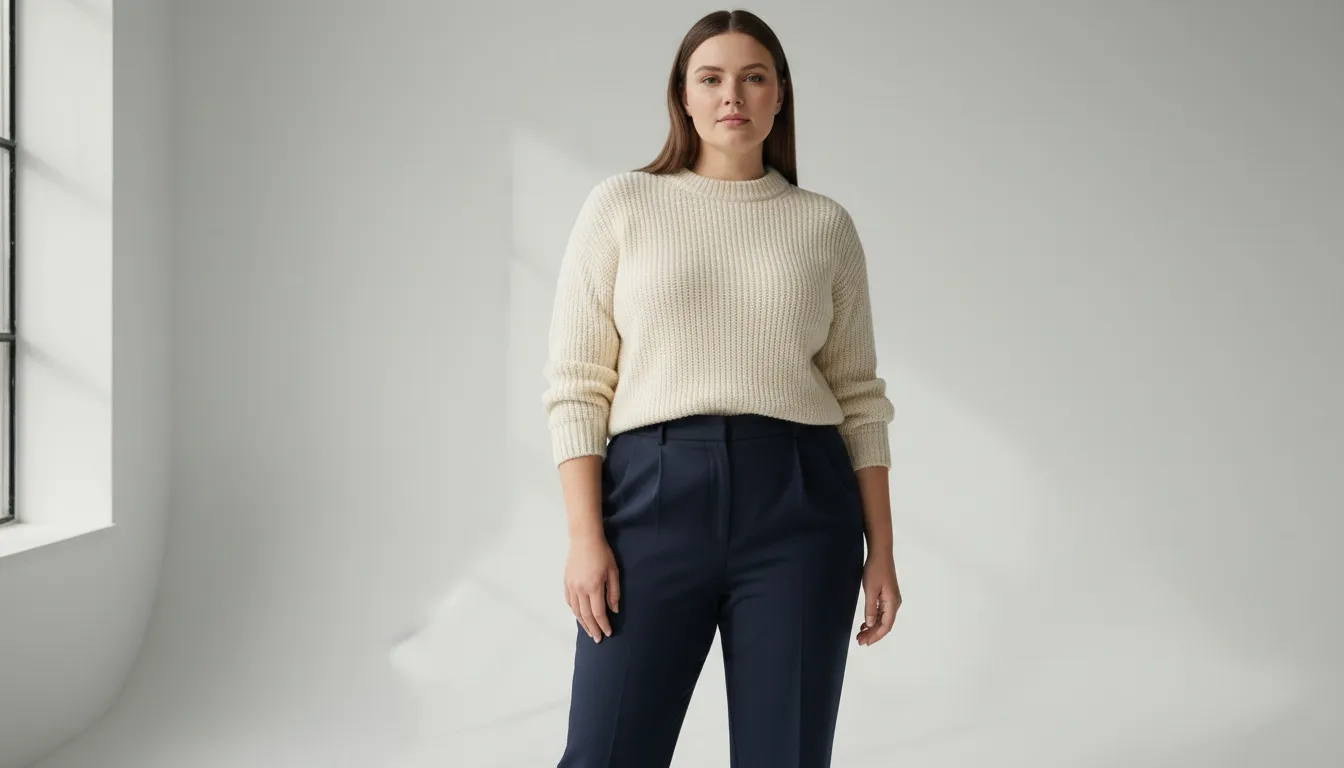
The 2026 Reality: Most AI Fashion Tools Still Default to Slim Bodies
67% of US women wear size 14+ Plus-size: chronically under-served by catalog imagery Most AI models trained on slim bodies Fashion-trained AI closes the gap
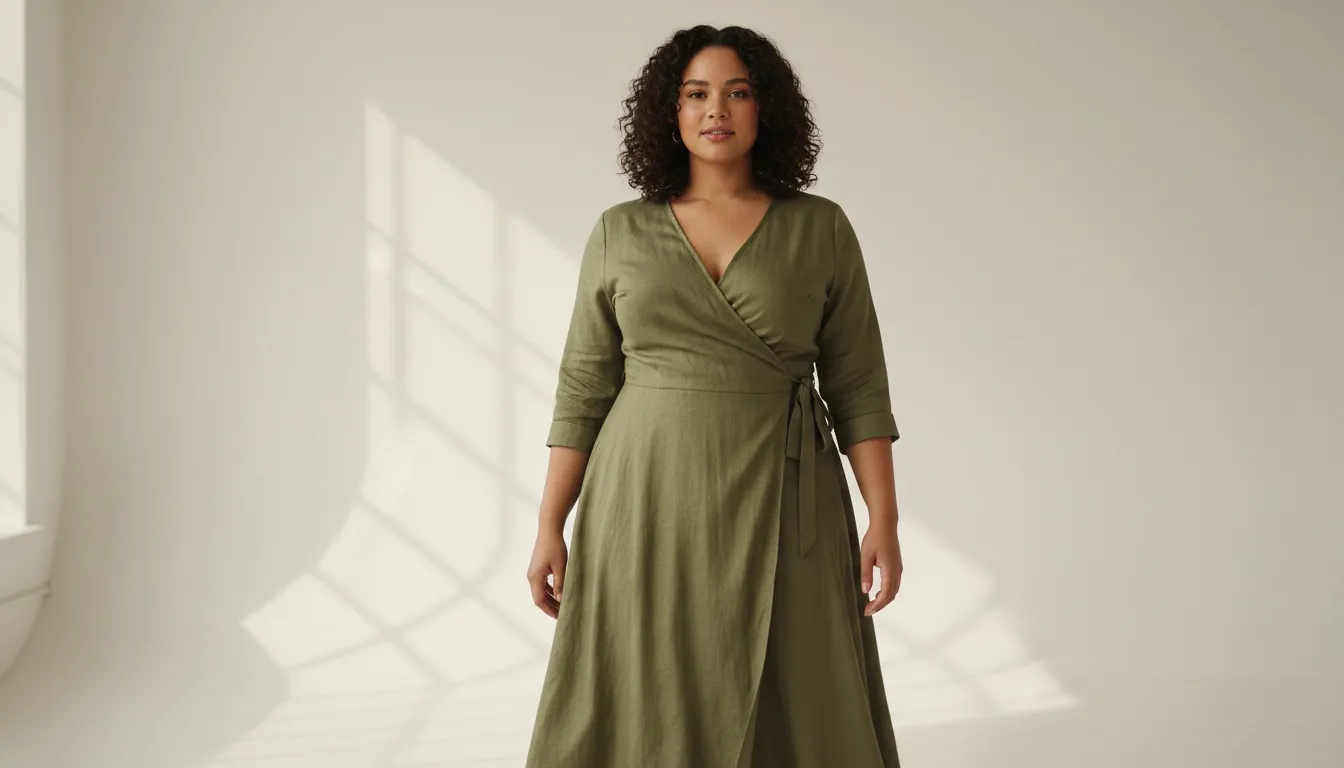
Two-thirds of American women wear a size 14 or larger, but most generic image AIs still produce slim bodies by default. Fashion-trained AI platforms are closing this gap with body-diverse training data and dedicated controls — letting inclusive brands visualize every SKU across the full size range without booking separate shoots for each body type.
Inclusive fashion brands face an operational problem that almost no one talks about: showing every SKU on every body type is economically impossible with traditional photography. A brand with a 30-size range (00-32, the standard at Good American and Universal Standard) is looking at 5-7 body archetypes per garment — which means a 100-SKU collection needs 500-700 individual model shots. The math doesn't work, so brands compromise: shoot the "core" sizes, use fit illustrations for outliers, and hope the size chart fills the gap.
AI plus-size fashion photography changes the math. Fashion-trained AI generates the same SKU on every body archetype — petite, average, curve, plus, extended plus — from one source image, in one workflow, at near-zero marginal cost per body type. For the first time, brands can actually show what every customer would look like in the garment.
The catch: generic image AIs aren't trained for this. Most AI image tools default to slim bodies because their training data does. Generating a plus-size model in a generic AI typically produces a slim body with disproportionate features added on, rather than accurate plus-size body geometry. This guide covers what actually works in 2026 — the tools, the techniques, the brand examples, and the ethics — for inclusive brands building authentically diverse imagery at scale.
Why Plus-Size Photography Has Always Been Underserved
Before getting to the AI workflow, it's worth understanding why inclusive imagery is so underrepresented in fashion despite the market reality. Five factors compound:
- Casting pool limitations. Plus-size model rosters are smaller than straight-size rosters at most agencies. Brands have fewer faces to choose from, which means more brands using the same models — and the "diversity" feels staged.
- Shoot day economics. Showing a 30-size range requires 5-7 body archetypes per shoot. That's 5-7 model bookings, 5-7 fittings, 5-7 wardrobe cycles per look. Most brands can't justify the budget for every SKU.
- Garment availability across sizes. Sample sizes for shoots typically come in one or two sizes. Getting actual production samples in the full size range for a shoot day requires longer lead times.
- Photographer specialization. Photographers experienced in lighting and posing across body types are rarer than generalist fashion photographers. The cost reflects the specialization.
- Generic image AIs make it worse. Brands that turned to AI tools hoping to fill the gap often found that generic AIs produced caricatured or inaccurate plus-size bodies — which is worse than not showing diversity at all.
The unspoken truth of inclusive fashion: most brands want to show every body type, but the operational math of traditional photography breaks before they can. AI plus-size workflows are the first tools that make full-range visualization economically viable.
The result is the gap most plus-size shoppers experience daily: a homepage showing a size 6 model in the same garment they want to buy in a size 22, with no way to tell how the fit will translate. AI plus-size photography solves the operational constraint that creates this gap.
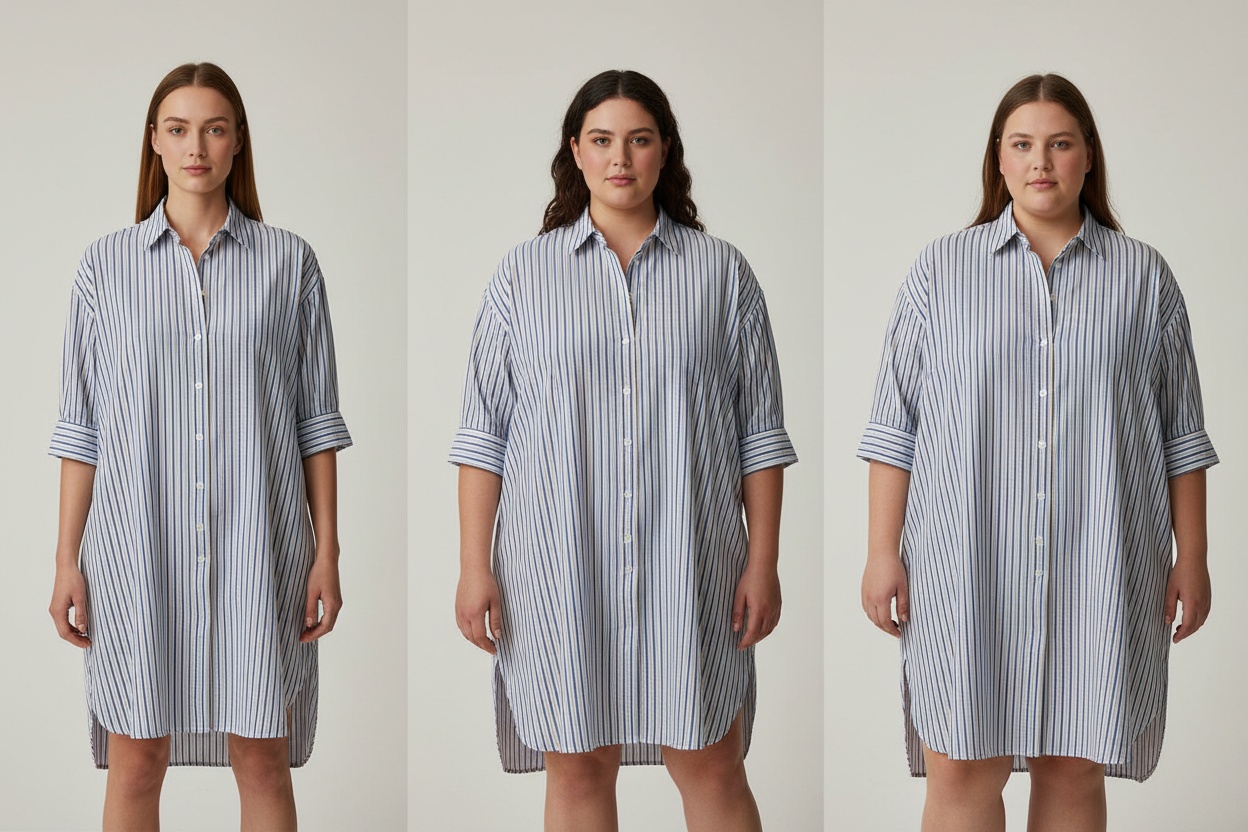
Why Generic Image AIs Fail at Plus-Size Bodies
Before recommending a workflow, it's worth being honest about why most AI image tools don't handle plus-size bodies well. The failure mode is consistent and structural:
Training Data Bias
Generic image AIs are trained on web-scraped image datasets. Fashion imagery on the web overrepresents slim bodies dramatically. So when a generic AI generates "a plus-size model," it generates the average of what it learned plus-size bodies look like — which often means a slim body with stylized features added on, not accurate plus-size body geometry.
Proportional Errors
Real plus-size bodies have specific proportional relationships — wider hips relative to shoulders, fuller arms with characteristic shape, body softness in specific anatomically accurate places. Generic AIs that haven't been trained on diverse body data tend to apply "plus-size" as a uniform scaling factor rather than respecting body shape variation (apple, pear, hourglass, rectangle).
Garment Fit Errors
Once the body geometry is wrong, the garment fit on the body is wrong too. A stretch fabric on a size 22 body has different tension and drape behavior than the same fabric on a size 6 body. Generic AIs that get the body wrong inevitably get the fit wrong as well.
Generic AIs (Midjourney, DALL-E, Stable Diffusion without inclusive fine-tuning) produce caricatured plus-size outputs more often than accurate ones. For inclusive brands, the visual difference between authentic representation and stylized "plus-size-as-stereotype" is the difference between a successful campaign and a PR problem. Always use fashion-trained AI with explicit body type controls.
What Fashion-Trained AI Does Differently
Fashion-trained AI platforms — like Fashio AI's AI Fashion Model Generator combined with the Body Editor — are trained on intentionally diverse body data. Three capabilities define the difference:
| Capability | Generic Image AI | Fashion-Trained AI |
|---|---|---|
| Body Type Range | Slim bias, caricatured plus-size | Accurate across XS-6XL, multiple shape types |
| Body Shape Variation | Uniform scaling factor | Apple, pear, hourglass, rectangle as distinct inputs |
| Garment Fit Behavior | Same drape regardless of body | Fabric tension and drape adapts to body geometry |
| Saved Body Archetypes | Not supported | Lock multiple body identities, reuse across collection |
| Inclusive Pose Library | Slim-body poses | Poses that flatter and represent every body type |
| Ethnicity Variation | Limited diversity within plus-size | Full ethnic representation across the size range |
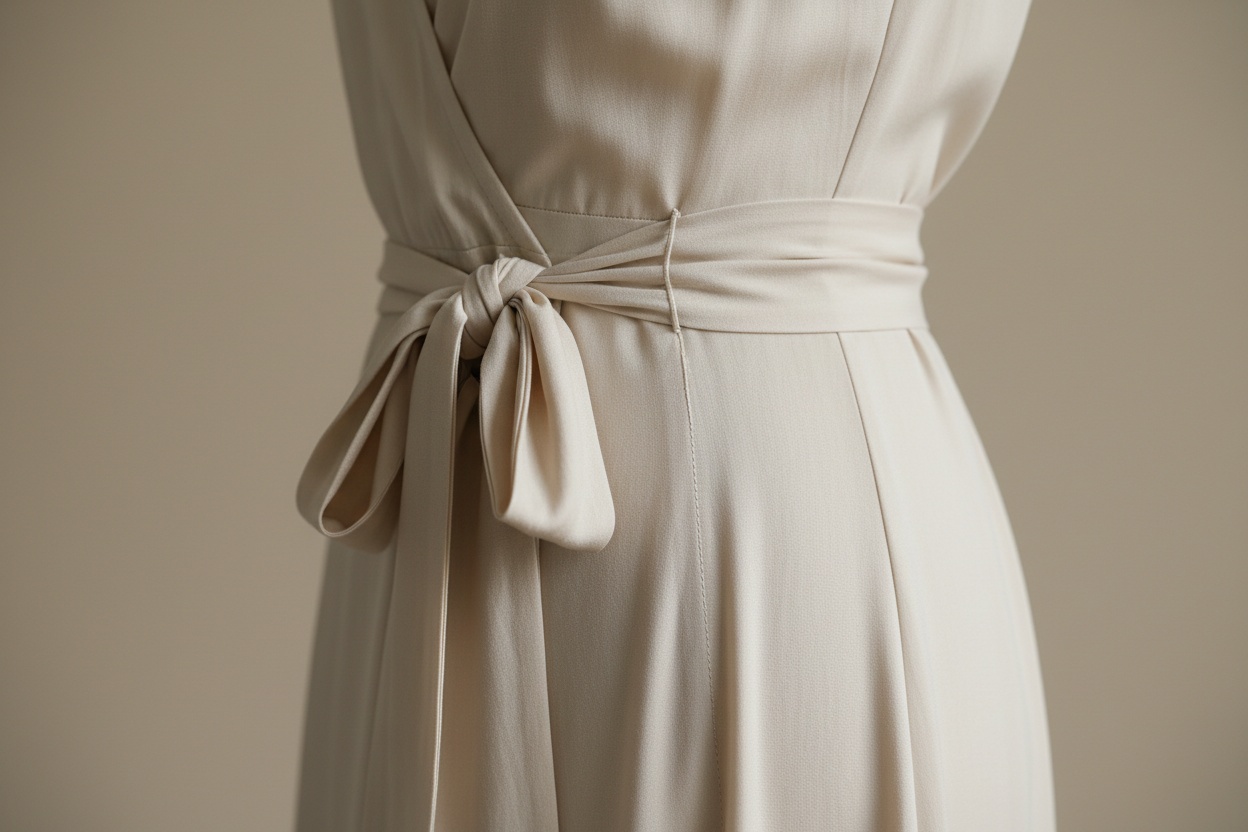
How to Build an AI Plus-Size Photoshoot — Step by Step
Here's the end-to-end workflow for producing an inclusive campaign that visualizes every SKU across the full size range. Same flow works for ready-to-wear, denim, intimates, or activewear.
-
Define Your Body Archetypes
Decide on the body archetypes that represent your brand's customer base. Most inclusive brands lock 4-6 archetypes: petite (XS-S), average (M), curve (L-XL), plus (XL-2XL), extended plus (3XL-6XL). For brands with diverse ethnic representation, save variants within each archetype.
-
Lock Each Body Identity
Use the AI Fashion Model Generator to create each archetype model. Specify age, ethnicity, body shape (apple, pear, hourglass, rectangle), bust size, hip ratio, height, and hair. Save each as a separate identity so the same archetype carries across every SKU. The Body Editor lets you fine-tune proportions until the model accurately represents the customer for that size segment.
-
Prepare Garment Inputs
Photograph each SKU flat or on a size-appropriate form. For multi-size collections, a size-medium flat lay or size-large mannequin shot is usually sufficient — the AI handles scaling and fit behavior across body types from one input.
-
Fit Each Garment Across Body Types
Use the Virtual AI Fashion Try-On to fit each garment to each saved body archetype. The same SKU runs through every saved identity, producing 4-6 body-type variants from one source image. Fabric drape and fit behavior adapt automatically.
-
Apply Inclusive Pose Variation
Run each output through Pose Variation. Use poses that flatter and represent every body type — three-quarter turns, candid lifestyle, full-length editorial. Avoid poses that read as "slim body posing." Editorial pose range across every body type signals brand intention.
-
Unify Backdrop and Mood
Use Remove Background and AI Image Editing to apply a single unified backdrop and color grade across every body type. Consistency in scene and mood is what makes the campaign read as one cohesive story rather than a folder of disconnected outputs.
Brand Examples — Who's Leading on Inclusive AI Photography in 2026
Several established inclusive brands have been early adopters of AI plus-size photography. The pattern: they built their brand identity on size inclusivity and now use AI to maintain it economically as catalog size grows.
Aerie
American Eagle's intimates and apparel line built on body-positive imagery and the #AerieReal campaign that famously committed to no retouching. AI workflows let Aerie maintain the no-retouching aesthetic across an expanded size range and weekly social drops without 4-figure-per-day shoot budgets.
Universal Standard
Sizes 00-40 across every garment in the catalog. Founded explicitly to solve the "every size, same garment" problem. AI plus-size workflows are the operational answer to visualizing 20+ size variations per SKU — which would be economically impossible with traditional shoots.
Eloquii
Plus-size focused brand (sizes 14-28) with a strong fashion editorial identity. AI workflows let Eloquii visualize every drop on the brand's customer body types without the cost of 6-figure-annual photography for body diversity alone.
Torrid
Plus-size leader (sizes 00-30+) with broad retail and digital presence. AI workflows help Torrid keep catalog turnover fast while maintaining visual consistency across multiple body archetypes per SKU.
Good American
Khloé Kardashian's denim-first brand (sizes 00-32). Built around the "fits every body" positioning. AI plus-size photography is the only economic way to actually show every SKU on every body in the brand's wide size range.
Savage X Fenty
Rihanna's intimates brand (32A-46H, XS-4X). Category leader for inclusive size representation. AI workflows make the brand's signature "every body, every tone" visual language operationally feasible at the SKU level — for more on inclusive intimates workflows, see our AI Lingerie Photography Guide.
The inclusive brands that lead on AI plus-size photography aren't using it to replace real plus-size models — they're using it to fill the gap between the hero campaign shoot and the catalog reality. Hero campaigns still use real models; AI handles the long tail.
Body Type Variations — What AI Can Actually Generate
One of the underused capabilities of fashion-trained AI is the ability to represent shape variation within size, not just size variation alone. Real customers in the same size have wildly different shapes — and the right AI workflow handles all of them:
| Body Shape | Characteristics | AI Workflow Notes |
|---|---|---|
| Apple | Fuller midsection, slimmer hips and legs | Specify in body editor; affects garment drape on torso significantly |
| Pear | Wider hips and thighs, smaller bust and shoulders | Critical for denim and bottom-focused brands |
| Hourglass | Balanced bust and hips with defined waist | Most common AI default; works well for fitted silhouettes |
| Rectangle | Straight silhouette with similar bust, waist, and hip measurements | Often underrepresented in AI defaults; explicitly specify |
| Inverted Triangle | Broader shoulders relative to hips | Important for athletic and outerwear brands |
| Petite Plus | Plus-size frame with shorter overall height | Underserved in traditional photography; AI handles well |
| Tall Plus | Plus-size frame with above-average height | Important for tall-specific lines like Universal Standard's tall offerings |
The point isn't to generate every possible shape for every SKU — it's to ensure your brand's saved body archetypes accurately represent the customers actually buying the product. A pear-shape pear-dominant customer base wants to see pear-shape models; saving the wrong default shape in your AI workflow undermines the inclusive intent.
Fit Accuracy Across the Size Range
Showing a plus-size model in the right pose isn't enough — the garment fit on that model also has to be accurate. This is where fit visualization separates a credible inclusive workflow from a stylized one.
Fabric Tension and Stretch
A stretch midi dress on a size 6 body sits differently than the same SKU on a size 22 body. Stretch fabrics expand to fit; structured fabrics drape differently around fuller proportions. Fashion-trained AI accounts for these differences automatically when body geometry is correctly set.
Coverage and Cut Behavior
A neckline that hits at the collarbone on one body type hits at a different point on another. AI workflows preserve the design intent (V-neck, scoop, boat) while showing how the cut actually lands on the saved body. This is critical for tops, dresses, and any garment where coverage matters.
Length and Proportion
A midi length on a 5'4" body lands differently than on a 5'10" body. Inclusive AI workflows respect height variation within body archetypes, so the fit visualization includes length accuracy alongside body shape accuracy.
Build Your First Size-Inclusive Campaign Free
Lock 4-6 body archetypes, run your full collection through each, export channel-ready variants — all on one Fashio AI membership. No watermarks, full commercial rights, cancel any time.
Start Your Campaign →Ethics & Representation — Where AI Is Useful and Where It Isn't
Inclusive AI photography raises ethical questions that brands need to navigate carefully. The technology can amplify real inclusive intent — or it can be used to fake diversity without doing the harder work of representation. Three principles separate the two:
1. AI Augments, Doesn't Replace, Real Plus-Size Models
The brands using AI plus-size photography ethically still book real plus-size models for hero campaigns, brand storytelling, and any moment where the model's identity matters. AI fills the long tail — showing every SKU on every body type — which is the gap traditional photography couldn't economically fill anyway. AI shouldn't be used to substitute for plus-size models in the hero work; it should be used to extend coverage where the alternative was nothing at all.
2. Authentic Representation Requires Diverse Training Data
Using fashion-trained AI matters because the training data matters. AI platforms built on diverse body data produce authentic representation; AI platforms built on slim-body bias produce stylized caricature. Brands choosing AI tools for inclusive photography should ask explicitly about the training data and request example outputs across the full size range before committing.
3. Disclose AI Use Where It Matters
Some brands disclose AI-generated imagery in product photography (especially for fit visualization on PDPs) and reserve "real model" imagery for hero campaigns and editorial content. This transparency builds trust with the inclusive customer base, which is highly attuned to performative vs authentic diversity.
Fashio AI Tools for Inclusive Plus-Size Workflows
- AI Fashion Model Generator — lock multiple body archetypes for inclusive size visualization
- Body Editor — fine-tune proportions and body shape within each saved archetype
- Pose Variation — inclusive pose library that flatters every body type
- Virtual AI Fashion Try-On — fit each SKU to each saved body archetype
- Remove Background — unify the backdrop across all body type variants
- Photo to Video — animate inclusive campaigns for Reels and TikTok
Use Cases — Where Brands Are Deploying Inclusive AI Imagery
| Use Case | Traditional Approach | AI Workflow |
|---|---|---|
| PDP Fit Visualization | Single model + size chart | Same SKU on 3-5 body archetypes from one source |
| Category Page Diversity | Hero shot + filler imagery | Every product card on a different body type |
| Size-Specific Marketing | Separate shoot for plus-size collection | Same workflow visualizes core and extended sizes |
| Email Drops | One model, one drop email | Body-type-specific email variants from same SKU |
| Paid Social Ad Diversity | 2-3 model variants per campaign | 10-30 body-type variants per SKU at zero marginal cost |
| UGC-Style Content | Influencer partnerships only | Diverse AI-generated authentic-feel content at scale |
| Wholesale Linesheets | Sample-size shots only | Every SKU shown on multiple body types for buyer meetings |
What to Look for in an AI Plus-Size Platform
Not every AI tool can handle inclusive photography credibly. Before committing, check for these specific capabilities:
- Diverse training data. Has the platform been trained on body-diverse fashion datasets? Request example outputs at sizes 14, 18, 22, and 26 before committing.
- Body Editor / Body Shape Controls. Can you specify body shape (apple, pear, hourglass, rectangle) in addition to size? Shape variation within size is critical for authentic representation.
- Locked body archetypes. Can you save multiple body identities and reuse them across the collection? Without this, every SKU produces inconsistent body types and the inclusive intent breaks.
- Fit accuracy across sizes. Does the AI account for fabric tension and drape differences across body types? Test with a stretch dress and a structured blazer in two different sizes.
- Inclusive pose library. Are poses available that flatter every body type, or is the pose library biased toward slim-body posing?
- Ethnicity variation within size. Can you generate Black plus-size, Asian plus-size, Latina plus-size, etc., or does diversity collapse into a single archetype per size?
- Commercial license. Are outputs cleared for ecommerce, paid ads, and editorial use? Generalist AIs often aren't.
- Batch generation across archetypes. Can you run one SKU through every saved body identity in one pass? Without batch processing, the workflow doesn't scale.
Pricing Reality Check
The cost gap between traditional and AI inclusive photography is dramatic. Here's the honest comparison for a 50-SKU campaign visualized across 5 body archetypes:
| Cost Bucket | Traditional Inclusive Shoot | AI Plus-Size Workflow |
|---|---|---|
| 5 Plus-Size Models (Day Rates) | $4,000-$15,000 | $0 (no booking) |
| Photographer (specialist) | $1,500-$5,000 | $0 (AI workflow) |
| Studio (2-3 days for 5 bodies) | $1,500-$4,500 | $0 (digital backdrop) |
| Hair, Makeup, Styling (5x) | $1,500-$3,000 | $0 (AI handles styling) |
| Wardrobe Sample Logistics | $500-$2,000 | $0 (one flat-lay input) |
| Post-Production (250 images) | $2,500-$6,000 | $0 (clean output) |
| Usage Rights (per body model) | $0-$5,000/year | $0 (full ownership) |
| Software / Platform | n/a | $0-$200/month subscription |
| Total per 50-SKU x 5-body campaign | $11,500-$40,500 | $0-$200 |
Even on the higher end of the AI workflow, the cost is roughly 1-2% of a comparable traditional inclusive shoot. For inclusive brands committed to showing every body type, AI plus-size photography isn't a cost optimization — it's the difference between visualizing the full size range and not.
How AI Plus-Size Compares to Adjacent AI Workflows
| Workflow Type | What It Does | Best For |
|---|---|---|
| Generic Image AI | Generates body images from text prompts | Not recommended for inclusive photography |
| AI Model Generator (slim-trained) | Fashion-trained but primarily slim body data | Straight-size collections only |
| AI Model Generator (body-diverse) | Trained on full body type range with Body Editor support | Inclusive brands — full size range visualization |
| AI Try-On (size-aware) | Fits garments to body with size-appropriate drape | Per-SKU fit visualization across the size range |
| Integrated Inclusive Platform | Model + Body Editor + Try-On + Pose chained | Full inclusive campaign workflow in one pass |
Key Takeaways
- AI plus-size fashion photography is the first workflow that makes full-range size visualization economically viable
- Generic image AIs default to slim bodies and produce caricatured plus-size outputs — use fashion-trained platforms with explicit body type controls
- Lock 4-6 body archetypes (petite, average, curve, plus, extended plus) and reuse the same identities across the entire collection
- Body shape variation (apple, pear, hourglass, rectangle) matters as much as size variation — specify both for authentic representation
- Fit accuracy across sizes requires AI that understands fabric tension and drape differences — test with stretch and structured garments before committing
- Cost drops from $11K-$40K per inclusive campaign to under $200 on AI workflows
- Use AI to augment, not replace, real plus-size models — keep hero campaigns human, use AI to fill the long tail
- Leading adopters: Aerie, Universal Standard, Eloquii, Torrid, Good American, Savage X Fenty — all built on inclusive sizing
Extended Size Conversion — A Working Reference
Before any of the photography advice above is useful, the size range has to be described in numbers a customer recognises. Extended sizing is where labels diverge most: an XXXL is US 24–26 for women and a 50–52 inch chest for men, and the same letter maps to different numbers in the UK, the EU, Japan and India. A listing that says only "XXXL" is asking an international customer to guess.
The size converter below covers seven systems for both women's and men's sizing, anchored to bust, chest, waist and hip measurements rather than to a label. It also flags a distinction that trips up a great many size charts: straight-size alpha (XL, XXL, XXXL) and plus-size alpha (1X, 2X, 3X) are two different scales cut from different blocks, and a 3X is generally roomier than a 3XL at the same nominal number.
Our XXXL and XXXXL size chart covers the conversions in full, including how to measure and why the same label fits differently at every brand.
Going Deeper — Related Reading
If you're building out your inclusive AI fashion workflow, these guides cover adjacent capabilities and category-specific applications:
- How to Make AI Fashion Models Look Real & Consistent — the techniques that keep your body archetypes locked across the collection
- Best AI Fashion Model Generators Compared — picking the right tool for body-diverse photography
- AI Lingerie & Intimates Photography Guide — inclusive sizing in the intimates category specifically
- AI Lookbook Generator Guide — the broader editorial workflow inclusive campaigns build on
Try the Full Inclusive Workflow on Fashio AI
AI Model Generator with body diversity, Body Editor, Try-On, Pose Variation — on one membership. Build your first size-inclusive campaign today.
Start creating →FAQ: AI Plus-Size Fashion Photography
Can AI accurately generate plus-size fashion models?
Yes — when the AI is trained on diverse body data. Fashion-trained platforms like Fashio AI generate plus-size models with accurate body proportions across sizes 14-32 (XL-6XL), preserving natural curves, fit dynamics, and authentic body shape. Generic image AIs trained primarily on slim bodies often distort plus-size proportions or produce caricatured outputs, which is why brands need to evaluate fashion-specific tools for inclusive photography.
How does AI handle fit accuracy across the full size range?
Fashio AI's Body Editor and AI Fashion Model Generator work together to maintain fit accuracy across the size range. Garments are rendered with appropriate drape, stretch, and tension for each body type — a stretch midi on a size 6 body looks different than the same SKU on a size 22 body, and the AI accounts for these differences automatically when the model identity is correctly set.
What body types and sizes can AI generate for fashion photography?
Fashion-trained AI now supports the full size and body type spectrum: petite to extended plus (XS-6XL), apple/pear/hourglass/rectangle body shapes, multiple ethnicities, varied heights, and adaptive body considerations. Brands like Universal Standard (00-40), Eloquii (14-28), and Good American (00-32) use AI workflows specifically to maintain visual consistency across their extreme size ranges.
Is AI plus-size photography ethical for inclusive brands?
When done thoughtfully, yes — but it requires intentionality. The ethical concerns are real: using AI to fabricate diversity without paying actual plus-size models or creators, and using AI to bypass casting work that brands should be doing. The right approach combines AI for scale (visualizing every SKU across the size range) with continued investment in real plus-size models for hero campaigns and brand storytelling.
Why are most AI models trained on slim bodies?
Generic image AI training data overrepresents slim bodies because fashion imagery historically did. When generic image AIs generate plus-size models, they often produce slim bodies with disproportionate features added on, rather than accurate plus-size body geometry. This is why fashion-specific AI platforms trained on diverse body data dramatically outperform generic tools for inclusive photography — the training data difference produces a structural quality difference in outputs.
How much does AI plus-size photography cost compared to traditional shoots?
Traditional inclusive photography is expensive because brands need multiple model bookings to represent the full size range, and each booking carries its own day rate. AI plus-size photography on Fashio AI is priced per credit instead — the Plus plan is $29.99/month for 160 credits — about $0.75 per generated image at 4 credits per generation — so adding another body type costs another handful of credits rather than another shoot day. That is what makes size-inclusive visualization economically viable. For a brand running several inclusive campaigns a year, that moves photography from a major annual line item to a minor one.
Can AI show the same garment on multiple body types from one source image?
Yes — this is the highest-impact AI workflow for inclusive brands. Upload a flat lay of one SKU, lock 3-5 body archetypes (petite, average, curve, plus, extended plus), and generate the same garment on each body. The result is fit visualization across the entire size range from one operational pass, which is operationally impossible with traditional shoots. Combined with the Pose Variation tool, you can show each body type in poses that flatter and represent every customer.