Where AI Fashion Photography Is Going in 2027
12 trends covered Sub-second generation imminent Personalization at scale Mandatory disclosure incoming
Twelve trends are reshaping how fashion imagery is produced, consumed, and regulated between now and 2027. This is the operational forecast — what brand teams should be planning for, not what reporters speculate about.
The pace of change in AI fashion photography between 2022 and 2026 was already remarkable. Image-based virtual try-on went from research demos to production at H&M, Levi's, Zalando, and Shein. AI model generators became table stakes at fast-fashion brands. Lookbook production compressed from weeks to hours. By any reasonable measure, the industry has been transformed.
The acceleration is not slowing into 2027. Twelve specific trends are visible in the early-2026 signal — funding rounds, model releases, brand pilots, regulatory drafts — that will define how fashion imagery is produced and consumed by the end of next year. This forecast walks through each, with concrete action items for brand teams planning ahead.
How This Forecast Was Built
Each trend below meets three criteria: (1) there's tangible evidence of it already shipping in some form today, (2) the underlying technology or regulatory mechanism is mature enough that 12-month rollout is realistic, and (3) it changes how brand teams should be planning content production in 2026-2027. Speculative "AI will revolutionize everything" claims didn't make the list.
Trend 1: Real-Time AI Image Generation
Status today: 5-30 second inference for production-quality images
2027 forecast: Sub-second response for most generation tasks
The single biggest under-discussed trend is generation speed. Today, even the best virtual try-on or model generation tools take several seconds per image — fast enough for batch workflows, slow enough that they can't power live interactive experiences. By 2027, that drops to sub-second response for most generation tasks.
This shifts what AI fashion imagery can do. A multi-second pipeline supports batch production. A sub-second pipeline supports interactivity: the shopper drags a slider and the AI model regenerates in real time, scrolls through a product list and the model image updates per item, types a customization request and sees the result before they finish typing.
What Brand Teams Should Plan For
- Product pages designed around live image regeneration, not pre-rendered images
- Live customization interfaces — color, fit, styling — with instant visual response
- API budgets that account for higher per-session image generation (10-50 images per session, not 5-10)
- Quality controls that can run in the same sub-second budget
Trend 2: AR Commerce Integration
Status today: AR try-on apps exist separately from product pages
2027 forecast: AR try-on integrated directly into product page experience
AR fashion try-on has existed for years (Snap, ARCore, dedicated apps), but it's lived in a separate experience from the main ecommerce product page. By 2027, AR will be embedded directly in the product page itself — the shopper points their camera at themselves from within the product flow, the garment overlays in real time, and the path to purchase stays in the same browser tab.
The technical pieces are largely there in 2026: WebXR maturity, on-device generative model inference, and consumer device camera quality have all crossed the thresholds. The remaining work is integration, design, and standardization — exactly the kind of work that happens in 12-18 months once the upstream technology is ready.
Trend 3: Hyper-Personalized AI Models per Shopper
Status today: Pilot programs at premium DTC and ultra-fast fashion
2027 forecast: Standard at mid-market ecommerce
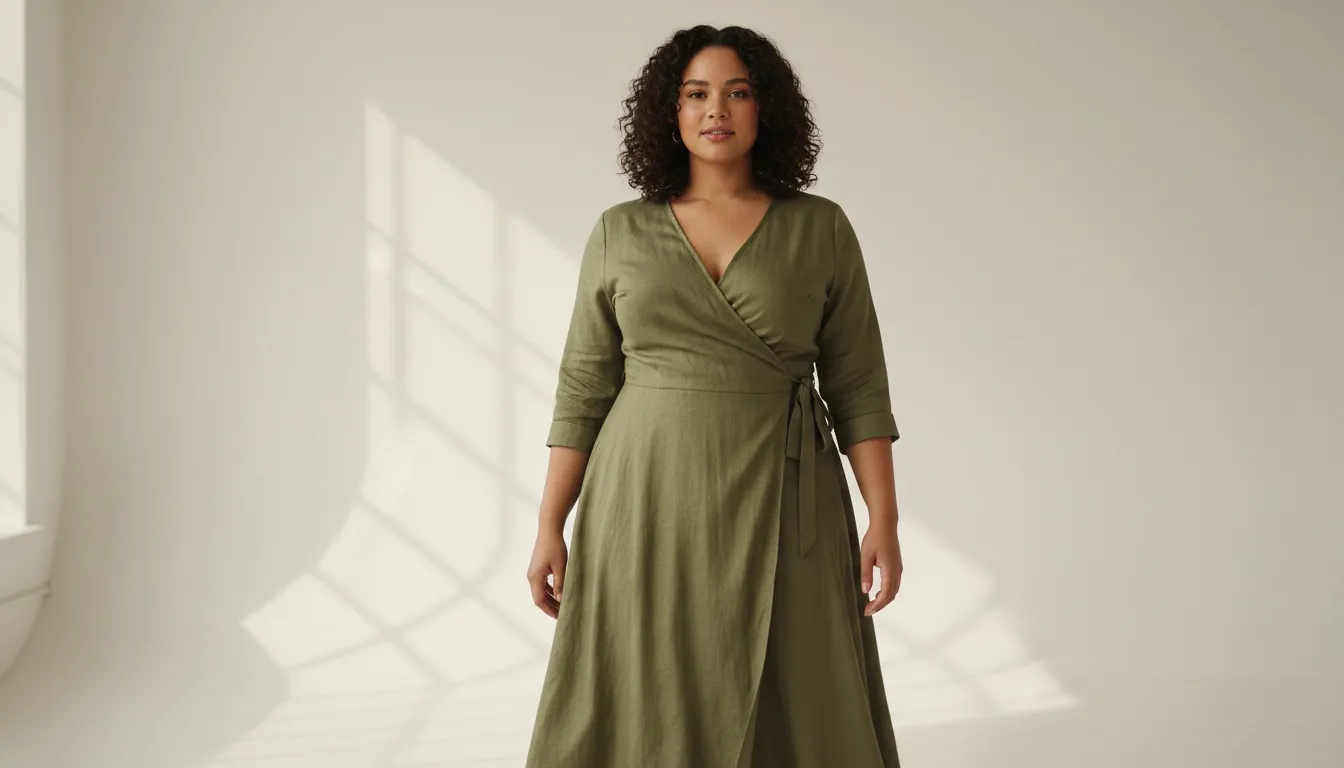
Hyper-personalization in 2027 means each shopper sees AI-generated product imagery that reflects them — same body type, same skin tone, same age range, same hair if they opt in. The garment stays constant; the model varies per visitor.
The ROI driver is straightforward: shoppers convert better and return less when they see the garment on someone who looks like them. The brands running this today have not published their numbers, so we cannot put a figure on the lift — but the direction is consistent enough that broader rollout looks inevitable once inference costs allow it.
| Personalization Level | 2026 Adoption | 2027 Forecast |
|---|---|---|
| Generic single model per SKU | Standard | Declining |
| Multiple model options per SKU | Growing | Standard |
| Shopper-personalized model per session | Pilot programs | Mid-market standard |
| Real-time customizable model | Experimental | Emerging at premium |
Trend 4: AI Fashion Video Commerce
Status today: Short-form AI video produced for marketing
2027 forecast: AI video on every product page
The leap from AI still imagery to AI video is happening faster than most brand teams realize. Tools like Fashio AI's Photo to Video already animate still lookbook imagery into 5-15 second clips for social. By 2027, the same capability will ship directly into commerce infrastructure — every product page including a short AI-generated video showing the garment moving on a model, multiple angles, multiple poses.
The competitive dynamic mirrors mobile-first product pages a decade ago: brands without video will compete against brands that have it on every SKU, and the ones without will lose engagement and conversion. The shift starts in 2026 and is fully visible by 2027.
Brand teams should start planning AI video production capacity now. The product pages that win in 2027 won't be the ones with the best static photography — they'll be the ones where every SKU has a short, polished AI video showing the garment in motion. Tools like Fashio's UGC Video and Photo to Video already handle this workflow.
Trend 5: Voice-to-Fashion Prompt
Status today: Text-prompt AI fashion model generation is standard
2027 forecast: Voice-driven generation in customer-facing and creator workflows
By 2027, the prompt interface for AI fashion imagery shifts from typed text to voice. Designers describe a campaign aloud to a generation system. Shoppers ask their phone "show me this dress in navy on someone my height," and the product page regenerates. Brand teams collaborate with AI through spoken creative direction.
The underlying technology — high-quality speech-to-text and prompt-aware generation — is already production-grade. The remaining work is interaction design and trust-building. Both happen in 12-month timelines.
Trend 6: Sustainable AI — The Synthetic Catalog Substitution
Status today: Major brands quietly replacing some physical shoots with AI
2027 forecast: Explicit sustainability messaging tied to AI adoption
The sustainability angle on AI fashion photography has been under-discussed but is becoming visible in 2026. A traditional fashion shoot involves model travel, location energy use, studio lighting, garment shipping, post-production server time. An AI workflow eliminates most of that.
Through 2027, expect more brands to explicitly tie AI catalog production to their sustainability messaging — particularly mid-market brands that have public sustainability commitments and need credible carbon-reduction stories. The pattern: physical shoots remain for hero campaigns where emotion and craft matter; AI absorbs the volume work where carbon impact is highest.
Trend 7: AI-Generated Fashion Shows
Status today: AI runway videos as marketing concepts
2027 forecast: AI fashion shows as legitimate brand content channel
Fashion shows have always been hybrid spectacle + content production. AI is starting to disrupt the content side: fully AI-generated runway videos, AI-rendered front-row attendees, AI models walking AI-rendered collections in AI-rendered venues. The early examples in 2025-2026 were treated as gimmicks; by 2027 they're a legitimate content channel that brands deploy alongside physical events or sometimes in place of them.
The clearest application is between-collection content — drops that don't warrant a full physical show but need event-style narrative content. AI fashion shows fill that gap without the production cost.
Trend 8: AI Brand Mascot Consistency
Status today: AI models still drift across campaigns
2027 forecast: Locked brand-mascot AI models with cross-content consistency
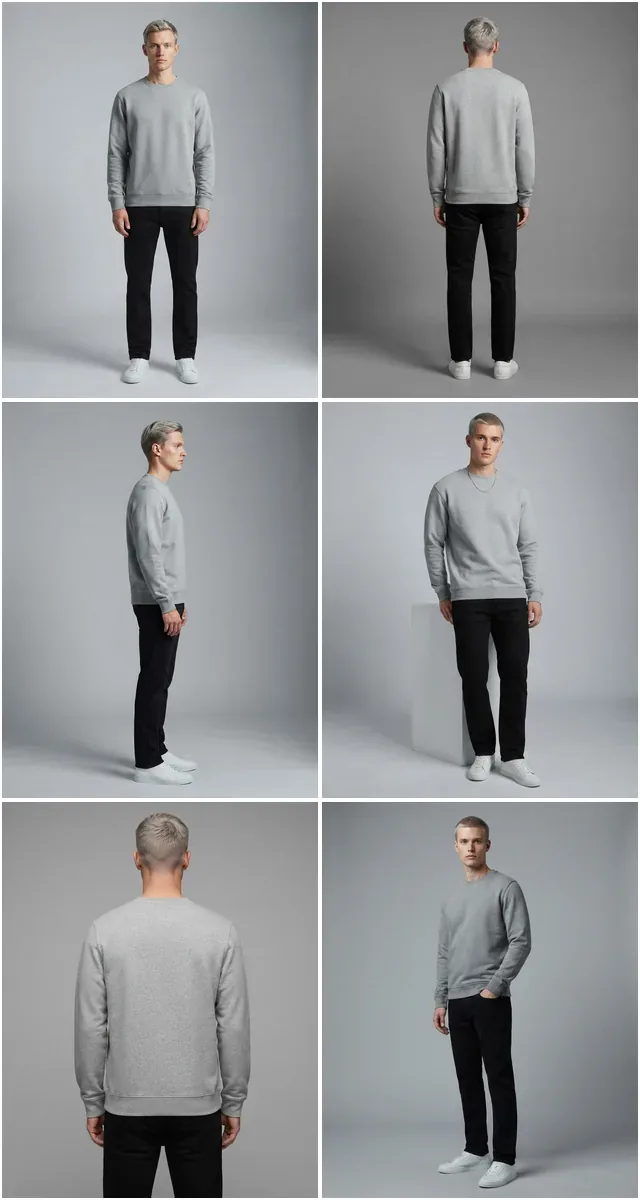
One of the persistent technical limitations in 2026 is that AI fashion models tend to drift slightly across generations — same character "concept" but with subtle face, body, or styling variations. By 2027, advancing identity-preservation techniques (LoRA-style fine-tuning, brand-specific model embedding, character anchoring) close this gap. Brands lock a single AI brand mascot identity and reuse it across every campaign, every social post, every ad, every product page — with no drift.
This creates new brand-identity dynamics: instead of relying on a hired human model whose contract expires, brands own a perpetual digital character. Fashio AI's Fashion Model Generator already supports this workflow today; in 2027 it becomes standard practice rather than an advanced technique.
Trend 9: Multi-Modal Try-On — Clothes + Hair + Makeup
Status today: Try-on tools separate by category (garments, hair, makeup)
2027 forecast: Unified multi-modal try-on in single workflow
Today, virtual try-on tools tend to specialize: garments, hair color, makeup looks, accessories. By 2027, these merge into unified multi-modal workflows. A shopper tries on a complete styled look — dress, hair color, lipstick, jewelry — in a single image generated in one pass.
The commercial implication is significant: beauty and fashion ecommerce converge into shared try-on experiences, opening cross-sell opportunities ("this dress, with this lipstick, on this hair color") that weren't previously possible. The first integrated multi-modal try-on platforms are launching in 2026; broader adoption follows through 2027.
By 2027, virtual try-on isn't about putting one dress on one model — it's about previewing an entire styled look, including the makeup, the hair, the jewelry, and the styling, in a single image generated in real time.
Trend 10: AI Fit Prediction & Returns Reduction
Status today: Size recommendation engines, basic AI fit prediction
2027 forecast: AI fit visualization driving measurable return-rate reduction
Return rates are one of the largest cost drivers in apparel ecommerce. AI fit prediction has been promised for years; in 2027 it finally ships at scale, combining body scanning (via smartphone camera), garment construction data, and ML-based fit modeling to show shoppers how a specific size will fit their specific body.
Brands that adopt this early gain a measurable margin advantage: 3-7 percentage point reductions in return rates flow straight to operating profit. By 2027, AI fit prediction is a competitive baseline rather than a differentiator — the brands without it will see returns rising while their competitors' fall.
Trend 11: The Open-Source vs Closed Model Wars
Status today: Strong open-source models (IDM-VTON, OOTDiffusion, CatVTON) alongside commercial APIs
2027 forecast: Open-source narrows quality gap but loses production share
The open-source ecosystem in 2026 produces models that are remarkably close to commercial-API quality on raw output. By 2027 the gap narrows further — but production share moves in the opposite direction.
The reason: production teams care about more than raw model quality. They care about commercial licensing, support, SLAs, multi-modal workflows, accessory handling, video output, infrastructure, and update cadence. Closed APIs deliver these as a bundled offering; open-source still requires teams to build them. By 2027, the open-source ecosystem dominates research and customization-heavy use cases, while closed APIs dominate production ecommerce and brand operations.
For brand teams, this means the open-source debate effectively closes by 2027 — managed APIs become the default, and self-hosting becomes a niche choice for teams with specific customization needs and dedicated ML resources.
Trend 12: Regulation & Disclosure Standards
Status today: Voluntary disclosure varies by brand
2027 forecast: Mandatory disclosure in most major markets
The EU AI Act establishes disclosure requirements for AI-generated commercial content. UK ASA guidance is moving in the same direction. US FTC and state-level legislation in California and elsewhere is following. By 2027, mandatory disclosure of AI-generated fashion imagery in advertising and commerce is the standard in most major markets, with specific symbols, text, or metadata requirements.
The brands positioned best are the ones that built disclosure into their practice early — H&M's digital twins program, Mango's transparent AI campaigns. The brands with the most to do are those that relied on quiet adoption (some fast-fashion operators) and will need to update their content infrastructure to meet the new requirements.
What Disclosure Will Look Like in Practice
- Visible labels or watermarks on AI-generated commercial imagery
- Standardized icons (similar to "ad" or "sponsored" labels today)
- Metadata embedded in images (C2PA standard or equivalent)
- Disclosure in advertising disclaimers and product page footers
- Differentiated treatment for AI-enhanced vs fully AI-generated imagery
Cross-Trend Implications: What All This Means Operationally
The twelve trends combine into a coherent picture of what fashion ecommerce content production looks like in 2027:
- Static product photography on product pages
- One model per SKU
- Catalog shoots every season
- Manual content production workflows
- Voluntary AI disclosure
- AR try-on as a separate app
- Fit predicted from sparse data
- Open-source vs closed AI as live debate
- Mix of static + AI video on every product page
- Multiple personalized model variants per shopper
- AI-extended catalog updated continuously
- AI-led workflows with human creative direction
- Mandatory disclosure with standardized formats
- AR try-on embedded directly in product pages
- AI fit prediction driving margin gains
- Managed APIs dominant for production, open-source for research
Action Items for Brand Teams by Mid-2026
Six concrete things brand teams should be doing now to be ready for 2027:
-
Lock In a Brand AI Model Identity
Use Fashio AI's Fashion Model Generator to create a consistent brand model identity now. Reuse it across content. By 2027, every brand will have a locked AI model identity — start building yours.
-
Build AI Video Production into Your Content Stack
Start producing AI video for at least your hero products. Photo to Video and UGC Video are the production-ready tools today. By 2027, video on every product page is competitive baseline.
-
Adopt Proactive AI Disclosure Now
Don't wait for regulation. Add clear AI disclosure to your product pages, ad materials, and brand communications today. Brands that disclose early (H&M, Mango) avoid backlash and are positioned well for mandatory requirements.
-
Plan for Multi-Modal Try-On Integration
If you're a fashion brand, watch the beauty AI ecosystem. If you're a beauty brand, watch the fashion AI ecosystem. Multi-modal try-on changes both categories — having a 2027 roadmap for cross-category preview is a competitive advantage.
-
Invest in Fit Data Infrastructure
AI fit prediction depends on garment construction data and customer measurement data. Brands that have clean data infrastructure in 2026 deploy fit prediction faster in 2027. Brands without it will be behind by months.
-
Consolidate on a Managed AI Platform
The open-source vs closed debate is closing. Production ecommerce teams should consolidate on a managed AI platform — Fashio AI covers model generation, virtual try-on, video, lookbooks, and the workflow integration that production work requires.
Start Building Your 2027 Content Stack Today
16 fashion AI tools covering model generation, virtual try-on, video, lookbooks, and editing — all under one platform. One membership, every tool, cancel any time.
Start creating →What We're Less Certain About
For honesty: not every trend visible in 2026 will play out exactly as forecast. A few areas where the prediction is shakier:
- Exact timing of regulation. The direction is clear; the specific year mandatory disclosure lands in each market is harder to call.
- Open-source quality plateau. A breakthrough in open-source fashion AI (similar to what Stable Diffusion did for general image generation) could shift the open-vs-closed balance.
- Consumer acceptance of hyper-personalization. The technology will ship; how shoppers respond to "an AI model that looks just like me" at scale is still uncertain.
- AR commerce friction. Camera-based AR has historically run into UX friction that has slowed adoption — there's a chance the AR commerce timeline slips into 2028+.
That said, every trend on this list is anchored in technology already shipping in 2026 — these aren't speculative leaps, they're 12-18 month rollouts of work that's already underway.
Related Reading for the 2027 Outlook
- Fashio AI Home — the platform powering 2027-ready workflows today
- AI Fashion Model Generator — lock in brand mascot identity now
- Virtual AI Fashion Try-On — production-ready try-on for 2027
- UGC Video — AI video for 2027 product pages
- Photo to Video — animate still imagery into video
- The State of AI in Fashion, 2026: A Practitioner's View — current state baseline
- 12 Best AI Tools for Fashion Brands 2026 — current tool landscape
Key Takeaways
- Sub-second AI image generation arrives in 2027 — plan product pages around live regeneration, not pre-rendered images
- AR commerce moves from separate apps to embedded product page experiences
- Hyper-personalized AI models per shopper become mid-market standard, driving conversion gains and return reduction
- AI video on every product page becomes competitive baseline — start producing AI video now
- Voice-driven AI fashion prompting reshapes both creator workflows and shopper interfaces
- Sustainable AI catalog positioning becomes explicit brand messaging
- AI fashion shows mature into a legitimate between-collection content channel
- Brand mascot AI model identity locks in — every brand owns a perpetual digital character
- Multi-modal try-on (clothes + hair + makeup) unifies fashion and beauty ecommerce
- AI fit prediction delivers measurable return-rate reduction and margin gain
- Managed AI APIs dominate production; open-source dominates research and customization
- Mandatory disclosure regulation lands in 2027 — build the practice now
Build for 2027 Today on Fashio AI
Brand mascot model identity, virtual try-on, AI video, lookbooks — every 2027-ready capability available now on a Fashio AI membership.
Start creating →FAQ: AI Fashion Photography in 2027
What are the biggest AI fashion photography trends for 2027?
The twelve defining trends include real-time sub-second image generation, AR commerce embedded in product pages, hyper-personalized AI models per shopper, AI video on every product page, voice-to-fashion prompting, sustainable AI catalog positioning, AI-generated fashion shows, locked AI brand mascot identities, multi-modal try-on (clothes + hair + makeup), AI fit prediction reducing returns, the consolidation of production AI on managed APIs, and mandatory AI disclosure regulation.
Will AI replace fashion photographers by 2027?
No, but the work shifts significantly. AI absorbs high-volume catalog, ecommerce variations, and supporting content — work that was historically the bulk of fashion photography. Hero campaigns, editorial features, and brand-defining imagery remain human-led. Fashion photographers in 2027 increasingly operate as creative directors guiding AI workflows alongside selective traditional shoots, rather than as the sole producers of imagery.
What's hyper-personalized AI fashion modeling and when will brands adopt it?
Hyper-personalized AI modeling generates product imagery that matches each individual shopper — same body type, same skin tone, same age range, same hair preferences. Early adoption began in 2025 at premium DTC brands and ultra-fast fashion operators. Mid-market rollout accelerates through 2027 as inference costs fall. The ROI driver is that shoppers convert better and return less when the model resembles them; the brands running it have not published figures, so treat the size of the effect as unknown.
How will AI fashion video commerce change in 2027?
By 2027, every product page increasingly includes a short AI-generated video of the garment moving on a model in under 15 seconds. Tools like Fashio AI's Photo to Video already do this for marketing content; in 2027 the same capability ships directly into commerce infrastructure. Brands without AI video will lose engagement and conversion against brands that have it on every SKU.
What is multi-modal try-on?
Multi-modal try-on combines garment try-on with hair, makeup, accessories, and full styling in a single generation pass. Instead of trying on a dress separately from a makeup look, shoppers preview the complete styled outfit — clothes plus hair color plus makeup plus jewelry — in one image. By 2027, this pulls fashion and beauty ecommerce closer together and opens new bundle and cross-sell opportunities.
Will AI fashion photography face new regulations in 2027?
Yes. The EU AI Act requires disclosure of AI-generated commercial content; UK ASA and US FTC guidance is moving in the same direction. By 2027, mandatory AI disclosure in advertising and commerce is standard in most major markets. Brands that built proactive disclosure into their practice early (H&M, Mango) are positioned well; brands relying on quiet adoption will need to update their content infrastructure.
How will the open-source vs closed AI model dynamic play out in fashion?
By 2027, open-source fashion AI models continue closing the quality gap with closed commercial models, but production share moves toward managed APIs. The reason: production teams need commercial licensing, support, SLAs, multi-modal workflows, and integrated capabilities that open-source can't easily bundle. Open-source dominates research and customization; closed APIs like Fashio AI dominate production ecommerce and brand operations.