Photoshoot Concepts That Move a Collection in 2026
30 ready-to-shoot concepts AI prompt + tool per idea Under 1 hour to execute Same model, ten concepts, one afternoon
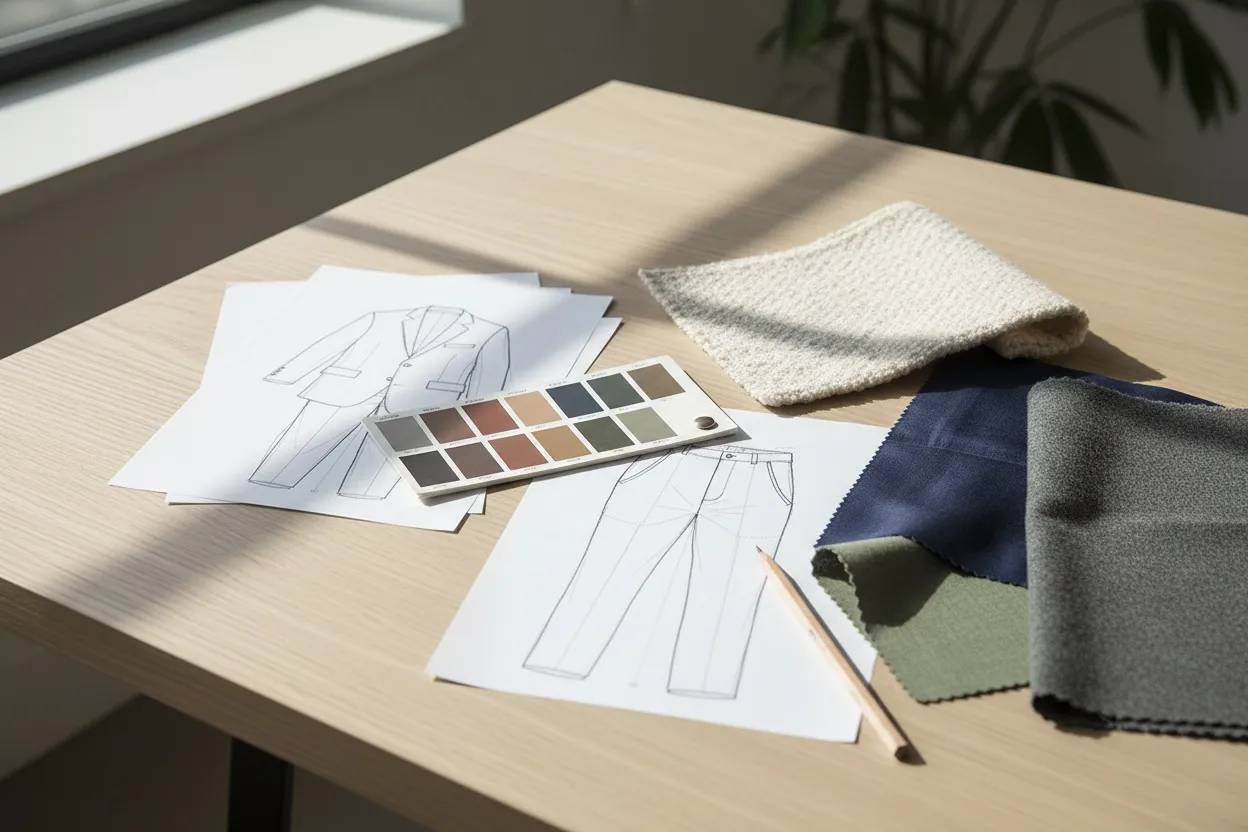
This isn't a Pinterest mood board — it's a working catalogue of 30 designer photoshoot concepts, each with the AI prompt template and the Fashio tool to execute it. Designers no longer pick one concept because budget forces the choice. Test five, ship the one that performs.
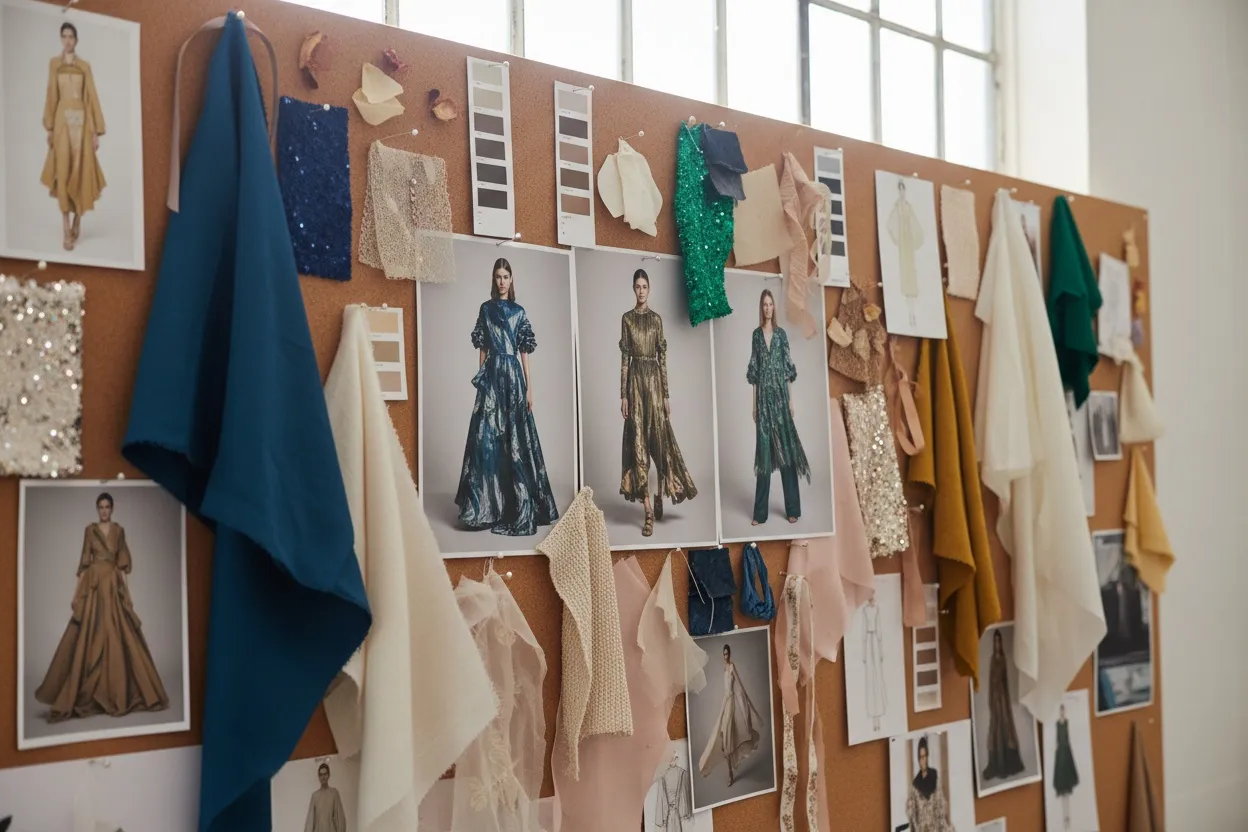
Every designer hits the same wall when planning a collection shoot. The mood board is full of ideas, the budget covers one. Casting, location, photography, post-production — by the time the math is done, two-thirds of the concepts get cut, and the surviving one has to carry the entire season. That tradeoff defined fashion production for forty years.
What changed: AI. A designer in 2026 can render every concept on the mood board against the actual garments, with a consistent model identity, in under an hour each. The bottleneck is no longer execution — it's selection. The question is no longer "can we afford this concept?" It's "which of these ten concepts actually moves the collection?"
This piece is a working playbook of 30 photoshoot concepts organized by mood, with an AI prompt template and a Fashio tool stack for each. Pick one, prompt it, render it, and move on. Or test all 30 in a weekend.
The Four-Step Workflow Behind Every Concept
Before the concepts: the workflow. Every idea in this catalogue executes through the same four-step process. Once it's locked in, you can produce any concept in roughly the same hour.
-
Lock the Model Identity
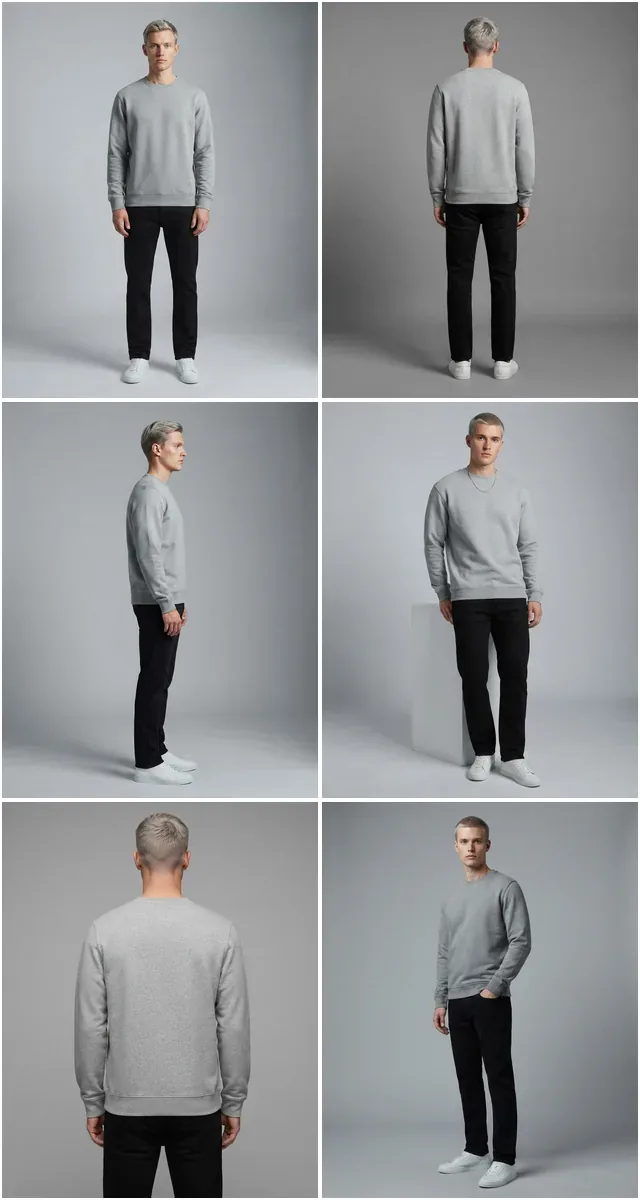
Generate a brand-consistent model using AI Fashion Model Generator. Save the character — same face, body, hair, expression — and reuse across every concept. This single decision is what makes a 30-concept test feel like one collection instead of 30 random images.
-
Fit the Garments
Run each garment through Virtual AI Fashion Try-On or Product to Model. The same locked model wears every look across every concept.
-
Apply the Concept
Use AI Image Editing with the prompt template for the chosen concept. Scene, lighting, mood, color grade all applied from the prompt.
-
Vary Poses and Reframe
Run Pose Variation for editorial range, then Photo Reframe for every aspect ratio you need across channels.
Theme 1: Minimalist & Studio Concepts
Clean, controlled, considered. Minimalist concepts let the garment speak. They photograph beautifully on white seamless or single-color backdrops and translate especially well to ecommerce and lookbooks. Easy to produce; hard to do exceptionally.
1. Pure White Cyc Wall
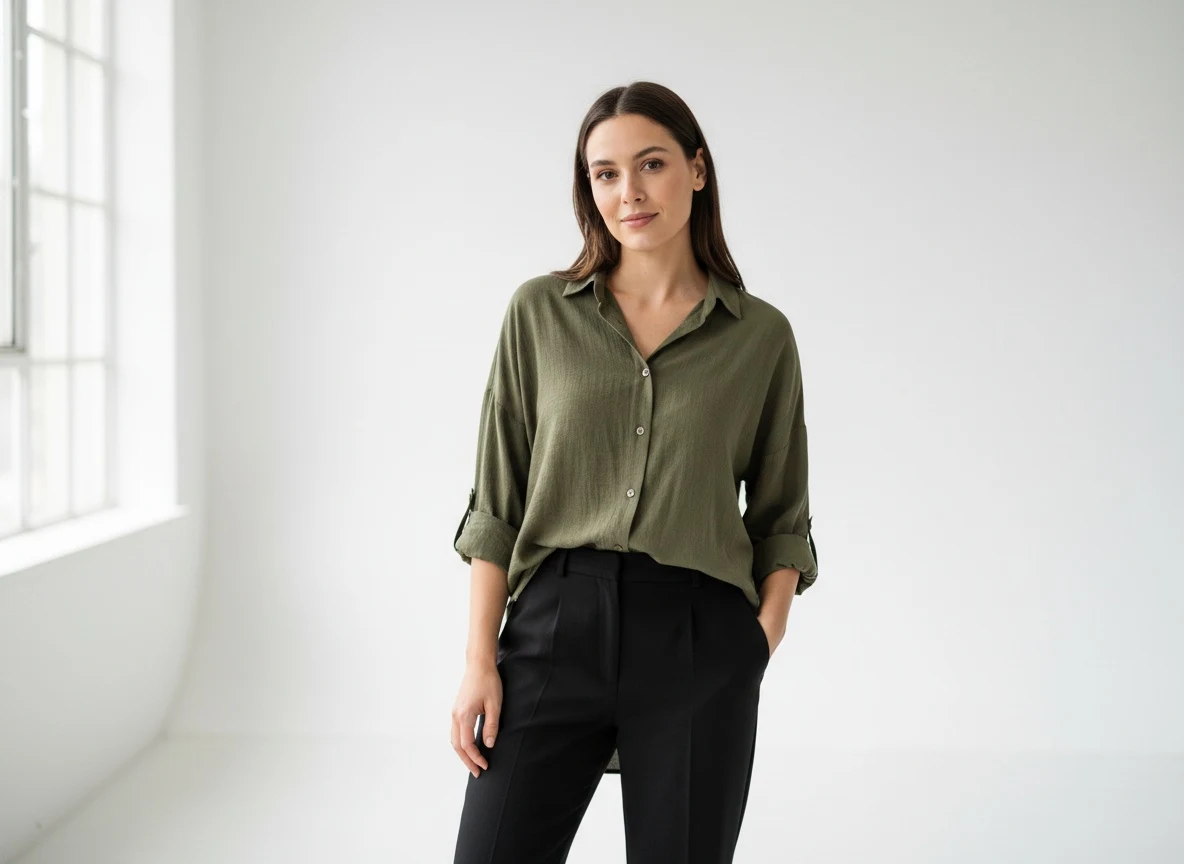
The ecommerce default elevated to editorial. Single model on infinite white cyclorama wall, soft directional light from above-left, full-length shots with cropped variations. Works for any garment, any season.
Prompt template: "Editorial fashion model standing on infinite white cyclorama background, soft daylight from upper-left, neutral expression, full-body framing, magazine-quality lighting, no props, garment is the focus."
Fashio stack: AI Fashion Model Generator → Virtual Try-On → Pose Variation → Remove Background for the final white backdrop.
2. Single-Color Saturation
Replace white with a single saturated color — cobalt blue, oxblood red, mustard yellow. Garment in a complementary or contrasting tone. Modern, graphic, social-friendly.
Prompt template: "Model centered against saturated [color] backdrop, even soft lighting, no shadows on backdrop, direct gaze, editorial fashion magazine aesthetic."
3. Negative Space Composition
Model and garment occupy 30% of the frame; the rest is intentional empty space. Works beautifully for typography overlays and campaign hero images. The garment becomes a graphic element.
Prompt template: "Fashion model positioned to the right third of the frame, large negative space on the left, soft directional light, minimalist composition for editorial headline overlay."
4. Black Studio with Single Light
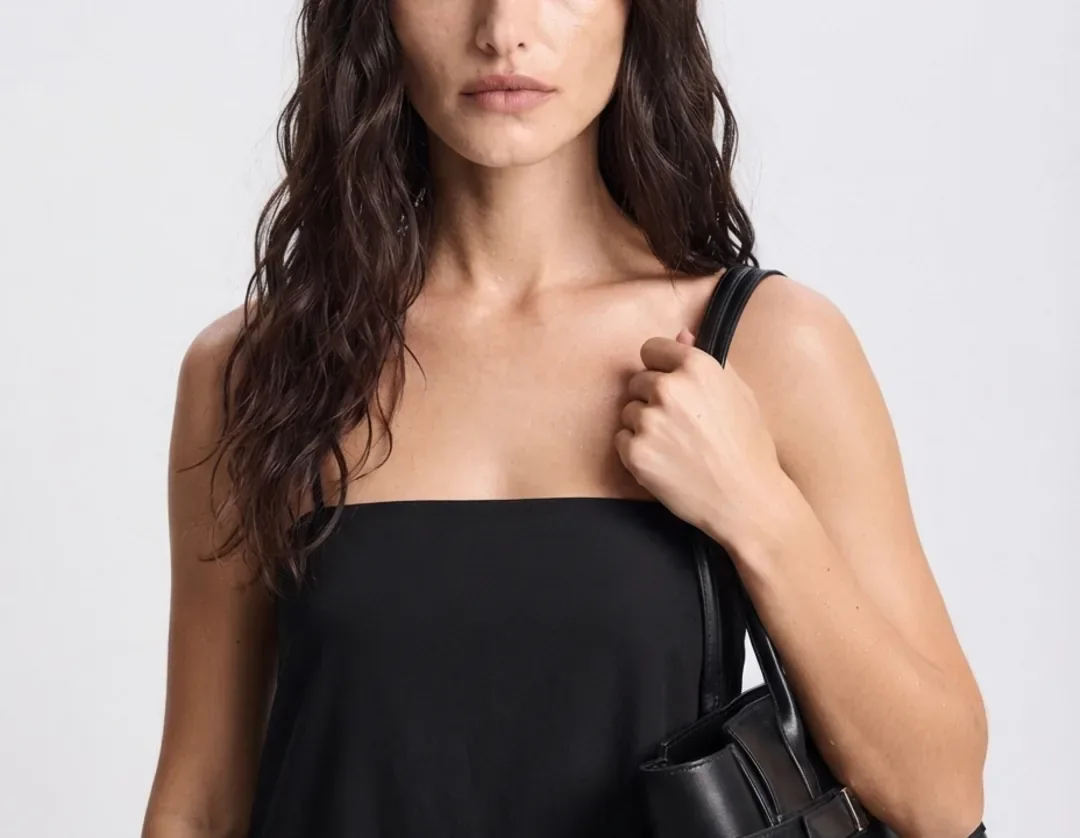
Drama through restraint. Pure black background, single hard light source creating sculptural shadow, garment edges defined by rim lighting. Reads as luxury and high editorial.
Prompt template: "Model on pure black background, single hard light from upper-right creating sculptural shadow on opposite side, rim light defining garment silhouette, high-contrast editorial fashion photography."
5. Symmetry & Centering
Architectural composition — model perfectly centered, frontal pose, symmetric framing. Garment becomes the focal point through pure compositional discipline. Particularly strong for tailoring, suiting, and outerwear.
Prompt template: "Front-facing model, perfectly centered composition, symmetric framing, neutral light gray background, direct gaze, formal pose, architectural balance."
Theme 2: Urban & Street Editorial
Place-as-character. Urban concepts let the city become the second model. Stronger storytelling, harder logistics in physical shoots — easy with AI scene composition.
6. Brutalist Concrete
Raw concrete architecture, harsh angles, model softening the geometry. Particularly strong for monochrome and neutral palettes. Works on rooftops, parking garages, civic buildings.
Prompt template: "Editorial fashion model against brutalist concrete architecture, raw textured surfaces, overcast soft light, neutral mood, full-body editorial framing, magazine fashion photography."
7. Neon Night Street
Tokyo, Hong Kong, or unspecified high-density city after dark. Wet pavement, neon signs reflecting, model lit by ambient color. Reads as cyber, contemporary, and youth-oriented.
Prompt template: "Fashion model on wet city street at night, neon signs glowing in background, ambient color reflections on pavement, cinematic lighting, editorial mood."
8. Empty Urban Geometry
Empty urban environment — closed shopfronts, empty parking lots, deserted plazas. Model is the only living element. Particularly strong for understated luxury and slow-fashion brands.
Prompt template: "Single fashion model in empty urban plaza at dawn, no other people, geometric architectural background, soft cool morning light, slow-fashion editorial mood."
9. Subway Tunnel
Tiled corridors, fluorescent strip lighting, vanishing-point perspective. Model walking toward or away from the camera. Energy is forward motion and isolation in transit.
Prompt template: "Fashion model walking through tiled subway tunnel, fluorescent overhead lighting, vanishing-point composition, slight motion blur, urban editorial story."
10. Rooftop Skyline
Industrial rooftop with city skyline behind. Wind, distance, scale. Particularly strong for outerwear and statement pieces. Late-afternoon golden light or blue hour.
Prompt template: "Fashion model on industrial rooftop, distant city skyline, golden-hour warm light, gentle wind through hair, panoramic framing, cinematic fashion editorial."
Theme 3: Surreal & Conceptual
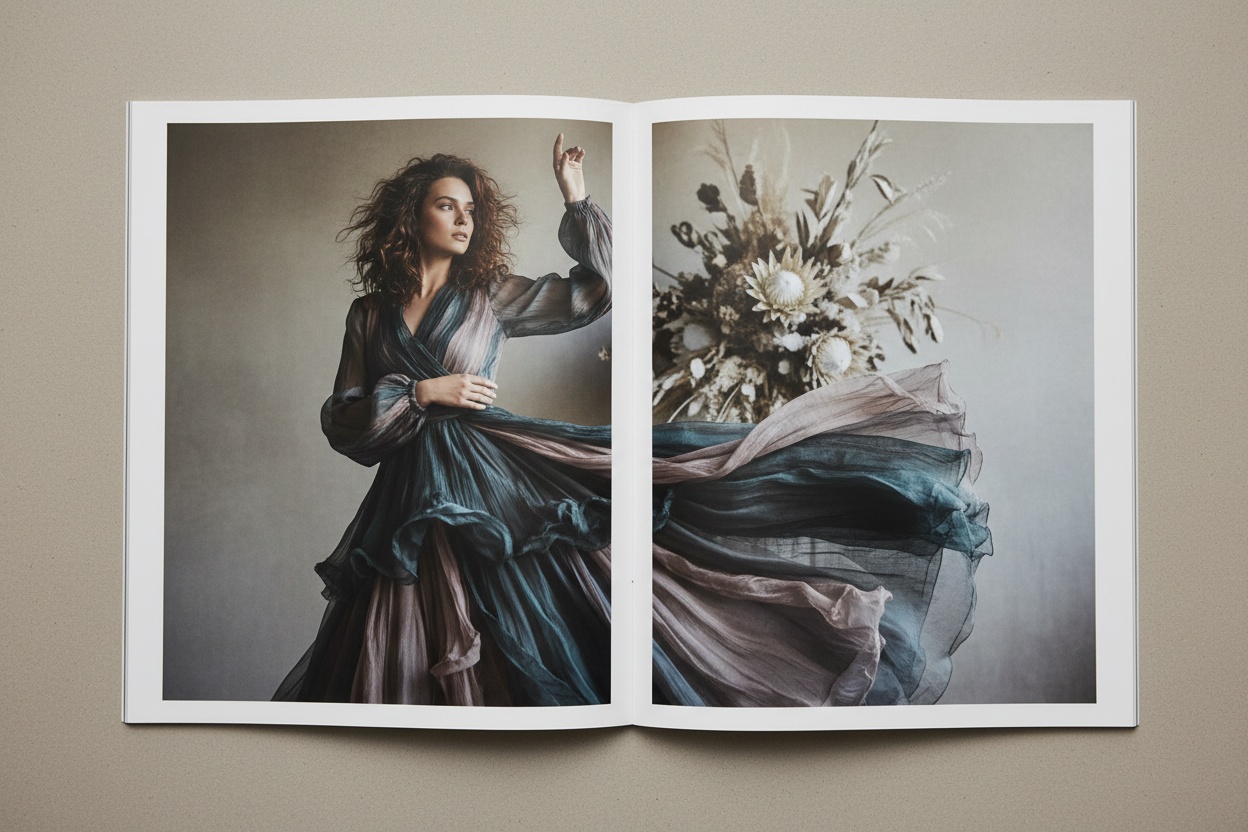
This category is where AI legitimately outperforms traditional photography. Impossible scenes, scale shifts, repeating selves, gravity-defying compositions. Physical shoots take weeks of post-production to achieve what AI delivers natively.
11. Floating Garments
Model wearing the garment, but additional pieces of the same garment float and orbit around them. Suggests collection unity and product as object. Works exceptionally well for paid ad sets.
Prompt template: "Fashion model wearing [garment], additional pieces of [garment] floating and orbiting around the model in zero gravity, surreal editorial concept, clean studio background."
12. Scale Shift
Model dwarfed by oversized everyday objects, or oversized models in miniature environments. Plays with proportion and surprise. Particularly strong for accessories and small leather goods scaled up.
Prompt template: "Surreal fashion editorial — model standing next to oversized [accessory], dramatically out-of-scale composition, dreamlike pastel background, magazine concept shoot."
13. Repeating Selves
Same model appearing 3-5 times in the same frame in different poses or outfits. Suggests range, collection breadth, or psychological narrative. Impossible to shoot traditionally without compositing days.
Prompt template: "Same fashion model appearing five times in the same frame, each version wearing a different look from the collection, surreal repeating composition, unified studio backdrop."
14. Underwater Editorial
Submerged model, garment moving with water currents. Reads as ethereal, dreamlike, fashion-as-art. The traditional version requires an underwater photographer, certified diver model, and a pool rental.
Prompt template: "Fashion model underwater, garment flowing with currents, bubbles rising, blue-green ambient light, ethereal editorial fashion photography."
15. Mirror Multiplication
Model surrounded by mirrors at varied angles. Infinite reflections of the same garment. Particularly strong for graphic prints and statement silhouettes.
Prompt template: "Fashion model in mirrored room, infinite reflections of garment from multiple angles, geometric mirror placement, high-contrast editorial mood."
16. Cloud Floor
Model standing on or walking through clouds. Reads as light, ethereal, dreamlike. Works beautifully for soft, romantic, or light-fabric collections.
Prompt template: "Fashion model standing on bed of soft white clouds, pastel sky background, ethereal soft light, dreamlike editorial fashion photography."
Theme 4: Archive, Vintage & Era-Specific
Era as concept. Particularly strong for collections that reference a specific decade or revival trend. AI nails period authenticity (lighting style, film grain, color palette) without the cost of period-correct locations and props.
Brief the era precisely rather than by name — a decade covers several incompatible moods, and the shoot will drift toward the most generic one otherwise. Our Y2K fashion guide breaks the turn of the millennium into its two distinct halves, the techno-futurist and the mall-and-tabloid, which are the two references most often collapsed into one another on a moodboard.
17. 1970s Disco Editorial
Warm tones, soft focus, bokeh lights, gold and amber. Reads as glamour, opulence, dance. Particularly strong for sequins, satin, and statement evening wear.
Prompt template: "Fashion model in 1970s disco interior, soft warm bokeh lights, gold and amber palette, soft-focus glamour, 35mm film grain, vintage Vogue editorial style."
18. 1990s Minimalism
Stripped-down studio, neutral palette, slip dresses, harsh fluorescent or daylight. Reads as cool, slightly detached, anti-fashion. Calvin Klein and Helmut Lang reference territory.
Prompt template: "Fashion model in stripped-down 1990s studio, neutral beige and gray palette, fluorescent or cool daylight, minimalist Helmut Lang aesthetic, 35mm grain, archive editorial."
19. 1960s Mod
Saturated primary colors, geometric backgrounds, sharp graphic poses. Reads as optimistic, kinetic, art-pop. Particularly strong for prints, blocks, and dress silhouettes.
Prompt template: "Fashion model in 1960s mod editorial, saturated primary color blocks behind, geometric composition, graphic posing, bright crisp light, retro fashion magazine aesthetic."
20. 1980s Power Editorial
Big silhouettes, hard shadows, saturated backgrounds, oversized props. Reads as confident, theatrical, ambitious. Works for tailoring and statement outerwear collections.
Prompt template: "Fashion model in 1980s power editorial, dramatic hard light, saturated red or electric blue background, oversized silhouette, theatrical posing, vintage fashion magazine."
21. Y2K Revival
Glossy magazine flash, low-rise styling, holographic surfaces. Reads as nostalgic for the millennium era. Particularly resonant with Gen Z driven brands.
Prompt template: "Y2K revival fashion editorial, glossy direct flash photography, holographic and metallic surfaces, low-rise styling, early-2000s magazine aesthetic."
Theme 5: Motion & Energy
Movement as the central concept. Particularly strong for activewear, dance-inflected brands, and youth-driven collections. AI motion blur is now indistinguishable from camera-captured blur when prompted correctly.
22. Mid-Motion Blur
Slow-shutter aesthetic captured digitally. Model mid-jump, mid-walk, or mid-spin with garment trailing. Reads as kinetic, joyful, performative.
Prompt template: "Fashion model mid-jump, motion blur on garment, sharp focus on face, dynamic editorial energy, daylight studio environment."
23. Frozen Action
The opposite of motion blur — high-shutter freezing of mid-action. Garment caught mid-flow, hair caught mid-toss. Reads as fashion-as-sport, fashion-as-dance.
Prompt template: "Fashion model in mid-action pose, hair and garment frozen in motion, high-shutter clarity, neutral studio background, dynamic fashion editorial."
24. Sport Editorial
High-end fashion in athletic context — tennis court, running track, gym, swimming pool. Plays luxury against utility. Particularly strong for athleisure, performance wear, and crossover collections.
Prompt template: "Luxury fashion model on minimalist tennis court, considered athletic pose, soft natural light, sport-meets-luxury editorial mood, magazine fashion photography."
25. Dance Editorial
Trained dancer poses — extension, balance, line. The body becomes the focal point of the composition. Particularly strong for flowing fabrics, dresses, and minimal silhouettes.
Prompt template: "Fashion model in trained dancer pose, full extension and balance, garment flowing with movement, soft studio light, sculptural editorial composition."
Theme 6: Nature, Landscape & Environmental
Place as story. Nature concepts ground the garment in environment and signal lifestyle. Particularly strong for outerwear, knitwear, and brands with sustainability positioning.
26. Desert Sand
Open dunes, golden light, vast horizons. Reads as expansive, contemplative, timeless. Works for flowing garments, neutral palettes, and statement silhouettes.
Prompt template: "Fashion model on golden sand dunes, vast desert horizon, warm late-afternoon light, contemplative editorial mood, cinematic fashion photography."
27. Forest Editorial
Dense forest, dappled light through canopy, model among trees. Reads as romantic, organic, slow-fashion. Particularly strong for natural fibers and earth-tone palettes.
Prompt template: "Fashion model in dense forest, dappled sunlight through canopy, romantic editorial mood, organic natural setting, slow-fashion magazine aesthetic."
28. Mountain Vista
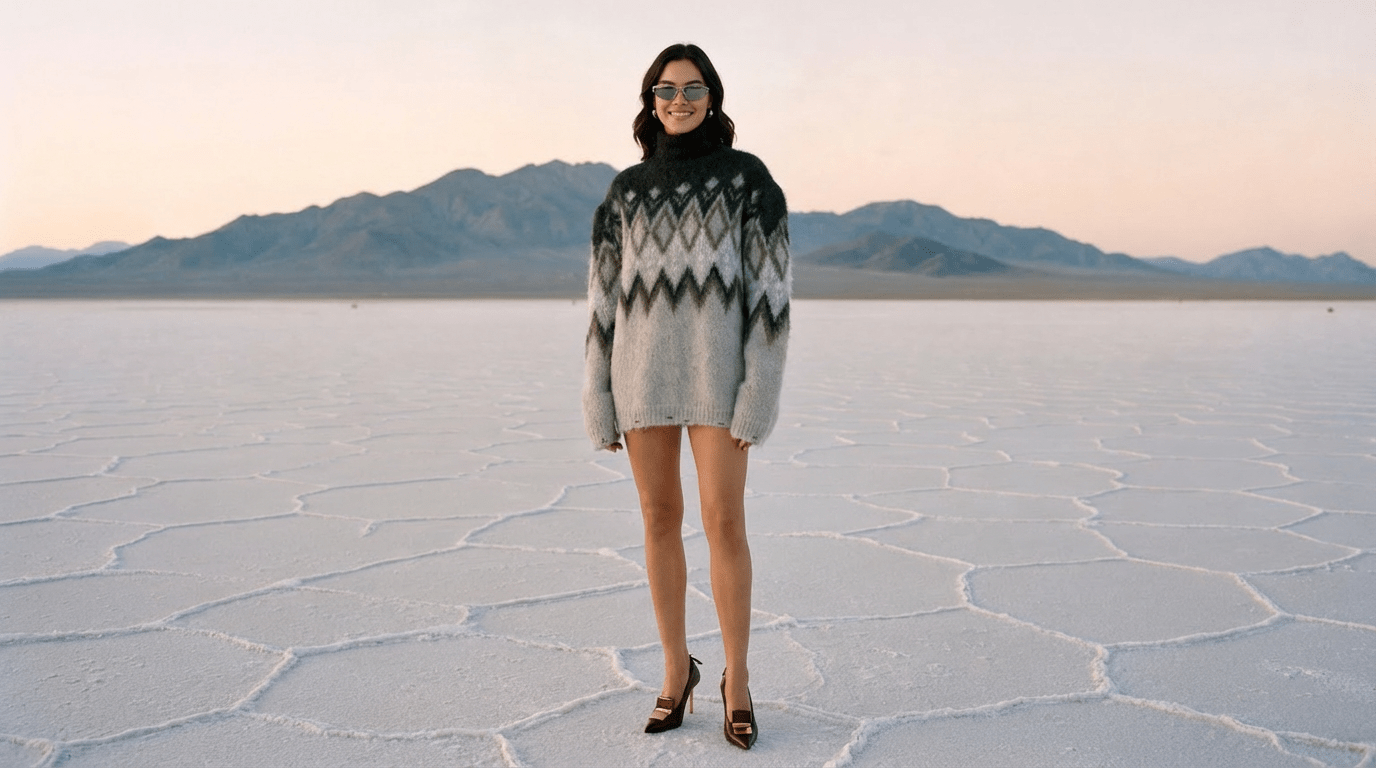
High-altitude landscape, dramatic peaks behind, model in foreground. Reads as adventurous, premium outerwear, technical-meets-fashion. Particularly strong for AW collections.
Prompt template: "Fashion model on mountain ridge, dramatic peaks behind, crisp cold light, technical outerwear editorial, premium adventure mood."
29. Coastal Editorial
Coastline at golden hour, model walking shoreline, breeze visible in garment. Reads as freedom, ease, summer luxury. Particularly strong for resort and SS collections.
Prompt template: "Fashion model walking coastal shoreline, golden-hour light, breeze through hair and garment, summer luxury editorial, resort fashion mood."
30. Greenhouse Conservatory
Glass greenhouse, lush tropical plants, model among foliage. Plays nature against architecture. Particularly strong for prints, florals, and biophilic brand positioning.
Prompt template: "Fashion model in Victorian glass greenhouse, lush tropical foliage, dappled natural light through glass, editorial fashion magazine, biophilic mood."
Choosing the Right Concept for the Collection
Thirty options is paralysis if you don't have a framework. The strongest collection shoots pick a concept that does three things:
| Selection Criterion | What to Ask | Why It Matters |
|---|---|---|
| Garment Type Fit | Does this concept flatter the silhouettes in the collection? | Surreal floating works for lightweight; brutalist works for tailoring |
| Brand Voice Fit | Does this concept sound like your brand says it? | A slow-fashion brand can't suddenly Y2K-flash without confusion |
| Channel Strategy | Will the concept reframe cleanly for every channel? | Editorial concepts need to convert to 9:16, 1:1, and 16:9 |
| Production Difficulty | Can this be executed inside your AI budget and timeline? | Even with AI, some concepts (underwater, dance) take more prompting work |
| Competitive Differentiation | Are competitors doing this concept right now? | Pick the concept that doesn't read as "we saw their shoot too" |
Picking three or four concepts and trying to combine them in one shoot. The result is always a lookbook that reads as random. Pick one concept per shoot, execute it across every garment in the set, and let the unifying mood do the heavy lifting. If you want to test multiple concepts, run them as separate complete sets and compare performance — don't mix them into a single confused deliverable.
Editorial vs Campaign vs Lookbook — What Each Format Needs
Same concept, different format. A designer photoshoot can deliver several outputs from the same source images — and each format has its own composition logic.
- Story-led — concept drives every choice
- Wide framing, negative space, mood
- Typography overlay friendly
- Loose narrative across 8-15 images
- Used for magazines, brand pages, press
- The "art" deliverable
- Sales-led — product is the focus
- Tighter crops, garment-forward
- CTA-friendly composition
- 3-5 hero images, multiple variations
- Used for paid ads, landing pages, email
- The "conversion" deliverable
The good news with AI: one prompted shoot generates both. Run the editorial wide shots, then reframe for campaign tight crops using Photo Reframe. Same source, both deliverables.
The shoot has stopped being the bottleneck. The new bottleneck is choosing which of the thirty concepts on the board actually moves the collection. The designer who picks well in 2026 wins. The designer who picks for novelty alone produces beautiful, forgettable images.
Putting Together a Multi-Concept Test in One Afternoon
If you want to test multiple concepts for a single collection — which is the move most designers will make once they have an AI workflow — here's the playbook:
-
Pick Three Concepts
Choose three from this catalogue that align with the collection's mood. Don't combine them in one set — run them as three separate complete lookbooks of 6-8 looks each.
-
Lock One Model Across All Three
Same locked model identity reused across all three concepts. The consistent face is what lets you compare concepts cleanly — the only variable is the concept itself.
-
Run the Same Garments in Each
Same 6-8 hero garments fitted in all three concepts. Now the comparison is clean: same model, same garments, three different worlds.
-
Ship to a Small Test Audience
Email list segment, paid ad split, or an Instagram story poll. Watch which concept generates the strongest engagement signal.
-
Commit to the Winner
Scale the winning concept into the full campaign rollout. The other two stay in the archive — usable for secondary channels or future campaigns. Nothing is wasted.
Location Ideas When Physical Shoots Still Matter
Not every shoot needs to be fully AI. Some brand-defining campaigns benefit from real locations with real photographers. When you go physical, the concept catalogue still works as a brief. Strong physical locations that align with these concepts:
- Brutalist architecture — government buildings, university campuses, civic centers
- Abandoned industrial — factories, warehouses, decommissioned power stations
- Galleries and museums — white-cube spaces, brutalist gallery exteriors
- Greenhouses and conservatories — botanical gardens, historic conservatories
- Coastal and desert — accessible day trips from major fashion cities
- Urban rooftops — film location services for skyline access
- Empty pools and tennis courts — off-season private clubs
- Vintage interiors — Airbnb has a category specifically for design-forward homes
Even when shooting physical, the AI workflow stays useful for pre-visualization — render the concept against the location before booking, and walk into the actual shoot day with a fully realized brief.
Run Your First Concept Test on Fashio AI Free
Lock the model, fit the garments, prompt the scene, vary the poses — every step on a Fashio AI membership. Test three concepts in one afternoon and ship the winner.
Start creating →Concept Cheat Sheet — Quick Reference
| Concept | Best For | Difficulty |
|---|---|---|
| Pure White Cyc | Ecommerce, lookbooks, any garment | Easy |
| Single-Color Saturation | Social, paid ads, statement pieces | Easy |
| Black Studio Single Light | Luxury, tailoring, eveningwear | Medium |
| Brutalist Concrete | Monochrome, neutral, structural pieces | Easy |
| Neon Night Street | Streetwear, youth, contemporary | Medium |
| Floating Garments | Paid ads, conceptual campaigns | Hard |
| Repeating Selves | Collection unity, surreal editorial | Hard |
| 1990s Minimalism | Slow fashion, neutral palette, archive | Medium |
| 1960s Mod | Prints, color, retro revival | Easy |
| Motion Blur | Activewear, youth, dance brands | Medium |
| Desert Sand | Flowing fabrics, neutrals, statement | Easy |
| Forest Editorial | Natural fibers, slow fashion, earth tones | Easy |
| Greenhouse Conservatory | Prints, florals, biophilic brands | Medium |
Fashio AI Tools Used Across These Concepts
- AI Fashion Model Generator — lock the consistent character across every concept
- Virtual AI Fashion Try-On — fit each garment to the locked model
- Product to Model — full looks including accessories
- Pose Variation — editorial pose range per concept
- AI Image Editing — apply concept-specific mood, lighting, and color grade
- Photo Reframe — reframe for every channel and aspect ratio
- Photo to Video — animate concept stills for social
- Fashion Photo Upscale — print-ready resolution for editorial output
What Makes a Designer Photoshoot Memorable in 2026
Production is no longer the differentiator. Every brand can produce. What separates the memorable shoots in 2026 is:
- A single strong concept executed cleanly — not three weak concepts merged
- Consistent model identity across the entire set, regardless of concept
- Concept aligned to the brand voice, not chasing trend novelty
- Testing in market before committing budget — AI lets you prove the concept first
- Cross-channel execution from a single source — stills, video, every aspect ratio
The designer who ships a clean execution of an unfashionable concept will outperform the designer who ships a confused execution of a trending one. AI is the leverage that lets the disciplined designer win.
Going Deeper — Related Reading
- AI Lookbook Generator Guide — turning a concept into a full lookbook
- AI Fashion Design Tools & Trends Guide — the broader AI fashion landscape
- AI Magazine Cover Generator Guide — translating editorial shoots into cover layouts
- The True Cost of Fashion Photoshoots — what concept testing replaces
Key Takeaways
- 30 strong concept directions exist for any collection — the bottleneck is selection, not execution
- The four-step AI workflow (model → garment → concept → poses) executes any concept in under an hour
- Lock one consistent model identity across every concept test for clean comparison
- One concept, executed cleanly across the entire shoot, beats three concepts merged into a confused set
- Editorial and campaign deliverables can both come from a single source shoot via reframe
- Surreal and conceptual ideas (floating, scale shift, repeating selves) are where AI legitimately outperforms physical production
- Test three concepts in one afternoon before committing budget to a single direction — the AI workflow makes this trivial
Build a Full Concept Test Free on Fashio AI
16 fashion AI tools cover every step of the designer shoot workflow — model, try-on, pose, scene, reframe. One membership, no watermark, full commercial rights.
Start creating →FAQ: Fashion Designer Photoshoot Ideas
How do designers come up with fashion photoshoot ideas?
The strongest concepts come from three inputs combined: the mood or story of the collection, a strong visual reference (architecture, film, art, location), and the brand's existing visual identity. A concept that aligns to all three becomes a campaign that strengthens the brand. A concept that only chases a trending visual reference produces beautiful but disposable imagery. The 30-concept catalogue in this guide is meant as a starting library — pick the one that aligns to all three filters for your collection.
What are the most popular fashion photoshoot themes in 2026?
The dominant themes in 2026 are minimalist studio, monochrome editorial, archive vintage (1990s and Y2K revival especially), surrealism, motion blur, color blocking, sport-meets-luxury, urban street editorial, surreal nature, and AI-native concept shoots that lean into impossibilities — floating garments, scale shifts, repeating selves — that traditional photography can't easily produce without weeks of compositing.
Can AI generate fashion photoshoot ideas?
Yes, and more importantly, AI executes the concept end to end. Designers provide a mood, the garment images, and model preferences; tools like AI Fashion Model Generator, Virtual AI Fashion Try-On, and AI Image Editing generate the full editorial set with consistent model identity, varied poses, and unified scene composition. The creative direction stays with the designer; AI replaces the production overhead between brief and final image.
How long does a fashion designer photoshoot take with AI?
A complete 10-15 look editorial concept can be generated in under an hour with AI, compared to two to four weeks for a traditional shoot covering casting, location booking, photography day, hair and makeup, and retouching. This time compression is what enables the new playbook of testing three concepts in one afternoon before committing to one for the full campaign rollout.
What is the difference between an editorial and a campaign photoshoot?
Editorial photoshoots are story-led and concept-driven — they're meant for lookbooks, magazines, brand pages, and PR. Campaign photoshoots are sales-led and product-driven — they're meant for paid ads, landing pages, email, and direct conversion channels. The same source images can deliver both with different reframing and cropping, which is why AI workflows are particularly efficient: one shoot, both deliverables.
What location ideas work best for fashion photoshoots?
Strong location ideas in 2026 include brutalist architecture, abandoned industrial spaces, white-cube galleries, minimalist apartments, urban rooftops, desert landscapes, neon-lit streets, vintage interiors, monochrome studios, and surreal AI-generated environments. AI tools let designers test five or ten locations virtually before committing budget — the same locked model and garments rendered against every backdrop in minutes through AI Image Editing scene prompts.
How do I make a designer photoshoot feel high-end without a big budget?
Three disciplines do almost all the work: one consistent model identity across the entire set, one unified mood (lighting, color grade, backdrop), and deliberate pose variation rather than identical front-facing poses. Combined, those three signals separate "considered editorial" from "stock photo set." With AI tools, all three are enforced automatically — the locked character, the prompt-applied mood, and the Pose Variation tool that delivers editorial range without re-shooting.