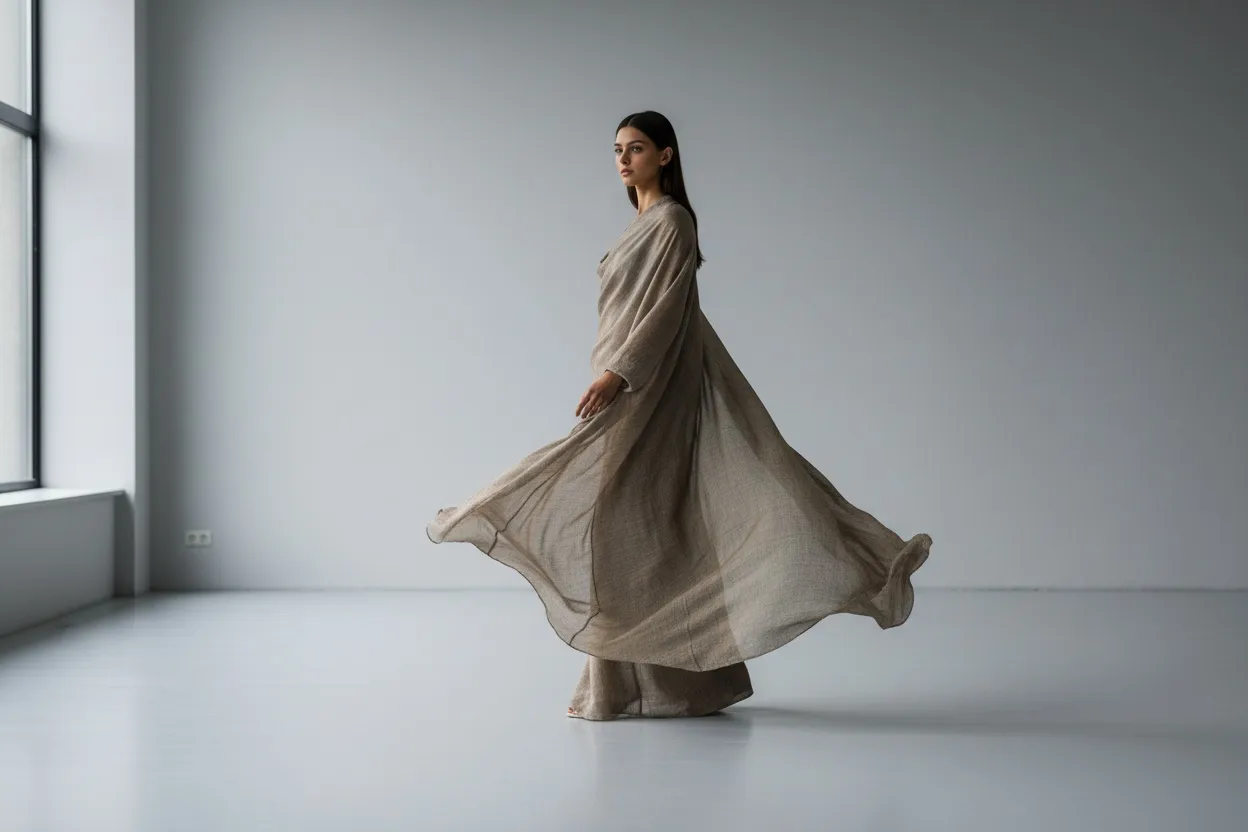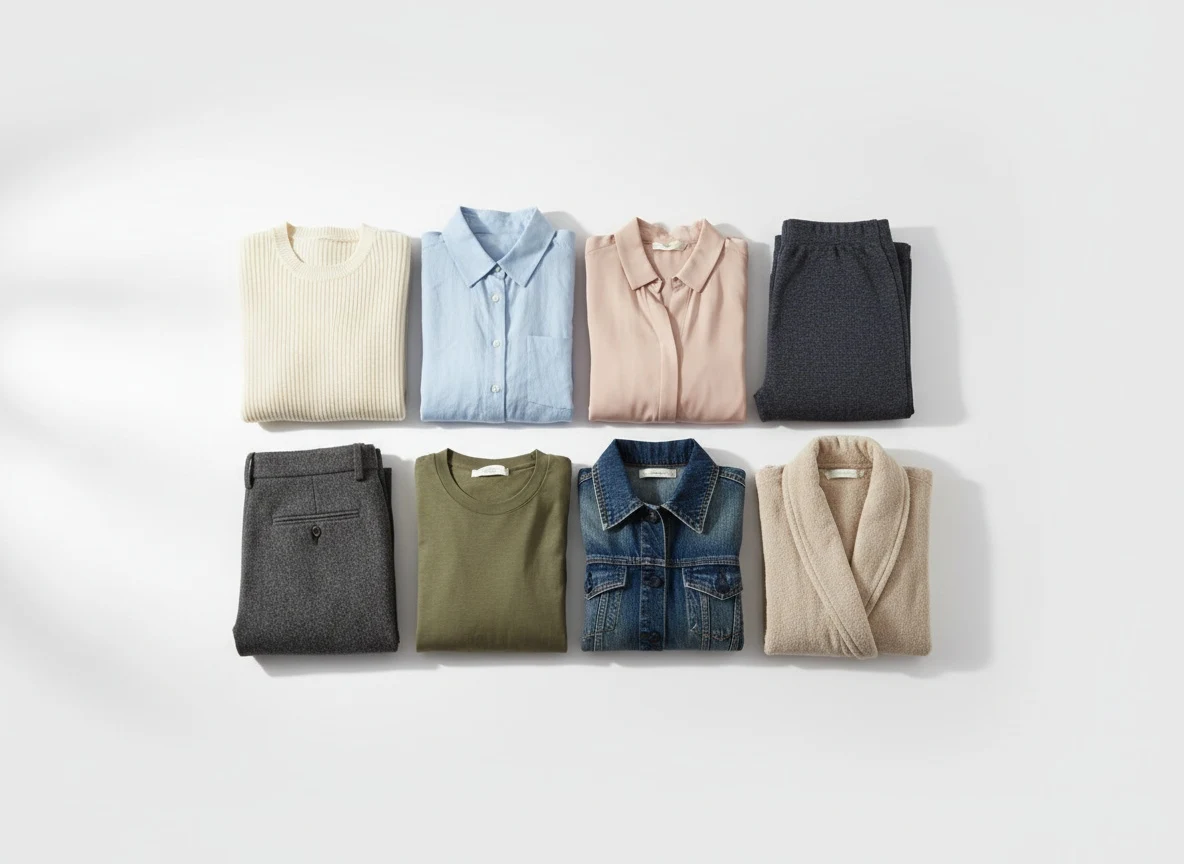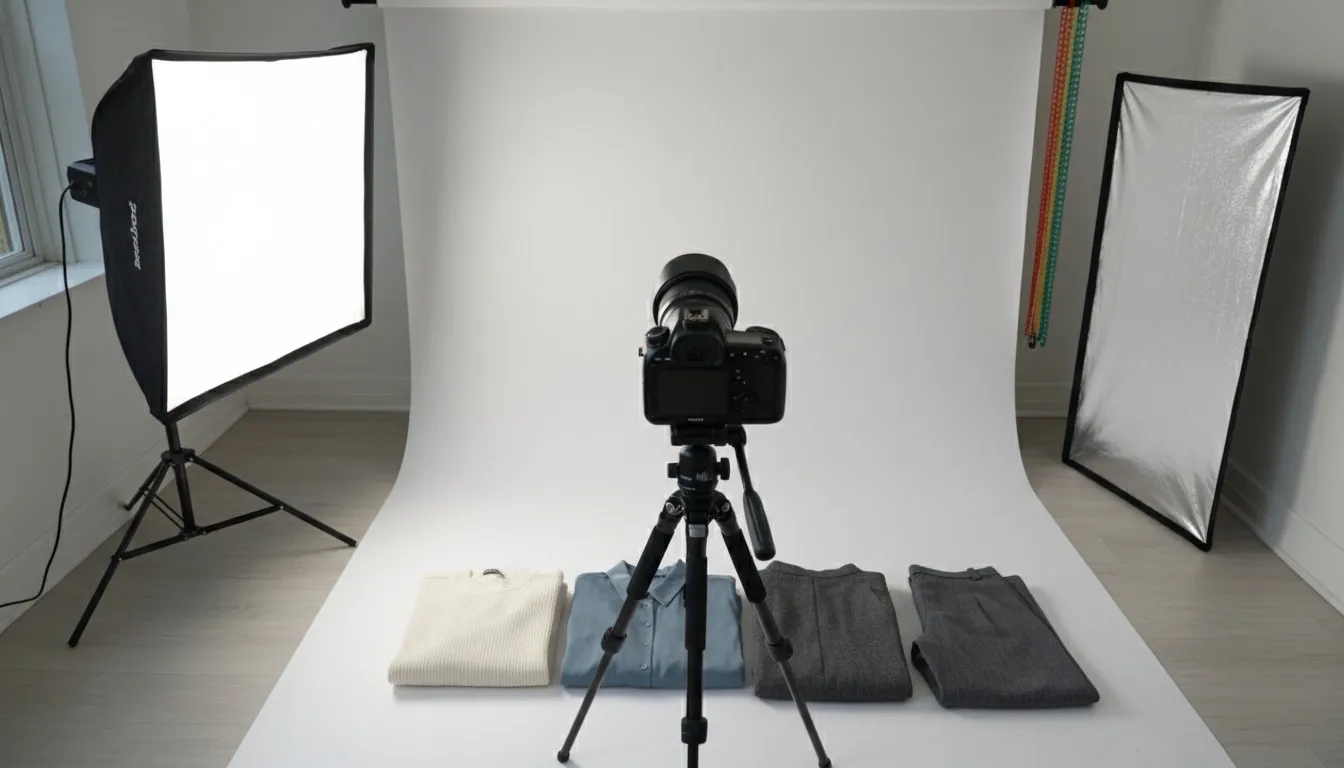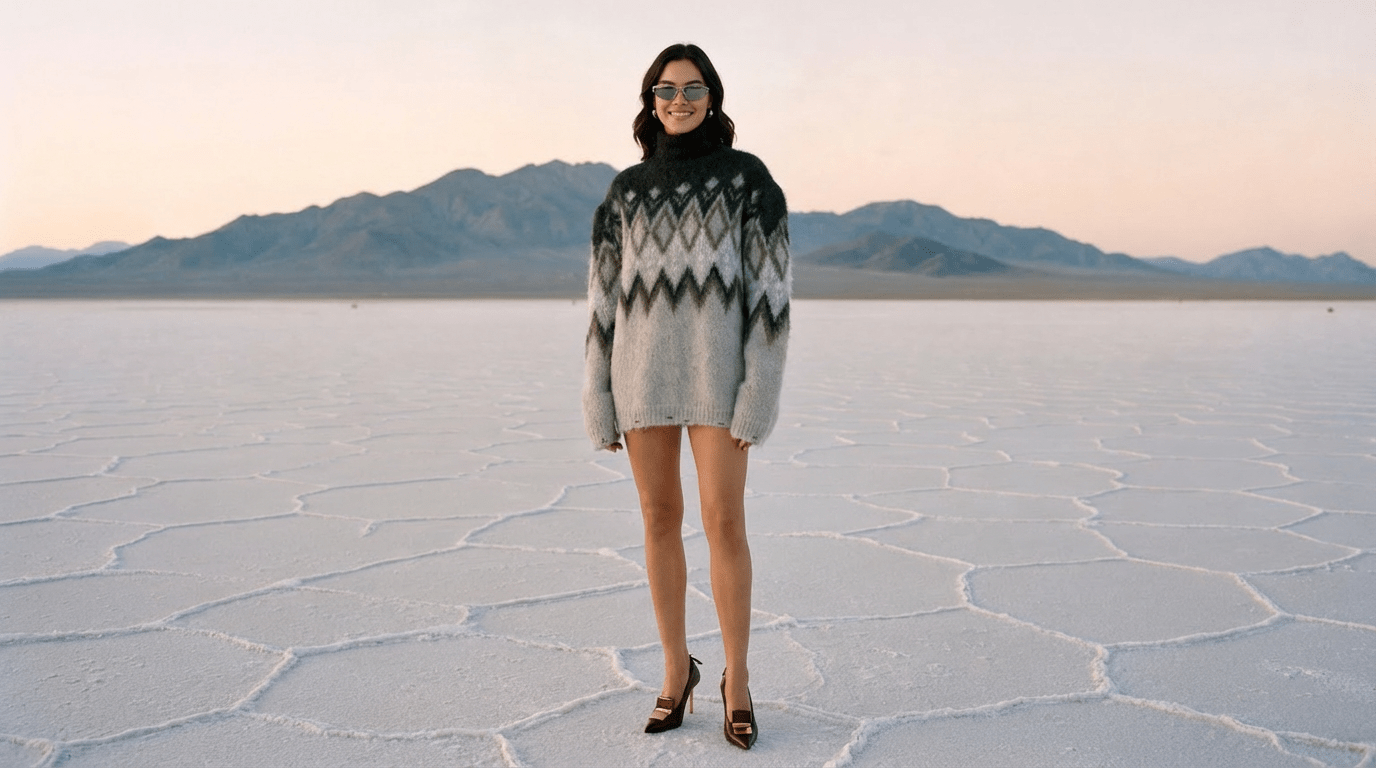
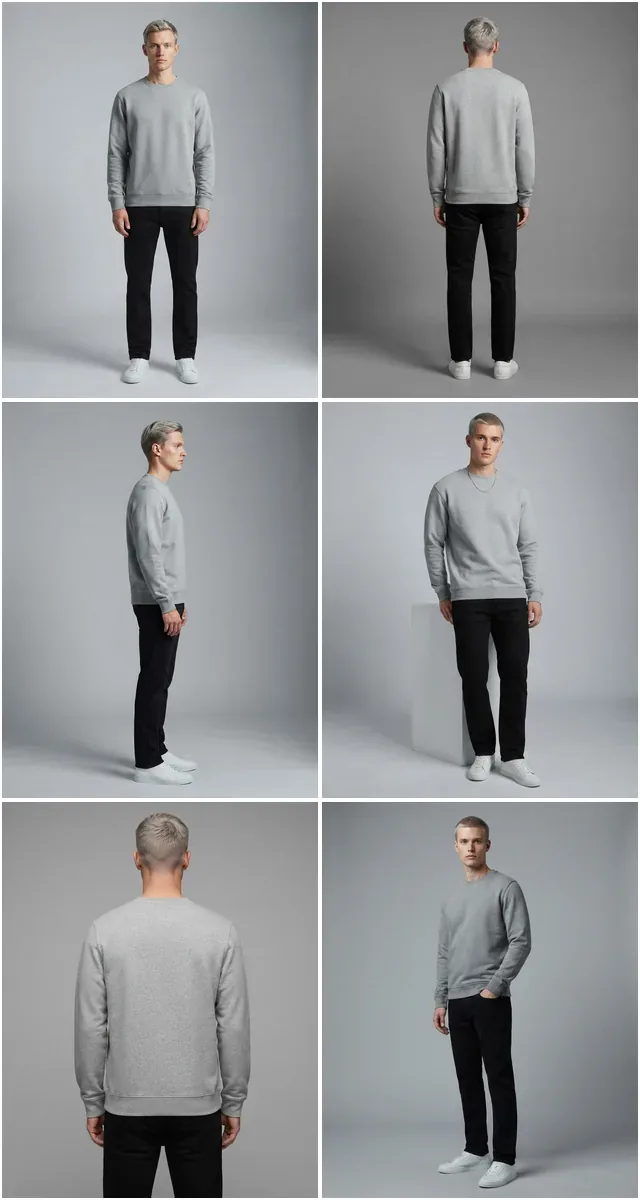
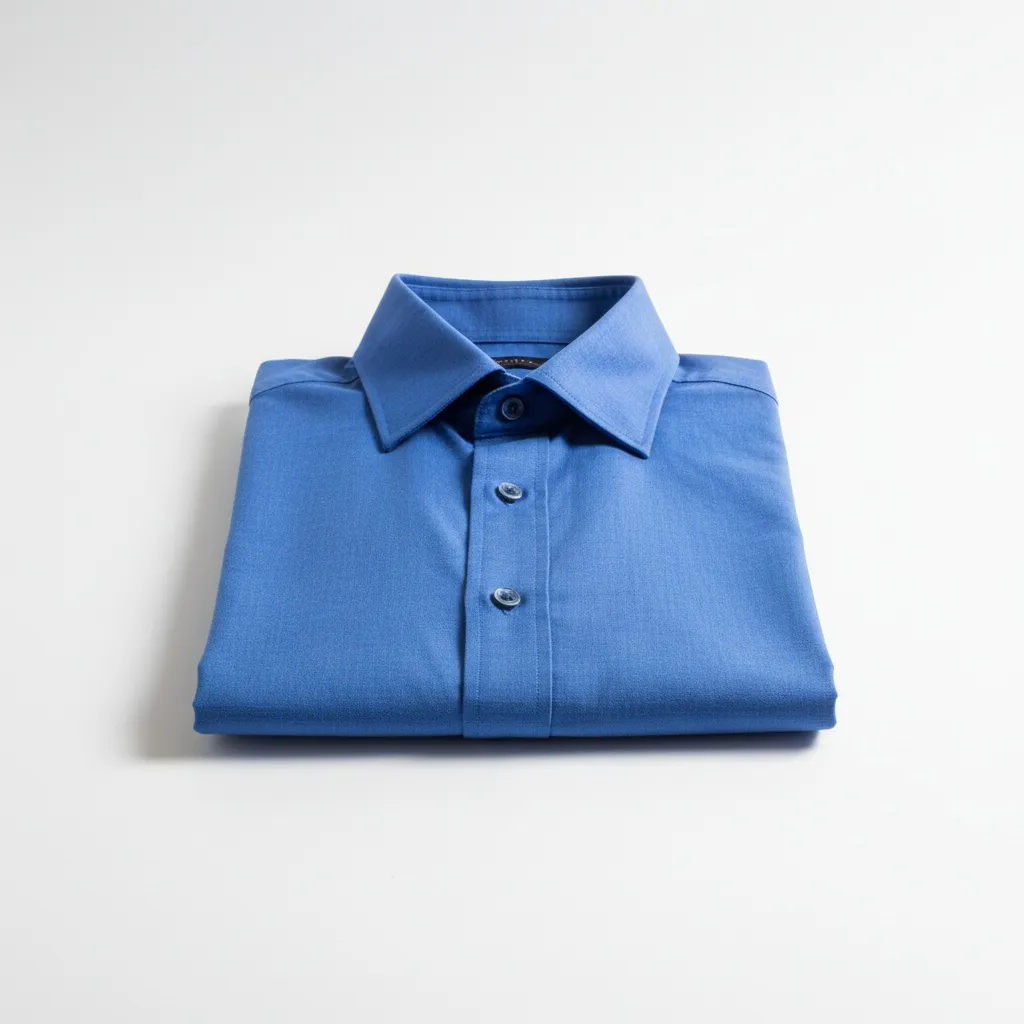
The 2026 Reality: One Photo Becomes Every Background — White, Lifestyle, Branded, Seasonal
5-15 sec per photo $0-50/mo vs $200+ studio rental 100% Amazon-compliant white BG Unlimited background variations
One source product photo can generate Amazon-compliant white background, Shopify lifestyle hero, branded gradient backdrop, and seasonal campaign scene — all from the same shoot, all in the same hour.
For two decades, ecommerce sellers fought the same battle. Marketplaces demanded pure white backgrounds. Brand stores wanted lifestyle scenes. Wholesale buyers wanted clean studio shots. Campaign launches needed branded backdrops. The traditional answer was to either shoot each photo three times (impractical) or use seamless paper and live with one look (limiting).
The AI photo background changer dissolves the trade-off. A single product photo becomes the source for unlimited background variations — Amazon white, Shopify lifestyle, branded gradient, seasonal scene, campaign-specific backdrop — all generated in seconds without reshooting. Modern AI segmentation isolates the product cleanly; modern generative tools synthesize new backgrounds with matched lighting and shadows.
This guide covers the full background-change workflow for fashion product photography: how it works, which tools deliver clean results, marketplace compliance rules across Amazon/Etsy/eBay/Shopify, step-by-step process for studio and lifestyle backgrounds, and the use cases that justify making it part of your standard catalog pipeline.
What Changing a Product Photo Background Actually Involves
"Change the background" sounds simple. The underlying workflow has three distinct steps:
| Step | What Happens | Quality Variable |
|---|---|---|
| 1. Subject Segmentation | AI identifies and isolates the product/model boundary | Edge accuracy — hair, fabric edges, transparent items |
| 2. Background Generation/Selection | New background applied (solid color, preset, or AI-generated) | Scene realism, light-direction match, color temperature |
| 3. Compositing & Light Match | Product placed in new scene with adjusted shadows, reflections, and color cast | Shadow direction, ambient color, edge blending |
The first step is mostly solved — modern segmentation handles complex edges including hair, transparent fabric, and fine detail. The second and third steps separate good tools from great ones. A cheap background change leaves your product looking pasted onto a backdrop. A high-quality one matches the lighting so completely that buyers don't notice the edit happened.
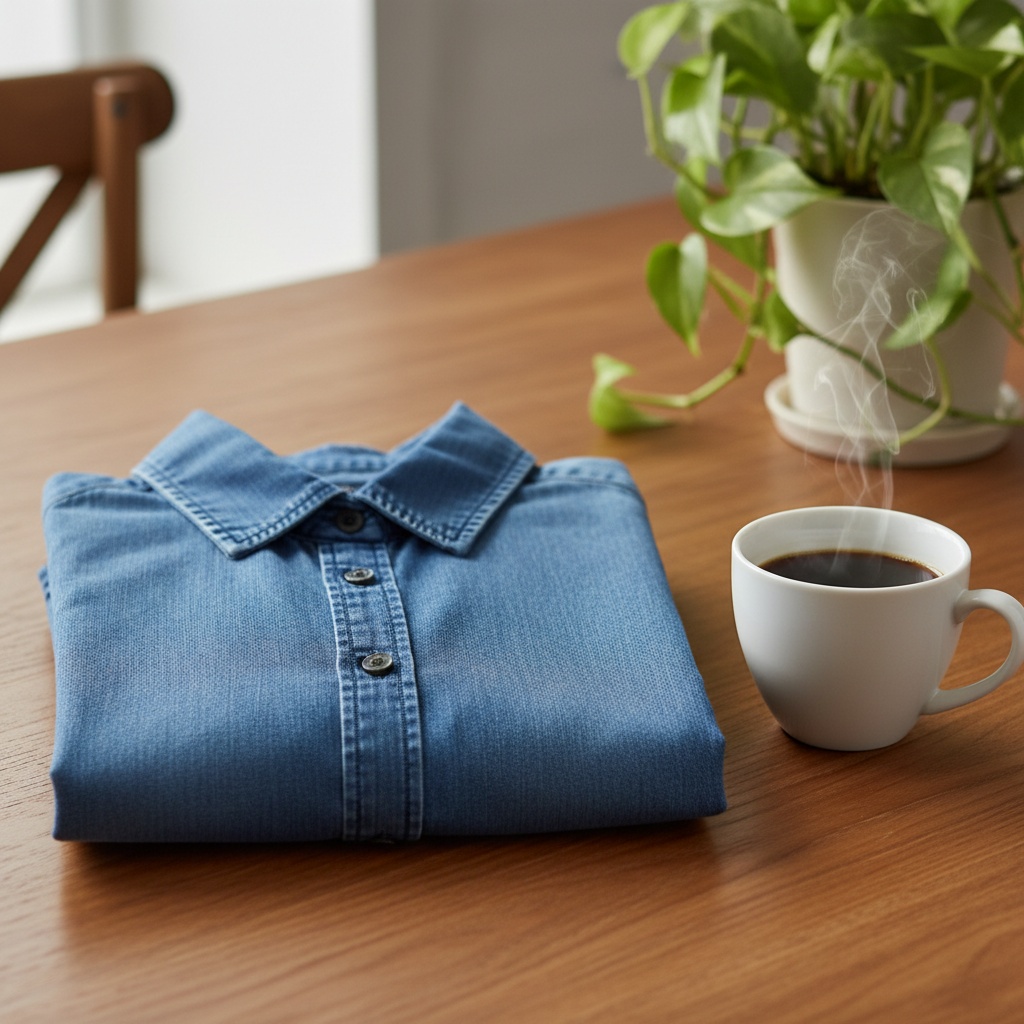
The Five Background Types Fashion Brands Actually Use
Not all "change the background" jobs are the same. Each background type has different requirements and different best-fit tools.
1. Pure White (Amazon, Walmart, Marketplace Main Images)
Required: RGB 255,255,255 — pure white, not off-white. No shadows on background, soft shadow under product OK. Product fills 85%+ of frame. This is the highest-volume background change category for ecommerce sellers.
2. Seamless Gradient or Neutral (DTC Brand Stores)
Soft gray-to-white gradient, single warm neutral, or brand-color gradient. The studio look without literal white. Used by most direct-to-consumer brands for their owned-store imagery because it reads as "premium" while keeping the product as the focus.
3. Branded Color or Pattern Backdrop (Campaigns)
Single brand color, brand-tile pattern, or branded gradient. Used for campaign drops, seasonal hero imagery, and category-specific styling. Communicates brand identity without distracting from the product.
4. Generated Lifestyle Scene (Social, Ads, Hero)
AI-generated or stock-composited scene — modern interior, outdoor environment, themed setup. Used for social content, paid ad creatives, and lifestyle landing pages. Quality matters most here because lifestyle scenes get the most scrutiny.
5. Custom Uploaded Backdrop (Brand-Specific Locations)
Your own backdrop image (store location, brand photoshoot location, partnership scene) composited behind the product. Used for owned-content storytelling where the location itself is a brand asset.
The same shoot day can produce a thousand different backgrounds. One source image, isolated cleanly, becomes Amazon-compliant white in the morning, lifestyle social content in the afternoon, and branded campaign hero by evening. That's not a workflow change — that's a content multiplier.
Manual Studio Approach vs AI Background Change — The Honest Comparison
- $200-$1,000/day studio rental for specific backdrop
- Separate shoot days for each background type
- Same model, same product photographed 3-5 times
- Background changes require reshoot or expensive retouch
- Seasonal updates require new shoot every season
- One-and-done — limited reuse of source imagery
- Background mood locked in at capture time
- $0-50/mo subscription for unlimited backgrounds
- Single shoot day produces source for every background type
- One photo, generates Amazon + lifestyle + branded versions
- Background swap in 5-15 seconds per photo
- Seasonal updates = re-render, not re-shoot
- Infinite reuse — same source, new backgrounds
- Background mood is post-production decision, not capture-time
The economic gap is enormous. A brand that produces background variations across Amazon, Shopify, social, and campaign use cases used to need three to four separate shoot setups. The same brand now produces all of them from one shoot at near-zero marginal cost.
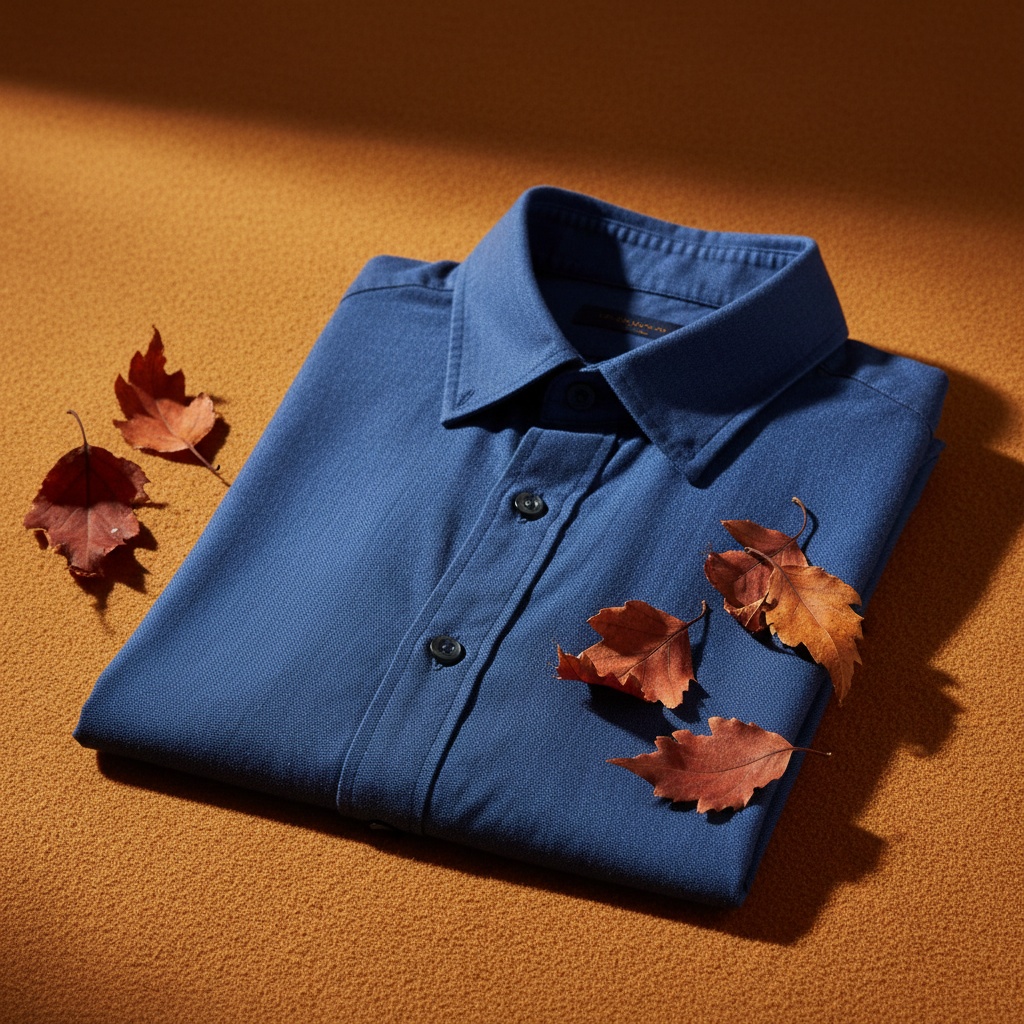
Step-by-Step: Changing a Product Photo Background with AI
The workflow applies to most modern AI tools, including Fashio AI's Remove Background + AI Image Editing. Principles transfer across platforms — only the UI changes.
-
Start with a Clean Source Image
The quality of the segmentation step depends on the input. Use a photo where the product is well-lit, in focus, and has clear separation from the original background. If the source has motion blur or compressed JPEG artifacts, run it through Amateur to Professional first to clean it up.
-
Run Segmentation to Isolate the Subject
Upload to an AI background tool. The tool auto-detects and segments the subject (product, model, or product-on-model). Most modern tools handle complex edges automatically; some let you brush-correct difficult areas like hair fly-aways or transparent fabric.
-
Inspect the Cutout Before Applying the New Background
Zoom to 100% and check edges. Common problem areas: hair strands (often need manual cleanup), fabric edges with motion (may have ghosting), transparent or semi-transparent fabric (may have residual original background), reflective surfaces (may have unexpected highlights). Fix issues now — they're harder to correct after compositing.
-
Choose Your Replacement Background
Options usually include: solid color picker (use RGB 255,255,255 for Amazon), gradient preset, stock backdrop library, AI-generated scene from text prompt, or custom uploaded image. Pick based on the destination platform and use case.
-
Configure Light Direction and Shadow
For solid color and gradient backgrounds, the AI usually handles shadow automatically. For generated lifestyle scenes, you may need to set light direction (left, right, overhead, ambient) to match the product's existing lighting. Mismatched light direction is the #1 giveaway of a low-quality background edit.
-
Run the Composite and Inspect
Generate the final composite. Check three things: edge blending (no halos or hard cuts), shadow direction (matches what the new background implies), color temperature (product doesn't look orange against a cool background or vice versa).
-
Adjust Edge Refinement and Color Match
Most pro tools have a "refine edges" pass and a "match scene color" toggle. Apply both for production-ready output. Edge refinement softens hard cutout edges into the new scene; color match shifts the product's color cast slightly to feel like it belongs in the new scene.
-
Export at Target Resolution
Export at the resolution required by the destination platform: 2000px+ for Amazon, 2048px+ for Shopify, 1080px for Instagram, 4K+ for hero imagery. If your source was lower res, run Fashion Photo Upscale as a final step.
The fastest way to make an AI-edited background look fake is to put a left-lit product against a right-lit scene. Even non-photographer buyers spot it instantly. Either match the lighting carefully, or use solid color backgrounds where lighting mismatch isn't visible. For volume marketplace work, white and gradient backgrounds sidestep the problem entirely.
Marketplace Compliance — What You Can and Can't Do
Background editing is allowed on every major marketplace as long as you don't misrepresent the product. Here's where the rules differ:
| Marketplace | Main Image Background Rules | Secondary Images | Lifestyle Allowed? |
|---|---|---|---|
| Amazon | Pure white (RGB 255,255,255) required | Other backgrounds allowed in image slots 2-9 | Yes, in secondary slots |
| Walmart Marketplace | Pure white required | Lifestyle allowed in additional images | Yes, additional images |
| Etsy | No specific rule | Flexible | Yes, fully |
| eBay | Recommends white, doesn't require | Flexible | Yes |
| Shopify (your store) | Your rules | Your rules | Yes |
| Faire (wholesale) | Recommends clean, doesn't require white | Flexible | Yes |
| TikTok Shop | Product must be clearly visible | Flexible | Yes, encouraged |
| Instagram Shop | Clear product visibility | Flexible | Yes, lifestyle preferred |
The general rule across marketplaces: you can change backgrounds freely as long as you accurately represent the product. You cannot edit to hide flaws, change the product color, or imply features that don't exist.
Tool Comparison — Background Change Tested on Fashion Photos
We tested seven tools on five fashion product photo categories: solid-color flat lay, on-model studio shot, lifestyle outdoor shot, transparent fabric (chiffon dress), and accessory close-up. Each tool was scored on segmentation accuracy, background quality, light matching, batch capability, and pricing.
1. Fashio AI (Remove Background + Image Editing)
Fashion-trained segmentation and background generation. Strongest performance on fabric edges, transparent materials, and hair detail. AI-generated lifestyle backgrounds with built-in light matching. Built-in compliance presets for Amazon, Etsy, and Shopify standards. Batch processing.
Segmentation: Excellent. Light matching: Excellent. Pricing: From $29.99/mo. Best for: Fashion ecommerce, marketplace compliance, multi-platform deployment.
2. Claid.ai
Ecommerce-focused background and image platform. Strong batch processing through API. Good preset library for marketplace standards. Less specialized for fashion than Fashio AI but solid for general product categories.
Segmentation: Strong. Light matching: Good. Pricing: $30-50/mo + API. Best for: Multi-category ecommerce batch.
3. Photoroom
Popular for SMB ecommerce — mobile-first interface, robust template library, fast workflow. Strong for marketplace-compliant white backgrounds. Lifestyle backgrounds rely on templates rather than AI generation.
Segmentation: Strong. Light matching: Good for solid; fair for lifestyle. Pricing: Free / $9.99+/mo. Best for: Mobile-first sellers, template-driven workflows.
4. Remove.bg + Manual Compositing
Industry-standard background removal. Excellent segmentation. Doesn't include background generation — pair with a separate tool (Photoshop, Canva) for the compositing step. Best when you have specific backgrounds you want to use and just need clean removal.
Segmentation: Excellent. Light matching: Manual. Pricing: Free / $9+/mo. Best for: Removal-only workflows, when you have your own backgrounds.
5. Adobe Express / Photoshop Generative Fill
Adobe's solution combines background removal with generative scene creation. Highly customizable, professional output. Slower workflow than dedicated ecommerce tools but unmatched flexibility.
Segmentation: Excellent. Light matching: Excellent (with manual adjustment). Pricing: $22.99/mo (Creative Cloud). Best for: Hero campaign work, premium output.
6. Canva Pro Background Tools
Casual user-friendly background change. Limited fashion specificity. Good template library. Best for non-critical applications like social media posts.
Segmentation: Good. Light matching: Limited. Pricing: $14.99/mo. Best for: Social content, non-ecommerce use.
7. Pixelcut
Mobile-first product photo editor. Strong for marketplace listings, particularly Amazon and Etsy. Good speed for high-volume listing work.
Segmentation: Strong. Light matching: Good. Pricing: Free / $9.99/mo. Best for: Mobile-driven small sellers.
Head-to-Head Comparison Table
| Tool | Segmentation | Lifestyle BG Generation | Marketplace Presets | Batch | Pricing |
|---|---|---|---|---|---|
| Fashio AI | Excellent | Excellent | Yes (fashion-tuned) | Yes | Free / $19+ |
| Claid.ai | Strong | Strong | Yes | Yes (API) | $30-50/mo |
| Photoroom | Strong | Template-based | Yes | Yes | Free / $9.99+ |
| Remove.bg | Excellent | No (manual) | Limited | Yes | Free / $9+ |
| Adobe Generative | Excellent | Excellent | No (custom) | Yes (action) | $22.99/mo |
| Canva Pro | Good | Template-based | Limited | Limited | $14.99/mo |
| Pixelcut | Strong | Template-based | Yes | Limited | Free / $9.99 |
Workflow Variants — White BG vs Lifestyle vs Branded
The three most common background-change jobs follow slightly different workflows. Optimize for each:
Amazon-Compliant White Background Workflow
Goal: pure white (RGB 255,255,255), product fills 85%+ of frame, clean soft shadow under product. Workflow:
-
Segment Product Cleanly
Run AI segmentation. Inspect edges. White background tolerates almost no edge artifact because there's no visual noise to hide it.
-
Apply RGB 255,255,255 Background
Use the white preset or set exact RGB. Don't use "off-white" or "warm white" — Amazon's automated checks reject anything that isn't pure white.
-
Add Subtle Product Shadow
A soft drop shadow grounds the product on the white space. Without it, the product appears to float. Most tools include a "natural shadow" toggle for this exact purpose.
-
Verify 85% Frame Fill
Reframe if necessary so the product fills at least 85% of the longest frame dimension. Use Photo Reframe for this if your source has too much negative space.
-
Export at 2000px+ Square
Amazon recommends 2000px on the longest side for zoom functionality. Pure white file, no profile issues, JPG or PNG.
Lifestyle Scene Background Workflow
Goal: contextual scene that suggests how the product fits into a buyer's life. Workflow:
-
Segment with Edge Refinement
Lifestyle backgrounds have detail that can show through poor edge work. Run segmentation, then apply edge refinement to ensure clean cutout.
-
Generate or Select Scene
Use a text prompt for AI-generated scenes ("modern minimalist apartment with natural light," "outdoor cafe terrace afternoon"), or upload your own backdrop. Generated scenes give brand flexibility; uploaded ones tie to specific brand locations.
-
Match Light Direction
Check where shadows fall on the product in the original. Pick or generate a background scene where light direction matches. If product is left-lit, scene should imply left light source.
-
Apply Scene Color Cast
Lifestyle scenes often have warmer or cooler ambient color than studio shots. Apply a subtle color cast to the product so it inherits the scene's ambient lighting. Most tools have an "integrate with scene" or "ambient match" toggle.
-
Refine Shadows
Lifestyle scenes typically have more complex shadow patterns (multiple light sources, environmental occlusion). Apply a scene-aware shadow that interacts with the new background surfaces.
Branded Color Background Workflow
Goal: brand color or gradient backdrop for campaign or category imagery. Workflow:
-
Define the Brand Color Hex
Use exact brand color values, not eyeballed approximations. Consistency across the catalog matters for brand recognition.
-
Choose Solid, Gradient, or Pattern
Solid is cleanest for products with detail. Gradient adds depth without distraction. Pattern works for hero campaign imagery but can compete with the product on standard listings.
-
Verify Product Color Contrast
Make sure the brand background contrasts enough with the product. A black bag on a deep navy background loses its silhouette; a yellow bag on cream loses its punch. Pick a brand color combo that highlights the product.
-
Apply Subtle Shadow
Even on branded backgrounds, a soft shadow grounds the product. Without it, the product looks pasted on.
Change Backgrounds for Every Marketplace and Channel
Fashio AI's Remove Background + Image Editing handles Amazon white, lifestyle scenes, and branded gradients from one source image. Fashion-trained, full commercial rights, one membership.
Start creating →Use Cases — Real Brand Scenarios for AI Background Change
| Scenario | Problem | AI Background Workflow |
|---|---|---|
| DTC Brand to Amazon Launch | Brand photos use gradient gray; Amazon needs white | Batch convert to RGB 255,255,255 with shadow preserved |
| Seasonal Hero Refresh | Want spring imagery without new shoot | Generate spring lifestyle scenes; composite existing products |
| Multi-Marketplace Compliance | Same product needs different BG for Amazon, Walmart, Etsy | One source, three exports with different presets |
| Wholesale Linesheet | Need clean white background for buyer linesheet | Batch convert full catalog to clean white |
| Campaign Drop Imagery | Want branded color backgrounds for new collection | Apply brand color preset; batch all SKUs in campaign |
| Lifestyle Social Content | Studio shots feel disconnected on Instagram | Generate lifestyle scenes; reuse same products in new contexts |
| Catalog Backfill | Inconsistent backgrounds across legacy listings | Standardize to one background type across the catalog |
| Regional Localization | Different markets want different background moods | Region-specific lifestyle scenes from same source images |
Fashio AI Tools for Background and Image Editing
- Remove Background — clean cutout with edge refinement
- AI Image Editing — full background swap, scene generation, color matching
- Flat Lay to Catalog Creator — flat lays with custom backgrounds for catalog
- Amateur to Professional — pre-process source photos before background change
- Photo Reframe — adjust frame fill for marketplace requirements
- Fashion Photo Upscale — boost resolution after background change
Quality Tips — Making AI Backgrounds Look Professional
The difference between an obviously-edited background and an indistinguishable one comes down to five details most sellers skip:
- Light direction match — Ensure the implied light source in the new background matches the actual lighting on the product.
- Color temperature integration — Apply a subtle color cast so the product looks like it's in the scene, not pasted onto it.
- Shadow inclusion — A soft shadow under the product grounds it. No shadow = "floating product" look.
- Edge refinement — Soft edges blend; hard edges show the cutout. Most pro tools have a refinement pass.
- Reflective surface handling — Glossy products (leather bags, vinyl, metal) should reflect some color from the new scene. Tools without scene-reflective compositing leave this off, and the product looks disconnected.
What AI Background Change Won't Do
To be honest about limits:
- Fix a bad source photo — If the original is blurry, badly lit, or wrong exposure, changing the background doesn't fix those issues. Enhance first.
- Recreate occluded product details — If the original background touched/overlapped the product (creating reflections, shadows on it, color bleed), some of that is baked in.
- Handle radical lighting changes flawlessly — Changing a noon-studio shot into a sunset outdoor scene works only partially. The product's existing lighting can be adjusted but only so far.
- Generate perfect transparent/glass scenes — Highly transparent objects (chiffon, glass accessories) still require manual compositing skill on complex backgrounds.
For everything else — which is the bulk of fashion product photography work — AI background change does the job in seconds at a fraction of the cost of reshooting.
Going Deeper — Related Reading
If you're upgrading your product photography pipeline, these guides cover related topics:
- AI Background Removal for Fashion: Complete Guide — the related cutout-only workflow
- Shopify Product Photography AI Guide — platform-specific imagery best practices
- 12 Best AI Tools for Fashion Brands in 2026 — broader tool stack overview
- AI Product Photography Complete Guide — full ecommerce imagery pipeline
Key Takeaways
- AI background change combines segmentation, scene generation, and light-matching into one 5-15 second workflow
- One source photo can generate Amazon-compliant white, Shopify lifestyle, branded gradient, and seasonal campaign backgrounds — all from the same shoot
- Marketplace compliance: Amazon and Walmart require pure white main images; Etsy/eBay/Shopify allow any accurate background
- Five background types matter: pure white (marketplace), gradient (DTC), branded color (campaigns), lifestyle (social/hero), custom upload (brand-specific)
- Shadow direction match is the #1 quality factor — mismatched light gives away low-quality edits instantly
- Fashion-trained tools like Fashio AI Image Editing handle fabric edges, transparent materials, and light matching better than generalists
- Batch processing handles 100-1000 photos per session, making catalog-wide background swaps a sub-hour job
- Use cases: marketplace compliance, seasonal refresh, multi-region localization, wholesale linesheets, social repurposing
Try the Full Fashio AI Suite Free
Background swap plus 13 more fashion AI tools — model generation, try-on, editing, video — all on one membership, with full commercial rights.
Start creating →FAQ: Change Background of Product Photos with AI
How do I change the background of a product photo with AI?
Upload the photo to an AI background tool, the tool segments out the product subject, and you choose a replacement background — solid color (white, gray, brand color), preset scene (studio, outdoor, lifestyle), or custom upload. The AI composites the product onto the new background with adjusted lighting and shadows. Modern tools complete this in 5-15 seconds per photo. Fashio AI's Remove Background plus Image Editing handles this workflow specifically for fashion product photography.
Can I make any product photo Amazon-compliant with AI?
Yes. Amazon requires main product images to have a pure white background (RGB 255,255,255), the product to fill 85%+ of the frame, no text or watermarks, and no additional accessories or props. AI background changers can isolate your product and place it on the required pure white backdrop in seconds, meeting Amazon's main image policy. Secondary images can use lifestyle or alternative backgrounds within Amazon's rules.
Will the AI background look fake or obvious?
On solid color backgrounds (white, gray, brand colors): essentially impossible to detect — the result is indistinguishable from a studio shot. On generated lifestyle scenes: quality varies by tool, but modern AI-generated backgrounds with proper light matching produce results that pass casual inspection. The most common giveaway is shadow direction mismatch between subject and background — high-quality tools handle this automatically; basic ones don't.
Is it legal to change product photo backgrounds for marketplace listings?
Yes, on your own product photos. Most marketplaces explicitly support or require background editing — Amazon mandates white backgrounds, Etsy and eBay allow any background that accurately represents the product, Shopify allows complete creative freedom. Editing background does not misrepresent the product itself; you cannot edit to change the product's appearance, color, or features in ways that mislead buyers.
What's the best background for fashion product photos?
Depends on the use case. Amazon and marketplace main images require pure white. Brand DTC stores typically use seamless gradient gray or brand-color backgrounds. Lifestyle and editorial imagery uses contextual scenes — natural light interiors, outdoor settings, or themed backdrops matching the collection mood. For premium positioning, single-color rich backgrounds (cream, deep neutral, brand color) outperform busy lifestyle scenes.
Can I batch-change backgrounds for an entire catalog?
Yes. Tools with batch capability process hundreds or thousands of photos in one session — upload a folder, set the target background (color, preset, or custom image), and run the batch. Fashio AI, Claid, and similar ecommerce-focused tools handle batch background changes specifically optimized for product photography. A 500-product catalog typically completes in 30-60 minutes.
How is changing a background different from removing it?
Background removal cuts out the subject and leaves a transparent PNG — useful for composite work or when you need a cutout for design tools. Background change does the removal step plus places the subject on a new background — useful when you need a finished image ready to publish. Most modern tools do both: remove the background, then offer background replacement options.
Can AI generate completely custom lifestyle backgrounds?
Yes. Generative AI tools can create new background scenes from text prompts — 'modern minimalist living room with morning light,' 'beach at sunset,' 'urban street scene at dusk.' The generated background is then composited with your product. Quality varies by tool; fashion-specific generators like Fashio AI produce backgrounds with light direction and color temperature that match the product's existing lighting, reducing the 'composite look' that gives away low-quality work.