What is the coquette aesthetic?
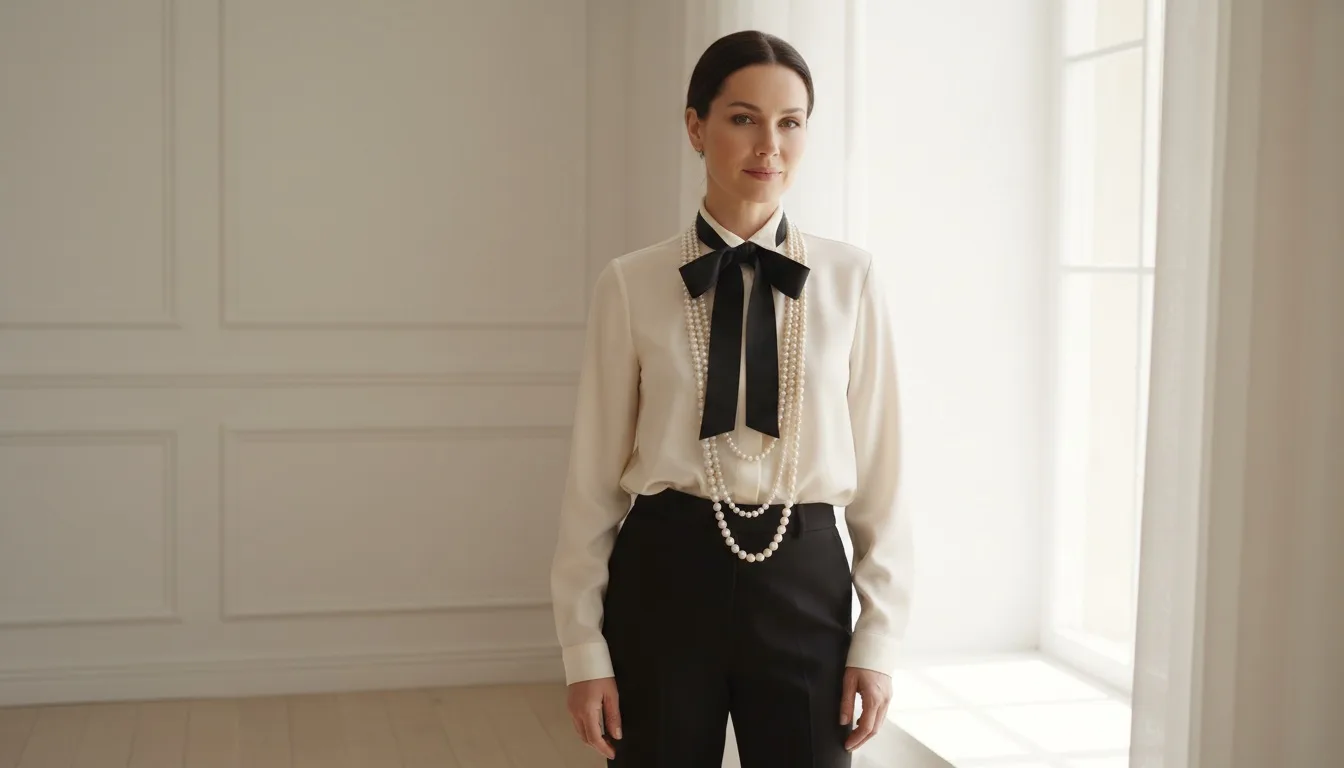
Coquette is an aesthetic of deliberate ornamental softness — bows and ribbon, lace trim, ballet pink and cream, sheer layers and pearl detail, drawing on lingerie, ballet and Rococo portraiture. What sets it apart from almost every other named aesthetic is that it is defined by trim rather than by silhouette. There is no coquette shape. There is coquette detailing, and it can be applied to a slip dress, a blazer or a pair of jeans.
Defined by trim, not shape Ballet pink, cream, ivory 10 carrying pieces Rule: two ornament points
The working rule: two or three ornament points, everything else plain. Ornament everywhere is the difference between a coquette outfit and a costume, and it is the mistake almost everyone makes first.
That trim-led definition is also why the aesthetic is unusually accessible. You do not need a new wardrobe. A ribbon at the throat over a plain white shirt, or a lace-trimmed camisole under an existing blazer, gets you there — which is a large part of why it spread as quickly as it did.
Where coquette came from
The aesthetic pulls from three sources, and knowing which one you are drawing on keeps an outfit coherent.
Rococo and eighteenth-century portraiture. Ribbon, pastel silk, ornament for its own sake, a self-aware performance of prettiness. This is the source of the aesthetic's slightly theatrical quality and of its name.
Lingerie as outerwear. The slip, the camisole, the corset, lace trim and sheer layers moved into daywear across several fashion cycles. Coquette inherits that vocabulary wholesale, which is why so much of it looks like underwear worn on purpose.
Ballet. The flat shoe, the pink, the ribbon, the wrap. This is the shared border with balletcore, and it is the most recent of the three influences.
All three sources are ornamental rather than functional, which is unusual — most current aesthetics claim a use (techwear is weatherproof, workwear is durable, gorpcore hikes). Coquette makes no functional claim at all. That is the point of it, and it is why the aesthetic is at its strongest when the ornament looks intentional rather than incidental.
The 10 pieces that carry coquette
| # | Piece | How it signals |
|---|---|---|
| 1 | Ribbon or bow | Hair, throat, wrist or waist. The single strongest signal, and the cheapest. |
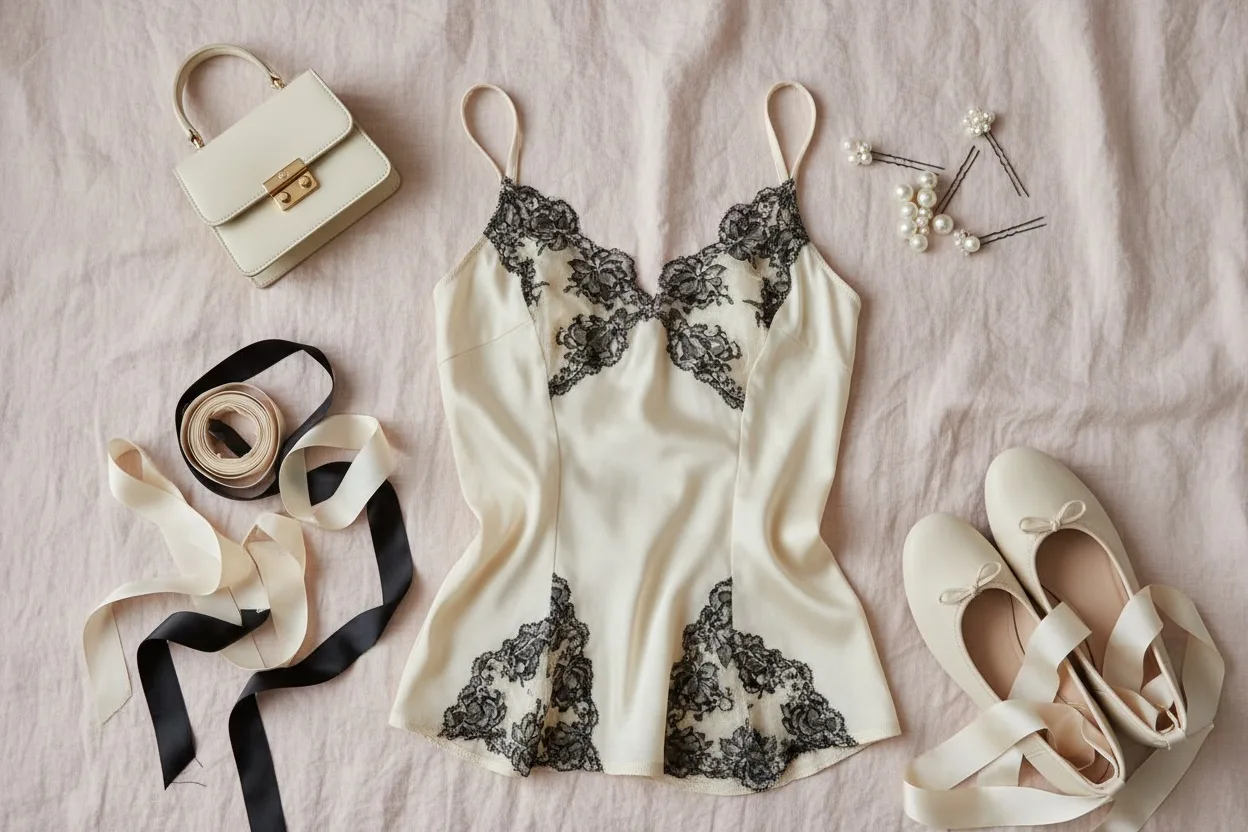
| 2 | Lace-trimmed camisole | Worn alone, under a cardigan, or under a blazer. The lingerie reference in its plainest form. |
| 3 | Cardigan buttoned at the top only | Cropped or shrunken, in cream or pink. The specific way it is worn is the signal. |
| 4 | Ballet flat or Mary Jane | Ribbon ties or a strap. Shares this piece with balletcore. |
| 5 | Slip skirt or slip dress | Bias-cut satin, usually with lace at the hem. |
| 6 | Sheer tights or lace-cuff socks | Texture at the ankle. Small, and does a lot of work. |
| 7 | Pearl jewellery | Layered strands, a single choker, or pearl hair pins. |
| 8 | Corset-cut or laced-front top | Structure against softness. The most assertive piece in the vocabulary. |
| 9 | Puff or balloon sleeve | The one silhouette signal the aesthetic has. |
| 10 | Small structured bag | Cream, blush or ivory. Top handle rather than shoulder. |
The coquette palette
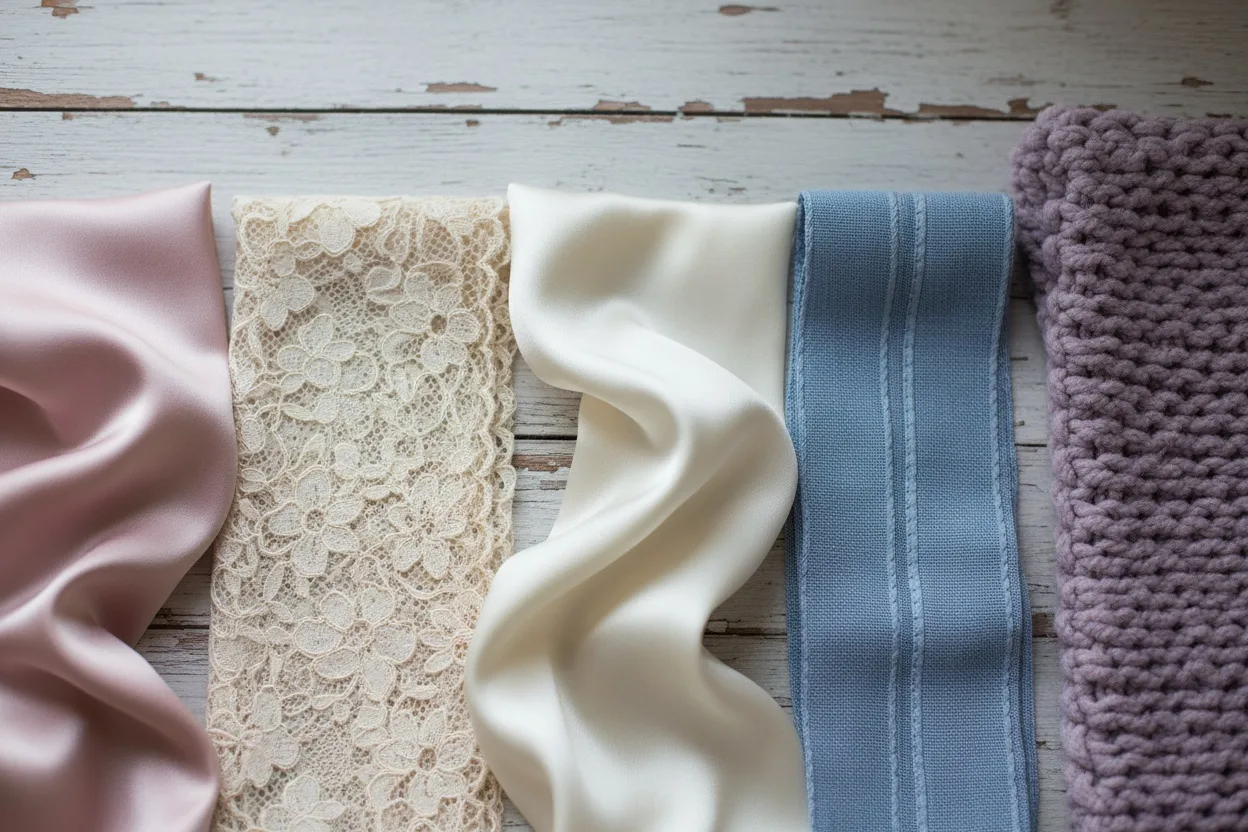
Ballet pink and blush lead. Cream, ivory, butter and off-white support. Powder blue, dusty lilac and pale sage appear as secondaries. Black exists only as contrast — a black ribbon against cream, a black bow on a pink shoe — never as a base.
Because the palette is so narrow in value, the outfit has to work through texture contrast rather than colour contrast. Satin against knit, lace against cotton, sheer against opaque. An all-blush outfit in one fabric reads flat; the same colours across three textures reads as designed. This is the technical reason coquette is harder to photograph well than most aesthetics, and it matters if you sell it.
24 coquette outfit formulas
Everyday
- Plain white shirt + ribbon tied at the throat + straight jeans + ballet flat
- Lace-trimmed camisole + cream cardigan buttoned at the top + midi skirt
- Pink knit + pleated cream skirt + sheer tights + Mary Janes
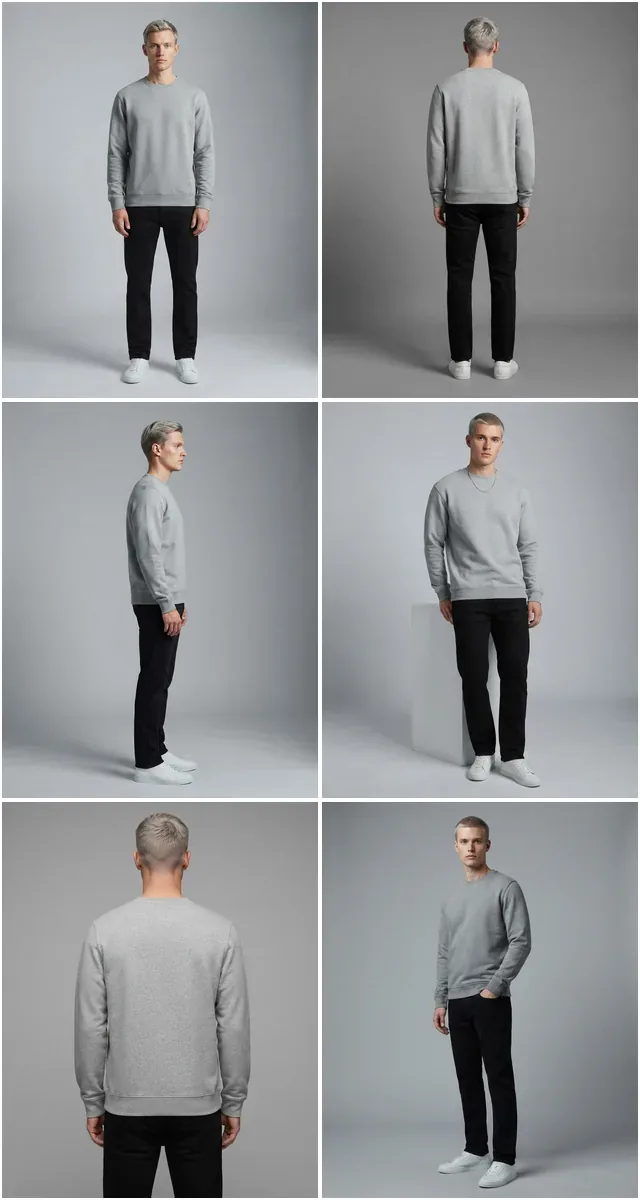
- Slip skirt + plain grey sweatshirt + ballet flats
- Puff-sleeve blouse + straight dark denim + pearl studs
- Cream knit dress + lace-cuff socks + flat loafer
- Blush cardigan worn as a top + tailored trouser + small top-handle bag
- White tee + pleated blush skirt + hair ribbon
Dressed up
- Satin slip dress + cropped cardigan + heeled Mary Jane
- Corset-cut top + long bias skirt + layered pearls
- Sheer blouse over a lace camisole + tailored black trouser
- Cream lace dress + black ribbon choker + flat
- Puff-sleeve blouse + satin midi + pearl hair pins
- Blush slip + sheer tights + ballet flat with ribbon ties
- Laced-front top + full skirt + small structured bag
- Ivory dress + single black bow at the waist
Contrast styling — the version that ages best
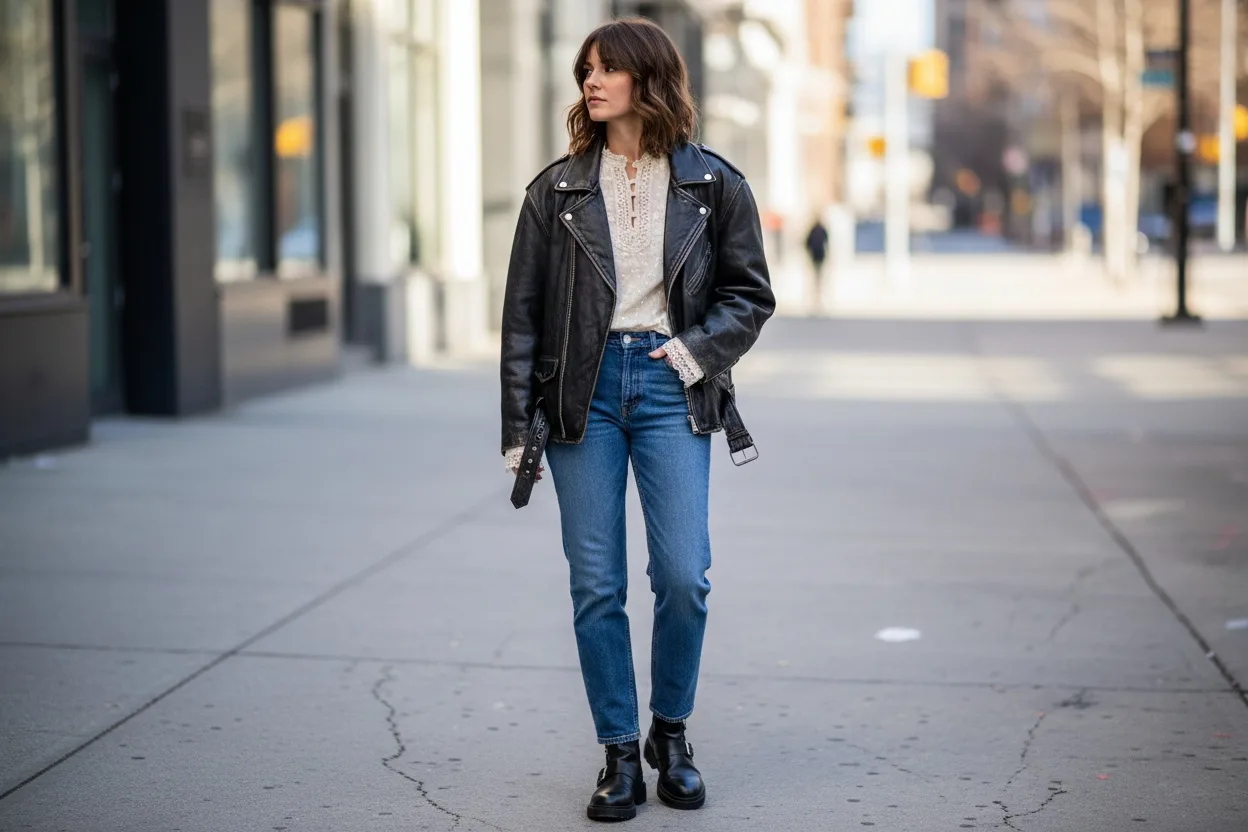
- Lace camisole + oversized leather jacket + straight jeans
- Ribbon choker + plain black tailoring + flat loafer
- Slip skirt + chunky knit + trainers
- Pearl layers + plain white tee + wide-leg denim
- Puff sleeve + cargo trouser
- Bow at the hair + otherwise entirely plain black outfit
- Corset top + tailored blazer + straight trouser
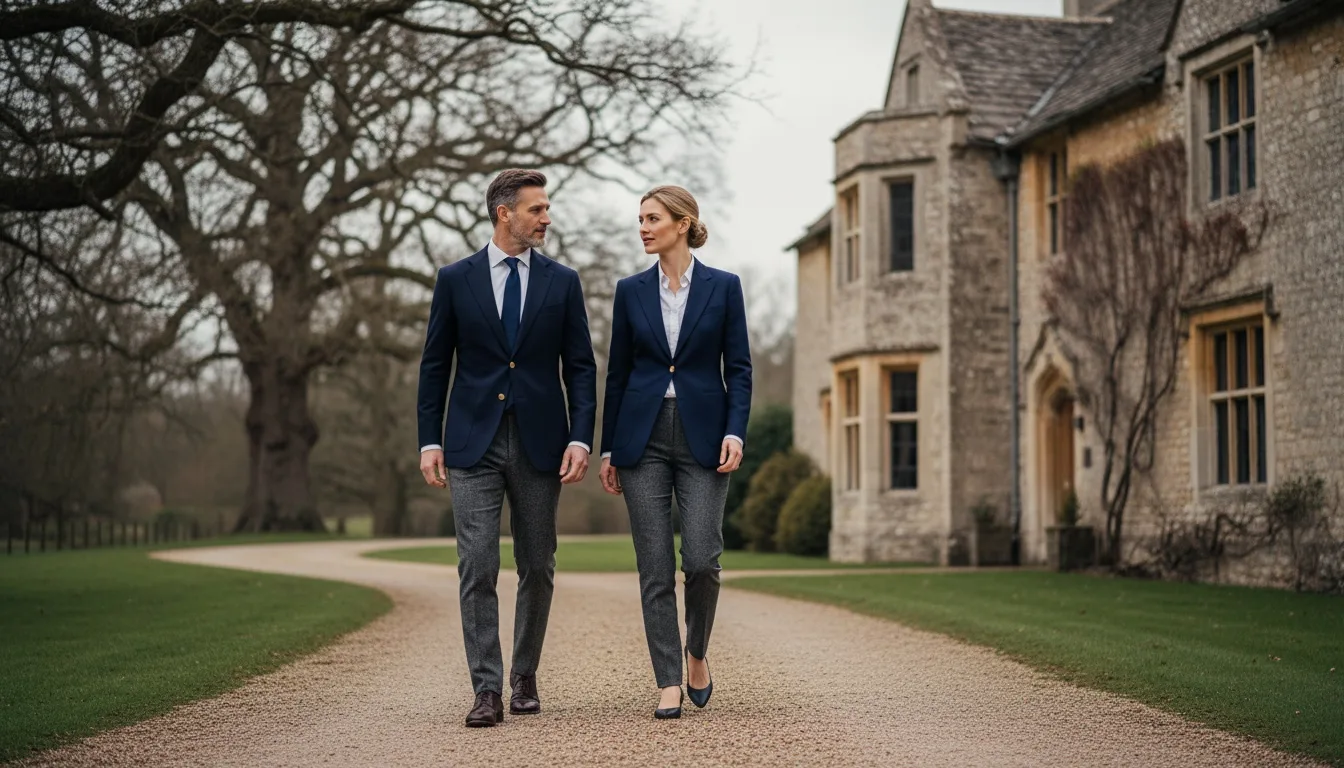
- Lace-trim cami under a grey suit
The third group above is the one to build from if you want the aesthetic to look current rather than referential. Lace and ribbon against denim, leather or tailoring reads as styling. Lace on tulle on satin reads as costume. Coquette is at its strongest when it is one deliberate note in an otherwise plain outfit.
Coquette vs balletcore vs cottagecore
Three aesthetics that share a palette and get conflated constantly.
| Coquette | Balletcore | Cottagecore | |
|---|---|---|---|
| Reference | Lingerie, Rococo | Dancewear, rehearsal | Rural, pre-industrial |
| Mood | Deliberate, ornamental | Functional, worn-in | Nostalgic, practical |
| Key fabric | Lace, satin, sheer | Jersey, knit, wrap | Cotton, linen, broderie |
| Silhouette | Any — trim-led | Close, layered | Loose, tiered |
| Shared | Ballet flat, pink, ribbon, cream | ||
If you want the fuller treatment of the nearest neighbour, see our cottagecore outfit guide — same palette, rural reference instead of ribbon.
Where coquette outfits go wrong
Ornament everywhere. Bows in the hair, at the neck, on the shoes, on the bag and down the front of the dress. Pick two points, three at the outside.
One texture throughout. An all-blush outfit in a single fabric loses the aesthetic entirely, because the palette is too narrow to carry an outfit without texture doing the work.
Costume-grade lace. Stiff synthetic lace is the fastest way to tip into fancy dress. Soft lace, or less of a better one, is worth the trade.
Ignoring fit. Because the aesthetic is trim-led, it is easy to assume shape does not matter. It does — a well-cut plain garment carrying one ornament looks considered; a badly cut one carrying the same ornament looks like the ornament is compensating.
For brands selling into this aesthetic
Coquette is unusually difficult to merchandise, for a reason that follows directly from what it is. The value of the garment sits in the trim — the lace weight, the ribbon quality, the sheerness, the pearl finish — and trim is exactly what a standard product photograph loses. A lace-trimmed camisole photographed flat at listing resolution shows a pale rectangle.
Two things fix that. The first is resolution: detail crops that let a customer see the lace pattern. Our AI image upscaler takes an existing frame to print resolution without softening the texture, which is the specific failure mode of ordinary upscaling on lace. The second is on-model imagery, because sheer and bias-cut fabric only reads correctly on a body.
For the lingerie-adjacent end of the range — camisoles, slips, corset-cut tops — our AI lingerie generator is the dedicated flow, built to hold lace pattern and trim placement through the render rather than approximating them. For everything else, the AI clothes changer puts a single garment photograph on a model at 4 credits a frame. The lingerie and intimates photography guide covers how to brief either one so the trim survives.
Building it from what you already own
Because coquette is carried by trim rather than by silhouette, it is the cheapest aesthetic on this site to enter — and almost uniquely, it can be done without buying a garment at all.
| You already own | Add | Result |
|---|---|---|
| Plain white shirt | A ribbon tied at the throat | Complete coquette outfit |
| Plain blazer | A lace-trimmed camisole underneath | The contrast version, which ages best |
| Straight jeans | Ballet flats and a hair ribbon | Everyday, unremarkable to anyone not looking |
| Black knit | Layered pearls | Evening, with no new garment |
| Any plain dress | A single bow at the waist | One focal ornament, correctly placed |
Ribbon is the cheapest fashion purchase available and the single most effective one in this aesthetic. A metre of good grosgrain or silk ribbon in cream, blush and black covers the hair, the throat and the waist for the price of a coffee, and the difference between cheap and good ribbon is genuinely visible — stiff polyester ribbon holds a hard shape and reads as gift wrapping, while grosgrain and silk fall softly.
Seasonal adaptation
The version of coquette that circulates most is a spring and summer one — sheer layers, slip dresses, bare ankles — which leaves people assuming the aesthetic disappears in cold weather. It does not; it changes fabric.
- Sheer becomes knit. A cream or blush fine-gauge knit does what a sheer blouse does: soft, pale, close to the body.
- Bare legs become opaque tights. In cream, blush or black. Lace-cuff socks over tights keep the texture at the ankle.
- The slip dress goes over a roll-neck, or under a heavy cardigan, rather than being put away.
- Ornament moves upward. Ribbon at the throat and in the hair, where a coat will not cover it. A bow at the waist is invisible under outerwear.
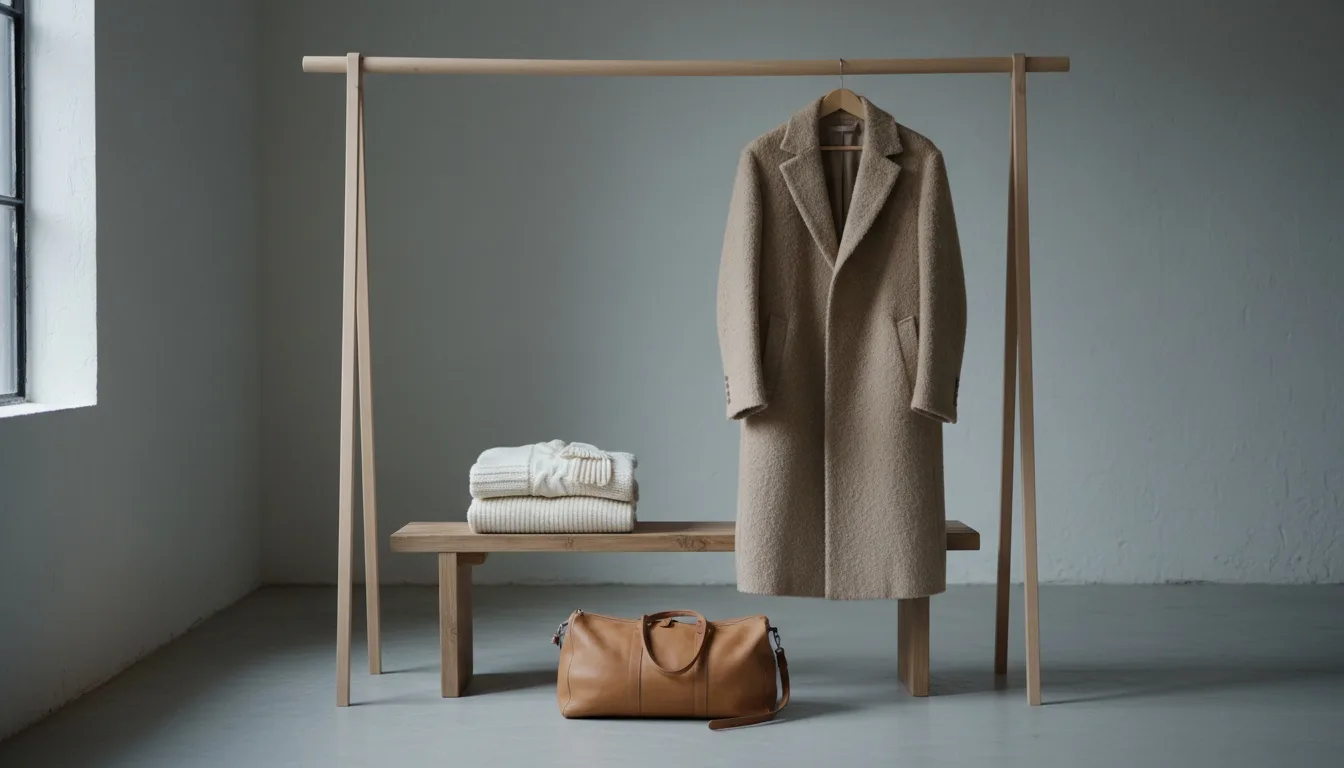
- The coat carries the palette. Cream, camel or blush outerwear is what makes a winter outfit read as coquette from the street.
A cream coat over a pink knit and a pleated skirt with a ribbon at the throat is fully within the aesthetic and contains no lace, no sheer layer and nothing you could not wear in January.
Coquette aesthetic FAQ
Is coquette only for one body type?
No. Because the aesthetic is carried by trim rather than by silhouette, it is one of the more adaptable ones — a ribbon, a lace trim and a pearl work on any shape of garment. The pieces most often shown with it, such as the bias slip, are shape-specific; the aesthetic itself is not.
Do I have to wear pink?
No. Cream, ivory and butter carry it perfectly, and an all-cream outfit with black ribbon is arguably the sharpest version of the look. Pink is the most recognisable entry point rather than a requirement.
What shoes work with coquette?
Ballet flats and Mary Janes are the defaults. A plain loafer, a low heeled sandal or clean white trainers all work in the contrast-styled version. Anything heavily embellished tends to compete with the ornament elsewhere.
Is coquette the same as the "clean girl" look?
No, and they are close to opposites in method. Clean girl is about minimal ornament, tonal neutrals and visible grooming. Coquette is about deliberate ornament. They share the pale palette, which is why they are sometimes filed together.
How do I make coquette work for a workplace?
Move the ornament to one point and keep it away from the lingerie references. A lace-trimmed camisole under a blazer, a ribbon at the throat with plain tailoring, or pearl jewellery against a plain knit reads as coquette to anyone who knows the aesthetic and as ordinary good dressing to anyone who does not.