What is balletcore?
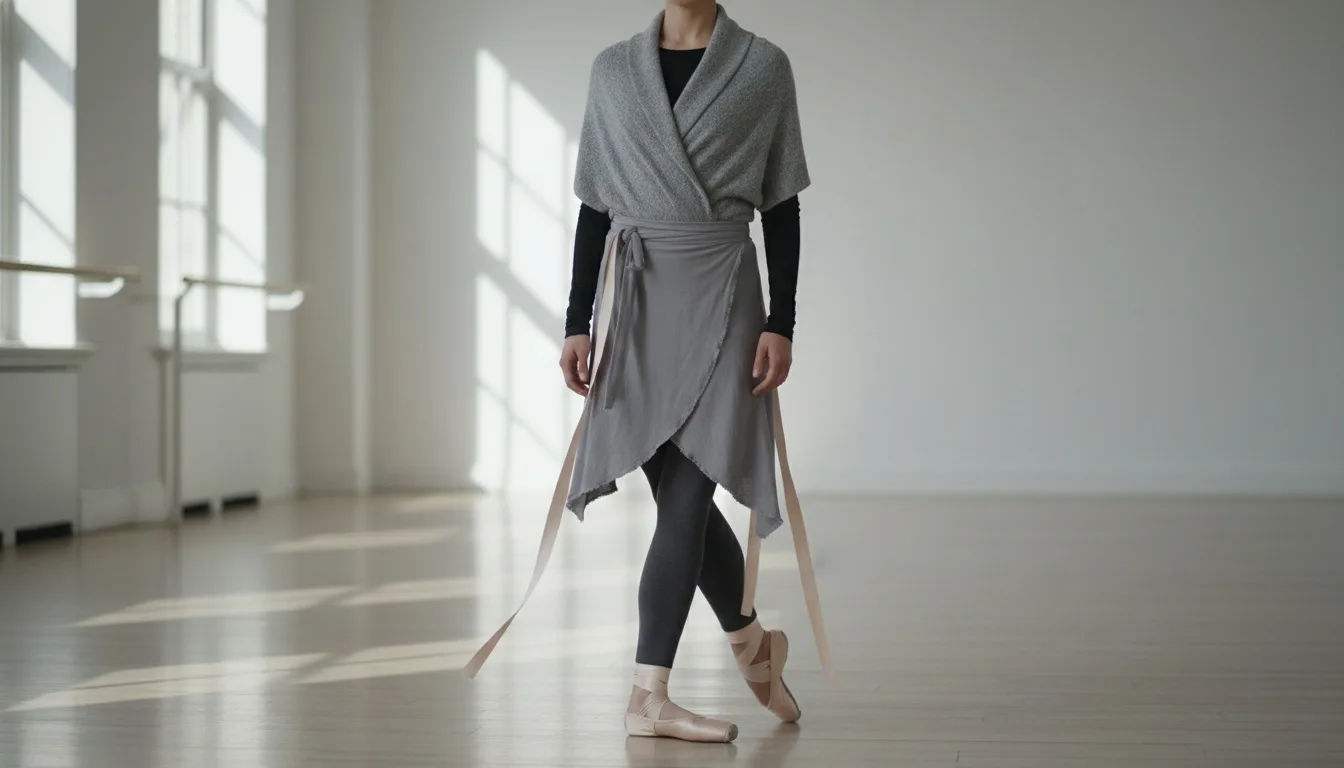
Balletcore takes its cues from dancewear — and specifically from rehearsal clothes rather than from stage costume: wrap tops, leg warmers, soft knitted layers, bodysuits worn as tops, ribbon-tied flats and skirts over leggings. The palette is ballet pink, cream, grey marl and black, and the mood is functional and slightly worn-in.
Rehearsal, not stage Ballet pink + grey marl 8 carrying pieces Layers, softened
The whole aesthetic resolves on one distinction: rehearsal room, not stage. A tulle skirt and a tiara is a costume. A wrap cardigan over a bodysuit with a skirt on top is an outfit.
That distinction does most of the work. Stage costume is decorative, symmetrical and stiff. Rehearsal clothing is soft, layered, mismatched and chosen for warmth — dancers layer knits and warmers over practice clothes because studios are cold, and the pieces get pulled off as the body warms up. Everything appealing about balletcore comes from that: the soft layering, the mixed textures, the sense of clothes chosen for use.
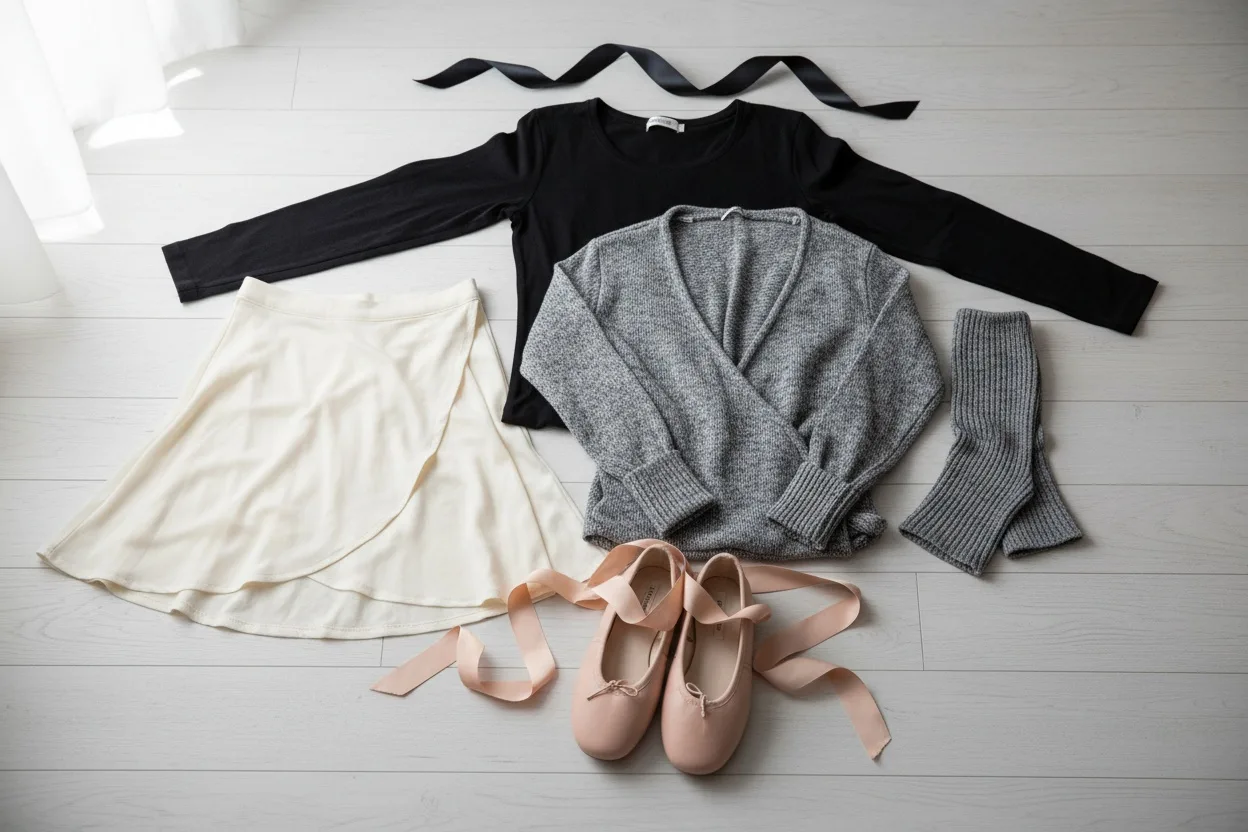
The 8 pieces
| # | Piece | How it signals | Wearable alone? |
|---|---|---|---|
| 1 | Wrap cardigan or wrap top | Crossover front, tie at the waist, soft knit | Yes — the easiest entry |
| 2 | Leg warmers | Ribbed knit, scrunched at the ankle | Only over tights or leggings |
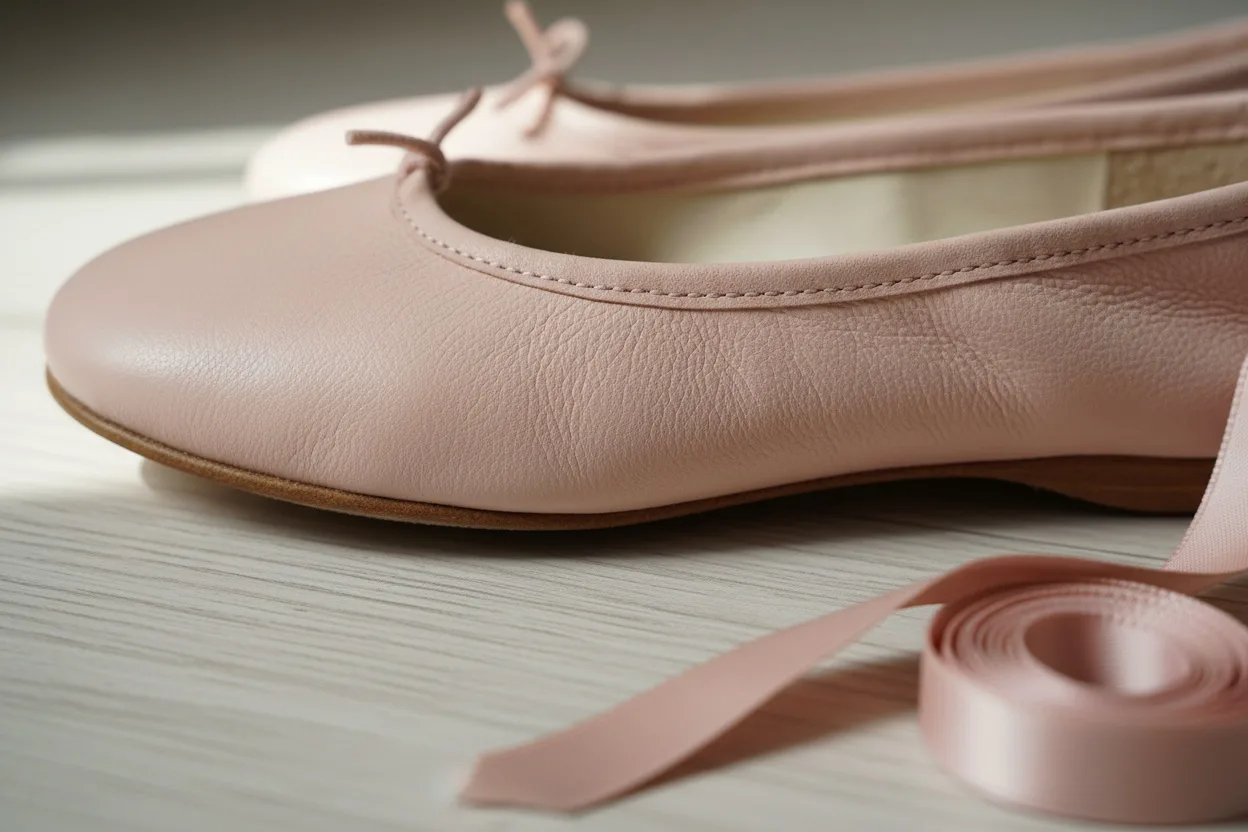
| 3 | Ballet flats | Ribbon or elastic ties, soft leather | Yes |
| 4 | Bodysuit or fitted long-sleeve | Clean line under a layer | With a layer over it |
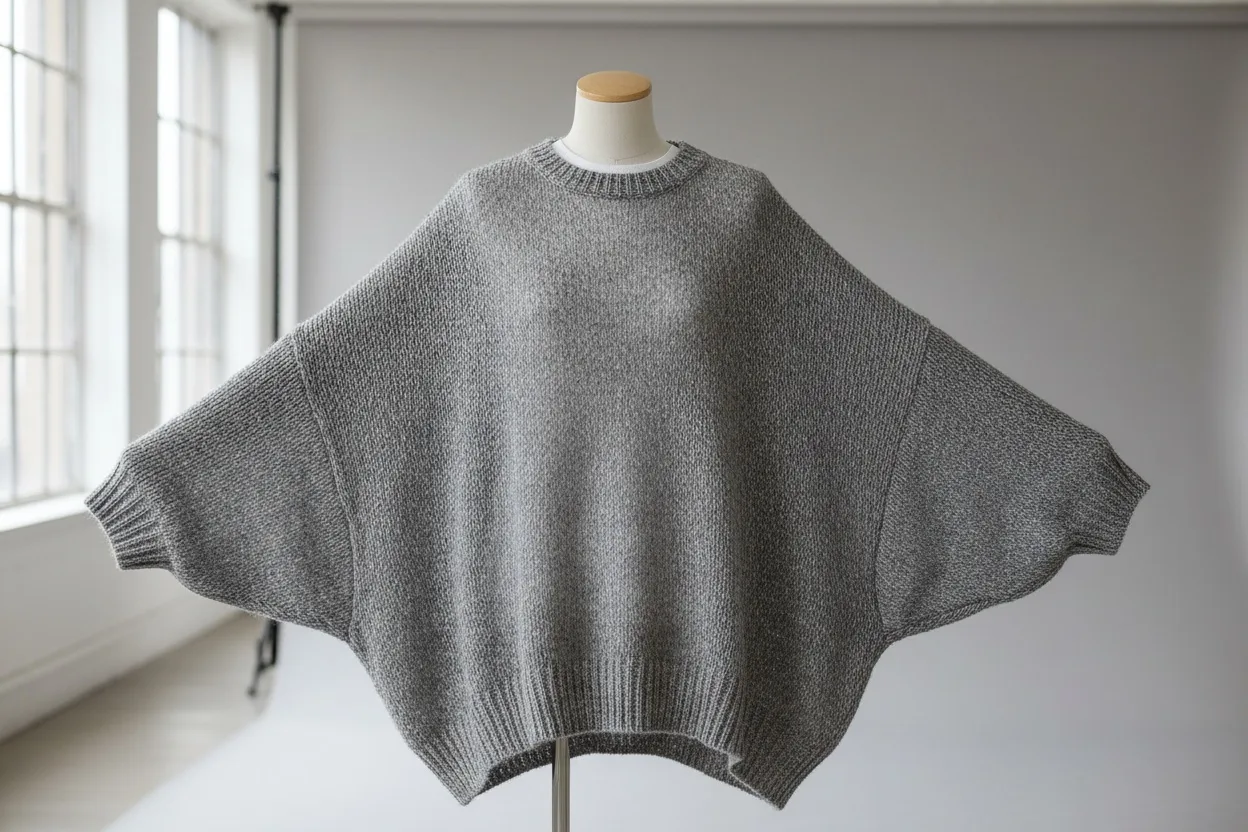
| 5 | Soft knit in grey marl | Oversized, slightly worn | Yes |
| 6 | Skirt over leggings | Wrap or circle skirt, mid-thigh to knee | Yes |
| 7 | Knitted legging or footless tight | Ribbed, ankle-length | Under a skirt |
| 8 | Ribbon | Hair or neck. Shared with coquette. | Yes |
If you want one colour that separates balletcore from coquette, cottagecore and every other pale aesthetic, it is grey marl. It comes straight from rehearsal sweats, it grounds an otherwise very pale outfit, and none of the neighbouring aesthetics use it. A grey marl knit over a pink top is unmistakably balletcore.
The layering logic
Balletcore layers are functional in origin, and reproducing that logic is what keeps an outfit from looking like a themed set.
- Close layer. Bodysuit, fitted long-sleeve or camisole. Clean and body-skimming.
- Soft layer. Wrap cardigan or oversized knit, deliberately looser than the layer beneath.
- Skirt over the leg. A wrap or circle skirt over leggings or tights — the layer that reads most specifically as dance.
- Warmth at the extremity. Leg warmers at the ankle, or a knit pushed up the forearm.
The proportion contrast between layers one and two is the point. A fitted base under a loose knit reads as rehearsal; two loose layers reads as nothing in particular.
20 balletcore outfit formulas
Everyday
- Wrap cardigan + plain white tee + straight jeans + ballet flats
- Grey marl knit + black leggings + leg warmers + flats
- Bodysuit + wrap skirt over leggings + soft cardigan
- Fitted long-sleeve + circle skirt + opaque tights + flats
- Oversized cream knit + slim knitted legging + ribbon in the hair
- Pink wrap top + straight dark denim + flats
- Grey sweat + pleated skirt + tights + trainers
- Plain black bodysuit + wide grey trouser + flats
- Wrap cardigan worn as a top + tailored trouser
- Cream knit + mid-length skirt + leg warmers over tights
Softer / dressed
- Bodysuit + long bias skirt + wrap cardigan over the shoulders
- Pink knit + cream midi + ribbon-tie flats
- Fitted long-sleeve + tulle-adjacent full skirt (one, not layered) + flat
- Black bodysuit + long grey knit skirt + ballet flat
- Cream wrap top + satin midi + ribbon at the neck
- Grey marl knit dress + opaque tights + flats
- Blush bodysuit + charcoal wide trouser + soft cardigan
- Ivory knit + long pleated skirt + leg warmers
- Wrap top + slim black trouser + flat + hair ribbon
- Plain black column + one pink wrap cardigan
Where balletcore goes wrong
Reaching for the stage. Tulle, tutus, tiaras, satin pointe shoes worn as street shoes. All stage, none rehearsal.
Leg warmers with bare legs. They exist to keep a warmed-up muscle warm. Over bare skin they read purely as a signal, and an obvious one.
Two loose layers. Loses the fitted-under-loose contrast that the whole silhouette depends on.
All pink. Without grey marl, cream or black to ground it, a full pink outfit tips into coquette or into costume. The neutrals are doing more work than the pink is.
Balletcore vs coquette
| Balletcore | Coquette | |
|---|---|---|
| Reference | Rehearsal, training | Lingerie, Rococo portraiture |
| Mood | Functional, worn-in | Deliberate, ornamental |
| Key fabric | Jersey, soft knit, wrap | Lace, satin, sheer |
| Neutral | Grey marl | Cream, ivory |
| Silhouette | Fitted under loose, layered | Any — carried by trim |
| Shared | Ballet pink, ballet flat, ribbon | |
Our coquette aesthetic guide takes the other column apart, including where the two can genuinely be combined — a lace-trim camisole as the close layer under a grey marl wrap being the obvious case.
For brands: knitwear that has to show its drape
Nearly every carrying piece in this aesthetic is soft, unstructured and body-dependent: a wrap cardigan, a bodysuit, a circle skirt, a knitted legging. None of them communicates anything as a flat lay. A wrap cardigan photographed flat is a shapeless piece of knit; the entire product is what happens when it is tied.
The category is also layered by definition, which means the useful product image is usually not the product alone. A customer buying a bodysuit wants to see it under something.
Two consequences for a shoot. On-model is mandatory rather than nice to have, and that is expensive for a category with a lot of low-price SKUs — our AI clothes changer takes a single garment photograph and puts it on a model at 4 credits a frame, holding the knit and the tie. And because fit through the body is the whole question with a bodysuit or a wrap, showing the same piece across more than one body type materially reduces returns: the virtual try-on flow runs across ten body types from the same source garment, and our plus size photography guide covers briefing it so the drape reads correctly rather than looking stretched.
Where balletcore came from
The aesthetic has a longer history than its recent visibility suggests. Dancewear has moved into ordinary clothing repeatedly across the last century, and each time it arrived it brought the same pieces: the wrap, the flat, the leotard, the knitted warmer.
The most consequential of those crossings was the fitness boom of the late 1970s and early 1980s, when leotards, footless tights and leg warmers left the studio and became daywear on a mass scale. That period is why leg warmers read as a specific decade to some people and as pure ballet to others — they carry both references simultaneously, which is worth knowing before you put them on.
The current version is narrower and quieter than that one. It has dropped the aerobics inheritance, kept the rehearsal-room inheritance, and added the flat shoe as its central piece. Where the eighties version was bright, synthetic and high-contrast, this one is pale, soft and tonal — which is why grey marl and cream do so much work in it.
The five-piece starter set
If you want the aesthetic without rebuilding a wardrobe, five pieces cover it, in this order.
- Wrap cardigan. Grey marl, cream or blush. Works over things you already own and reads as the aesthetic on its own. This is the one to buy if you buy only one.
- Ballet flats. With a real insole — see the construction note below. The most versatile piece in the list and the one you will wear most.
- Fitted long-sleeve or bodysuit. Black or cream. The close layer that makes the loose layer read as deliberate.
- Soft knit in grey marl. Oversized. The colour that separates this aesthetic from every neighbouring one.
- Ribbon. Costs almost nothing and finishes an otherwise plain outfit.
That set produces a dozen of the formulas above without any further purchase. Leg warmers, wrap skirts and knitted leggings are the second tier — genuinely part of the aesthetic, but harder to wear outside it and worth adding only once the first five are earning their place.
Press the sole between your fingers. If it folds flat with no resistance, there is no shank and the shoe will be uncomfortable within an hour. Look for a stitched rather than glued sole, a leather lining, a padded heel counter, and enough depth through the vamp that the shoe stays on without gripping. None of this is strictly a price question — plenty of expensive flats are unstructured, and plenty of mid-priced ones are built properly.
Balletcore across the seasons
The aesthetic is usually photographed in spring, which gives the impression that it is a warm-weather look. In practice it works better in cold weather than almost any other pale aesthetic, because knitwear and layering are already its native vocabulary rather than a seasonal compromise.
| Layer | Warm weather | Cold weather |
|---|---|---|
| Close layer | Bodysuit, fitted short-sleeve | Fine roll-neck, long-sleeve bodysuit |
| Soft layer | Light wrap cardigan | Heavy grey marl knit, wool wrap |
| Leg | Bare, or sheer tights | Opaque tights with leg warmers over |
| Skirt | Cotton wrap or circle | Wool or heavy knit, longer |
| Foot | Ballet flat | Soft leather boot, or flat with a thick sock |
| Outer | None | Cream or camel wool coat |
The one substitution that people resist and should not is the boot. A ballet flat in January is an unpleasant experience, and a soft, low leather boot keeps the line of the outfit intact while removing the reason to abandon it for four months. Leg warmers over opaque tights, under a boot, is closer to what dancers actually do in a cold building than anything in the summer version.
Where the pieces sit in an ordinary wardrobe
A fair objection to any named aesthetic is that it produces clothes you can only wear one way. Balletcore is unusually resistant to that, because five of its eight pieces are entirely ordinary garments.
- Wrap cardigan — works with jeans, tailoring or a work outfit. Nobody reads it as a reference.
- Ballet flats — the most versatile shoe in the list, and currently ordinary footwear.
- Grey marl knit — a plain sweatshirt or knit by any other name.
- Fitted long-sleeve — a base layer that goes under everything.
- Ribbon — invisible as a reference outside the aesthetic.
The three that are genuinely aesthetic-specific are the leg warmers, the wrap skirt over leggings, and the leotard. Those are the ones to buy last, and the ones to be honest with yourself about before buying at all.
Balletcore FAQ
Is balletcore still in style?
Its peak visibility has passed, but the pieces have stayed — the wrap cardigan, the ballet flat and soft grey knitwear have all become ordinary. The flat shoe in particular has held on well past the trend that reintroduced it.
Can I wear balletcore without pink?
Easily. Grey marl, cream, black and charcoal carry it entirely, and an all-neutral version with a wrap cardigan and flats is arguably the more wearable one. Pink is the recognisable entry point, not a requirement.
What is the best first purchase?
The wrap cardigan. It works over things you already own, it reads clearly as the aesthetic, and it is the only piece that carries the look on its own.
Do ballet flats hurt?
Badly made ones do. Look for a real insole, a padded heel, a leather lining and a stitched rather than glued sole. Construction is the whole difference, and it is not strictly a price question — plenty of expensive flats are unstructured.
Does balletcore work in winter?
Better than most pale aesthetics, because knitwear and layers are already central to it. Opaque tights, leg warmers over them, a heavy grey knit and a cream coat is a complete winter version. Swap the flat for a soft boot when it is genuinely cold.