What is dark academia?
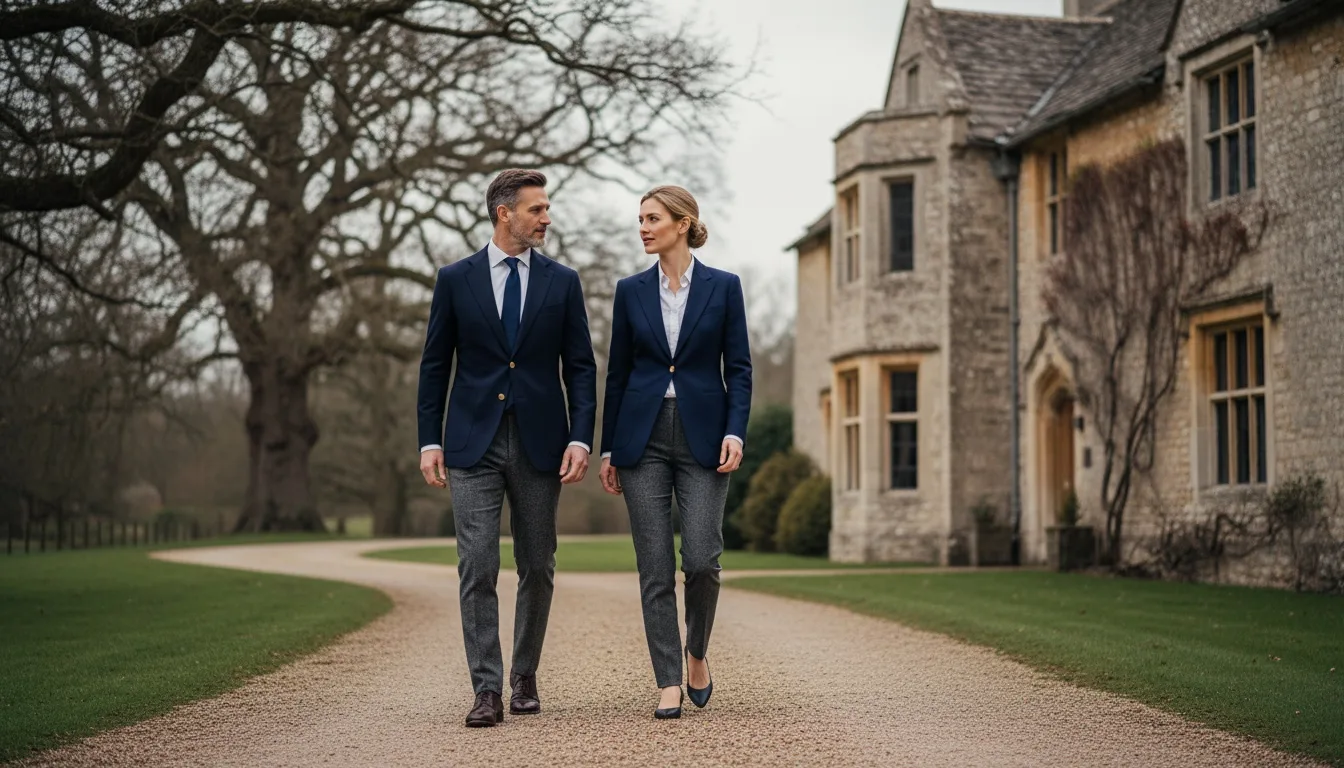
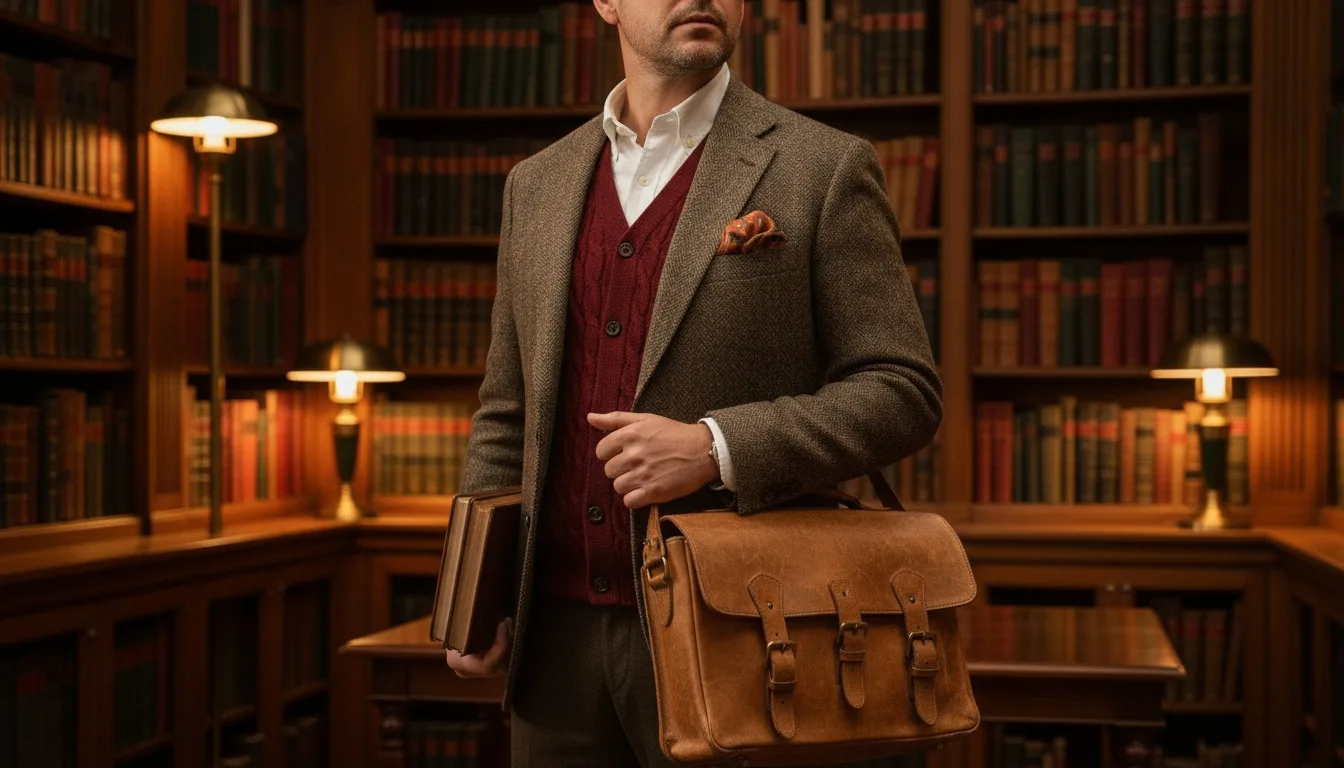
Dark academia dresses in the visual language of old universities and libraries — tweed, wool, corduroy, oxford shirting, knitted vests, pleated trousers, long coats and leather satchels, in brown, oxblood, forest green, charcoal and cream. It is the most heavily layered aesthetic in current circulation, and that single fact determines almost everything about how to wear it.
Texture, not colour Brown, oxblood, forest, charcoal 10 carrying pieces 3 visible layers, max
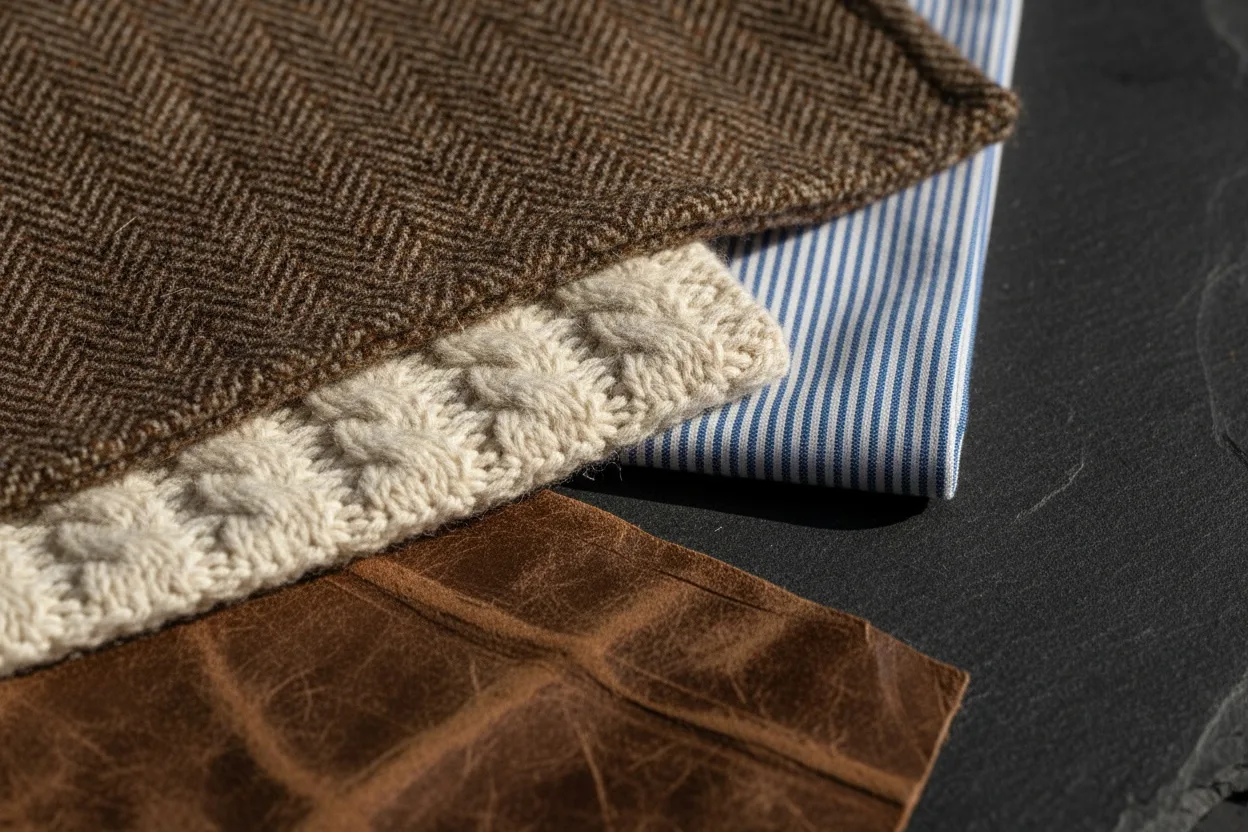
Because the palette is deliberately low-contrast, texture does the work colour does elsewhere. Tweed against fine knit against poplin is what makes an all-brown outfit read as designed rather than as flat.
The aesthetic has an obvious literary and cinematic ancestry, and it inherits a certain romance about study and old buildings that has been criticised fairly enough — the version of academic life it depicts is narrow and, historically, exclusive. As a way of dressing, though, it is unusually durable: the garments are traditional, well-made versions exist at every price, and nothing in the vocabulary dates.
The layering stack
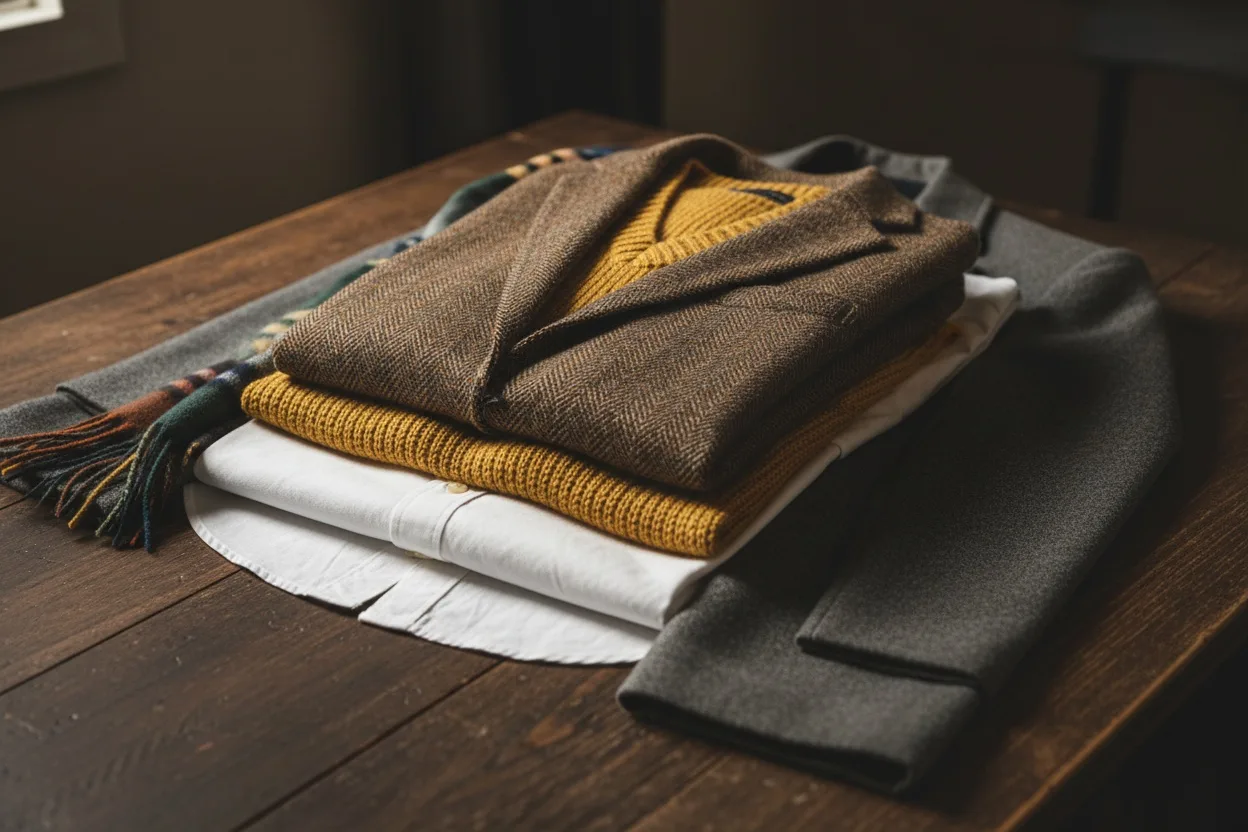
This is the part that matters. Dark academia is not a set of garments, it is an order of garments, and getting the order wrong is what makes an expensive attempt look like a costume.
- Shirt. Oxford or poplin. Collar and cuffs must remain visible through everything above.
- Knit. Vest, tank or fine crew. Its hem sits above the blazer hem, never level with it.
- Blazer. Tweed, herringbone or corduroy. Cuffs end above the shirt cuff so a half-inch of shirt shows.
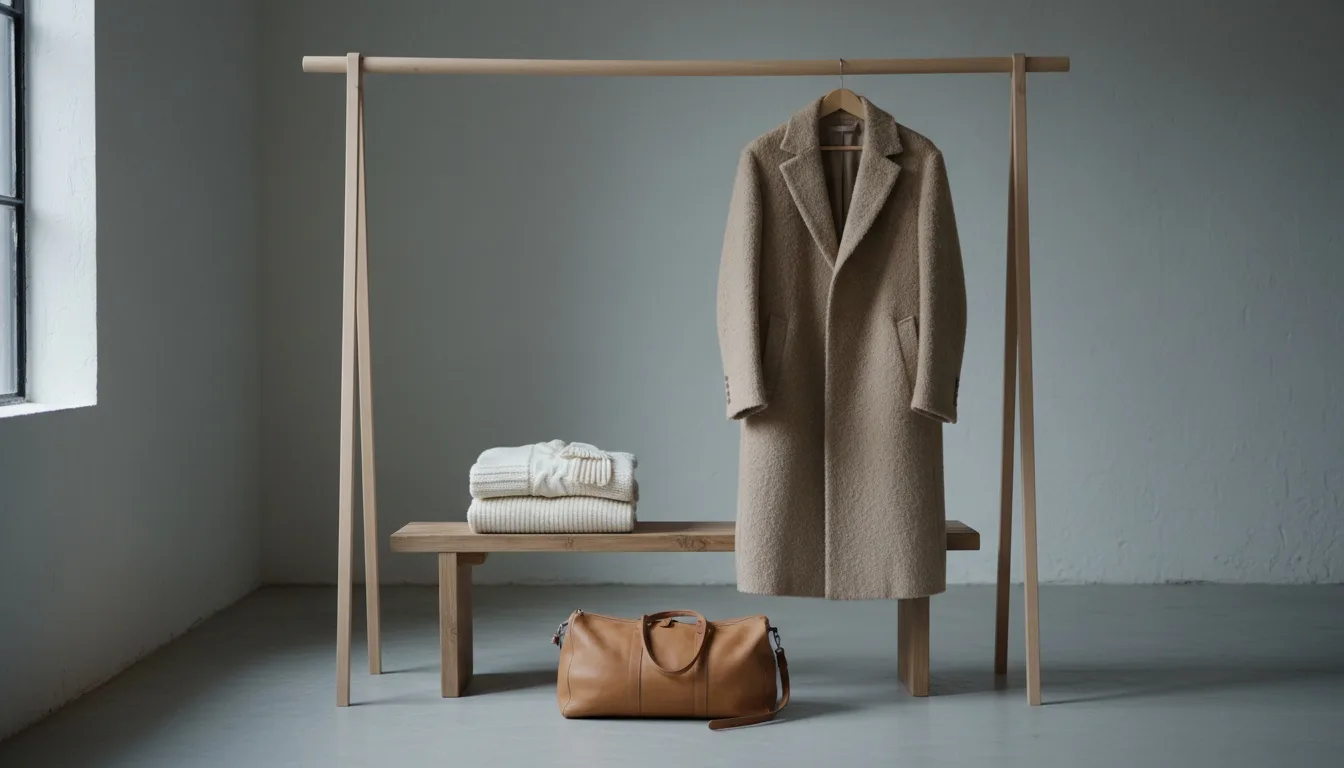
- Coat. Longer than the blazer by a clear margin — several inches, not one.
- Scarf. The finishing texture, in a muted check, worn loose rather than tightly knotted.
No two layers end at the same point. If the knit and the blazer both finish at the hip, they cancel each other out and the outfit reads as bulk instead of layers. Stagger the hems and the same pieces suddenly look considered.
Three visible layers is the working ceiling. Four is possible in real cold, but past that the silhouette stops being a person in clothes and starts being a stack.
The 10 pieces
| # | Piece | Specification | Layer |
|---|---|---|---|
| 1 | Tweed or herringbone blazer | Soft shoulder, patch or flap pockets, elbow patches optional | 3 |
| 2 | Knitted vest or tank | Cable, argyle or plain. Over a shirt, always. | 2 |
| 3 | Oxford or poplin shirt | White, cream or pale blue. Button-down collar works hardest. | 1 |
| 4 | Pleated skirt or trouser | Wool or heavy cotton, mid-calf or full length | Base |
| 5 | Fine roll-neck | Black, cream or charcoal. Substitutes for shirt + knit. | 1–2 |
| 6 | Long wool coat | Below the knee, brown, charcoal or forest | 4 |
| 7 | Leather satchel or briefcase | Brown, structured, visibly used | — |
| 8 | Brogues or loafers | Leather, brown or oxblood, kept polished | — |
| 9 | Opaque tights or wool socks | Brown, charcoal, forest. Socks show above the shoe. | — |
| 10 | Muted check scarf | Wool, worn loose | 5 |
The palette
Brown at every value from tobacco to chocolate. Oxblood and burgundy. Forest and olive. Charcoal, black, cream, mustard. Pattern is confined to herringbone, houndstooth, tartan and windowpane, always muted.
Contrast is deliberately low, which is what gives the aesthetic its interior, lamplit quality — and it is also the reason texture matters so much. An outfit in four browns of the same fabric reads as flat. The same four browns across tweed, knit, poplin and leather reads as intentional. If an outfit is not working and you cannot say why, the answer is almost always that everything in it is the same texture.
24 dark academia outfit formulas
Core
- Oxford shirt + knitted vest + pleated wool trouser + brogues
- Tweed blazer + fine roll-neck + straight trouser + loafer
- White shirt + argyle vest + pleated midi skirt + opaque tights
- Cream knit + corduroy trouser + brown leather satchel
- Herringbone blazer + shirt + tartan skirt + knee sock
- Roll-neck + long wool coat + straight trouser + boot
- Oxford shirt with sleeves rolled + plain vest + wide trouser
- Forest green knit + brown cord trouser + brogue
Layered / cold
- Shirt + vest + tweed blazer + long brown coat + check scarf
- Roll-neck + cable knit + herringbone coat + wool trouser
- Shirt + argyle vest + corduroy blazer + tights + boot
- Cream shirt + oxblood knit + charcoal coat + grey trouser
- Plaid skirt + opaque tights + knit + long coat + satchel
- Mustard knit + brown blazer + straight trouser + loafer
- Roll-neck + tweed blazer + pleated skirt + tall boot
- Shirt + vest + scarf + coat, everything in brown, four textures
Light academia — the warm-weather version
- Cream linen blazer + white shirt + stone trouser + loafer
- Short-sleeve knitted vest over a cotton shirt + wide cream trouser
- Pale blue shirt + camel knit + pleated cream skirt
- Ivory shirt + soft sage vest + straight linen trouser
- Cream cardigan + white shirt + tan trouser + flat
- Linen shirt + pleated midi + leather satchel
- Camel blazer + cream roll-neck (fine) + stone trouser
- White shirt + soft blue knit + wide linen trouser + loafer

Where dark academia goes wrong
Level hems. The single biggest problem, covered above.
One texture throughout. An all-brown outfit in one fabric loses the aesthetic entirely.
Costume props. A quill, round glasses with no prescription, a stack of leather-bound books used as an accessory. The clothes carry it; the props announce it.
Too much black. Dark academia is a brown aesthetic. Black is available but is not the base, and an all-black version of the outfit lands somewhere closer to goth or to plain office wear.
Ignoring the shoe. The whole aesthetic is traditional and cared-for. A scuffed trainer under a tweed blazer breaks it faster than any single wrong garment.
Dark academia, old money and cottagecore
| Dark academia | Old money | Cottagecore | |
|---|---|---|---|
| Setting | Library, lecture hall | Country house, club | Garden, kitchen |
| Palette | Brown, oxblood, forest | Navy, camel, cream | Cream, sage, faded floral |
| Fabric | Tweed, wool, corduroy | Worsted, cashmere, poplin | Cotton, linen, hand-knit |
| Layering | Heavy — three to four | Moderate — two | Light — one to two |
| Mood | Interior, autumnal | Established, understated | Rural, handmade |
Dark academia and old money share a great deal of wardrobe and differ mostly in palette and layer count; the tweed blazer belongs comfortably to both.
For brands selling into this aesthetic
Two merchandising problems, both consequences of what the aesthetic is.
Texture is the product, and texture is what images lose. A herringbone, a cable knit and a corduroy wale are the reasons these garments cost what they cost, and all three turn into flat colour at listing resolution or under heavy compression. Detail crops need real pixels — our AI image upscaler takes an existing frame to print resolution while holding the weave, which ordinary upscaling smooths out precisely on fabrics like these.
The garments are bought as an outfit, not as a SKU. Nobody buys a knitted vest without knowing what it goes over. Listings that show a piece in isolation ask the customer to imagine the stack; listings that show the full layered outfit and then break out each piece sell considerably better. That means one shoot has to produce both a styled full-look image and clean individual product frames.
Our AI lookbook generator turns flat lays into a full lookbook so the layered styling exists as its own set of pages, while the catalog photoshoot flow pins one model and one location across every SKU so the individual product shots still look like one collection. Both work from the same uploaded garment photograph.
Where the aesthetic came from
Dark academia is a recent name for a much older visual tradition, and separating the two is useful because one of them is durable and the other is a trend.
The clothing is genuinely old. Tweed jackets, knitted vests, oxford shirting, pleated trousers and brogues have been the uniform of European and American academic life for over a century, and they entered that world from country sportswear rather than from any deliberate scholarly style. Tweed was hunting cloth. The knitted vest was a golfing garment. The brogue was a working boot with drainage holes. None of it was designed to look intellectual; it looked intellectual because intellectuals wore it.
The aesthetic — the name, the mood, the specific palette and the romance about libraries — arrived through literature and film, and then through image-sharing platforms where it acquired its current form. That layer is worth holding at arm's length: it flattens a real institutional history, much of it exclusionary, into a shoppable look, and the version of academic life it depicts is narrow.
The practical takeaway is that the clothes long outlive the trend. A well-cut tweed jacket was correct in 1950 and will be correct in 2050, regardless of what the aesthetic is called by then.
The light academia switch
The single most useful thing to know for anyone who wants to wear this year-round: light academia is the same wardrobe with the palette inverted, and most of the pieces cross over unchanged.
| Piece | Dark academia | Light academia |
|---|---|---|
| Blazer | Brown tweed, herringbone | Cream linen, pale camel |
| Knitted vest | Oxblood, forest, mustard | Cream, sage, soft blue |
| Shirt | Cream or white oxford | Identical — the crossover piece |
| Trouser | Charcoal wool, brown cord | Stone cotton, cream linen |
| Skirt | Tartan, brown wool | Cream pleated, pale check |
| Shoe | Oxblood brogue, brown boot | Tan loafer, cream flat |
| Outerwear | Long brown or charcoal wool | Camel trench, cream coat |
The oxford shirt and the pleated trouser belong to both without modification, which means the seasonal transition costs two or three pieces rather than a wardrobe. If you are building from nothing and want the aesthetic to work in July as well as November, buy the crossover pieces first and the tweed last.
Dark academia FAQ
Do I need to wear glasses?
No. Glasses are the most-copied prop in the aesthetic and the most obviously performative. The clothes do the work.
Is dark academia expensive?
It is one of the cheapest aesthetics to build, because it lives almost entirely in secondhand shops. Tweed blazers, knitted vests, wool trousers, leather satchels and brogues are abundant used, and the aesthetic actively prefers pieces that look owned rather than new.
Can men wear dark academia?
The vocabulary is largely menswear to begin with — the blazer, the vest, the oxford shirt, the pleated trouser, the brogue. The womenswear version adds the pleated skirt and tights. Everything else is shared.
What is the one piece to start with?
The knitted vest. It is the cheapest, the most recognisable, and it works over shirts you already own with trousers you already own. A vest over an oxford shirt is a complete dark academia outfit.
How do I make it work for a modern office?
Drop to two layers and lose the check. A plain knitted vest over a poplin shirt with tailored trousers reads as good office dressing to a colleague and as dark academia to anyone who knows the aesthetic. Keep the brown and the texture, skip the tweed blazer.