What is quiet luxury?
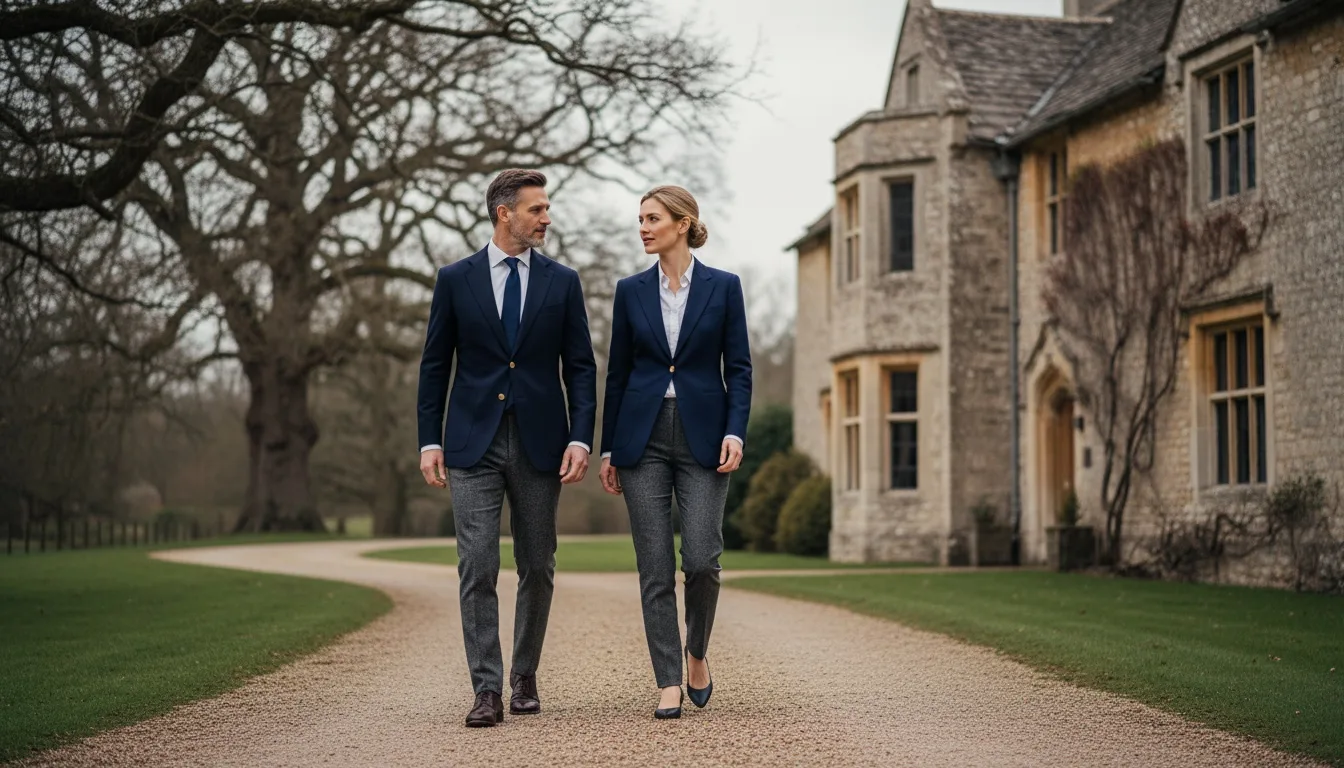
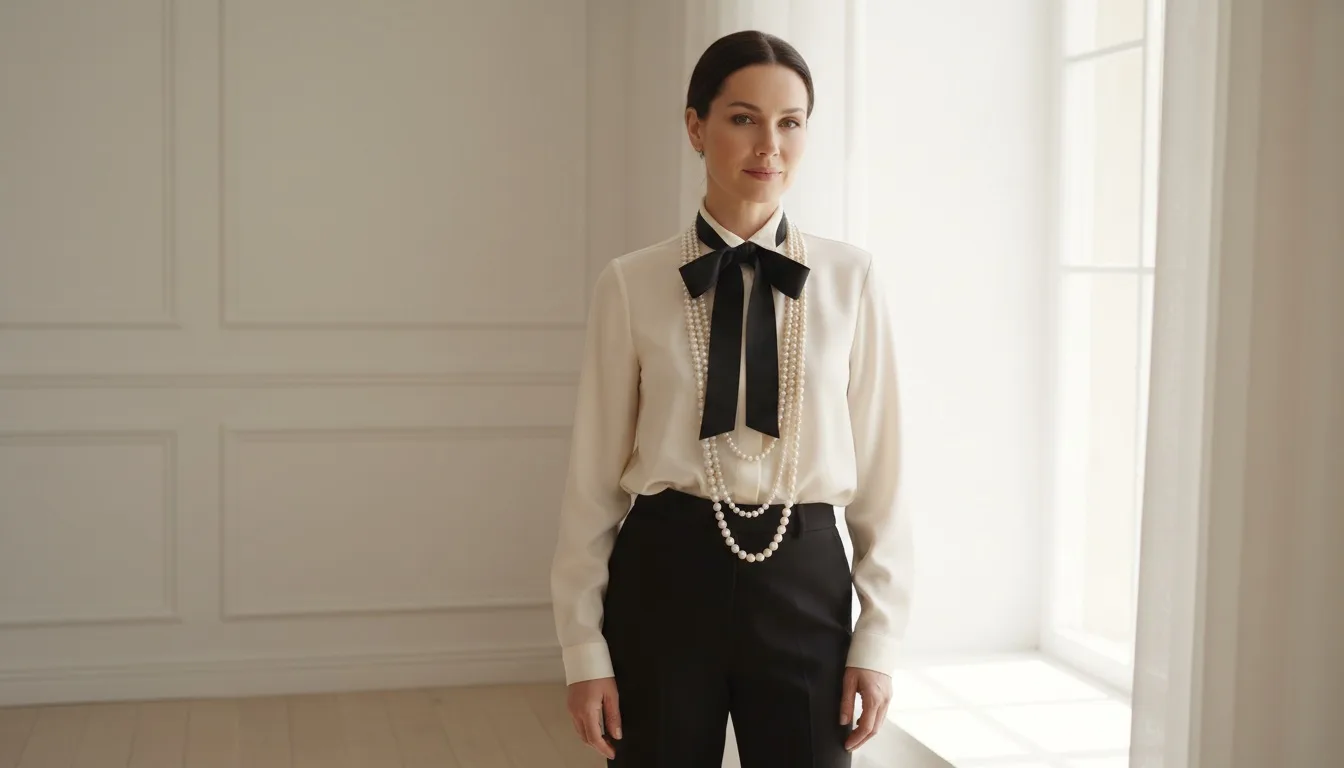
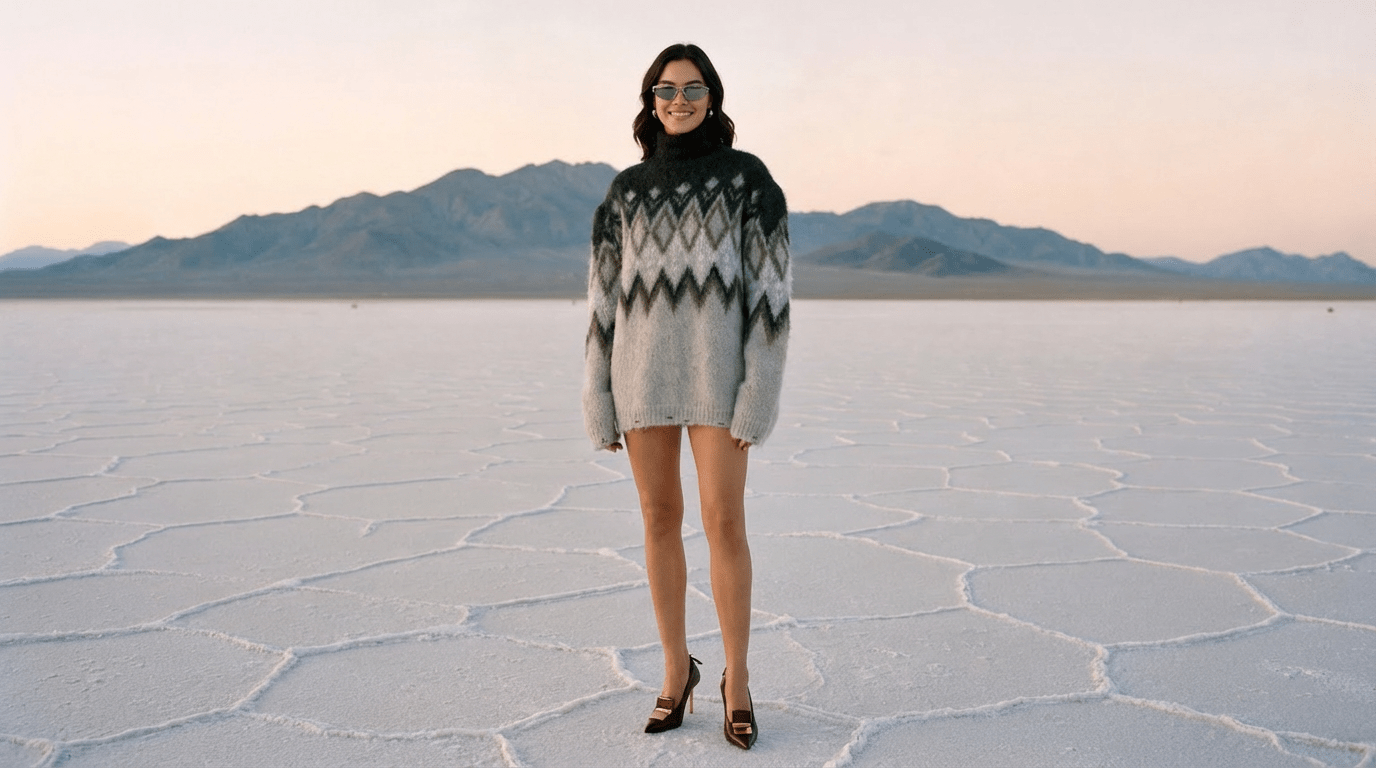
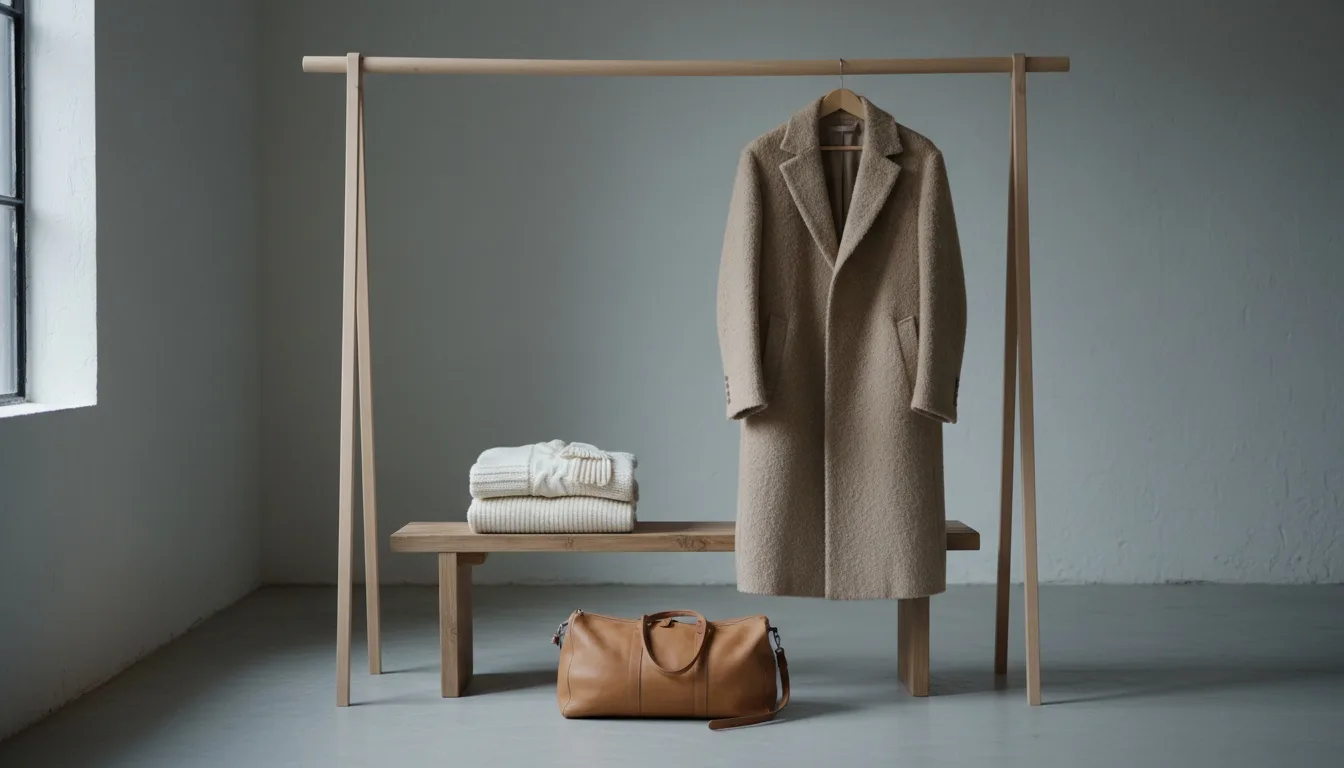
Quiet luxury removes visible branding, print and trend, leaving material quality and cut as the only two variables a garment can be judged on. Cashmere, fine merino, silk, long-staple cotton and full-grain leather, in camel, cream, grey, navy and black, cut precisely and worn without ornament.
Two variables: cloth, cut Camel, cream, grey, navy 10-piece wardrobe Composition label first
The palette, the fit and the absence of logos are free, and they carry most of the visual effect. The fabric is the part that genuinely costs money — which is the honest limit of any "quiet luxury on a budget" advice, including this article's.
The name that circulated alongside it, stealth wealth, describes the intent accurately: the aesthetic addresses an audience that can identify a cloth rather than a label. That is also its most common criticism — a look that is only legible to people already inside a particular world is doing something other than communicating taste. Both things can be true. What is not in dispute is that the underlying advice — buy fewer things, in better cloth, cut to fit — is sound regardless of what it is called.
The fabrics
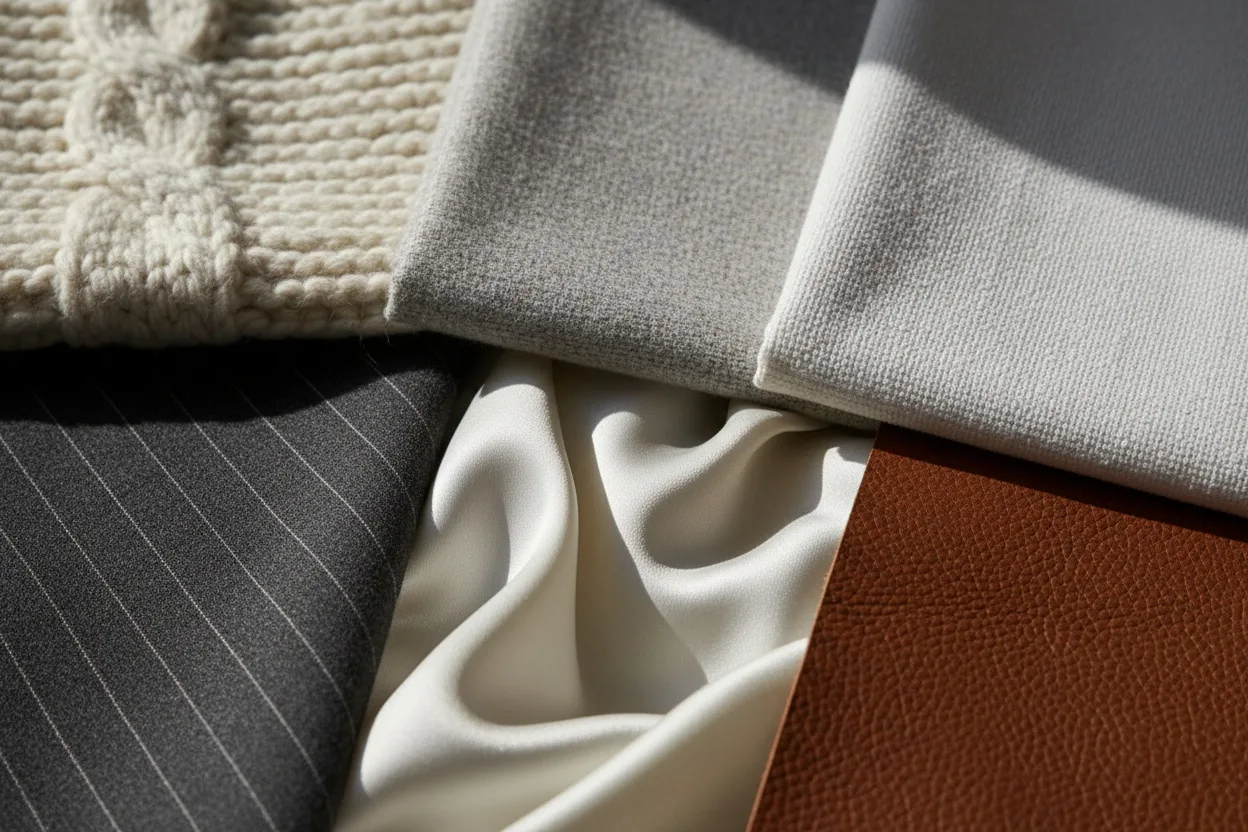
Because there is no print, no logo and no trend to look at, the fabric is the garment. Six materials do nearly all the work.
| Fabric | Where it appears | What to look for | Failure mode |
|---|---|---|---|
| Cashmere | Knitwear, coats | Longer fibres, two-ply or more, dense knit | Pills within weeks; loose short-fibre knit |
| Fine merino | Knitwear, base layers | Even gauge, no thin patches at the elbow | Stretches and never recovers |
| Worsted / flannel wool | Tailoring | Weight that hangs; crisp for worsted, soft for flannel | Shiny at the seat and elbow |
| Mulberry silk | Blouses, scarves, linings | Momme weight stated; matte rather than glassy | Snags, and shows every mark |
| Long-staple cotton | Shirting | Dense poplin, mother-of-pearl buttons | Goes translucent after washing |
| Full-grain leather | Shoes, bags, belts | Visible grain, develops patina | "Genuine leather" — the lowest grade, cracks |
"Genuine leather" is not a quality claim — it is close to the bottom of the leather grading scale, below full-grain and top-grain. It is made from the split hide left after the good layer is removed. A bag marked full-grain will outlive one marked genuine leather by years, and the terminology is the only signal you get on the tag.
The 10-piece wardrobe
| # | Piece | Fabric | Colour |
|---|---|---|---|
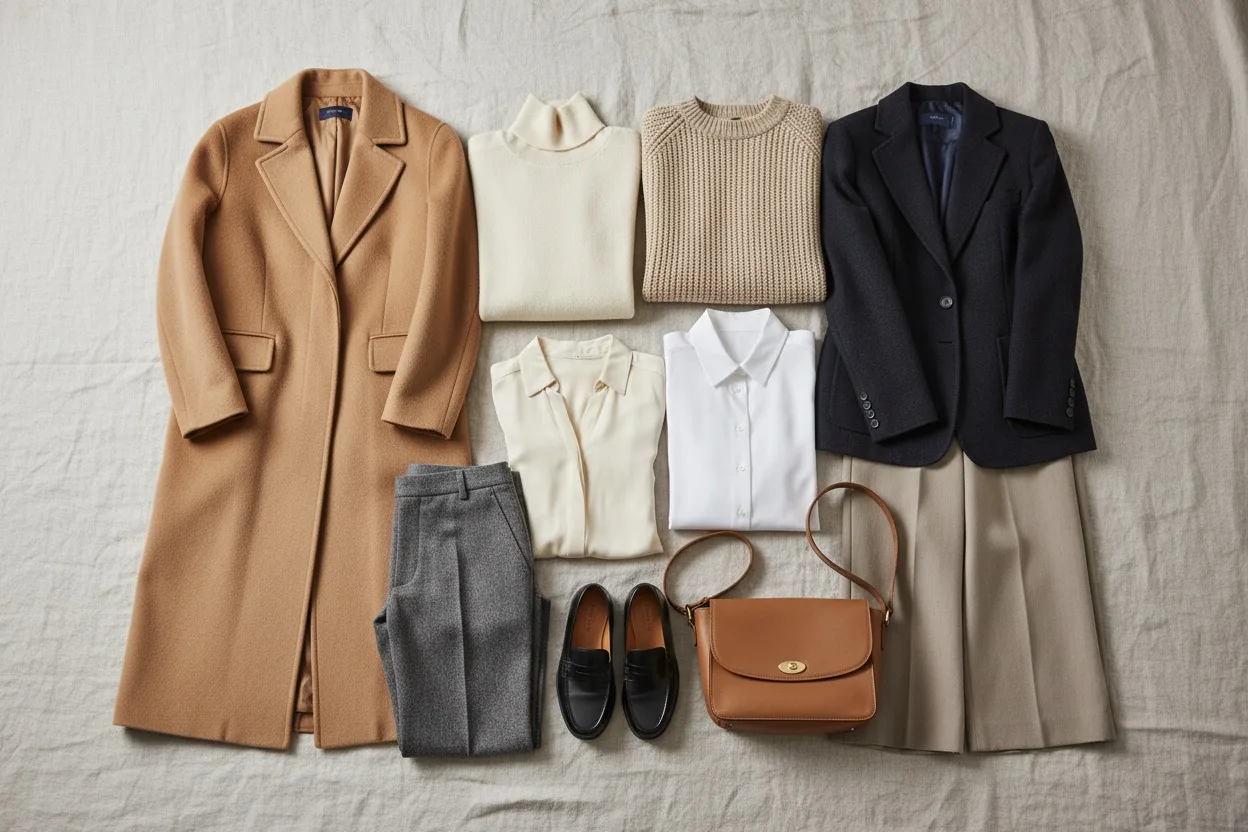
| 1 | Overcoat | Wool or wool-cashmere | Camel, grey or navy |
| 2 | Roll-neck | Cashmere or fine merino | Cream, grey or black |
| 3 | Crew or V-neck knit | Cashmere or merino | Oatmeal, navy |
| 4 | Tailored trouser | Worsted or flannel | Grey, charcoal, stone |
| 5 | Poplin shirt | Long-staple cotton | White, pale blue |
| 6 | Silk blouse | Mulberry silk | Cream, ivory |
| 7 | Blazer | Wool | Navy, grey, camel |
| 8 | Straight or wide trouser | Heavy cotton or linen | Cream, stone |
| 9 | Leather shoes | Full-grain | Black, brown, or plain white |
| 10 | Structured bag | Full-grain leather | Black, tan, cream |
The colours are chosen so that any two pieces work together. That is what makes the wardrobe a system rather than a list of outfits, and it is the practical reason people who dress this way appear to get dressed quickly.
How to judge quality before buying
- Read the composition label before the price. This one habit filters out most of what is sold at quiet-luxury prices without quiet-luxury cloth.
- Hold it to the light. Dense cloth blocks light. A shirt you can read through will go translucent after ten washes.
- Check pattern matching. On a striped or checked garment, do the lines meet across the seams and the pocket? Matching wastes fabric, so it only happens where someone decided it mattered.
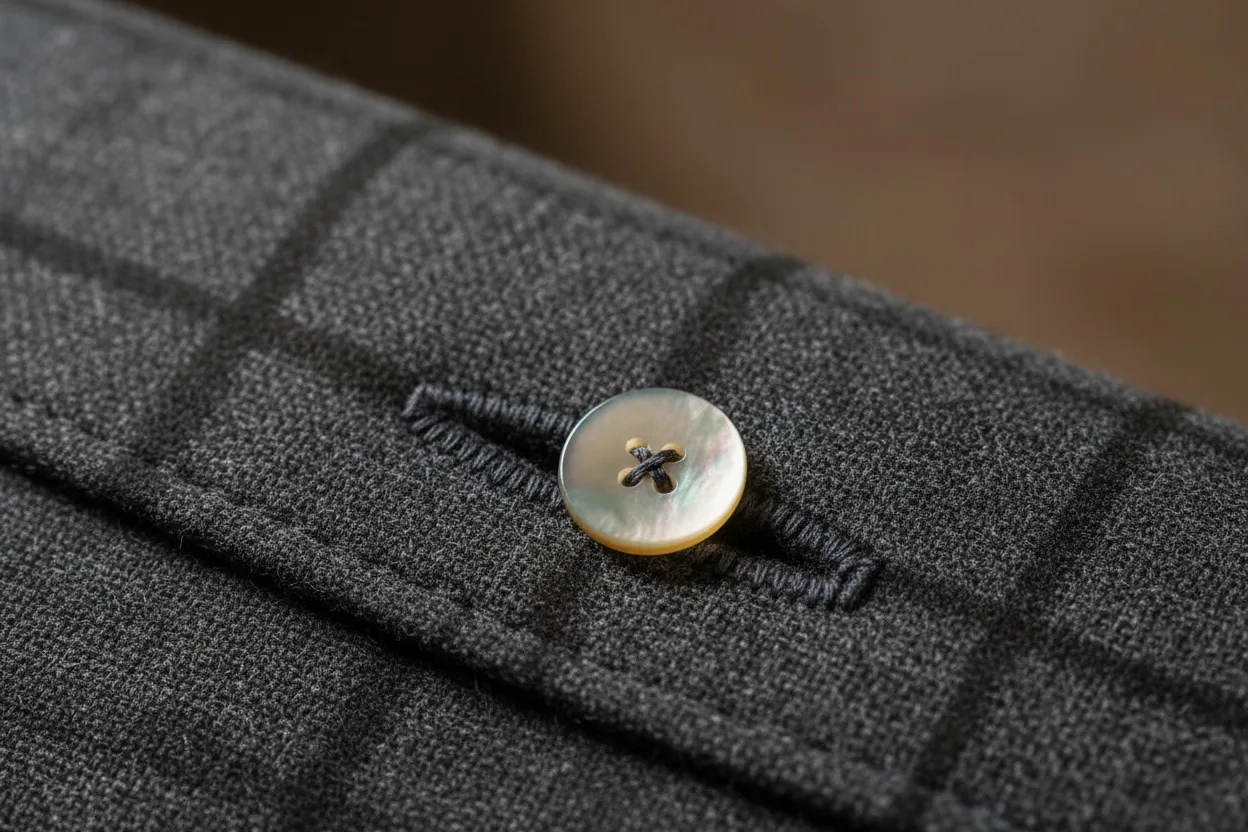
- Look at the buttonholes. Dense, even stitching with no fraying indicates a slower, more expensive make. This is the single most reliable tell on a jacket.
- Feel the weight. Good wool and good silk hang under their own weight. Fabric that floats is usually thin.
- Turn it inside out. Seam allowance, lining and finishing are where manufacturers economise when they assume nobody is looking.
20 quiet luxury outfit formulas
Everyday
- Cream cashmere roll-neck + grey flannel trouser + black loafer
- White poplin shirt + navy knit + stone trouser
- Camel overcoat + all-grey separates + plain white trainer
- Oatmeal knit + straight cream trouser + tan leather bag
- Navy blazer + white shirt + charcoal trouser
- Black roll-neck + tailored black trouser + black leather bag
- Silk blouse + wide cream trouser + flat sandal
- Grey crew knit + straight dark denim + brown loafer
- Linen shirt + stone wide-leg + plain white trainer
- Camel knit + navy trouser + structured tan bag
Occasion and colder weather
- Grey wool overcoat + cream roll-neck + charcoal trouser + boot
- Silk blouse + black tailored trouser + court shoe
- Plain wool dress + full-grain leather belt + low heel
- Navy suit + white poplin shirt + no tie
- Cashmere knit dress + camel coat + knee boot
- Ivory silk shirt + grey flannel skirt + plain flat
- Black cashmere + long grey skirt + leather ankle boot
- Camel coat worn over the shoulders + all-cream outfit
- Charcoal knit + navy trouser + brown derby
- Cream blazer + white shirt + stone trouser
Quiet luxury vs old money vs minimalism
| Quiet luxury | Old money | Minimalism | |
|---|---|---|---|
| The claim | Material quality | Inherited taste | Less, better arranged |
| References | Deliberately none | Ivy, country, sailing | Design, architecture |
| Requires money? | Yes, for the cloth | Less than it appears | No |
| Pattern | None | Stripe, check, argyle | None |
| Silhouette | Precise, contemporary | Traditional | Clean, often relaxed |
The nearest neighbour is old money, and the practical difference is references: quiet luxury has none by design, while old money is built on a specific set of them. Our old money aesthetic guide covers that column.
For brands: selling a garment with nothing to look at
This is the hardest category in fashion to photograph, and the reason is structural. Every other category has something for an image to seize on — a print, a logo, a colour, a silhouette. Quiet luxury has deliberately removed all four. What is left is cloth, and cloth is exactly what compression, low resolution and flat lighting destroy first.
Three requirements follow.
Resolution on the detail crop. A customer paying for cashmere needs to see the knit; a customer paying for full-grain leather needs to see the grain. At standard listing resolution both look like a flat colour field. Our AI image upscaler takes an existing frame to print resolution while holding fabric texture, which is the specific thing ordinary upscaling smooths away.
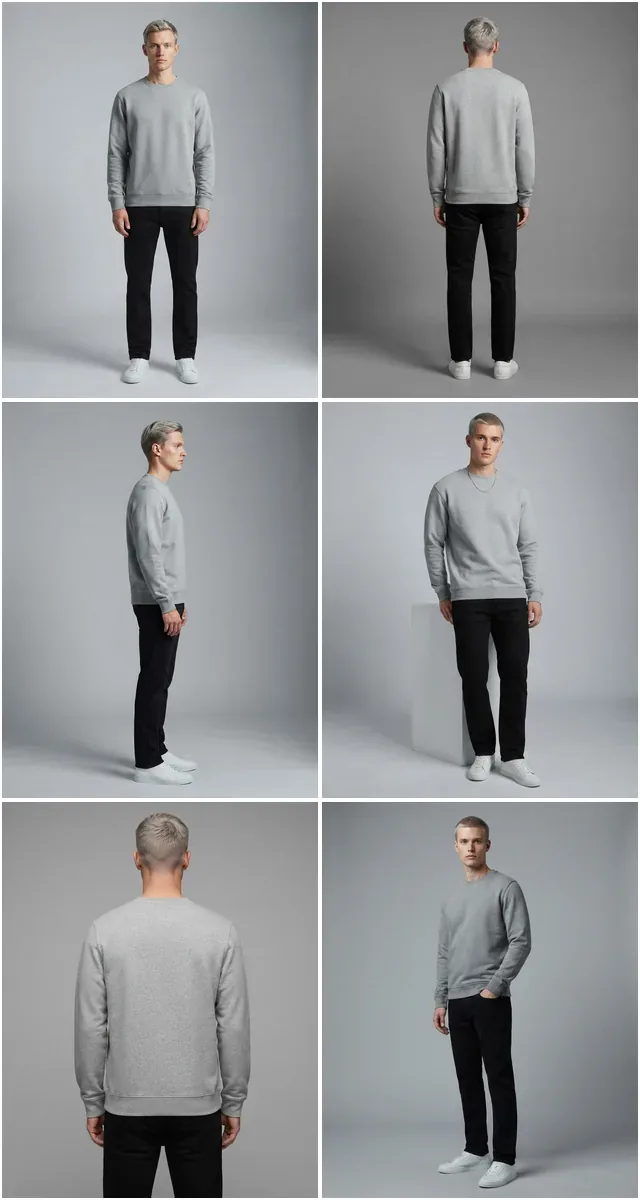
Colour accuracy. When the entire range is camel, cream, oatmeal and grey, a half-stop colour shift between two images makes two pieces that were designed to be worn together look like they clash. Consistency across a shoot is not a nicety in this category — it is the product. The catalog photoshoot flow pins one model, one location and one lighting setup across every SKU precisely so this does not happen.
Drape on a body. A wool coat and a silk blouse are bought for how they hang, which a flat lay cannot show at all. The AI fashion model generator turns a single garment photograph into on-model imagery at 4 credits a frame; our guide to photographing clothes to sell covers getting the source photograph right, which matters more here than in any other category.
The cost-per-wear argument, honestly
The standard defence of expensive clothing is cost per wear: divide the price by the number of times you will wear it. It is a real argument and it is also the one most often used to justify purchases that do not survive it, so it is worth doing the arithmetic properly.
| Cheap coat | Good coat | |
|---|---|---|
| Price | £120 | £600 |
| Wears before it looks tired | ~90 (one and a half seasons) | ~750 (eight to ten seasons) |
| Cost per wear | £1.33 | £0.80 |
| Replacement over 10 years | 6–7 coats | 1 coat |
| Ten-year spend | £720–840 | £600 |
The argument holds for the coat. It does not hold everywhere, and the honest version of this advice says where it stops.
It holds for: outerwear, shoes, bags, tailoring, and any knitwear you wear weekly. All are high-wear, structurally complex, and improve materially with better construction.
It fails for: anything you wear rarely, anything in a colour or cut you may tire of, and anything worn against the skin that will wash out regardless. A £300 silk blouse worn four times a year has a worse cost per wear than a £40 one worn weekly, no matter how much better the silk is.
Cost per wear only works as a prediction you then check. Buying an expensive item and telling yourself you will wear it 300 times is not the same as having worn it 300 times. If you have a track record of not wearing a category of garment, better fabric will not change that — and this is the point at which quiet luxury advice tips over into simply spending more money.
Where to start with a limited budget
In order, with the reasoning.
- Alterations on what you already own. Cheapest possible improvement per pound. A shortened sleeve and a taken-in shoulder change a garment more visibly than a new purchase.
- Shoes. Worn daily, structurally complex, and the difference between full-grain and split leather is visible from three metres.
- The coat. On show for six months of the year, over everything else.
- One knit. Cashmere or good merino, in a neutral. Replaces three mediocre ones.
- Everything else, secondhand. The pieces do not date, so the used market is unusually good in this category.
Quiet luxury FAQ
Is quiet luxury over?
The term has been used enough to become a marketing label, which is self-defeating for an aesthetic built on not announcing itself. The underlying practice — fewer pieces, better cloth, no branding — is not a trend and predates the name by a long way.
Can I mix quiet luxury with other aesthetics?
Easily, because the wardrobe is neutral by construction. A cashmere roll-neck works under a techwear shell, with a cottagecore skirt, or against a coquette ribbon. The pieces are designed not to argue with anything.
What is the single best first purchase?
The coat. It is worn over everything, it is on show for the entire cold half of the year, and it is the piece where the difference between good and poor cloth is most visible at a distance.
Does quiet luxury work in warm climates?
Yes — the fabric list simply shifts. Linen, heavy cotton, lightweight silk and open-weave knits in cream, stone and white carry exactly the same proposition. Linen creasing is not a flaw here; it is part of how the fabric announces what it is.
Is buying secondhand acceptable within the aesthetic?
More than acceptable — it is the most efficient way in. The pieces are designed not to date, so a ten-year-old cashmere coat in good condition is not a compromise on the new version. It is often better cloth than the current one at the same price.