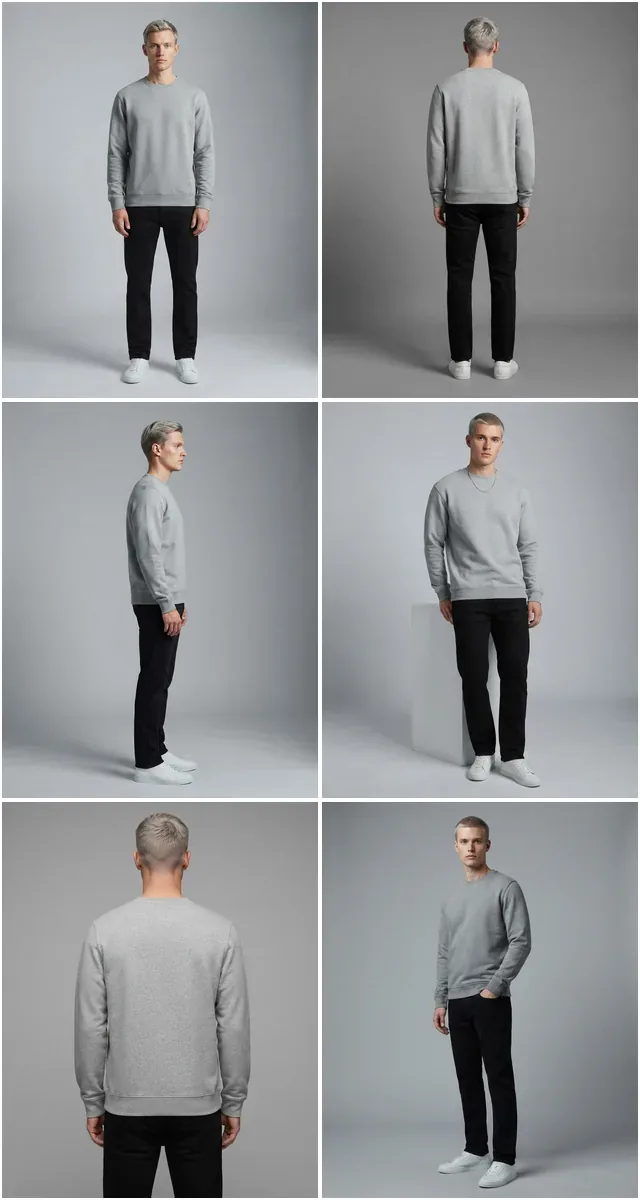
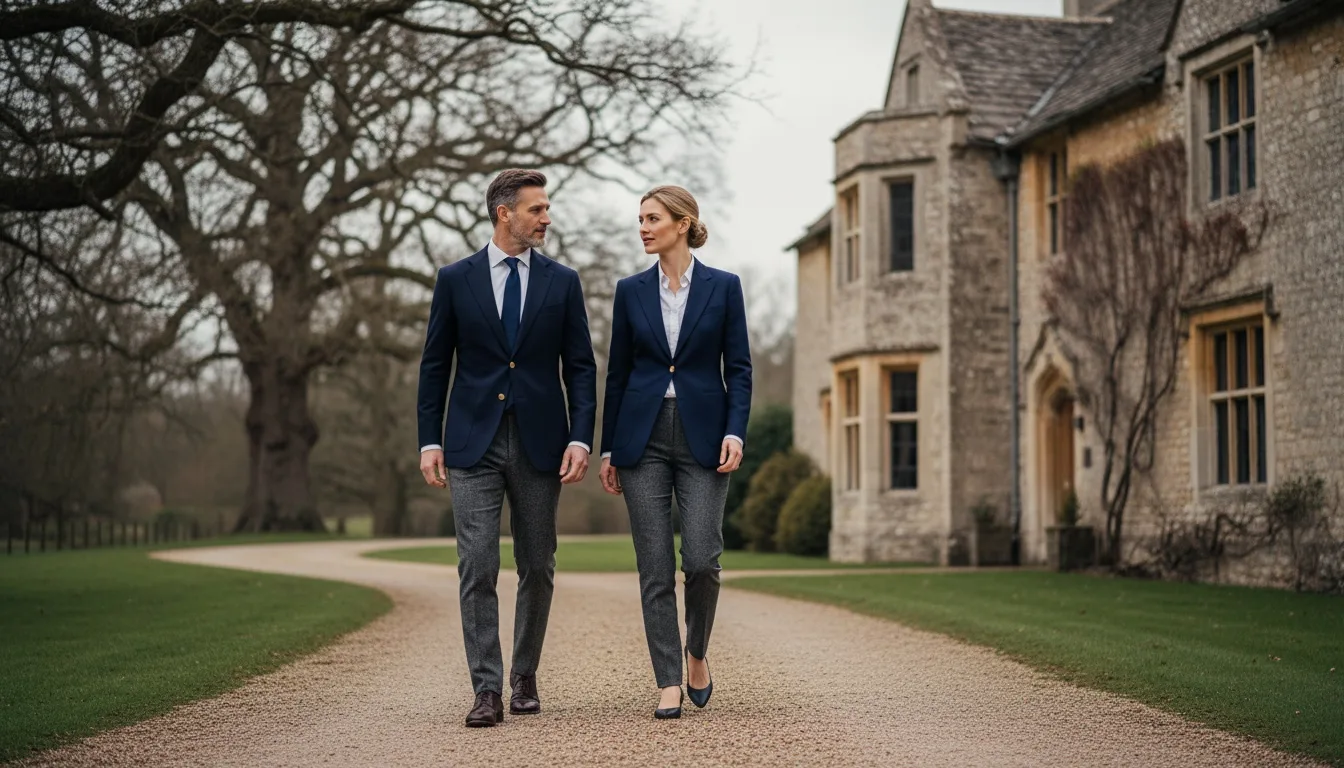
What is the old money aesthetic?
The old money aesthetic dresses to signal inherited taste rather than spending power: no visible logos, no trend pieces, no shine, no novelty. It is the only widely-followed aesthetic defined chiefly by absences, which makes it easier to describe by subtraction than by addition.
No logos, ever Navy, camel, cream, grey 12-piece wardrobe Fit > price
The one thing that separates a convincing version from an unconvincing one is not budget. It is tailoring. An altered inexpensive blazer beats an unaltered expensive one in every single case.
Remove the branding, the current season, the reflective surface and the conversation piece, and what is left is a narrow vocabulary: tailoring, knitwear, poplin, leather, a handful of colours. The aesthetic's governing idea is durability — a garment should look as though it has been owned for ten years and will be owned for ten more. That idea does real work, because it rules out most of what a shop is trying to sell you.
The unwritten rules
Five rules cover almost every decision within the aesthetic.
- Nothing announces its price. No logo, no monogram, no hardware that identifies a maker across a room. The reference is a garment recognised by people who know, and invisible to everyone else.
- Nothing is shiny. Matte wool, matte cotton, brushed leather. Patent, satin, sequins and metallic hardware all fall outside.
- Nothing is new-looking. Not distressed — cared for. A well-kept coat with a decade on it is the ideal; a pristine one straight out of a box is not.
- Fit is the whole argument. The aesthetic has no ornament and no colour to hide behind, so a shoulder seam in the wrong place is the only thing anyone sees.
- Nothing is of the moment. If a piece could be dated to a season, it is out. This rules out most silhouettes currently in shops, which is why the aesthetic looks so consistent over time.
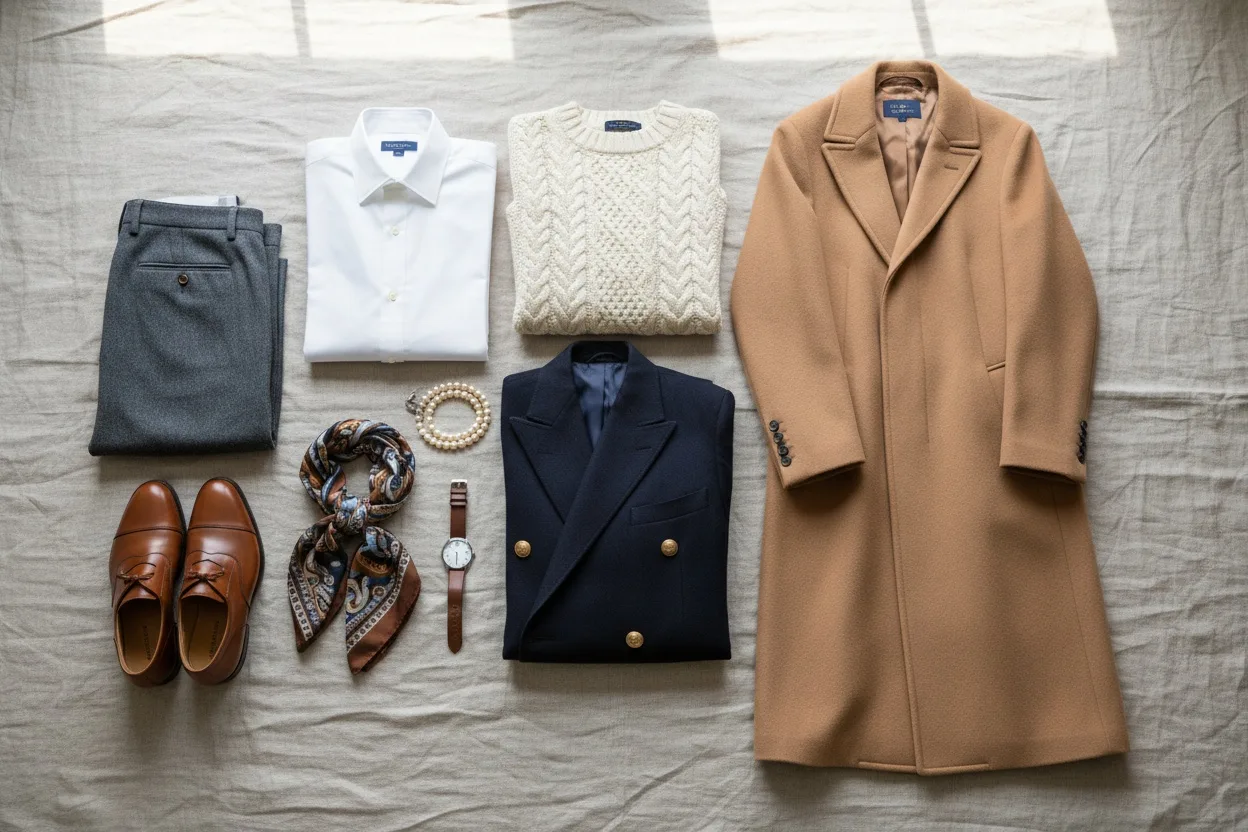
The 12-piece wardrobe
| # | Piece | Specification | Spend here? |
|---|---|---|---|
| 1 | Navy blazer | Single-breasted, natural shoulder, horn or plain metal buttons | Alter it |
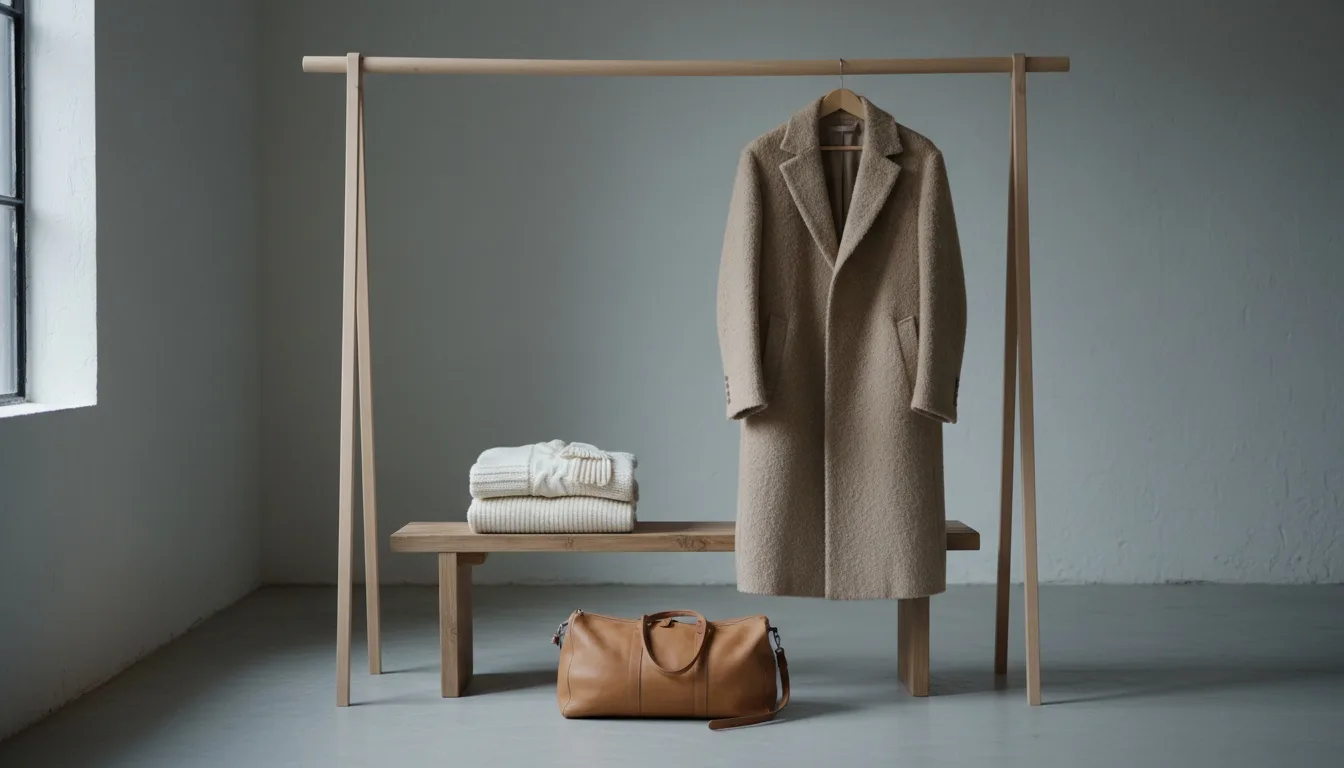
| 2 | Camel or navy overcoat | Wool, knee-length, minimal detail | Yes |
| 3 | White poplin shirt | Point or button-down collar, no contrast stitching | No |
| 4 | Fine-gauge knit | Navy, grey or cream. Merino or cashmere. | Moderately |
| 5 | Cable or cricket jumper | Cream with a contrast trim, or plain | No |
| 6 | Straight tailored trouser | Grey flannel or stone cotton, no break or a slight one | Alter it |
| 7 | Pleated or A-line skirt | Knee or midi, wool or heavy cotton | No |
| 8 | Loafer or plain white trainer | Leather, unbranded, well kept | Yes |
| 9 | Trench coat | Stone or navy, classic cut | Moderately |
| 10 | Silk scarf | Plain, striped or a small repeating motif | No |
| 11 | Leather-strap watch | Plain dial, no complications on show | No |
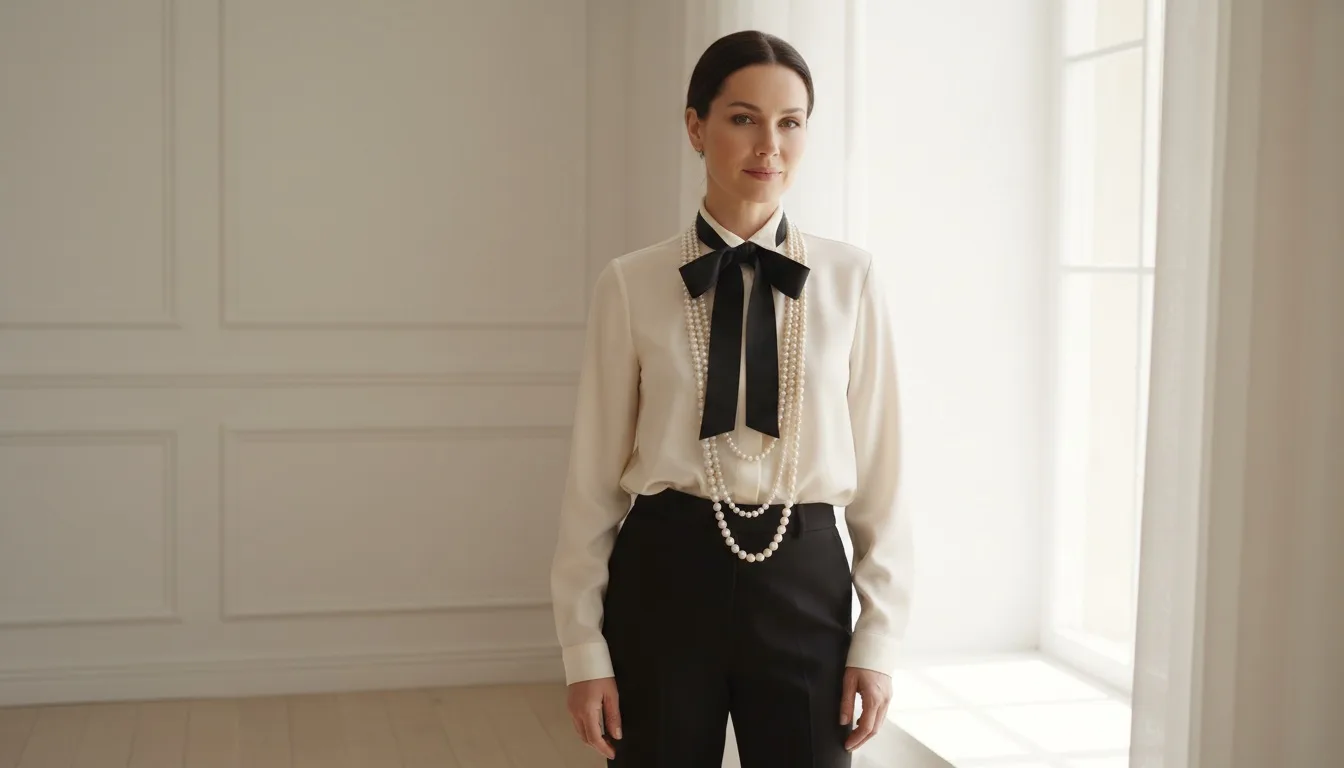
| 12 | Pearls or a plain gold chain | One strand, or one chain. Never both. | No |
Two pieces are worth real money, and they are the two that touch the ground and the weather: the coat and the shoes. Everything else can be inexpensive and altered.
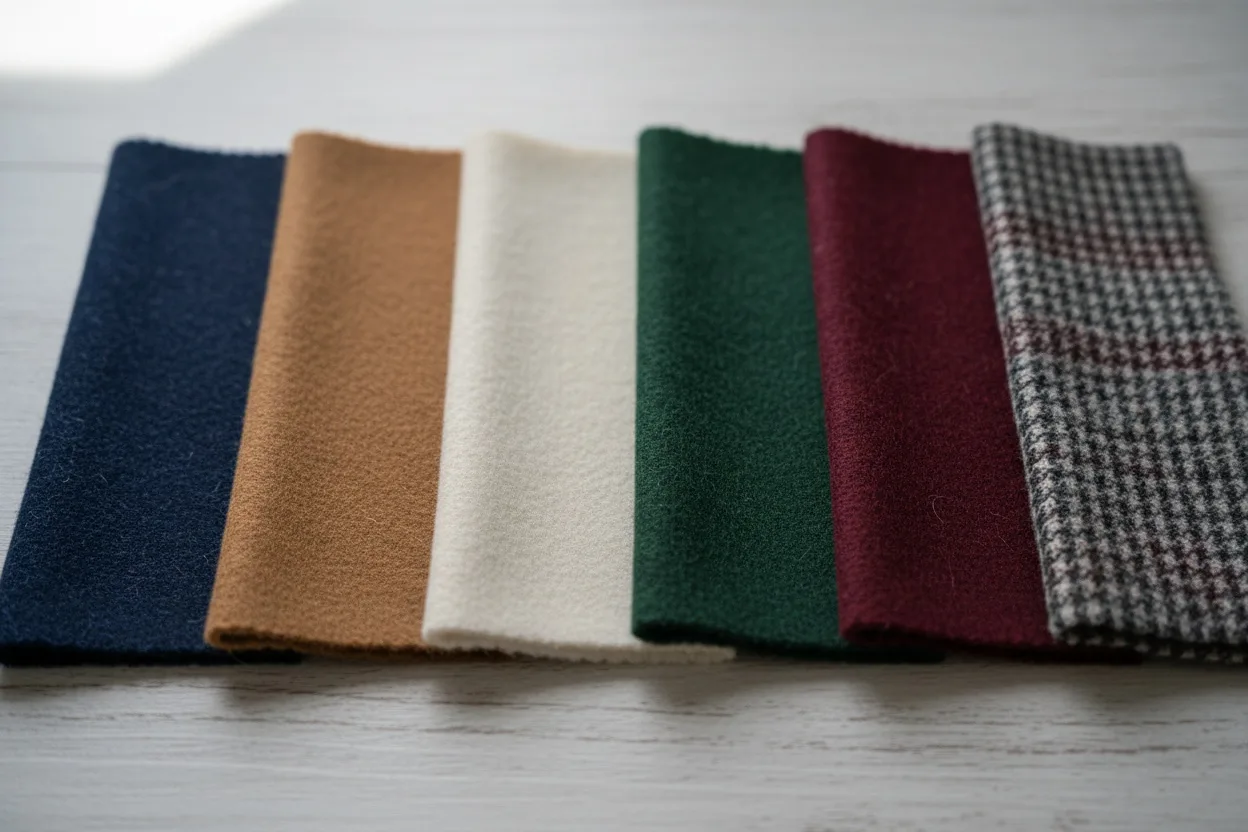
The palette
Navy, camel, cream, white, grey, forest green, burgundy, stone. Pattern is restricted to stripes, small checks, houndstooth and occasional argyle, always muted. Black is used sparingly — footwear, evening, outerwear — and rarely as the base of a daytime outfit, which is one of the clearest differences between this aesthetic and quiet luxury.
The absences matter as much as the presences. No neon. No metallic. No large-scale print. No colour that could be dated to a specific season. If you can name the year a colour was popular, it does not belong.
24 old money outfit formulas
Daytime
- Navy blazer + white poplin shirt + grey flannel trouser + loafer
- Cream cable knit + stone chino + white trainer
- Striped poplin shirt + navy fine knit over the shoulders + straight trouser
- Camel coat + cream roll-neck + grey trouser
- Pleated midi skirt + plain navy knit + loafer
- White shirt + A-line skirt + silk scarf at the neck
- Cricket jumper + white trouser + plain trainer
- Trench + navy knit + straight jean + loafer
Colder weather
- Camel overcoat + grey roll-neck + charcoal trouser + boot
- Navy blazer + cream knit underneath + wool skirt + tights
- Forest green knit + stone trouser + brown loafer
- Houndstooth coat + plain black knit + grey trouser
- Cable knit + tweed skirt + knee boot
- Quilted jacket + poplin shirt + straight cord trouser
- Burgundy fine knit + navy trouser + silk scarf
- Navy overcoat + white shirt + grey flannel + plain black loafer
Evening and occasion
- Plain black or navy dress + pearls + low heel
- Navy blazer + white shirt + tailored black trouser
- Cream silk blouse + long wool skirt
- Charcoal suit + plain white shirt + no tie
- Black knit + long pleated skirt + plain flat
- Navy midi dress + camel coat over the shoulders
- Silk blouse + straight trouser + single gold chain
- Plain wool dress + leather belt + court shoe
Take a shoulder in, shorten a sleeve to show a quarter-inch of shirt cuff, hem a trouser to the right break. Three alterations on cheap clothes will do more for this aesthetic than one expensive purchase — and it is the single reason budget versions of old money can look entirely convincing while budget versions of most aesthetics cannot.
Where it goes wrong
Buying the reference instead of the garment. A crest, a club stripe or a heraldic button on a piece with no connection to any of it is the most common misstep, and it is legible as a costume immediately.
Too matched. A full outfit in matching pieces reads as a uniform, which is the opposite of the intended effect. The aesthetic is meant to look assembled over years, not bought as a set.
Shine. Patent shoes, satin blouses, metallic hardware. One shiny thing undoes an otherwise correct outfit.
Over-accessorising. Pearls and a chain and a scarf and a watch and a signet ring. Pick two.
Old money vs quiet luxury vs preppy
| Old money | Quiet luxury | Preppy | |
|---|---|---|---|
| Core claim | Inherited taste | Material quality | Collegiate ease |
| References | Ivy, country, sailing, riding | None — deliberately | American campus |
| Palette | Navy, camel, cream, green | Camel, grey, cream, black | Brights, pastels, navy |
| Pattern | Stripe, check, argyle | Essentially none | Stripe, madras, tartan |
| Mood | Understated, established | Precise, austere | Cheerful, youthful |
Our quiet luxury guide takes the middle column apart in detail, including where the two genuinely diverge on fabric.
For brands selling into this category
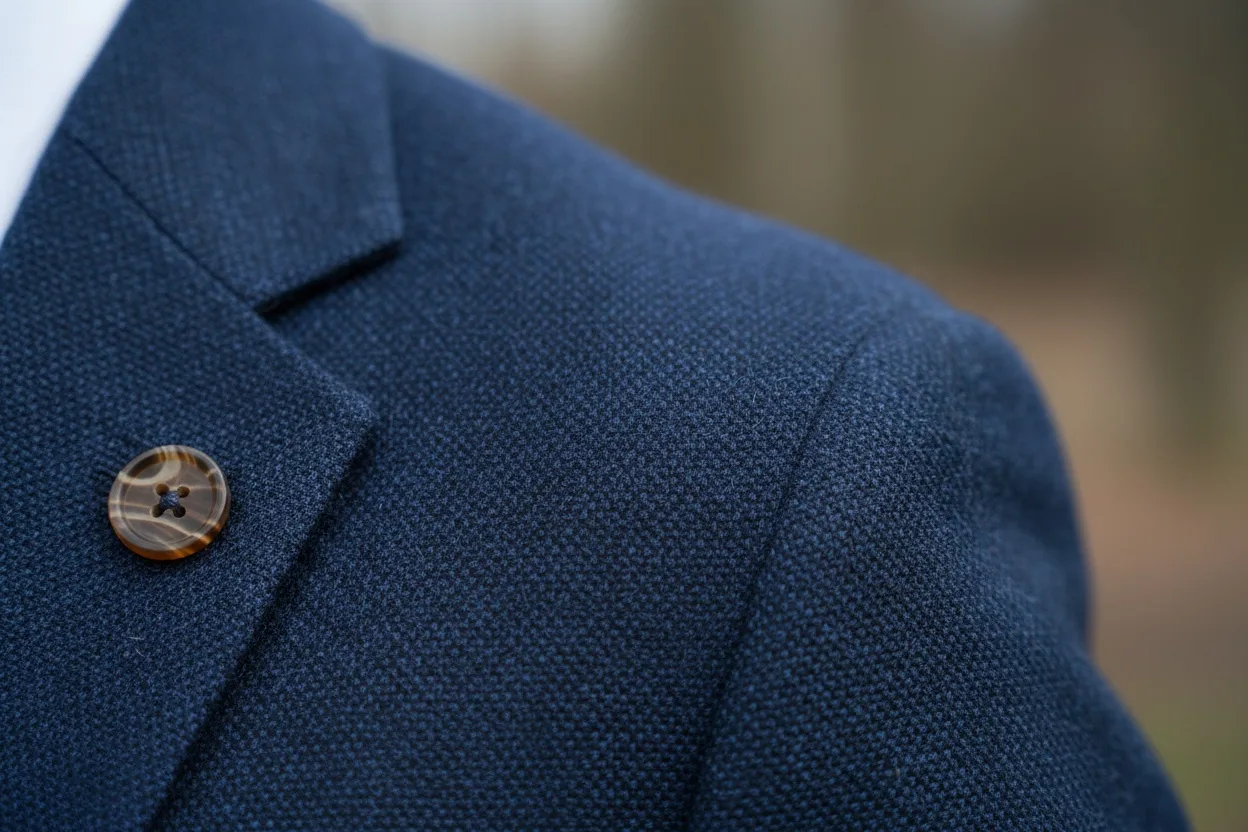
Old money merchandising is a genuinely hard photography problem, because the entire value proposition is invisible at listing resolution. Take away logo, print, colour and trend and what remains is cloth and cut — the weight of a flannel, the roll of a lapel, the way a coat hangs from the shoulder. A navy blazer photographed badly is indistinguishable from any other navy blazer.
Three things carry it. Detail crops at real resolution, so the weave and the button are visible — our AI image upscaler takes an existing frame to print quality without smoothing the cloth texture, which is what ordinary upscaling does to wool. Consistency across the range, so a collection looks like a house rather than a marketplace: the catalog photoshoot flow pins one model, one location and six angles across every SKU. And, for the accessories that finish these outfits, the jewelry on model AI covers necklaces, rings, earrings and bracelets on a body rather than on a plinth — relevant here because a single strand of pearls is the most common accessory in the whole aesthetic.
Building it in order, with a real budget
The aesthetic is unusually forgiving of a small budget, provided the money goes in the right order. Here is that order, and the reasoning behind each position.
| # | Spend on | Roughly | Why here |
|---|---|---|---|
| 1 | A tailor | The price of one shirt | Changes everything you already own. Nothing else has this return. |
| 2 | Leather shoes | The largest single item after the coat | Worn daily, visible from a distance, and the difference in leather grade is obvious |
| 3 | The coat | The largest single item | On show over everything for half the year |
| 4 | One good knit | Moderate | Replaces several mediocre ones and photographs well |
| 5 | Everything else | Secondhand or inexpensive | Shirts, trousers, blazers and skirts are abundant used and easy to alter |
Position 1 surprises people, so it is worth being specific about what a tailor actually changes. Taking in a shoulder, shortening a sleeve so a quarter-inch of shirt cuff shows, hemming a trouser to the right break, and taking in a waist are all inexpensive alterations that move a garment from "clothes that fit" to "clothes that were made to fit". In an aesthetic with no ornament, no logo and almost no colour, that difference is the entire visual argument.
What secondhand gets you here
Old money is, along with dark academia, the aesthetic best served by the used market, and for the same structural reason: its garments are designed not to date, so a twenty-year-old example is not a compromise on a new one. It is frequently better cloth, because mid-market fabric quality has fallen over that period.
- Blazers. The most abundant item in any secondhand shop and the most expensive to buy new. Check the shoulder fits — that is the one thing a tailor cannot easily fix — and ignore everything else, which can be altered.
- Overcoats. Wool coats survive decades. Check the lining at the underarm and the shoulders for wear, not the outside.
- Knitwear. Check the elbows and the underarms for thinning against the light. Small moth holes at a cuff are repairable; thinning through the body is not.
- Shirts. Cheap enough new that secondhand is rarely worth the compromise, unless you find something exceptional.
- Shoes. Only if resoleable — a welted construction can be rebuilt, a glued one cannot.
When buying a jacket in any condition, at any price: fit the shoulder, alter the rest. A shoulder seam sitting where your shoulder ends is the one measurement that cannot be corrected without effectively rebuilding the garment. Sleeves, waist, length and even the chest are routine alterations.
Old money aesthetic FAQ
Do I need expensive clothes for the old money aesthetic?
No. Fit, condition and restraint carry it. Spend on a coat and a pair of shoes, buy everything else inexpensively, and put the difference toward alterations. The aesthetic actively punishes conspicuous spending, so an obviously expensive piece can work against you.
Can I wear jeans?
Yes, within limits: straight or slim, a dark or mid indigo, no distressing, no visible branding, no fashion wash. Worn with a blazer, a knit or a poplin shirt, they sit comfortably inside the aesthetic.
What shoes are correct?
Leather loafers, plain derbies or oxfords, riding-style boots, and plain white leather trainers. All unbranded and all kept clean. The condition of the shoe carries more weight here than the shoe itself.
Is old money a real thing or an internet aesthetic?
Both, and it is worth being clear about it. The reference points — Ivy dressing, English country clothes, sailing and riding kit — are real traditions with real histories. The named aesthetic is a recent internet construction that flattens them into a shoppable look. Dressing this way is perfectly reasonable; treating it as a description of an actual social class is not.
Does it work for menswear and womenswear equally?
Yes, and the vocabulary is almost identical: blazer, knit, poplin, tailored trouser, coat, loafer. The womenswear version adds the pleated and A-line skirt and the pearls; the menswear version leans harder on shirting and knitwear. The rules are the same for both.